Two Reflections for the New Year: 5774 By Ivy Helman

ivyIn June, my friend, Shifra, and I became Co-Chairs of the Ritual Committee at our shul. During the past few weeks, we have occasionally turned to one another and said, “I can’t wait for the High Holy Days to be over!”  Then, we have paused realizing what we have said and have sworn that we didn’t mean it.  We don’t.  Truly, we don’t.  But we are overwhelmed by the sheer amount of detail required for the days to go well.  There are babysitters to find, flowers to pick-up and drop off and pick-up again, kiddushim to organize, chairs to arrange, musicians to contact, mahzorim to bring up from the basement, bulletins and programs to coordinate, volunteers to recruit, parking to find for Tashlich, carpets to be cleaned, pianos to be tuned and so much more.  Thank G-d there is a committee and a community to help us, but we still have much of the organizing and synchronizing to do.  It’s a lot for two people who also have jobs, family and other responsibilities to fit in as well.

What concerns me more than anything in all of this organizing and busyness is that I won’t be personally prepared for the High Holy Days.  These days require personal, spiritual and relational work which all takes time.  I can’t show up on Yom Kippur morning and expect to have an amazingly deep spiritual experience if I have done nothing to prepare myself for it.  To me, this would be the irony of all ironies: the one who has spent the past three months making sure the shul is ready isn’t prepared herself.  Since the last week of August, I have been setting aside time away from the details to make sure that doesn’t happen.  Within the personal work I’ve done, I have found two inspirational and meaningful reflections which I’d like to share with you. Continue reading “Two Reflections for the New Year: 5774 By Ivy Helman”

When Some People Say “Religion” They Mean “My” Religion by amina wadud

Amina Wadud 2 I am Muslim, by choice, practice and vocation

I came to live in India after having already lived in other parts of Asia. Naively, I anticipated that the best of my Asian living experiences would be manifest in India and this centered on a dynamic encounter with diverse religious communities. I have thus been disappointed that the ideals of diversity have given way to exceptionalism and exclusivity.

For example, members of one religion are not encouraged to or interested in visiting the sacred spaces of other religions. In fact, in most cases, they are prohibited. To be sensitive to these constraints I do not visit any sacred place, no matter how much I have wanted, unless I am given permission as a Muslim. (Coincidentally, I am also prohibited as a woman from entering some of the sacred Muslim spaces!)

As a (retired) professor of religious studies I would like to think I can be a respectful observer. Nevertheless, I have little ability to internalize the notion of taboo. That is, I cannot understand that any space constructed by human beings would be defiled by the entry of another human being. My history of social and political advocacy against all forms of oppression just cannot find a space to accept this notion that one person is irredeemably taboo. Continue reading “When Some People Say “Religion” They Mean “My” Religion by amina wadud”

The Institutional Silencing of Women by Natalie Weaver

Natalie Weaver

On July 26, 2013, I had the opportunity to hear Rev. Helmut Schüller speak at the City Club of Cleveland’s Friday Forum.  He spoke to a convened audience of around 150 people, in addition to the much greater broadcast audience, and he responded to questions that ranged from wholly supportive, to sincerely questioning, to highly critical.  I myself sat with a group of vowed religious women from Pittsburgh who seemed enthusiastic about Rev. Schüller’s Austrian Priests’ Initiative, while behind me sat a table of obvious, vocal critics.

Rev. Schüller’s initiative, now represented by over 400 priests, began in 2006 as an effort to mobilize priests to lead the way for change in the Catholic Church in at least four crucial areas: women’s ordination; married priesthood; same-sex marriages; and lay participatory voting in the election of their bishops.  Of course, Catholics have been having these conversations long before the Priests’ Initiative.  What makes Father Schüller’s work different is that it is an “insider job.”  He argued that the laity have done their part, and now it is time for the clergy to speak, even at some personal and professional risk to themselves. Continue reading “The Institutional Silencing of Women by Natalie Weaver”

A Dream Too Far . . .? by Kelly Brown Douglas

Not too long ago I heard an interview with Eugene Allen’s son.  The recently released movie, The Butler is inspired by Eugene Allen’s life in the White House. Mr. Allen served in the White House through the terms of 8 presidents. His story first came to light after President Obama’s first election when a feature article appeared about him in the Washington Post. This feature told of how he never missed a day of work during his 36 years of service at the White House and it recalled what he witnessed from his position as butler when some of the most momentous decisions were being made, especially for black folks between1952-1988, his tenure of service. There are clearly many compelling things about his story, but there is one thing that stood out for me that actually did not come from him or the movie, but from an interview with his son. During this interview his son recalled the January morning in 2009 that he and his father, as invited guests, witnessed Barack Obama being sworn in as the 44th President of the United States.  He said that he leaned over to his father and asked him if he ever dreamed that he would live to see a black man become President. He said his father responded, “I didn’t dream that I could have that dream.”  To dream such a thing was a dream too far for Eugene Allen. He could not dream the dream.

Continue reading “A Dream Too Far . . .? by Kelly Brown Douglas”

The Hot Seat by John Erickson

Being a man in feminism isn’t easy and that’s how it is supposed to be.

men_feminist_mainI’ve been thinking a lot about what it means to be a male feminist lately.  As the only man to be a permanent blogger on this very site until my colleague and friend Kile Jones came on board, I took my role, as a man in a traditional feminist (online) space very seriously.  Although the ongoing struggle to be a male feminist is one continually wrought with dialogues about power and positionality (amongst a host of many other topics), I am often conflicted when I see male feminists take advantage and destroy the hard work that many, specifically on this site and beyond, worked hard to build and defend.
Not wanting to reopen old wounds or start new online battles, men have been involved in feminism for quite some time.  From James Mott chairing the first women’s rights convention, to radical feminist Andrea Dworkin’s life partner John Stoltenberg, to Michael Kimmel and Michael Kaufman’s life long work to legitimize not only men in feminism but also what it means to be a man who works for gender equality, being a man in feminism isn’t easy and that’s how it is supposed to be. Continue reading “The Hot Seat by John Erickson”

In Dreams I Trust by Annette Allen

AnnetteGrowing up in an agnostic family in 1950’s Britain, I did not hear religion discussed.  So it seemed odd that my parents sent my brothers and me to Sunday school.  At home, as I was battling my father’s constant criticism and jealousy towards Eric, my younger brother, learning about Jesus thrilled me.   Jesus seemed to love and value young children – what a hero!

Moving to Addis Ababa, Ethiopia, in 1962, deepened my faith.   At Nazareth School for Girls, I practised Catholicism, recited the rosary, and devoured books about female Catholic saints. But the American sisters taught that our bodies were impure, not healthy; lustful thoughts about boys were wrong, and husbands were masters.  Worst of all, heaven didn’t have any animals.  To an innocent girl, God was now judging and condemning.  I was very confused. Continue reading “In Dreams I Trust by Annette Allen”

Values of Respect and Compassion for Others by Deanne Quarrie

Deanne QuarrieWe live in an age when there are overall changes in our society in the values of respect and compassion. I no longer see people pulling back chairs or opening doors for others.  Actually, I am constantly witness to a general lack of respect everywhere.  From vulgar profanity in public places to downright abuse of others – this saddens me.  Where I see this lack of respect most of all is within social media.  There, people write anything they want – about anyone they want and to anyone they want without consideration of the grievous harm they might cause. Continue reading “Values of Respect and Compassion for Others by Deanne Quarrie”

Stories from the Yoga Mat: Sleep as Spiritual Necessity (Part Two) by Marie Cartier

This is a follow up to my July 2013 blog: Stories from the Yoga Mat: Sleep as Spiritual Necessity.

Last month I wrote about “sleep as spiritual necessity,” and posted information about how even the Dalai Lama believes spiritual practice will suffer without sleep—and compassion must be practiced for the self—by giving the self—sleep.

If you didn’t get a chance to read that column—there is some pretty compelling evidence gathered there from an informal search of recent web articles attesting to the importance of sleep.

But, for now, let’s assume that we all agree—sleep is important and without it life is much harder than with it.

“Sleep on it.” “Things will look better in the morning.” And other common place sayings show us how much we believe in this. And yet—sleep is elusive for so many of us. So–this month I am following up with tips– including a brief yoga therapy overview to combat insomnia. Continue reading “Stories from the Yoga Mat: Sleep as Spiritual Necessity (Part Two) by Marie Cartier”

The Philadelphia Ordinations and Pope Francis in Rio by Alla Renée Bozarth

Alla Renée Bozarth, Philadelphia 11, Philadelphia ordinations

On July 29, 2013,  I read the feminist theologian Mary Hunt’s fine account of Pope Francis’ visit to Brazil, with commentary on his informal conversation with press people on the way back to Rome.

When asked for a statement about the role of women in the Roman Catholic Church, a question which indirectly refers to women in the priesthood and episcopacy, he reiterated the position that the door to the ordination of women is closed. In response, I was inspired to write in the way that most intensely felt responses come out~ as a poem.

As I wrote, I couldn’t help but hear an older poem, “Water Women,” in the background. Perhaps the fact that Pope Francis had been to Rio, the Spanish word translated into English as river, inspired this association. Perhaps it was reinforced because Mary Hunt, whose article had moved me, was the co-founder and co-director of the organization WATER (Women’s Alliance for Theology, Ethics and Ritual). I wrote the poem “Water Women” a few years after the historical Philadelphia Ordinations, in which eleven women put a significant crack in the stained glass ceiling barrier in the Episcopal Church by being ordained to the priesthood on July 29, 1974. That fait accompli event opened the doors to the ordination of women into all three Holy Orders. The Roman Catholic Women’s Ordination Conference began later that same summer. I wrote “Water Women” in response to a question asked of me and others in a small group of Roman Catholic and Episcopal feminists during a press conference, just as I wrote “Pope Francis in Rio” on the 39th anniversary of the Philadelphia Ordinations because of a press conference, this time with Pope Francis during his flight back to Rome.

Continue reading “The Philadelphia Ordinations and Pope Francis in Rio by Alla Renée Bozarth”

Coming Together to Honor the Mother by Carol P. Christ

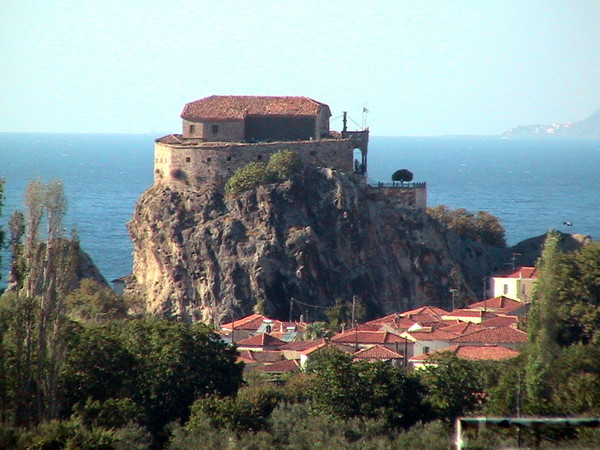
petra churchcarol-christFrom the evening of the 14th through the day and night of the 15th of August, thousands of pilgrims ascended the Holy Rock of Petra to honor the Panagia—She Who Is All Holy. 

There is “something really beautiful”* in being among them.

Six of us set out from Molivos at 7:30 on the 14th to meet in the square of Petra to ascend to the church.  Petra was already full of so many pilgrims that police had forbidden traffic in the main square and were directing cars into a nearly full parking lot in a field.  When we got out of the car, the two others who came with me and I had a perfect view of the steady stream of pilgrims climbing the rock, which was already lit up in the twilight.

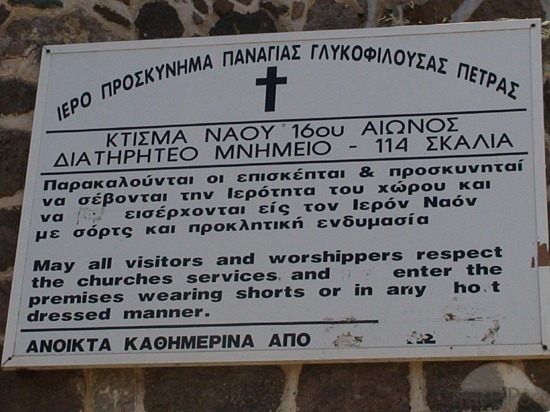
When we found the others, I said that we would climb to the church on the top of the rock where we would light candles and approach the icon of the Panagia to silently pray or express a wish for the coming year.   The others followed me through the square into the winding streets lined with stalls and gypsy beggars to the bottom of the rock.  While we waited for our turn, we saw the sign advising pilgrims of proper dress (read carefully).

instructions-before-getting-in-the-church-petra

Continue reading “Coming Together to Honor the Mother by Carol P. Christ”