My hobbling has made me aware, in a new way, of my vulnerability. When I walk down the street, I notice that very few people actually seem to notice my constraint. And this makes me feel even more vulnerable. I’ve been afraid to take the subway, afraid to be in crowds, uncomfortable even when I am alone at home. I worry about another break, a fall, a misstep—banging into something, or having something drop on my foot.
And I think, with deeper compassion, about my friends and acquaintances—and all the people I don’t know—who bravely endure even greater, often invisible, challenges.
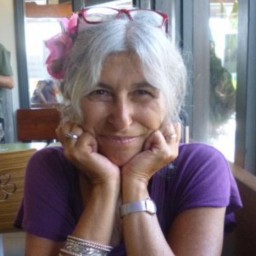
Just a few months ago, not long after turning seventy, I was diagnosed with mild osteoporosis. I had thought that all my yoga, my occasional forays to the gym, my daily walking, my frequently consumed leafy greens and yogurt , my calcium supplements would protect me. I had thought I was different from most other women my age, that I could avoid taking the medication that I knew was sometimes problematic. But the bone density scan revealed what I had feared, and because both of my parents declined and died shortly after hip fractures, because I had once broken an ankle, I decided to accept my doctor’s sober recommendation: that I begin a weekly dose of alendronate. It would be the first chronic medication I would ever be prescribed.
But right before I actually began taking my weekly pill, I noticed a strange new pain across the instep of my left foot. For the first few days I ignored it; I felt it only when I walked, and I assumed it was a strained muscle or tendon. The pain increased; when, after ten days, it persisted even when I was not walking, I decided to see a podiatrist.
Isabella Ides’ White Monkey Chronicles is my lectio divina, the wisdom, humor, and wonder of her story savored daily. (For an overview, see BJ Austin’s review.) Although the titular white monkey is at the heart of the chronicles, and his charge, foundling/avatar Conrad Eppler, is a boy, I have never encountered a more vivid evocation of goddess—multi-dimensional, earthy, transcendent, fierce, compassionate. No one knows Godma better than the Sisters of the Joyous Mysteries, an order of rogue nuns, the focus of this interview with the author.
Give us a thumbnail sketch of the three remaining members of the order, Sister Mary Subordinary, Sister Merry Berry, and Mother Mary Extraordinary.
Mother Mary Extraordinary is ancient, icy white, her soul as scuffed as an old shoe. Extraordinary’s veil hides long white hair that reaches to her ankles. Sister Merry Berry is youthful, dark as an espresso truffle, her hair a disarray of dreadlocks. She ditches her veil, crochets a Rastafarian beret, and adopts a pair of florescent orange running shoes. Nun on the run. The orderly Sister Mary Subordinary is almost without physical detail. She is selfless, a giver, a maker of bread and soup. She is porous. Sometimes her soul escapes her. Mary Subordinary has visitations; the monkey god, for one, slips in. Subordinary herself can enter other minds, although she tries not to snoop.
Have you encountered rogue nuns in your own life?
Author with Sr. Mary Agnus, Blessed Sacrament School
I spent my first-communion year at a Catholic school in Hollywood, on Sunset Boulevard. One day on the playground, Sister Mary Agnus asked if I wanted to see the bones of a saint. Yes, I did! She reached into her deep pocket and fetched out a small gold case with red velvet lining and a glass portal. Forget Mary Poppins. I was enthralled. Yet in my secret life, I did not believe in her god. I was a seven-year-old redactor, appalled by the vision of an ocean of children drowning as the ark of animals sails on.
Then years of public school in the suburbs drained the world of mystery. I jumped at the chance to enroll in an all-girls Catholic high school. My notions about nuns changed irrevocably the day I wore a faux zebra coat over my school uniform. Sister Mary Malua asked to try it on. Her Sister friends giggled like girls. And with a shock, I was made aware that they were girls. Like me. These young Sisters, fresh off the boat. Irish – they spoke Gaelic when ruffled — upper-class girls, smart, some of them brilliant, but not very pretty, and not necessarily traditionally gendered.
And none of them as rogue as my creations. Indignant on their behalf, I stepped into the role of fairy Godmother to the Sister Cinderellas — working for no pay, made to obey their priest confessors, denied agency, denied priesthood, doomed to be brides of an indifferent god. Waving my writer’s wand, I de-colonized their minds, redressed them, and sent them invitations to a spiritual ball, the likes of which they had never known.
Toni Morrison said that she wrote the novels she wanted to read. I wrote the world I wanted for my beloveds.
Their mysterious foundling, Conrad Eppler, is home-schooled by the sisters who have widely and wildly varied approaches to his education. Give us a brief description of their curricula.
Author costumed as Shakespeare’s Helena with Sr. Mary Joseph, Louisville High School
Paraphrasing Marx, from each according to her gifts. Sister Subordinary, mindful of Conrad’s origins, reads to him from the Ramayana, stories of the monkey god, Lord Hanuman, and the story of Guha, her idea of a perfect devotee. Guha’s practice is to faithfully kick the statue of Shiva that the Brahman priests have brought to his forest. She passes to Conrad the spiritual gifts of discernment and doubt.
Merry Berry gives Conrad the childhood that she never had. This is one of the fascinations of motherhood and mentorhood, how the child/student changes the teacher. Motherhood is actually one of the deep themes of the Chronicles, that and redemption. How we transform and are transformed by what we create, what we give birth to in the world.
Mothering a child, a planet, a poem, a prayer, a god.
Mother Mary Extraordinary teaches Conrad astral travel. She is a visionary, come to grief over dead and dying dreams. She is cranky, reluctant to crank up further investments in the material world that betrayed her. Her most potent gift comes late in the novel. She is the difficult parent. The dark side of the moon.
The sisters have a highly original approach to prayer, which lands them in mortal trouble with the Great Church. Tell us a little about the flowering of the heretical practices.
The Great Church cast out its rebel brides for ordaining sister priests. Unbound, all holy mayhem broke loose at the convent. New sacraments were invented, Sisters married each other, created scrumptious communion breads, and each sister wrote a personal mass, worshiping the gods as she imagined them. Then disaster. The prayer eaters came and licked the pages of the prayer books clean. When a Sister’s prayer book went blank, death soon followed. And then there were three. Mary Extraordinary. Mary Subordinary. Merry Berry.
When the sky-blue baby deity is delivered to the convent, the three survivors crack open one of the old prayer books to enter his name in the litany of infants. Theirs is a radical hospitality. All gods are welcome. Well. Almost. This hospitality doesn’t quite extend to those gods who deny that they have mothers, or that claim one-and-only status, or label their progeny the only begotten. In the Sisters’ theology every child is a coming, and a godsend.
We’ll close with an excerpt from one of the sisters’ prayers:
Litany of the Infants
The infants come
on fresh beds of hay
on sterile hospital sheets
down dark Calcutta streets
on the back seats of taxi-cabs
on the beds of Mack trucks
they come
in woodshed and chateau
in barn and bordello
on the snow belt
and bible belt
on the green veldt
and parched plains of Africa
they huddle
in refugee camps
in quarantined villages
they set sail in Moses-baskets
afloat on the Nile
launched
from Bodrum
from the shores of Vietnam
from the banks of the Rio Grande
let them come
with halo hair
and soft eyes shining
Divine Mother, Sweet Protectoress
shelter each foundling
in the house of your infinite kindness
in the womb of your joyous mystery
Holy of Holies, Mary Mother of God
teach us thy trade.
Isabella Ides was born under the Hollywood sign and attended a Catholic School on Sunset Boulevard. Her father ran search lights for movie openings. Thus she was bent towards stage lights and spirit lights from the get go. A poet and playwright, she considers her debut novel, White Monkey Chronicles, the mother lode. Everything leads to it. And away.
Elizabeth Cunningham is best known as the author of The Maeve Chronicles, a series of award winning novels featuring a feisty Celtic Magdalen. Her novels The Wild Mother and The Return of the Goddess have both been released in 25th anniversary editions. She is also the author of Murder at the Rummage Sale. The sequel, All the Perils of this Night, will be published in 2020. Tell Me the Story Again, her fourth collection of poems, is now in print. An interfaith minister, Cunningham is in private practice as a counselor. She is also a fellow emeritus of Black Earth Institute.
Let me share with you the Goddess most honored as the Goddess of liminal time and space. It is our beloved Hekate, Great Goddess of the Three Ways, bridging Earth, Sea and Sky as we travel between worlds.
In modern times, She is seen by many as a “hag” or old witch stirring the cauldron. This idea was popularized by Roberts Graves’ book, The White Goddess. In early writings, however, she is portrayed as a beautiful and powerful maiden goddess.
“I come, a virgin of varied forms, wandering through the heavens, bull-faced, three-headed, ruthless, with golden arrows; chaste Phoebe bringing light to mortals, Eileithyia; bearing the three synthemata [sacred signs] of a triple nature. In the Aether I appear in fiery forms and in the air, I sit in a silver chariot.” (Chaldean Oracles)
She was the only one of the ancient Titans that Zeus allowed to retain her power after the Olympians seized control. She shared with Zeus, the awesome power of granting all wishes to humanity (or withholding, if she chose).
And so is born the “monster” most people associate with the name Frankenstein–a lone and lonely terrorist who lashes out against a world that has no place for him. One by one, he strangles all the people his “maker” holds dear: his brother William, his best friend Clerval, and his cousin/bride Elizabeth. Yet the novel invites us to have compassion for the creature, even while it condemns the society that makes him as he is. Victor, raised by a devoted mother and tenderly loved by a doting cousin, should have known better. As should we.
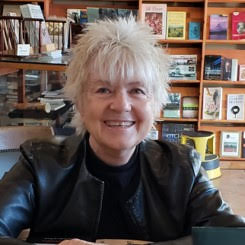
A few weeks ago, a former colleague invited me to visit one of his classes, to discuss Mary Wollstonecraft Shelley’s 1818 novel Frankenstein; or, The ModernPrometheus and the essay I’d published about it almost thirty years ago, “‘They Will Prove the Truth of My Tale: Safie’s Letters as the Feminist Core of Mary Shelley’s Frankenstein.” To prepare for that visit, I’ve spent the past few days re-reading the book, and I’m overwhelmed anew by the beauty of Shelley’s language, the brilliance of her plot, and the profoundness of her themes. The book moves me even more today than when I first read it.
The rising voices of female empowerment, consciousness, and position has been an undertaking in the last two centuries. Yet societies are still using fairy tales; tales that were written at least 500 years ago. Many of the fairy tales can be read in a 21st Feminism lens as being harmful and products of a patriarchal society. The movement can only gain more strength and momentum if we start from the ground up – reworking the stories, fables, and myths we teach our children, we make into movies, and that children want to dress up as.
Candide, ou l’Optimisme (in English, Candide, or Optimism) is a satirical, picaresque novel published in 1759 by François-Marie Arouet, better known as Voltaire, who was possibly the smartest author of the Age of Enlightenment…but he annoyed so many courtiers and public officials that he was forever traveling around Europe to get away from their threats of arrest and bodily harm. A picaresque novel is an adventure novel with a clever, tricky hero who somehow survives and makes us like him. Voltaire wrote his novel primarily to criticize the optimism of the German writer Gottfried Wilhelm Leibniz, who said that because God is always benevolent, everything that happens is always for the best. This presumably includes the bloody Seven Years War (Protestant vs. Catholic, fought mostly in Germany and France) and the Lisbon earthquake of 1755, which occurs both in Lisbon and in the novel. Even though Voltaire was accused of blasphemy and heresy, among his other sins and crimes, Candide was enormously popular throughout Europe, a popularity that continues to this day.
In 1956, playwright and screenwriter Lillian Hellman (who had been persecuted by Sen. Joseph McCarthy and HUAC) proposed to composer/conductor Leonard Bernstein that they turn Voltaire’s novel into a Broadway musical. Bernstein composed some of the most beautiful music ever written for this show, which has been produced as an opera, an operetta, and a musical comedy. Hellman’s libretto turned out to be weak, so Bernstein turned to the poet Richard Wilbur and Stephen Sondheim, among others for new libretto and lyrics. It’s been through numerous revisions, and every time it’s staged, it’s different. I have four or five versions on DVD. My favorite is the New York Philharmonic staged concert written and directed by Lonny Price and broadcast on PBS in 2004. Continue reading “Lessons from Candide by Barbara Ardinger”
The handsome but uncharming prince having been magicked, the witch and her coconspirators know it’s time to focus on finding Ella. The witch looks around the table.
“Mrs. Janedoe and Mrs. Worthington,” she says, “you are two of our most highly experienced sauceresses…I mean sorceresses. Mrs. Bezukhov, you are also a woman of great, if temporarily diminished, power. Let us work together and see what we can do. Surely when people of good will work together they can raise energy that leads to positive results. Yes?” She looks around. “Please come up to my study.” The ravens of course know they are members of this ad hoc coven, and Mrs. Bezukhov goes out to her little room (actually a stall) in the barn to fetch her old scrying stone.
“Now,” says the witch, “we need to find out where Ella is and—”
“Before that,” says Kahlil, the prophetic raven, “we gotta fly that…er…sausage to the city ’n’ drop it on that lousy prince and hit ’im where it’ll do the most good. Make sure he got the message, doncha know. I got a new buddy who’ll fly with us.” He waves a wing at the window and another raven flies in. “This’s Icarus.” The new raven bows. “Despite his name, he’s a good flyer ’n’ he knows the safest routes to the capital and the bestest ways to get around the city.” Kahlil shows the bagged sausage to Icarus, who studies it and shakes his head like he’s just been attacked by a million fleas. “Okay,” says Kahlil, “youse girls just keep an eye on us in that there scrying stone.” He starts to rise from the table, but Mrs. Worthington stops him.
A year, now. It has been a full year since the phony election that put El Presidente in the Golden Office. A year since people began leaving the capital and the nation’s other large cities. While some of the refugees emigrated to quasi-democratic nations, most of them settled in the small towns and on the farms across the countryside, where they began building new, rural lives. A year ago, it was a flood of refugees. Now fewer people are able to escape.
A year, now, and even though she has studied and practiced, the wicked witch is no wickeder than she ever was. Nowadays she even forgets to put on the wicked-witch mask that she used to think scared people. But it’s easy for everyone to see that, masked or not, she’s just an ordinary woman practicing an old-time religion. She’s never fooled anyone, not the sixty or so refugees who now live on her farm, especially not the various ravens who drop by regularly for snacks in exchange for gossip.
Since I am teaching in a charter high school this year, this is the level of education I am speaking about. I teach college English, and often craft my writing classes in thematic ways. This semester, I did units on mindfulness and the environment. Some of my younger students were resistant to the texts that were Buddhist in tradition, and when I suggested, perhaps to take a more comparative and inclusive approach, we actually do a world religions unit for my classes next semester, the administration was very kind and supportive, yet hesitant due to the “conservative” nature of our institution. I am grateful that the administration is willing to work with me and possibly allow me to do the unit next academic year with some guidance and advisement. But, again on the younger student level, I hear “This is an English class and not a Religious Studies class” or even the question, “Can we study religion in school?”
I myself have had a mottled relationship with religion, having been introduced at a young age to an intensive, evangelistic, charismatic version of Christianity that consumed my formative years. The incredible communal space created by this version applied extreme language to relationships with others and ourselves in terms of those who followed other religions or none at all (they were confounded by that tricky devil), in terms of those who were not straight (sin is sin), and in terms of our young bodies, since self-pleasure was cheating on our future (different-sexed) spouse. Continue reading “Religious Studies is Too [?] for Education by Elisabeth Schilling”
Last summer I began a deep inquiry of Gaudiya/Bengali Vaishnava culture. That inquiry had its origins in a dream I had two years prior where Radha and Krishna appeared in the form of miniature clay figurines. Krishna went missing and Radha asked me to help find him like how she implores her sakhis/friends in much Vaishnava literature. Seeing deities in that manner, as I know in some aspects of Bengali culture, is a big deal. It usually signifies some spiritual connection to those deities. I wrote the dream down because of how vividly I saw it but brushed off as anything significant to me personally though the dream sparked my inquiry.
I had gotten some great information from an academic I met at the American Academy of Religion conference in 2015 who recommended I start with an ethnographic study, The Place of Devotion (Open source by UC Press), published that year by scholar Sukanya Sarbadhikary on the diversity of Bengali Vaishnavism. That was my start of my spiritual-academic journey of understanding Bengali Vaishnavism, but it has taken a while for me, through a lot of counseling, to get mentally and emotionally stable before I could start processing and analyzing all the information I’ve been collecting on this topic. I’m not going to divulge on the details about this in depth, but I can say it is connected to the politics of religious purity found across South Asian Muslim and Hindu communities which is exacerbated by non-Muslims and Hindus who can’t comprehend, for lack of a better word, folk religion or religious syncretism apart from the framework of dual religious identity through intermarriages and the term “multiple religious belonging.” But even those terms are not readily ascribed to non-white bodies.


 Just a few months ago, not long after turning seventy, I was diagnosed with mild osteoporosis. I had thought that all my yoga, my occasional forays to the gym, my daily walking, my frequently consumed leafy greens and yogurt , my calcium supplements would protect me. I had thought I was different from most other women my age, that I could avoid taking the medication that I knew was sometimes problematic. But the bone density scan revealed what I had feared, and because both of my parents declined and died shortly after hip fractures, because I had once broken an ankle, I decided to accept my doctor’s sober recommendation: that I begin a weekly dose of alendronate. It would be the first chronic medication I would ever be prescribed.


 A few weeks ago, a former colleague invited me to visit one of his classes, to discuss Mary Wollstonecraft Shelley’s 1818 novel Frankenstein; or, The Modern Prometheus and the essay I’d published about it almost thirty years ago, “
 Candide, ou l’Optimisme (in English, Candide, or Optimism) is a satirical, picaresque novel published in 1759 by François-Marie Arouet, better known as Voltaire, who was possibly the smartest author of the Age of Enlightenment…but he annoyed so many courtiers and public officials that he was forever traveling around Europe to get away from their threats of arrest and bodily harm. A picaresque novel is an adventure novel with a clever,
 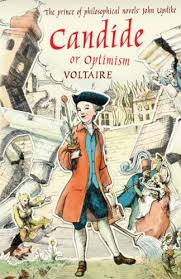 tricky hero who somehow survives and makes us like him. Voltaire wrote his novel primarily to criticize the optimism of the German writer Gottfried Wilhelm Leibniz, who said that because God is always benevolent, everything that happens is always for the best. This presumably includes the bloody Seven Years War (Protestant vs. Catholic, fought mostly in Germany and France) and the Lisbon earthquake of 1755, which occurs both in Lisbon and in the novel. Even though Voltaire was accused of blasphemy and heresy, among his other sins and crimes, Candide was enormously popular throughout Europe, a popularity that continues to this day.

 Since I am teaching in a charter high school this year, this is the level of education I am speaking about. I teach college English, and often craft my writing classes in thematic ways. This semester, I did units on mindfulness and the environment. Some of my younger students were resistant to the texts that were Buddhist in tradition, and when I suggested, perhaps to take a more comparative and inclusive approach, we actually do a world religions unit for my classes next semester, the administration was very kind and supportive, yet hesitant due to the “conservative” nature of our institution. I am grateful that the administration is willing to work with me and possibly allow me to do the unit next academic year with some guidance and advisement. But, again on the younger student level, I hear “This is an English class and not a Religious Studies class” or even the question, “Can we study religion in school?”
 Feminism and Religion