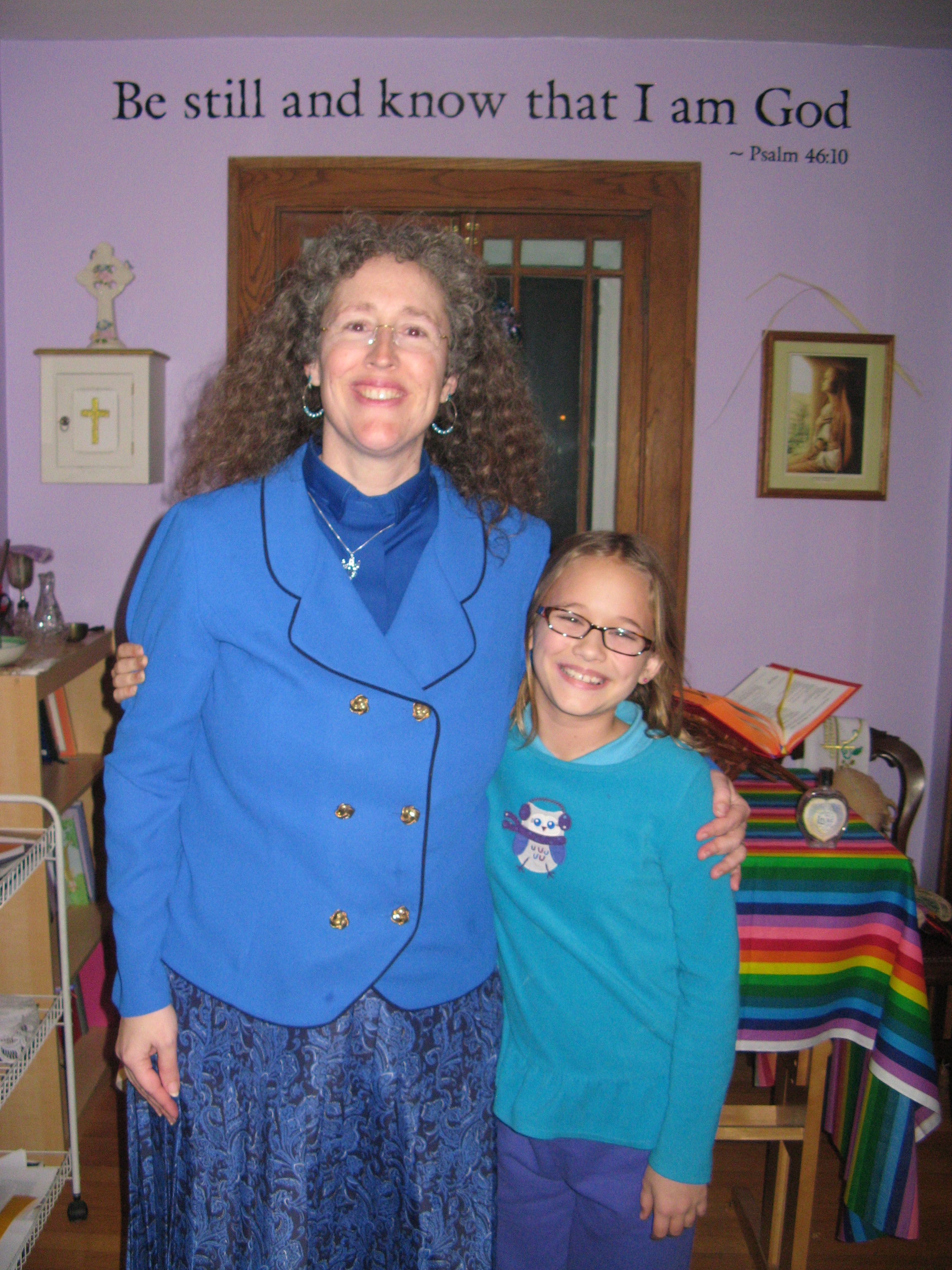
Mother’s Day Wish: “Don’t take me backwards or on a detour” by Dawn Morais Webster

Dawn Morais Webster, the Pope off to his summer palace, Castel Gandolfo. He tells the world he will now become just a “humble pilgrim.”

Mother’s Day schmaltz in the media and in our malls makes me wonder if others struggle with some of the mixture of deep gratitude—and impatience I feel.

So I asked a few friends if they would tell me what they wished for most as mothers.   Not surprisingly, all wanted their children to know how much they would always be loved, no matter how their lives unfolded. A few went a little further.

Mika K. is the mother of four beautiful children. Over the last couple of years, in addition to caring for her older children, she has nursed the youngest through a near catastrophic health crisis. That crisis left him with multiple disabilities. She continues to keep abreast of the latest in neuroplasticity and neuromuscular therapies that might help further her child’s potential to lead an independent life.
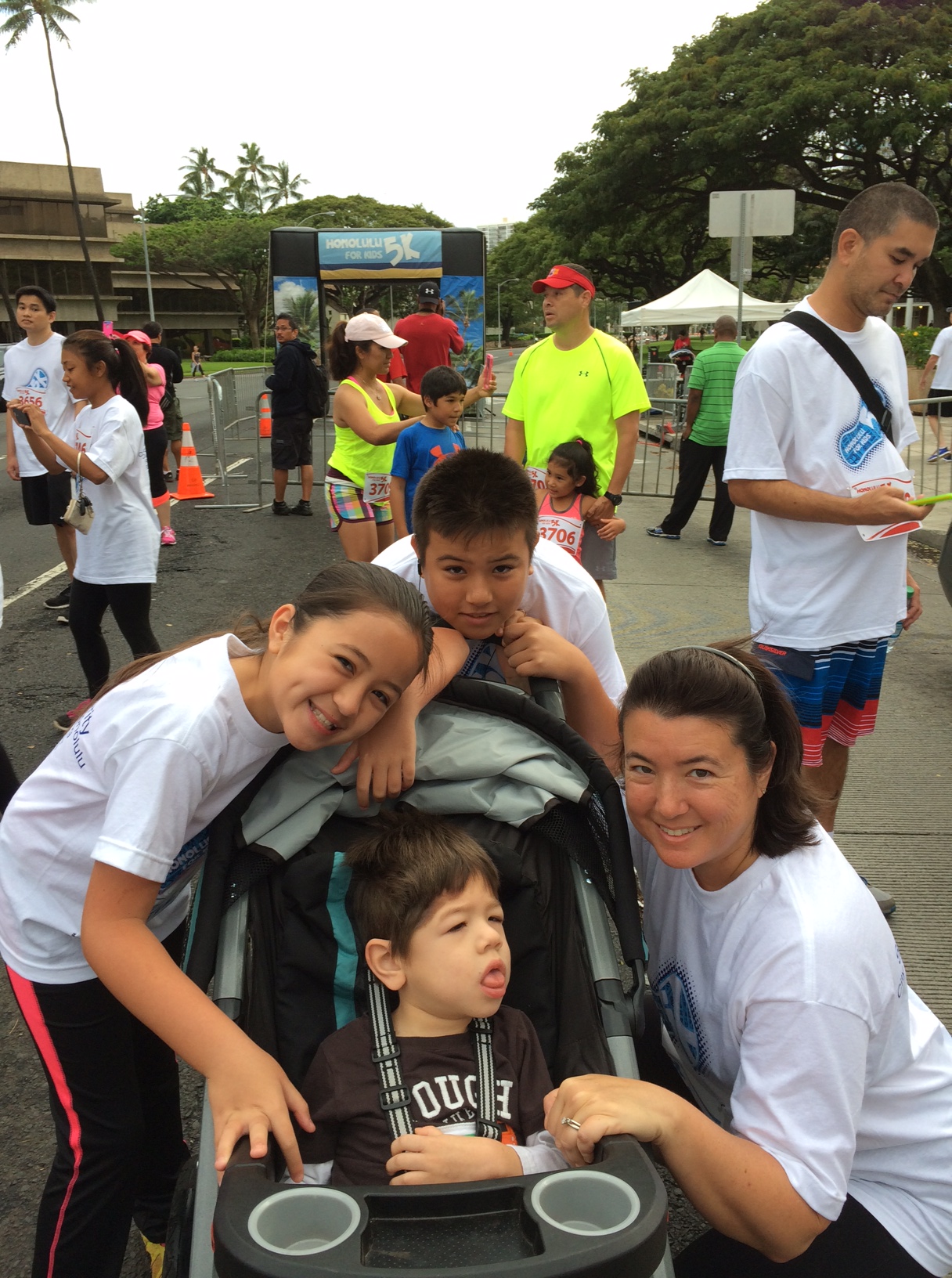
Mika and kids
Mika and kids

Mika says: “My wish, these past few Mother’s Days, has been to NOT be Mom for a day. Don’t get me wrong – I LOVE my kids, LOVE my family, but some days, I am so wrapped up in being Mom that I lose sight of the woman I was before I was Mom. And I don’t just want a “day off.” Here’s how I feel: I feel like I’m running a race and I don’t know how long it is – 5K? 10K? Or is the finish line around the corner?  So I don’t know how to pace myself. And I’m carrying a backpack filled with rocks. I appreciate the people on the sidelines cheering me on, and I appreciate the people who tell me to stop and rest. But what I don’t have – and would like – is for someone to carry that backpack for a couple of miles. Or carry ME for a couple miles! Right now, I can take a day off, but that just means I have more to do tomorrow.  And I have to be confident that if someone does carry my backpack (or me) that they stay on the course. If they show me a better path – awesome! But don’t take me backwards or on a detour. Does that make sense?” Continue reading “Mother’s Day Wish: “Don’t take me backwards or on a detour” by Dawn Morais Webster”
Feminist Musings on Mother’s Day.

photo1Happy Mother’s Day!

Yes, I said it, but Mother’s Day invokes within me a certain hesitancy. Now before you say, “Well that’s because you don’t have children of your own so you don’t understand what it is like to be a mother or because your relationship with your own mother is awful, you hate the day.” I would respond that that is an unfair assessment of the situation. First, Mother’s Day doesn’t bother me because I don’t have children. (By the way, I find the idea that I don’t truly understand love or commitment and/or motherhood because I don’t have kids unbelievably condescending. Yes, motherhood can give one gifts and insights but those can also come from other areas of one’s life and/or other experiences.) I am also not hesitant about Mother’s Day because my mother and I have an awful relationship.  We don’t. In fact, it is quite good.

Rather, Mother’s Day bothers me for three reasons. First, it often seems fake. People seem to go through the motions because it is expected and not because they sincerely want to honor their mothers. Second, I often wonder if Mother’s Day isn’t just some consumer-driven, capitalist, patriarchal creation asking us to buy expensive cards and “remember” all our mothers have done for us this one very special day of year.

Third, what are we celebrating about mothers?  Most of the cards at the store and advertisements on television (if we would take them as research on what the general sentiments on Mother’s Day are) honor a mother’s love, support, guidance and acknowledge the child’s needs.  They thank mothers for all they do.  Continue reading “Feminist Musings on Mother’s Day.”

A Family Conceived, Lost, and Resurrected by Gina Messina-Dysert

Gina and SarahGood Friday marks the second anniversary of one of the most significant dates in my life – the adoption of my daughter, Baby S – who by the way is no longer a baby (she will be turning 5 this May).  On Easter Sunday, 2012 I wrote about the resurrection of my family.  In the last few years that I have been blogging, this is by far my favorite post and I have been so grateful for the many wonderful responses I have received from it.  With today being Good Friday, it seems an appropriate time to revisit this incredible experience and once again, give thanks for the blessings in my life.  Continue reading “A Family Conceived, Lost, and Resurrected by Gina Messina-Dysert”

Sanctuary of Echoes by Natalie Weaver

Natalie WeaverTomorrow I will have the unique opportunity to hear my son recite a poem I wrote before his class. The students were invited to select a poem to memorize and perform along with props or costumes as suited the material. The only conditions were that the poem be a minimum of twelve lines, published in a book, and in good taste. A poorly chosen poem, he said, would result in perpetual detention.

I was excited when he expressed enthusiasm for the assignment. I asked him what kind of poem he would like to learn. Something humorous? Something dramatic? Something tragic? Something about love? War? I read to him first those famous opening words of Virgil’s Aeneid: Arma virumque cano (I sing of arms and a man…). I thought surely he would be intrigued by the rhythm and the promise of such a tale. He asked for some other options, so I presented favorites from the Medieval Hebrew canon. I taught him Adon Olam, since he was curious about learning poetry in a foreign language. He liked it quite a bit and learned how to pronounce the Hebrew, but this was not his choice. I pulled out selections from Catullus’ eulogies for his brother. I searched Sappho for something playful. We read more contemporary options from the usual suspects in an anthology of poetry that I had used in a college course: Frost, Dickinson, Poe. I even introduced him to the seductive “duende” of the great early 20th century Spanish poet Federico Garcia Lorca in his Poet in New York.

Continue reading “Sanctuary of Echoes by Natalie Weaver”

“Inheriting Our Mother’s Gardens”: Trans/lating, Trans/planting and Trans/forming Life by Sara Frykenberg

Sara FrykenbergThis Friday, March 7, 2014, the Women’s Caucus (WC) of the American Academy of Religion, Western Region will be hosting its annual “Professional Development Panel and Workshop” in Los Angeles, CA.  During the workshop panelists and attendees will consider what ‘gardens’ we have grown in, who our ‘mothers’ are and how this impacts what we bring to the table or what ‘gifts’ we bring to the table when dialoging with and across differences.  Our title and praxis at this event is also meant to honor our feminist mothers.  Specifically I would like to recognize and honor Letty Russel, Katie Geneva Cannon, Kwok Pui Lan and Ada Maria Isasi-Diaz.  Among many other accomplishments, these women edited the 1988 volume entitled: Inheriting Our Mothers’ Gardens: Feminist Theology in Third World Perspective.  This book helps to give voice to women marginalized within feminist theological discourses and is the inspiration for our panel’s title this year. 

Preparing for this panel, I reflected that many of those who contribute to this blog have written about their mothers (biological or non-biological) and mothering.  (Most recently I found myself inspired by Marie Cartier’s meditation on aging, health, her mother and religion.)  I realized that I have said very little about my own mom; my mom, who I am so like, who I look like, and who is both my mother and my friend.  I have definitely ‘inherited her garden,’ so to speak: flowers, herbs, weeds, rocks and all.  So, momma, this blog is for you.

Continue reading ““Inheriting Our Mother’s Gardens”: Trans/lating, Trans/planting and Trans/forming Life by Sara Frykenberg”

Encountering “the Change” as a Personal Exodus and Liberation by Michele Stopera Freyhauf

Freyhauf, Durham, Gender, John Carroll, Menopause, Celebration, ExodusThe story of Exodus, through a liberation lens, has different meanings depending on the person’s experience in life.  I recently experienced my own kind of liberation, a freedom from decades old enslavement.  Through this realization, I celebrated with many other women with the reminder – you are not alone!

The story of the Exodus is a familiar one. It is a text of oppression, journey, and freedom – a freedom that finds us in new surroundings, a place of revelation and transformation.  Many have written about the Exodus text found in the Hebrew Scriptures from different ideological lenses and social locations.  For me, I propose to apply this to menopause (also known as the “change”).

It is not too far fetched to look at menopause as a transformative event in a woman’s life.  For a woman like me, who struggled with the disease Endometriosis since my teen years, menopause it is not only transformative, but liberative.  The only effective treatment for this disease (for me) was the injections of Lupron Depot that put my body in “medical menopause.” Because of that experience,  I felt like my  body was being liberated from disease – this disease that debilitated me monthly or, at the very least, caused me tremendous pain.

A few weeks ago, I had the experience of attending a musical with a group of friends. I am not in the habit of blogging about my personal life, but I cannot help but wonder if my story and experience might help another.  The problem about “the change” is that we joke about it and usually face it with unbelievable dread.  I propose to look at the “change” as a positive – a new beginning, with a reminder to all women out there – you are not alone!

I received this revelation several months after my surgery at a musical named – you guessed it – Menopause!  What started out as a much needed get together of friends turned into an awakening and celebration. Something that has me celebrating the change – even as I fan myself through the hot flashes (I prefer “personal summers”), tear-up during emotional commercials for no reason (something I haven’t experienced since pregnancy), clinching my teeth due to a quick-igniting temper that causes me to exercise remarkable restrain (and you thought patience was a gift to children and teens), to searching every cabinet for that holy grail of comfort food – chocolate.  As I reflected on that evening, it occurred to me that I was living my own exodus story and the very thing that enslaved me can no longer hurt me – I am now free – renewed and emerged, but still in a strange wilderness that holds different challenges. Continue reading “Encountering “the Change” as a Personal Exodus and Liberation by Michele Stopera Freyhauf”

IS IT ESSENTIALIST TO SPEAK OF EARTH AS OUR MOTHER? by Carol P. Christ

carol-christThe charge of “essentialism” has become equivalent to the “kiss of death” in recent feminist discussions. In this context it is taboo to speak of Mother Earth.  Yet, I would argue there are good reasons for speaking of Mother Earth that do not add up to essentialism. What if the values associated with motherhood are viewed as the highest values? What if the image of Mother Earth encourages all of us to recognize the gift of life and to share the gifts we have been given with others?

For those not familiar with the “essentialism” debate in feminist theory, it might be useful to define “essentialism.”  In philosophy, essentialism is the idea that every “thing” has an “essence” which defines it.  In its pure form, essentialism is a by-product of Platonic “idealism” which states, for example, that the “idea” of table is prior to every actual table and that every actual table is an embodiment of the idea of table.

Aristotle disagreed with the Platonic view “way back then,” arguing that the idea of what a table is can be inferred from actual tables, and so on for every “thing.”  There is no need for an idea to exist prior to the existence of anything. Rather ideas help us to name and categorize existing things.  In the 20th century “existentialism” again challenged “essentialism,” asserting that “existence precedes essence.”  Existentialism argued that free individuals are defined by what they do, not by what they “are” prior to or apart from their actions.

When Whitehead said that all western philosophy can be understood as a footnote to Plato, he was referring in part to disagreements among philosophers about the relationship of ideas to things and existence to essence.

In the context of feminist theory, the charge of “essentialism” is used to criticize theories which speak of woman as opposed to man or feminine as opposed to masculine. Continue reading “IS IT ESSENTIALIST TO SPEAK OF EARTH AS OUR MOTHER? by Carol P. Christ”

Truly Our Sister by Laura Grimes

Laura GrimesMiriam of Nazareth, the fiery and courageous Jewish prophet who single-handedly enabled the incarnation of God/dess, is a profoundly ambivalent figure for Catholic feminists.  Her racist and patriarchal deformation as a sexless European Barbie has often been used to club and control other women.  Yet she refuses to be silenced or appropriated by oppressors, carrying the lost image of God/dess through the centuries and empowering women to know the sacredness of their own physical and spiritual life–giving labors in Her image.  I composed this hymn to celebrate the feast of the brown and pregnant Guadalupe/Tonantzin, and to mark the Marian feastdays of the Assumption (Aug. 15) and Queenship of Mary (August 22).  It reflects a long journey of exorcising the false misogynist Mary from my own mind and heart and claiming her as role model and mentor in my own call as thealogian, mother of four, and spiritual director.  It may be used in ritual or republished with the inclusion of author and copyright information (Laura M. Grimes, copyright 2010).

Image from: http://www.fisheaters.com/images/marialactans160020.jpg

My original inspiration, after the birth of my younger daughter, was the traditional Litany of Loreto.  I came to love its eloquent images when I was studying in Rome and prayed it daily with the old Italian women who had the last liturgical word by leading it, in Latin and from memory, after each day’s mass.   It also includes key scriptural passages about Mary and many of the traditional mysteries of the rosary.  But the work’s gestation was incomplete until I became involved in an interfaith women’s spirituality church, the Goddess Temple of Orange County, and encountered the fourfold Goddess for the first time.  Rev. Ava Park, Presiding Priestess, has been a leader in the recent movement to add the missing image of the wise and loving Queen to the traditional Maiden, Mother, and Crone as a celebration of midlife and a model for women’s leadership.  The second through fifth verses of the hymn highlight Mary’s experience in each stage of women’s life and affirm every woman’s power and beauty as an icon of these four aspects of the Divine.  The title will be recognized by many as a reference to Elizabeth Johnson’s groundbreaking book on Mary—criticized by traditionalists for a cover depicting her scripturally as the mother of a large family!
Continue reading “Truly Our Sister by Laura Grimes”

Enduring the Trials of Graduate School: From Conception to Labor Pains and Birth (Revisited) By Michele Stopera Freyhauf

Freyhauf, Feminism, Religion, Durham, Old Testament, Blogger, Bible, Gender, Violence, Ursuline, John Carroll

With the new school year in full swing, I thought this post from almost two years ago would be an appropriate reflection, encouragement, and outward support to those returning to school or nearing the completion of their degree.  Remember – do not give up – the sweat, sacrifices, and struggles are worth it in the end AND  You are not alone.  Remember the strength and courage it took to return to school or take that next step to pursue your educational goals will become the tool to help you persevere and reach that finish line!!

Going back to school at 30-something to complete a B.A. in a completely different field (from accounting to Religious Studies and Theology) was an interesting endeavor.  After many years of legal and business writing as well as crunching numbers, learning how to write academically, including formatting citations and using new technology was quite an undertaking that has proven to be rewarding.  All the searchable databases in the library no longer included card catalogues and microfiche.  This was amazing!  No more correction ribbon and electric typewriters (am I showing my age yet?!)  Going to college in 1985 is different then going back to college in 2006. Continue reading “Enduring the Trials of Graduate School: From Conception to Labor Pains and Birth (Revisited) By Michele Stopera Freyhauf”

Truths My Mother Taught Me by John Erickson

I never gave much credence to religion but through my mother, I met G-d, and through her I understood that I’m not a feminist because of the books I’ve read but rather because of the woman I call mom.

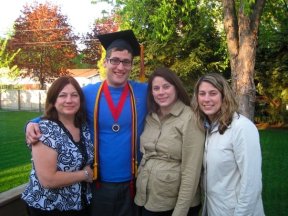
Graduation PhotoThe first question I always get asked when I’m in feminist spaces is: “What inspired you to become a feminist?”  Although I could go into the various histories revolving around men’s involvement in the early stages of the women’s movement to the similarities between the LGBTQ and women’s movements, my simple answer has always relied on one person: my mother.

I’ll be the first to admit (as well as many other people who will join me in the same chorus) that my mother deserves Sainthood for having put up with all the shenanigans I have, and still continue to, put her through. From running away from our local Catholic church the moment she dropped me off at Sunday School, to swearing like a sailor on leave at a very early age in front of Father Schmidt (who still fondly remembers me and the list I brought in with me to the confessional booth). Continue reading “Truths My Mother Taught Me by John Erickson”