Samhain and the Waters of Hurricanes Helene and Milton, part 1 by Susan Foster

Moderator’s note: While Samhain is past for this year, we are still in the section of the Celtic calendar which makes this blogpost, and its part 2 which will be posted tomorrow, relevant.

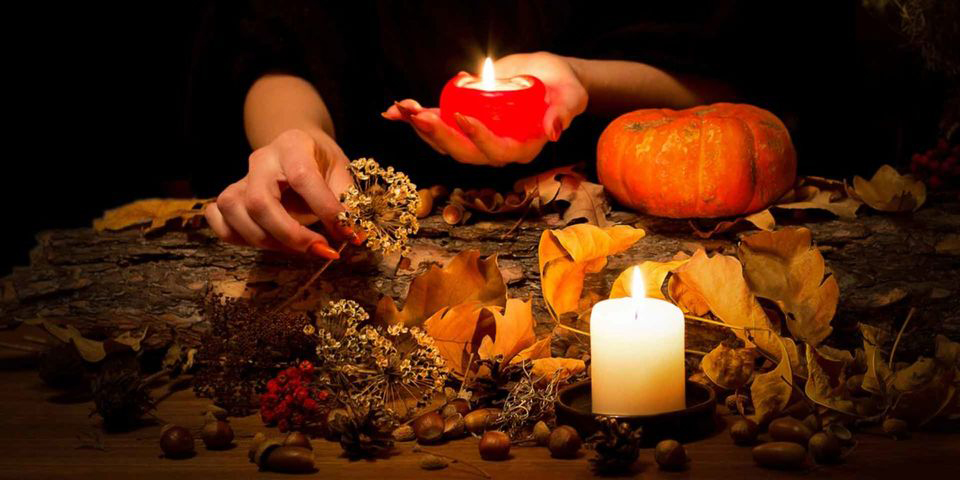
Samhain is an ancient Celtic festival, in fact the most sacred celebration in the Celtic year. Samhain is the New Year of the Celtic calendar. It is one of the eight holidays of the Celtic year—the solstices, equinoxes, and cross-quarter days—all of which mark the turnings of the seasons. Samhain is a time when the harvest had been completed; all the grains and late-maturing vegetables have been gathered in; the fields have been cleared, the old cast off, the fields lying fallow over the cold and dark of winter in order to make room for the eventual springing forth of new life. The New Year, begins in darkness at Samhain, is a reminder that all life emerges from the darkness, that death precedes rebirth. It is a time when the veil between the worlds of the dead and the living thinned, so that the presence of those who have gone before us is more clearly felt or even seen. It is a time to remember the ancestors as well as those newly departed—to grieve our losses, to let go so that we can move forward.

Samhain is the precursor of our Halloween. It was brought to this country by Irish immigrants during the potato famines in the 19th century. They brought their Celtic customs with them, but by that time Samhain was known as Hallows Eve, since the Irish were good Catholics. It struck a responsive chord with the American people, who called it Halloween. They adopted many of its customs, including lighting candles in gourds or pumpkins and dressing in costume. Today Halloween is celebrated as a spooky and fun time, observed with trick-or-treating and mischief-making, but originally it was a solemn holiday—a time to commune with the beloved dead, to honor the ancestors with food and drink, and to acknowledge death as part of a never-ending cycle of birth, death, and rebirth.

Continue reading “Samhain and the Waters of Hurricanes Helene and Milton, part 1 by Susan Foster”

From the Archives: A Ritual for Thanksgiving, by Molly Remer

This was originally posted Nov. 22, 2022

Find some pine trees
and a wide rock in the sun.
Settle down and feel gratitude
curl around your shoulders.
Listen to the wind
sense that there is sorrow too
in this place,
deep and old,
threaded through the
lines of sun
slices of shadows.
It tells of what has been lost,
what has been stolen,
of silenced stories,
and of fracturing.
Make a vow,
silent and sacred,
to do what you can,
to rebuild the web
to reweave the fabric.
Lie on your back in the pine needles,
feel your body soften into the ground
and become still.
Allow yourself to feel held,
heavy bones and soft skin
becoming part of the land.
Wonder how many of your
ancestors kept other people
from becoming ancestors themselves.
Watch the sunlight making tiny rainbows
through your eyelashes and pines.
Find a pretty rock.
Don’t take it.
Leave it where it belongs,
on the land that gave it birth.
Go home.
Keep your promise.

Continue reading “From the Archives: A Ritual for Thanksgiving, by Molly Remer”

On Noach and its Ecofeminist Potential.

The Torah portion for November 2, 2024 is Noach.  The portion includes the stories of Noah’s ark and the tower of Babel and ends with Abraham and Sarai settling in the land of Canaan.  In my feminist analysis of Noach, I will focus on the ecofeminist potential of divine acknowledgements and how the divine is portrayed.

As ecofeminists at the intersection with religion, one task we have is to interpret those sacred texts which have something to say about nature and animals.  Within Judaism, there are numerous such texts, and parshah Noah is one of them.  Afterall, most of Noach revolves around a great flood in which the deity destroys the earth and most of its inhabitants, animal and human.  

The divine destruction of the material realm is problematic.  The deity blames the divine decision to destroy creation on the rampant corruption of the flesh: human and animal alike (6:13).  In feminist thinking, linking material existence to corruption is unsettling since patriarchy often disavows material existence by linking it to evil.  In addition, in Noach, an aspect of the material world, water, is used in bringing about that destruction.  However, water is also ironically what all flesh depends on for life.    

Continue reading “On Noach and its Ecofeminist Potential.”

What is Rematriation? by Sara Wright

“Rematriation centers Indigenous Women’s leadership for the restoration and regeneration of land and water. By revitalizing Indigenous knowledge, honoring traditions and renewing annual cycles of life, rematriation directly addresses harms caused by patriarchal extraction and violence.”
Bioneers

 Bioneers, is a FREE online publication that has been around since 1990. in addition to its weekly programs this organization is now introducing the ‘Leading from the Feminine’ newsletter whose intent is to bridge divides and to celebrate connection invoking the feminine as leaders. This newsletter exists to bridge divides and celebrate connections within the rich tapestry of visionary women and men who are evoking/ invoking the feminine to lead with courage, vulnerability, intuition and empathy. 

Continue reading “What is Rematriation? by Sara Wright”

Ancestor Wisdom by Sara Wright

Photo by Gay Bradshaw

“The wisdom of our ancestors is clear about this: If we do not take the journey inward to discover who we are, the creative potential within us will implode and we will destroy ourselves and the world”.
 Betty Kovacs 

Jesus said something similar in one of the Gnostic Gospels: If you bring forth what is within you it will save you – if you do not bring forth what is within you, it will destroy you.

 (no wonder the Gnostic Gospels are ignored)

Continue reading “Ancestor Wisdom by Sara Wright”

Summer Steeping, by Molly M. Remer

“It was one of those days so clear, so silent, so still, you almost feel the earth itself has stopped in astonishment at its own beauty.”

—Katherine Mansfield quoted in Meditations for People Who (may) Worry too Much

The editor of this anthology, Anne Wilson Schaef, goes on to say:

“When we do stop, many times we look around and realize that we are the only ones rushing around. We realize that the roses, the trees, even the clouds seems suspended in space, and it is as if the universe has paused for a breather. Life has time to experience itself.

Often, when we stop and let ourselves take in the beauty that is around us, we realize there is much more than we originally imagined. Our eyes begin to see beauty in the cracks in the sidewalk, the crookedness of tree limbs, the cragginess of faces, even the color of cars.

We don’t have to travel to see beauty. It is everywhere.

How much more alive we are when we can feel those times that the earth has ‘stopped in astonishment at its own beauty.’”

Do you have time for beauty? When was the last time you stopped in astonishment? What is astonishing you lately? Where are you discovering beauty?

Continue reading “Summer Steeping, by Molly M. Remer”

On Persephone and the Racetrack: My Experience at Lake Pergusa.

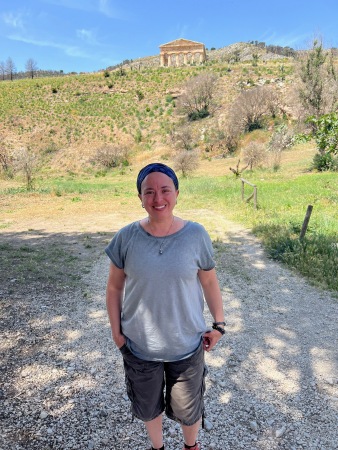
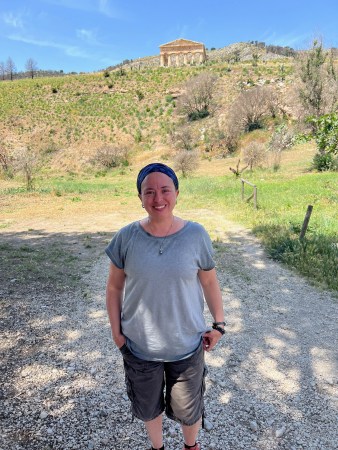
At the Segesta temple.

This May, I visited Sicily to present at the European Academy of Religion’s Annual Meeting. There I saw various historic, religious sites: parts of the city of Siracusa; the Valley of the Temples in Agrigento; mikvot in Palermo; various churches including the Cathedral in Palermo and the Church of St. Cataldo; the Segesta temple; and lake Pergusa where Hades emerges from the land to abduct Persephone. In this blog, I will focus on this lake. As an ecofeminist focusing on religion, this place gave me mixed feelings.

Continue reading “On Persephone and the Racetrack: My Experience at Lake Pergusa.”

Summer Emergence by Molly Remer

Sometimes I wonder what I do in a year. Then I remember that I watch nighthawks migrate and coneflowers go to seed. I find Monarch caterpillars small and brave on persistent milkweed. I travel over miles of stone and moss, sometimes on my knees, seeking mushrooms and cackling with glee. I kneel in the violets, purple and white and yellow, and inhale great breaths of wild plum. I keep dates with as many sunsets as I can. I walk and walk and walk, carry leaves of mullein, crow feathers, bits of chicory, coreopsis, evening primrose, and wild rose home to press into the pages of my prayers. I pick blackberries with the bees and feel butterfly tongues on the skin of my wrist. I reach for wild raspberries under both thunder and sun. I slide down hillsides with muddy feet and antlers in my hands. I make eye contact with hummingbirds and turtles and deer and raccoons. I watch both fawns and nestlings grow. I learn how woodpeckers talk to their babies and the purring sound crows make at the compost pile when they think they’re unobserved. I lose and recollect myself more times than I can count, hold myself steady and let myself dissolve. I create new things with a wild veracity of devotion that sometimes threatens to consume me. And, I learn over and over again every day, how much it matters to bear witness, to what means to sit with myself in the temple of the ordinary each day, calling my attention back, recommitting to being here for it all, settling back into center again and again, rebuilding and renewing, witnessing and weaving, losing and finding, laughing and crying, refusing to surrender my joy and trusting that somehow it matters to be here, to see everything I can.

Continue reading “Summer Emergence by Molly Remer”

3 Taoist Secrets for Embodying your Life

Taoism is an ancient Chinese philosophy and spiritual tradition that offers a unique perspective on life, existence, and human experience. Where many religious practices aim to transcend and sometimes even punish the body, Taoism cultivates a deep connection with our physical self in ongoing relationship with nature around us. 

This resonates with my own experience, in which I see the body as starting point and place of return for everything we do in life. Leaving the body in order to meet spirit or the divine has never made any sense to me. 

In this article I’ll highlight a few elements of Taoism as an embodied philosophy, specifically zooming in on principles and practices that promote holistic wellbeing and inner peace.

Continue reading “3 Taoist Secrets for Embodying your Life”

May Day by Sara Wright

 To Death in Spring

‘Experts’ 
told me

you would
not rise

too old
they said

abandoned
purple and rose

Continue reading “May Day by Sara Wright”