Time to Heal the Ancestral Wounds From the Burning Times by Marilyn Nyborg

My work has been in the areas of social justice and the empowerment of women. Until somewhere in 1990, I saw a series of films from women in Canada on the Early Modern European Witchcraft trials which included “The Burning Times”. (Still available on You Tube.)  The film talked about three centuries of Witch burnings. The narration and graphics really shocked me and awakened an interest.  Intuitively I recognized the way in which women have embedded the limitations and pain of that era from centuries ago.  I now know it to be called ancestral wounding. 

Not to say the abuse of women began there.  It didn’t.  But the intensity of three centuries of extreme violence on women have impacted us and cultures through time: sowing the limitations and lack of respect for women into cultures globally.

Continue reading “Time to Heal the Ancestral Wounds From the Burning Times by Marilyn Nyborg”

From the Archives: Writing: Changing the World and Ourselves. By Ivy Helman

This was originally posted on October 12, 2014

20140903_180423

I still remember the first time I read Mary Daly’s Gyn/Ecology. It awoke something within me. Her use of language, the power of her writing and the ease with which she created new words taught me so much about the world around me and about the way the language, and subsequently its use in writing, shapes lives, choices, abilities and destinies. She also taught me about myself.

I was hooked, but not just on Mary Daly. Shortly after I finished her book, I moved onto other feminists writing about religion like Katie Cannon, Judith Plaskow, Alice Walker, Carol Christ, Rita Gross, Gloria Anzaldua, Audre Lorde, Adrienne Rich, Margaret Farley and Starhawk to name just a few. All of them, in fact every feminist I’ve ever read, has shown me the way in which words have power and how words speak truth to power. Ever since, I’ve wanted to be the kind of writer whose words carry a power that not only affects people but also inspires a more just, more equal, more compassionate and more humane world. In other words, I wanted to be a writer activist.

Continue reading “From the Archives: Writing: Changing the World and Ourselves. By Ivy Helman”

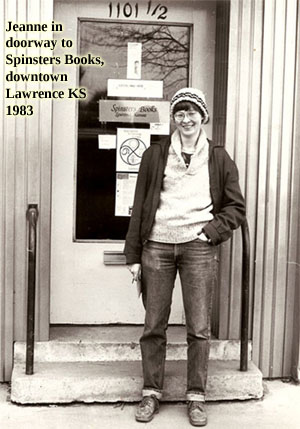
Mountain Mother: Earth, Woman, Goddess (Part 2) by Jeanne F. Neath

Part 1 was posted yesterday.

In Part 2 we’ll complete our travels into Mountain Mother’s realms, as we explore female-centered economics and spiritualities as a means toward creating earth- and female-centered communities and small-scale societies.

Imagine living on Turtle Island prior to 1492. At that time Indigenous peoples had been living in respectful relationship to nature, tending her for thousands of years. European invaders and colonists were amazed by the abundance, but assumed they were seeing wild nature. These were subsistence societies! People’s needs were met by the Earth, her plants, animals, waters, and human efforts. No one charged a fee. Everything was a gift.

Continue reading “Mountain Mother: Earth, Woman, Goddess (Part 2) by Jeanne F. Neath”

Mountain Mother: Earth, Woman, Goddess (Part 1) by Jeanne F. Neath

Growing up in the 1950s in the U.S. I was deeply immersed, trapped like so many girls and women, in capitalist, colonizing, patriarchy. I rescued myself in the 1970s when I jumped head first into the Women’s Liberation movement. I found that the currents pushing communities of women were wild at times, yet taking me where I wanted to go.  At that time, it was possible to live one’s life, as I did, largely within this subculture and its women’s dances, bookstores, battered women’s shelters, women of color organizations, festivals, land groups and more. These female-centered and female-only spaces gave women a gut level knowledge of what a world without patriarchy could be like. We could imagine a female-centered world because we were, in many respects, living in one.

Thanks to a decades long assault by the right wing and other anti-feminist forces, women’s spaces became difficult to access. Now the grassroots women’s movement is making a comeback. Over 50 years of second wave feminist thought, research and organizing inform our work. Women’s communities are on the rise. These communities have the potential to become the base for an earth- and female-centered future, as I’ll discuss below.

Continue reading “Mountain Mother: Earth, Woman, Goddess (Part 1) by Jeanne F. Neath”

Women’s Rights: How Far Back in Time Will our Legal System Go? by Janet Maika’i Rudolph

Wikimedia Commons

I was in the process of writing this blogpost last week when the Arizona supreme court decided to turn abortion rights back to the civil war era (1864). This was a time when women had no rights at all and abortion from conception was illegal. But civil war era laws are downright quaint and modern compared the legal underpinnings of the supreme court’s Dobbs decision.  

In his decision, Mr. Alito cited four “great” and “eminent” legal authorities, Henry de Bracton, Edward Coke, Matthew Hale, and William Blackstone. For perspective here are their dates. 

Henry de Bracton  c. 1210 – c. 1268
Edward Coke 1552 – 1634
Mathew Hale 1609-1676
William Blackstone 1723 –1780

To help me understand Alito’s logic, I read up on some conservative commentary. Here is what I learned: When the founding fathers needed to create legal documents, they didn’t create them out of thin air. They relied on the logic of the four men (and others) listed above. Yes, they did pick some enlightened aspects of these thinkers of the time, esp. in regard to the rights of the common people in relation to royalty. The thought of commoners having rights was revolutionary in its day. But as we have learned so painfully, our founding fathers limited who those rights applied to. They did not take into consideration the rights of anyone other than landowners, which at the time meant white men.

Continue reading “Women’s Rights: How Far Back in Time Will our Legal System Go? by Janet Maika’i Rudolph”

TRUMP AS MESSIAH by Esther Nelson

Once upon a time long, long ago, I identified as an evangelical Christian. The term “evangelical” has evolved over time, however, evangelicals can probably be found in every branch of Protestant Christianity. Wherever you find them, they emphasize the authority/ inerrancy of the Bible, a “born-again” experience into the Kingdom of God, and a personal relationship with Jesus Christ. Generally, evangelicals are socially conservative and rarely does their thinking go beyond the borders of their insulated theology.

It comes as no surprise to me that many (most?) evangelicals embrace Trump with a fervor akin to their enthusiasm for Jesus. Trump supporters, especially those who identify with the Religious Right may love Jesus, but Jesus is not the Messiah they yearn for.

Continue reading “TRUMP AS MESSIAH by Esther Nelson”

Making Room for Reverence by Kelly Applegate-Nichols

While the Goddess spirituality movement runs alongside the women’s and feminist spirituality movements, I am certain the Goddess herself looks on with wonder and pride at Her creations. I am sure that it pleases Her to see women so devoted to self-sovereignty, and the fierce determination to get out from under the lash of patriarchy, to stand as women together, united in our passion for a better world.

While I know in my heart that we are continually held in the mind of the Goddess, I am called to wonder, how often is She in ours?

Though we make great strides together in our common goal of freedom and peace, some of us seem to be less at peace than ever before; there seems to be an undercurrent of loneliness, of disconnection. Lately, I’ve been thinking, it is at least possible that the thing that keeps us up at night is less about the state of the world, and more about the sometimes tenuous connection with our Mother. We may be so focused on self-empowerment that we have forgotten that there is another power, a “higher power” if you will. And She wants to commune with us.

Continue reading “Making Room for Reverence by Kelly Applegate-Nichols”

In Deep Gratitude to Donald Trump by Caryn MacGrandle

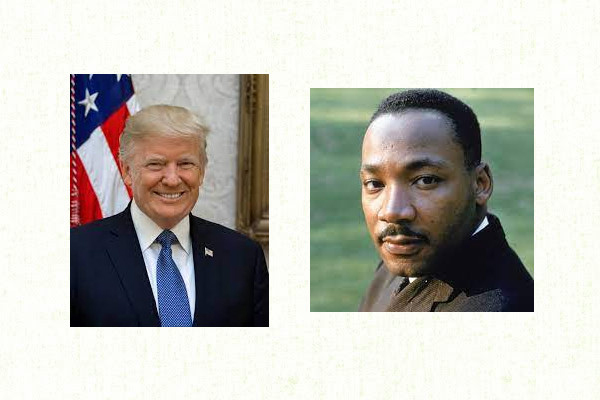
“Show me someone without an ego, and I’ll show you a loser.”
― Donald Trump

“Life’s most persistent and urgent question is, “What are you doing for others?”
Martin Luther King, Jr.

The fabric of our world is falling apart.

And it is necessary.

Last night, I took a job entering early results for elections.  My assignment was in a small city 30 miles away from me.  I found the courthouse and the courtroom where the election officials, law officials and others had gathered.

As I was waiting, I listened and observed.

Continue reading “In Deep Gratitude to Donald Trump by Caryn MacGrandle”

On the changing role of the Goddess

Goddess Prominence & Nature Participation through time

Today I reflect on the presence or absence of the goddess in religion and society, and how we view humanity and participate in nature as a result. 

This post is inspired by “The Myth of the Goddess. Evolution of an Image” by Anne Baring and Jules Cashford, and especially by its final chapter “The Sacred Marriage of Goddess and God: the Reunion of Nature and Spirit.” This dance of integration of apparent opposites is essential to my work.

Continue reading “On the changing role of the Goddess”

Patriarchy as Primer of Cruelty by Janet Maika’i Rudolph

Matilda Joslyn Gage

This was a hard post to write. When I write about my personal trauma, it is not only healing for me but adds to the canon of stories of other women that help all of us navigate trauma. That makes it easier. When writing about the trauma of women in a whole culture, I feel a sense of helplessness, especially here in the United States. We are all experiencing a group trauma and it is digging in deep.

January 5, 2024, will live in the Patriarchal Hall of Infamy. On this date the Supremes agreed to allow the rapist, misogynist, trying-to-be-dictator former President an opportunity to have his rights heard. But this same date, the Supremes also told we women that our lives are insignificant. No that’s not right, less than insignificant, a mere distraction to what they consider to be more important issues. They allowed an Idaho abortion law to go into effect that doesn’t allow an abortion even in the case of a medical emergency when a pregnant woman in life-threatening distress has been rushed to the emergency room. The split screen exhibits patriarchy for what it is. I want to use the word, “culmination” but that means the height. I don’t think we’ve reached a culmination because there seems no end to the cruelty that patriarchy seeks to inflict.

Continue reading “Patriarchy as Primer of Cruelty by Janet Maika’i Rudolph”