The Return of the Exile by Mary Gelfand

A few years ago I encountered a Norwegian folktale titled “Prince Lindworm.” This tale was completely new to me and aspects of it have lingered as I contemplate the future of my country.  

In “Prince Lindworm,” a childless Queen wants an heir and follows the advice of the Wise Woman she meets in her garden.  The Wise Woman tells the Queen where to find two magical roses, instructs her to eat only one, and warns that she “will be sorry” if she eats both.  The Queen, of course, eats both and gives birth to twin boys.  The elder child emerges as a serpent or lindworm and immediately disappears into the forest.  Only the Queen witnesses this birth and, as this is not the child she wants to parent, she remains silent.  The second boy is beautiful and healthy and grows into a fine young man.  When he is of age to seek a wife, his path is blocked by his unknown exiled brother, Prince Lindworm, who has grown into a massive, repulsive serpent and claims his right to have a bride first.  The Queen admits her failure to follow the Wise Woman’s advice and the kingdom must cope with the knowledge that the heir to the throne is an exile.

Continue reading “The Return of the Exile by Mary Gelfand”

Suffrage is Unfinished Business—On The 101 Anniversary of the 19th Amendment by Marie Cartier

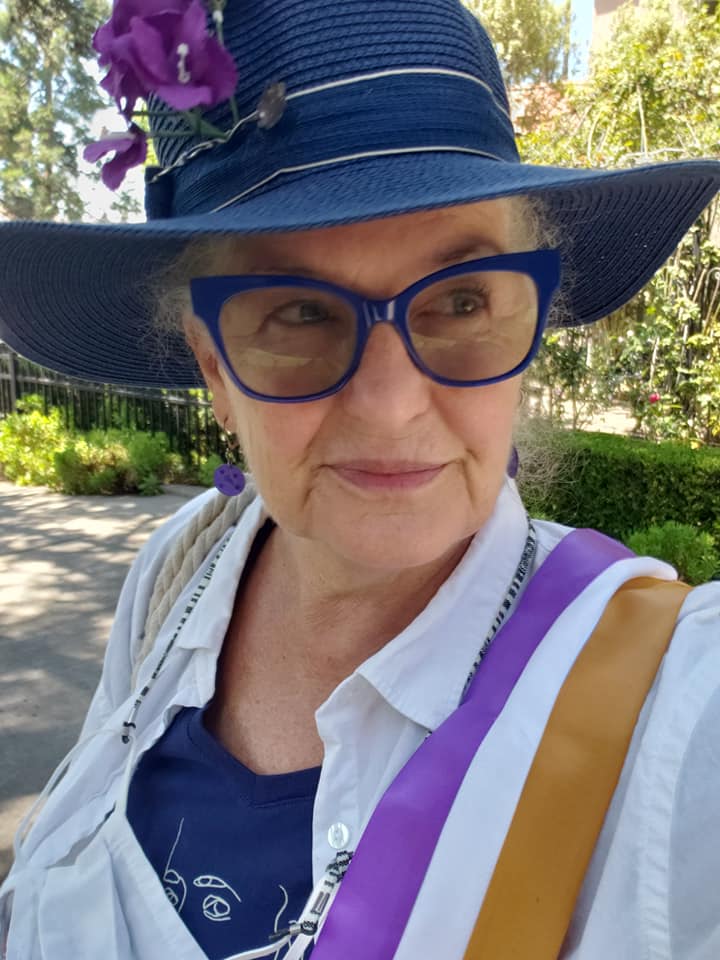
Dear FAR readers – please find photos from a celebration of the 101 anniversary of women’s suffrage, the 19th Amendment, that I attended August 26, 2021. That day marks the end of the 100th year of women having the right to vote.

I have been proud to be a part of, these past few years, a group calling themselves Suffrage in California – LBSuffrage100 Suffrage 100. We have met continuously in person and on line for two years now, stymied by the pandemic, but still pushing forward throughout this year with actions at the Democratic Convention, Long Beach Suffrage 100 celebrates in silence for centennial anniversary of the 19th Amendment – Press Telegram, standing in silence as the original suffragettes did outside the White House. We also of course marked the 100th anniversary of suffrage, and at that time switched focus during the election to lobby for the John Lewis Voting Rights Act, part of the “unfinished business” of suffrage.  Text – H.R.4 – 117th Congress (2021-2022): John R. Lewis Voting Rights Advancement Act of 2021 | Congress.gov | Library of Congress which seeks to expand federal ability to challenge discriminatory election rules.

Continue reading “Suffrage is Unfinished Business—On The 101 Anniversary of the 19th Amendment by Marie Cartier”

Speaking of Colombia by Xochitl Alvizo


Today (May 5) on Feminism and Religion, we have a post by new contributor Laura Casasbuenas. She is our third new contributor from Colombia, the land from where Laura Montoya, our current FAR intern, also hails. But news in Colombia are not good today; I take a minute then to ask you to consider taking an action of transnational solidarity.

Friends presently living in Colombia are sending first-hand reports of the violence imposed by the president and his military. The situation has escalated over the last three days. Protests originally began in objection to the proposed Tax Reform that would disproportionately impact poor and working poor families in Colombia. But the protests have continued due to the growing violence with which the demonstrators – most of them teens and early twenty-year-old’s – are treated.

Continue reading “Speaking of Colombia by Xochitl Alvizo”

C.G. Jung and the Heroine’s Journey by Sally Abbott


I was intrigued by the discussions of Jung and Jungian motifs, such as the sacred marriage, that sprang up in response to Mary Sharratt’s wonderful post “The Via Feminina:  Revisioning the Heroine’s Journey,” partly based on Maureen Murdock’s book. Carol Christ pointed out the problematical nature of the whole notion of the sacred marriage, relying as it does on our stereotypes of the masculine and feminine.

Sara Wright reported that her sense of the dangers of Jungian thought led her to change her profession; she had once been a Jungian analyst. Barbara McHugh put forward a well-thought out and articulate version of the Heroine’s Journey, corrected for sexist thought.

Continue reading “C.G. Jung and the Heroine’s Journey by Sally Abbott”

The largest protest in the world: India’s Farmers Protest by Anjeanette LeBoeuf


So much has happened since my last post. From the inauguration of President Joe Biden and Vice President Kamala Harris, the GameStop Investment, the military coup of Myanmar, the 2nd Impeachment Trial and Republican Acquittal of Donald Trump, a catastrophic Artic Freeze of Texas, and other states, and the upcoming “no holding back, tell all” from the Duke and Duchess of Sussex. But what I really want to focus on this month is on something that is struggling to maintain publicity and support despite its importance; The Farmer’s Protest/Strike in India.

Continue reading “The largest protest in the world: India’s Farmers Protest by Anjeanette LeBoeuf”

Like Water Flowing Down a Mountain: Creating Lasting Change by Carolyn Lee Boyd

Carolyn Lee Boyd

As we strive to create a better future, we can look to our rich heritage of global goddess and heroine tales for insight into peaceful, creative, and effective means to achieve our goals. Let me introduce you to the delightful ancient story of two young Chinese heroines, Gum Lin and Loy Yi Lung.

Summarized from Merlin Stone’s Ancient Mirrors of Womanhood:  Gum Lin’s village was starving due to a drought. Even the bamboo she needed to make objects to sell had disappeared. Searching for bamboo on a nearby mountain, she found a lake, but a locked gate stopped its abundant waters from flowing down to the village. A dragon living in an underwater cave held the key. Gum Lin sang sweetly until the dragon’s daughter, Loy Yi Lung, arose from the depths and together they hatched a plan. They sang in unison to draw the dragon to the surface. While Loy Yi Lung continued her song and the dragon listened, Gum Lin swam to the cave where she encountered treasures she could easily steal for herself. She ignored them and found the key.  She unlocked the gate and the waters gently flowed down the mountain in a newly-made river, nourishing the rice and bamboo. In time, Loy Yi Lung moved to the village where she and Gum Lin happily sang at the edge of the water.

Continue reading “Like Water Flowing Down a Mountain: Creating Lasting Change by Carolyn Lee Boyd”

Wisdom from our Ancient Female Lawgiver and Judge Traditions by Carolyn Lee Boyd

Carolyn Lee Boyd


As I have witnessed both the joy of so many across the world at the nomination of Kamala Harris for Vice President and the deep sorrow at the death of Ruth Bader Ginsburg, I am struck by the fact that, in 2020, supremely qualified women still need to be trailblazers to hold high office. After all, goddesses and wise women gave a number of cultures their systems of laws and governance and have been celebrated for their wisdom as judges for millennia. 

Here are a few of the goddesses and wise women lawgivers:

The Goddess Themis
  • the Italian goddess Egeria gave Rome its first laws and taught the correct rules for Earth worship; 
  • the Babylonian Kadi, was goddess of Earth and justice; 
  • Ala of the Ibo people of Nigeria is both the Earth Mother and lawgiver of society; 
  • the Greek Themis, daughter of Gaia, symbolized the social contract and cohesion of people living on Earth; 
  • the Inuit Sedna both gave humanity abundance from the ocean for life from her own body and withheld it when her laws were broken;
  • Marcia Proba, whose historical reality is unclear, is said to have created the ancient Celtic system of laws known as the Marcian Statutes that may have influenced later British law;
  • past and present Women’s Councils and Clan Mothers of the Iroquois and other Indigenous peoples as well as those of Societies of Peace have brought harmony and well being to their people for tens of thousands of years.

Continue reading “Wisdom from our Ancient Female Lawgiver and Judge Traditions by Carolyn Lee Boyd”

What’s Changed? by Elise M. Edwards

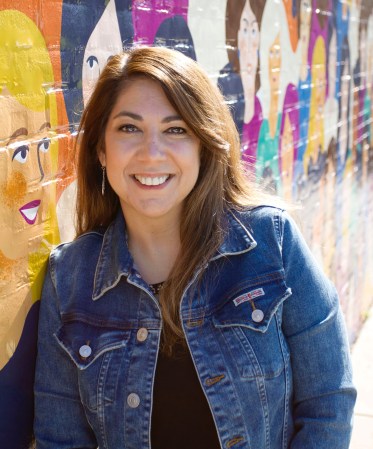
An image of Elise Edwards smiling outdoorsFriends, it has been a few months since I’ve posted in this community.  I’m amazed at how much our world has changed since then.  Here in the northern hemisphere, spring came and went.  It felt like a tide of turmoil rolled in, leaving debris all along the shore and now we are trying to clean it up while keeping our eyes on the sea for more dangerous waves that are coming.
The issues we now face began before March, but for many of us, that was when the COVID-19 pandemic began to alter our patterns of daily existence. In-person instruction at my university and most schools was suspended and spring semester courses shifted online.  In March and April, we quarantined, self-isolated, and sheltered in place.  While a gradual re-opening of businesses and services has occurred in the months since then, I don’t know anyone who has resumed daily life as it was before. The virus continues to spread and the death toll rises.

Continue reading “What’s Changed? by Elise M. Edwards”

In Search of Insight by Gina Messina

A conversation I often have with students is focused on the ways mission and purpose are inextricably linked with our roles as human beings. Understanding what it means to say that human beings have a specific purpose can feel overwhelming and spiral us into an existential crisis; a hallmark of a “Messina class,” according to one of my students. 

Regardless of religious or spiritual beliefs, we must know that we are called to a particular mission within our lives. We are gifted with knowledge and abilities that contribute to a greater whole. And when we are willing to see our own missions through, we become part of a collective effort that honors the humanity of all. 

For many of us, we have a mission; an understanding of our purpose and how we can engage our communities to work toward positive social change. But as time passes, we grow, our circumstances shift, and we gain insight; as a result, our missions need to reshape.

For women, and particularly women of color, our ability to understand and engage our missions have been bogged down with oppressive structures that devalue our contributions. Dualism has forced women into roles of passive care takers who always put themselves last. Acknowledging the critique of white feminism, women of color experience such roles in a far more damaging way, expected to not only care for their own families; but also serve those who society has claimed to have a higher status based on race and wealth. Although we too are made in the image of God, our full humanity is often denied, with intersecting identities determining our level of worthiness in this broken world.  Continue reading “In Search of Insight by Gina Messina”

Listening to the Noise: The Connections between Milada Horáková, Anti-Semitism, and the Black Lives Matter Movement by Ivy Helman.

20200627_112934This month more than most, I feel like I have so much to say that I don’t really know where to begin.  It doesn’t help that next door they are remodelling an apartment and, outside my window, there is a crew drilling up the sidewalk and another roofing the house across the street.  The noise and its echoing are overwhelming on Prague’s narrow streets.  

Perhaps the best place to start is with a similarly loud occurrence.  On June 27th, Prague commemorated the 70th anniversary of the execution of Milada Horáková using the city-wide intercom system.  Minute-long excerpts from her trial and execution were broadcast throughout the day.  Horáková, the only woman to be executed during the Communist regime in Czechoslovakia, was a long-time proponent of democracy and  women’s rights.  In the field of women’s rights,  she focused on the status of women and children, spending considerable effort on women in the workplace and reconciling their work with family responsibilities.  She was also an outspoken critic of the Nazi Regime, having spent time as a political prisoner in Terezin.  When the war ended, she joined parliament, but resigned right after the communist take-over.  After continuing to speak out against the Communists,  she was arrested in September of 1949 and charged with attempting to overthrown the government.  She along with 12 others were interrogated and tried.  Four of them, including Horáková were sentenced to death.  She was publicly hanged on the 27th of June 1950.  Eighteen long years later, she was posthumously exonerated, and in 2000, the Czech Republic unveiled a commemorative tombstone for her in the National Cemetery at Vyšehrad Castle.  In 2017, a film was made about her life and legacy. Continue reading “Listening to the Noise: The Connections between Milada Horáková, Anti-Semitism, and the Black Lives Matter Movement by Ivy Helman.”