Legacy of Carol P. Christ: Why a Goddess Pilgrimage?

This was originally posted on October 1, 2012

What is a Goddess Pilgrimage and why are so many US, Canadian, and Australian women making pilgrimages to ancient holy places in Europe and Asia?  The simple answer is that women are seeking to connect themselves to sources of female spiritual power that they do not find at home.

Traditionally pilgrims leave home in order to journey to a place associated with spiritual power.  “Leaving home” means leaving familiar physical spaces, interrupting the routines of work and daily life, and leaving friends and family behind.  For the pilgrim, “home” is a place that has provided both comfort and a degree of discomfort that provokes the desire to embark on a journey.  The space of pilgrimage is a “liminal” or threshold space in which the supports systems of ordinary life are suspended, as Victor Turner said.  A pilgrim chooses to leave the familiar behind in order to open herself to the unfamiliar—in hopes that she will return with new insight into the meaning of her life. 

Continue reading “Legacy of Carol P. Christ: Why a Goddess Pilgrimage?”

Jacob’s Ladder, A Feminist Perspective by Janet Maika’i Rudolph

Today, I embark on my retelling of the biblical story of Jacob, the section usually referred to Jacob’s ladder or Jacob’s pillow. The entire story-arc of Jacob is filled with mystery and a sense of shamanic-style questing. What is the goal of a shamanic quest? There are many but the foundation is to open gateways to travel amidst thresholds. It is through these passages that we can gain knowledge of ourselves, have ecstatic experiences, do healing work, divination . . 

I believe this is a feminist issue because when we look at Jacob’s story more holistically, we can strip away the patriarchal assumptions inherent in the tale as it’s come down to us. For example, in my retelling, there is no male grand deity standing above, judging and dictating human actions and interactions. 

Continue reading “Jacob’s Ladder, A Feminist Perspective by Janet Maika’i Rudolph”

A Recipe for Dancing Your Soul Home

When you hear the word ‘soul’, what is your first association? 

Soul is a complex and much-debated word, that often brings up strong feelings. Without going into religious or philosophical discourse, it is often associated with the breath, and with that mysterious spark of life force that animates the body. I discussed soul in a previous post Untangling the Triad of Life Force, Spirit and Soul. Today I write about soul as a fluid concept, an essence that can get dispersed and also retrieved, and propose a light self-retrieval through dance as remedy that you can do by yourself. 

Continue reading “A Recipe for Dancing Your Soul Home”

Label or Be Labelled Part 3: Toward Embodied Presence

In Part 1 of this series on labelling, I highlighted the difference between naming and labelling, and the search for a personal label as ‘participation ticket’ for life.

In Part 2 on professional and spiritual identity, I looked at what we can learn from the autoethnographic practice of disclosing various selves in research situations. I also discussed the effects of Christianity on the suppression of pagan traditions in northwestern Europe, and nature-based spirituality as part of our generic spiritual DNA.

Today I share a few final reflections including what groups celebrate their differences with ‘prides and games’, and which ones remain invisible? What are the effects of woke ideology on fear of expression and loss of voices, and an invitation for embodied presence as one characteristic of our shared humanity.

Continue reading “Label or Be Labelled Part 3: Toward Embodied Presence”

Label or Be Labelled Part 2: Professional and spiritual identity

This post continues from Part 1, where I situated this essay as a reflection on Xochitl Alvizo’s article Human, Just HumanThere, I questioned the difference between the power of naming versus the pressure to label. I then described my search for a personal identifier as ‘participation ticket’ to life. This feels important nowadays to join the conversation and not be dismissed by default. However, I wondered whether looking for things that set us apart emphasises otherness rather than shared humanity.

Today, I question what can we learn from autoethnography about the many selves we bring to different professional situations and how they might hide more than they reveal. I also describe the challenges of naming nature-based practices in a geographical area where 2000 years of Christianity forced our pagan traditions underground.

Continue reading “Label or Be Labelled Part 2: Professional and spiritual identity”

Welcome to the Psychopomp Dreamhouse! by Stacey Simmon, PhD

When I first heard a Barbie movie was going to be released this summer I groaned. Like the awful complements of GI Joe, American Girl, and Trolls, I assumed that the content of this film would be designed to fleece parents out of the cost of tickets and popcorn. I am delighted to report that I was completely mistaken. Not only does Barbie enchant, she also delivers a complex message about idealism and womanhood.

But Barbie’s most important revelation is in her role as a psychopomp between the world of the ideal and the world of the real. Barbie Land is like a patriarchal heaven. Women are ideal, they don’t have flaws. They get shit done without breaking a sweat or wearing comfortable shoes, and the men are the accessories. It is what I imagine all the men who struggle with patriarchy idealize about what it would mean to be a beautiful, flawless woman- all of the power, where men can relax and be accessories for a change.

Continue reading “Welcome to the Psychopomp Dreamhouse! by Stacey Simmon, PhD”

Collective Joy as Our Birthright by Mary Gelfand

One of two pieces on Joy, part 2 tomorrow.

Joy was not a conspicuous presence in my childhood home.  My parents were kind and loving, but both had been raised in the Protestant conservatism of rural Alabama during the Depression years.  Laughter, contemporary music, dancing, drinking—none of these were part of my growing up years.  Attending church was our primary social activity.   I started middle school in the mid-1960s having never heard of the Beatles, Chubby Checker, or the Twist. 

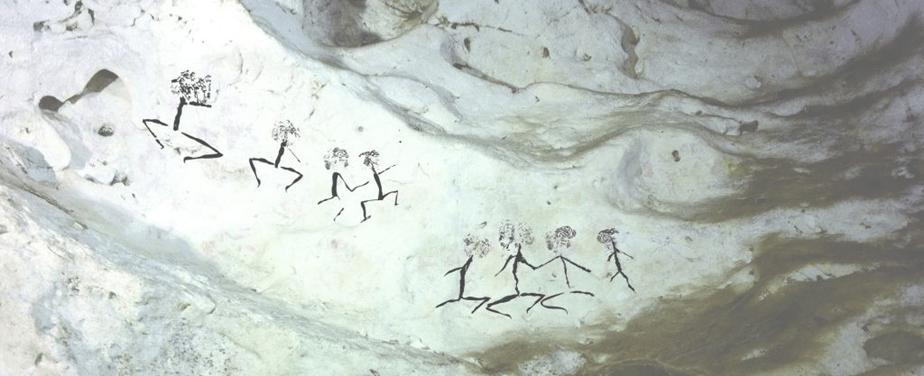
2000 year old cave art from Borneo

Instinctively, I felt that there must be more to religious experiences than the dull passivity of listening to an old white man lecture on details of an antiquated religious text.  Psalm 100 in the Hebrew Bible instructs us to “Make a joyful noise unto the Lord,” but I couldn’t find joy anywhere in my home church.  Even my relationship with Jesus, which felt sacred and special, was dimmed by the constant focus on Jesus’ suffering and death and my concurrent obligation to avoid sin at all costs.

Continue reading “Collective Joy as Our Birthright by Mary Gelfand”

From the Archives: Sacred Water by Molly Remer

This was originally posted on August 9, 2017

“Drinking the water, I thought how earth and sky are generous with their gifts and how good it is to receive them. Most of us are taught, somehow, about giving and accepting human gifts, but not about opening ourselves and our bodies to welcome the sun, the land, the visions of sky and dreaming, not about standing in the rain ecstatic with what is offered.”

–Linda Hogan in Sisters of the Earth

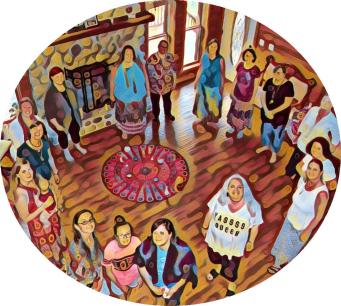
The women have gathered in a large open living room, under high ceilings and banisters draped with goddess tapestries, their faces are turned towards me, waiting expectantly. We are here for our first overnight Red Tent Retreat, our women’s circle’s second only overnight ceremony in ten years. We are preparing to go on a pilgrimage. I tell them a synopsis version of Inanna’s descent into the underworld, her passage through seven gates and the requirement that at each gate she lie down something of herself, to give up or sacrifice something she holds dear, until she arrives naked and shaking in the depths of the underworld, with nothing left to offer, but her life.

Continue reading “From the Archives: Sacred Water by Molly Remer”

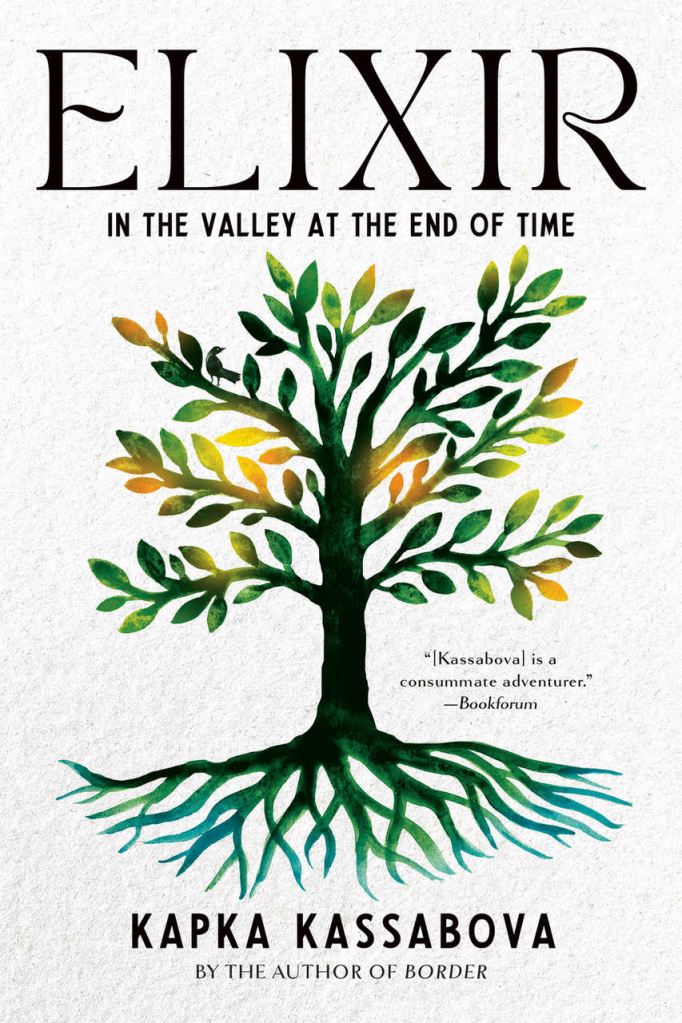
Elixir: In the Valley at the End of Time by Kapka Kassabova, Book review by Laura Shannon

Kapka Kassabova is an award-winning author of poetry, fiction and nonfiction, born in Bulgaria and now living in the Scottish Highlands. Her newest work of narrative nonfiction, Elixir, soars with the luminous prose and unflinching honesty we have come to expect from this brilliantly gifted writer.

Elixir is an extraordinary, profoundly moving book. The moment I finished reading it, I began again from the beginning, pausing only to order multiple copies for friends. Like Robin Wall Kimmerer in Braiding Sweetgrass, Kassabova effortlessly integrates science and the sacred, addressing historical, ecological, and personal trauma with clarity, compassion, and hope. Elixir combines memoir, travel, history, ethnography, botany, philosophy, spirituality, eco-psychology, traditional Chinese medicine, and even alchemy, in a subtle, sophisticated exploration which defies categorisation.

Continue reading “Elixir: In the Valley at the End of Time by Kapka Kassabova, Book review by Laura Shannon”

Integrating Snake Medicine Part 2

In Part 1 of this post, published yesterday, I described the first steps of my personal journey of soul recovery, including my first encounter with Green Snake, in statues, dreams and hypnotherapy. Those experiences led to choosing to tattoo Green Snake on my left arm. Read more about finding my Medicine and embracing my Golden Shadow as I stepped into an ancient lineage of Snake Healers.

Sometimes we encounter really sweet, or funny gems on the road of individuation… Let’s start with one like that!

Sweet Intermezzo (6 years ago…)

In the film The Matrix, Neo receives a message to “follow the White Rabbit.” Just before I met my partner, he encountered a live Green Snake slithering across a forest trail in Thailand, followed by a Neo-like dream to “follow the Green Snake.”

Continue reading “Integrating Snake Medicine Part 2”