Moderator’s Note: This post has been posted in cooperation with the NCRI women’s committee. NCRI stands for the National Council of Resistance of Iran. You can learn more information as well as see this original article by clicking by link below. A description of their Council can be found at the end of this post. As an introduction, a NCRI representative sent us the following statement about the war.It was originally posted on March 11th and we are reposting it because of its importance.
STATEMENT: I would like to mention that the Iranian Resistance — which established a government-in-exile years ago — has long advocated a clear position: no to war, no to appeasement of the mullahs, but a third option — regime change by the Iranian people and their organized resistance.
Mrs. Maryam Rajavi, the President-elect of the Resistance and an internationally recognized figure, has outlined this vision in her Ten-Point Plan. I am sharing the link below, as it reflects the roadmap of the Iranian Resistance. Maryam Rajavi’s Ten-Point Plan for the future of Iran
I played Dolores Huerta in an adaptation of Antigone Too: Rights of Love and Defiance, at the feminist theater in Minneapolis, At the Foot of the Mountain, in 1983. When the theater closed in 1991, it was the longest continuously operating women’s theater in the United States. For Antigone Too, they brought, I think, twenty- five actresses from around the country to play twenty-five significant women who stood up for social justice. We had parts illustrating our histories, interspersed throughout the traditional script of Antigone.
I got the part of Dolores Huerta—championing the cause of social justice for farm workers.
I loved the character and I was deeply honored to become her. (Today I question why I, a woman with white skin privilege, but native heritage, was chosen for this role—but at the time I was just intensely grateful.)
Only in November 2025, the following murders were reported:
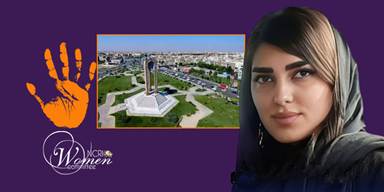
Mobina Zare, age 20, in Islamshahr (a city southwest of Tehran), was killed by her former fiancé. After murdering her, he burned her body in an aluminum-melting furnace at his father’s workshop. Her family searched for her for ten days before finding her half-burned body.
Mobina Zare was burned in analuminum melting furnace
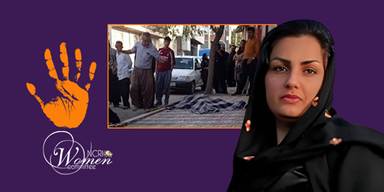
Leila Aliramaii, age 40, in Marivan (in Kurdistan Province, western Iran), was killed with a Kalashnikov rifle because she refused the vile demands of a member of the Revolutionary Guard Corps (IRGC). Leila was married and the mother of a young daughter and son.
Leila Aliramaii, the mother of two young children
Sarina Rostami, age 16, in Sarpol-e-Zahab (in Kermanshah Province, western Iran), was killed by a male relative because she refused accept a forcible marriage.
Sarina Rostami, 16, victim of forced marriage
A 40-year-old woman in Pakdasht (Tehran Province) was suffocated with a blanket by her husband.
Reyhaneh Dorzadeh, age 23, in Nikshahr (Sistan and Baluchestan Province, southeastern Iran), was suffocated by her husband because she opposed his desire to take a second wife.
A 29-year-old woman identified as J.D. was murdered by her father, who then dismembered her body and set it on fire.
Sakineh, age 80, in Tehran, was killed by her son using an iron rod.
Zahra Ghaemi, a women’s rights activist and member of the Women’s Study Group at the University of Tehran, was suffocated by her husband.
Zahra Ghaemi, a member of the Women’s Study Group at the University of Tehran
Shahla Karimani, age 38, mother of two, in Mahabad (Kurdistan Province), was strangled with a scarf by her husband and brother-in-law.
Sajedeh Sand-Kazehi, in Khash (Sistan and Baluchestan Province), was killed with a hunting rifle because her father-in-law wanted to forcefully take a gas regulator that belonged to her. Sajedeh was the mother of two young children.
Raheleh Siavoshi, age 26, in Nahavand, a town in Hamedan Province in western Iran, was fatally stabbed by her husband after participating in a sports camp. She died in the hospital two days later.
Raheleh Siavoshi, a national wushu champion and coach
Justice Has Lost Its Meaning
While women are sentenced to long prison terms for “removing their hijab” or protesting discrimination, men who murder their wives typically receive only a few years in prison. In many cases, they can pay money to buy their way out and return to their lives.
In notorious cases such as Romina Ashrafi and Mona Heydari, the murderers received only two to eight years in prison. Even state-run media sometimes acknowledge this “inverted justice”: “The punishment for beheading one’s wife: 8 years in prison; The punishment for removing one’s hijab: 10 years in prison!”
According to the regime’s laws, the father, who is also the “male guardian and blood-owner (vali-ye-dam),” is exempt from retributive punishment for killing his own child.
Zahra Eftekharezadeh, founder of one of Tehran’s safe shelters, said regarding the absence of deterrent laws: “When the law does not impose a punishment proportionate to the crime, perpetrators realize there is no serious consequence waiting for them. In many cases, the sentences issued by the judiciary are not only non-deterrent but encourage the offender. Romina Ashrafi’s father is an example. He openly said that if he killed his daughter, he would receive at most ten years in prison.” (Shargh newspaper – October 11, 2025)
Atrocities Rooted in Law and Politics
Under Iran’s misogynistic clerical laws, a woman is not recognized as an independent individual but as “subordinate” to a man. Without legal or structural protection, women are forced to endure domestic violence, and each day adds new names to the list of women murdered.
Article 1105 of Iran’s Civil Code assigns family leadership exclusively to men.
Article 1108 makes a woman’s right to financial support conditional on her “obedience.”
Article 1114 gives the husband the right to determine the wife’s place of residence.
In such a system, women seeking divorce must prove their lives are in danger, and their testimony is worth only half that of a man. Judges routinely force women who have been beaten or threatened back into the homes of their abusers.
Through its laws, media, and judiciary, the clerical regime perpetuates these crimes. Violence extends from home to the school, from the street to the courtroom, widening its reach every day.
But beyond the laws, today’s social tragedies in Iran stem from political roots. The misogynistic clerical regime is founded on the subjugation of women. The horrific killings of women are not isolated acts of personal fanaticism; they are the product of a system that authorizes violence against women.
The rising number of honor killings must therefore be understood as the direct result of the regime’s anti-woman policies and the patriarchal culture embedded within its structure. The Iranian people blame not society but the regime itself, an oppressive, misogynistic establishment that preserves its power through the suppression and elimination of women.
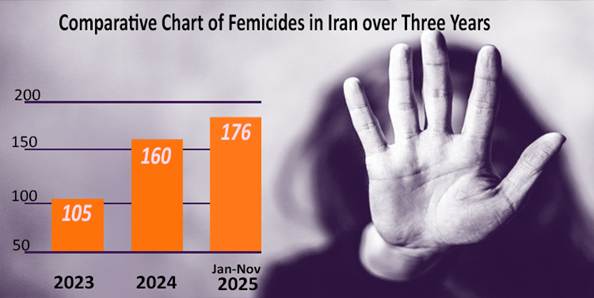
Data compiled over the past three years by the NCRI Women’s Committee shows a sharp upward trend in the number of women murdered under the misogynistic rule of the clerical regime. These figures are drawn entirely from documented and published reports by state-run media and other available sources. They therefore represent a minimum estimate, as the regime deliberately obscures such information, and many families, fearing the perpetrators, avoid publicizing the killings of their daughters and female relatives.
According to these findings, at least 105 women were murdered in 2023, 160 in 2024, and during just the first eleven months of 2025, no fewer than 175 women have been killed in Iran.
INFO: NCRI The NCRI Women’s Committee works extensively with Iranian women outside the country and maintains permanent contact with women inside Iran. The Women’s Committee is actively involved with many women’s rights organizations, NGOs, and the Iranian diaspora.
The NCRI Women’s Committee is a major source of much of the information received from inside Iran with regard to women. Attending meetings of the UN Women, the UN Commission on the Status of Women (CSW), the Human Rights Council, and other international or regional conferences on women’s issues, and engaging in a relentless battle against the Iranian regime’s misogyny are parts of the activities of members and associates of the NCRI Women’s Committee.
The NCRI Women’s Committee is one of the 25 committees of the National Council of Resistance of Iran.
At the bottom of this post you will find information for a free streaming of the film.
Sex Radical, Title Image
We are witnessing now in real time what happens when the full weight of the Federal Government turns its attentions and goes after individuals and even companies with the intent to squash dissent, intimidate and punish dissenters. This is perhaps most prominent among the immigrant population and those who the administration have been targeted with the legal system. But before there was Mahmoud Khalil, CBS, The Washington Post, UC Berkeley and all the others who have been hounded by government, there was Ida Craddock who faced the full weight of a government that turned its sights on her.
Recently, I have thought about a common idiom that has been used to refer to sexual reproduction, the birds and the bees. I became curious why animals that appear in most gardens were used as an example to explain where babies come from, until I did some research. It turns out that since the birds lay eggs, that is their representation of the female body and the bees represent the sperm due to pollination. It is a very subtle, overlooked message that can be disguised as being more age-appropriate to young children. However, I decided to dig a bit deeper. Ed Finegan, a USC professor of linguistics and law, has stated that this phrase has existed a lot longer than one might think. There is evidence of it being used in a somewhat sexual context going back to at least two authors, Samuel Coleridge Taylor (1825) and an entry from John Evelyn’s The Evelyn Diary (1644).
In Work Without Hope, Samuel Coleridge Taylor quotes, “All nature seems at work . . . The bees are stirring, birds are on the wing . . . and I the while, the sole unbusy thing, not honey make, nor pair, nor build, nor sing.” This separation of the birds and bees is indicating the loneliness and sadness of missing out on a potential romantic connection. When going even further back in time to 1644, it was noticed in the Evelyn Diary that there was an entry discussing the interior design of St. Peter’s in Rome: “That stupendous canopy of Corinthian brasse; it consists of 4 wreath’d columns, incircl’d with vines, on which hang little putti [cherubs], birds and bees.” This description is illustrating that there is a possible sensual or sexual meaning of the architecture in St. Peters.
It’s been over a week now since I first heard the news on MPR that four people had been shot in their homes near a golf course in Brooklyn Park where my son once lived. My first thought was that I was glad my son was no longer living there. A little while later I learned that this was not a random act of violence, but rather political violence targeting two Minnesota lawmakers and their spouses. Gradually the details came in. The lawmakers were Democratic lawmakers, former Speaker of the House Melissa Hortman and State Senator John Hoffman and their spouses. And then came the tragic news that Hortman and her husband had been killed. As I drove to pick up a friend to attend the “No Kings” protest downtown, I listened to the news reports of warnings not to attend the protests out of an abundance of caution, with the shooter still at large, as well as the voices of protest leaders saying the tragic events of the morning only strengthened their resolve. In the first few moments of the protest, we observed a moment of silence for Hortman and her husband, and for the recovery of Hoffman and his wife. The entire rally felt like a strange mix of grief and rebellious revelry.
As the identification and eventual arrest of the suspected shooter became known, the tragic events took on an even more ominous tone. The suspect, Vance Boelter, is a far-right Christian nationalist extremist who had preached against abortion and gay rights. He was schooled in his religious beliefs at the Christ for Nations Institute in Dallas, Texas[i] and was aligned with a charismatic Christian movement whose leaders, in the words of The Atlantic columnist Stephanie McCrummen, “speak of spiritual warfare, an army of God, and demon-possessed politicians.”[ii]
Are violence and domination innate in human nature? We have been told that we are the “naked ape” descended from “apes” who, like the chimpanzees with whom we share 98% of our DNA, were male dominant and violent. Do we, then, have any hope not to be violent and dominant?
**When I refer to Black women, I am referring specifically to descendants of African peoples that were forced to experience the dehumanization of chattel slavery in the United States.
I am no different than most Black children. Physical, mental, emotional, and physical harm is a historic reality deeply rooted in the Black American experience. This experience is mirrored in collective parenting and relating to children. In this context, many parents believe preparing children for the harsh realities of the world and the United States, while living in Black bodies, necessitates acclimating them to mistreatment and aggression. This parenting approach, (a consequence of centuries of colonization, slavery, and the ongoing impact of white supremacy), prioritizes survival. This survival mechanism has indeed ensured that we live and therefore I deeply respect the survival mechanisms deployed to survive. I offer no harsh critiques, only lessons learned and a desire for us to do better collectively now that we know better.
Quite a number of years ago I had a conversation with one of my professors, a feminist theologian, who posed the question “Why do I need a man to purify my baby with the waters of baptism? Is there something wrong or impure about the blood and water from a mother’s womb – my womb?” Before you jump and shout the words Sacrament or removal of original sin, this question bears merit in exploring, especially in today’s world where women are taking a serious beating religiously, politically, and socially. In today’s world, violations and rants are causing women to stand up and say STOP! This is MY Body. This outcry was provoked by chants of ethical slurs against women– Slut! Prostitute! Whore! The cry got even louder when the issue of religion and government was raised in the fight of healthcare coverage of contraception. The cry got even louder with the enactment of the laws in Virginia and Texas (and many other states to follow suit) that forces women to undergo transvaginal ultrasounds in early stage abortions. The mandatory insertion of a wand into a woman’s vagina (mandated by the government, mind you), is a violation and has women crying RAPE!
I was in the process of writing this blogpost last week when the Arizona supreme court decided to turn abortion rights back to the civil war era (1864). This was a time when women had no rights at all and abortion from conception was illegal. But civil war era laws are downright quaint and modern compared the legal underpinnings of the supreme court’s Dobbs decision.
In his decision, Mr. Alito cited four “great” and “eminent” legal authorities, Henry de Bracton, Edward Coke, Matthew Hale, and William Blackstone. For perspective here are their dates.
Henry de Bracton c. 1210 – c. 1268 Edward Coke 1552 – 1634 Mathew Hale 1609-1676 William Blackstone 1723 –1780
To help me understand Alito’s logic, I read up on some conservative commentary. Here is what I learned: When the founding fathers needed to create legal documents, they didn’t create them out of thin air. They relied on the logic of the four men (and others) listed above. Yes, they did pick some enlightened aspects of these thinkers of the time, esp. in regard to the rights of the common people in relation to royalty. The thought of commoners having rights was revolutionary in its day. But as we have learned so painfully, our founding fathers limited who those rights applied to. They did not take into consideration the rights of anyone other than landowners, which at the time meant white men.











 Feminism and Religion