My Tribute to Joy and Vera by Esther Nelson

esther-nelson

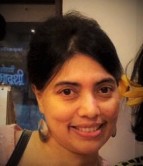
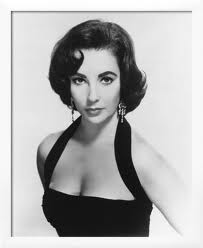
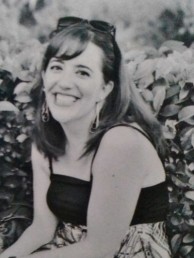
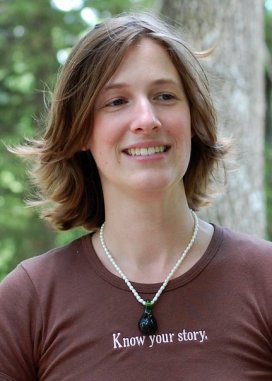
My daughter Joy, in so many ways, is like my mother Vera–competent, feisty, determined, smart, no-nonsense, generous, gracious, and loving.  Many of her mannerisms mimic Vera’s as well, yet Joy barely knew my mother.  She died soon after Joy’s fifth birthday.  Unlike both my mother and me, though, Joy came into the world wired with a feminist vision.  Comfortable in her own skin from the “get-go,” she did not shrink from asserting her right (quietly–she’s an introvert) to participate in whatever caught her fancy “out there.”  She always had a strong sense of autonomy and resists, along with other feminists, when men (or to be more accurate–the patriarchal social system that informs us) attempt to shape public policy based on (primarily) men’s experiences and political agendas.

It took some time for me to understand the structured (and toxic) nature of gender inequality within our society, and even more time to learn to “speak that truth to power.”  During Joy’s formative years, I tried my best to instill into her what I had been taught–women were created primarily to be “help-meets” for their husbands and by extension, men.  Joy never bought into that “truth.”  I could tell by the way she lived.  For example, Joy liked to cook.  When she prepared a dish, she balked if (when) family members just helped themselves to the fruits of her labor.  She insisted they first ask to partake of the food she prepared.  She would not be taken for granted. Continue reading “My Tribute to Joy and Vera by Esther Nelson”

Painting Women from Judges – Part 3: The Sacred Account of the Levite’s Pîlegeš by Melinda Bielas

Melinda BielasReading the story of the Levite’s pîlegeš – found in the Hebrew Bible, Judges 19:1-20:7 – is unlike any other scholastic endeavor I have undertaken.1 The narrative is of a woman who leaves her husband’s house, only to be retrieved by her husband, gang raped on her way to his home, and dismembered upon arrival. This intense violence then escalates to the abduction and rape of more than 400 virgins and the death of many more (Judges 20-21).

The first time I encountered this narrative was while reading Phyllis Trible’s Texts of Terror as an undergrad student. While at the time I did not fully understand the textual nuances Trible points out, I did understand this story was sacred in a way I could not articulate. It was not until years later that I realized I was not truly listening to the story because I had not read it from the pîlegeš’ perspective and was yet to be affected by the horror of it.

An explanation is needed when one calls a story of violence sacred. To clarify, it is the telling of the story that makes it sacred, not the violence. In much of the world today, violence done to women is taboo.2 Not only are the violent acts ignored, but the victim and her retelling of the acts are also often ignored. Perhaps this is because our society is biased towards the perpetrator. Perhaps it is because our faith communities have self-identified as loving and to acknowledge violence is to acknowledge failure. But perhaps it is mostly because violence is hard to process, especially when the violent act is committed against a loved one, and we prefer not to struggle with the presence of violence all around us. Continue reading “Painting Women from Judges – Part 3: The Sacred Account of the Levite’s Pîlegeš by Melinda Bielas”

Passover and the Exodus: A Feminist Reflection on Action, Hope, and Legacy by Michele Stopera Freyhauf

Freyhauf, Durham, Hahn Loeser, John CarrollLast week, Supreme Court Justice Ruth Bader Ginsburg was in the news again, but not for reasons you would expect.  She, along with Rabbi Lauren Holtzblatt, penned a feminist essay about the Exodus title “The Heroic and Visionary Women of Passover.”  Finding this story was exciting, especially because I am so drawn to the Exodus story (the intrigue and curiosity of which caused me to return to school and study, as one of my main areas of focus, Hebrew Scriptures – along with Archaeology and Ancient Near Eastern History).  Now women’s roles in this story are being elevated thanks to Justice Ruth Bader Ginsburg and Rabbi Holtzblatt.

Before I discuss the message and the importance this message brings, I think it is important to know an important fact about Justice Ginsburg.  Ginsburg is not observant, but does embrace her Jewish identity.  When her mother died, she was excludedRuth_Bader_Ginsburg_official_portrait[1] from the mourner’s minyan because she was a woman; an event in Judaism that is meant to comfort the mourner, brings a sense of community, and is considered obligatory – a means of honoring our mother/father.  This important event left an impression and sent a loud message that inspired and influenced her career path – she did not count – she had no voice – she had no authority to speak.  No wonder her life and career focuses so much on women’s rights and equality.

As many of us know, the story of Exodus is focused on two things 1) Moses and 2) liberation from the bonds of servitude and enslavement; women are rarely discussed.  In the essay co-authored by Ginsberg, women are described as playing a crucial role in defying the orders of Pharaoh and helping to bring light to a world in darkness.  In the Exodus event, God had partners – five brave women are the first among them, according to Ginsburg and Holtzblatt.  These women are: Continue reading “Passover and the Exodus: A Feminist Reflection on Action, Hope, and Legacy by Michele Stopera Freyhauf”

Nature: The Best Muslim and My Favorite Muse by Jameelah X. Medina

Jameelah MedinaNow that spring is upon us, it started me thinking about the beach. I love the ocean. Like me, lots of people get that back-to-the-peaceful-womb feeling when looking at the ocean. As I thought about the ocean, I realized I saw it as having a very strong feminine energy. She is like our distant relative. I mean, we are mostly water and when we cry it’s salty, when we sweat it’s salty, and we both (ocean and human) are alive, and we are both Muslims (in the sense of submission to Allah), so we are connected.

Allah says that there is nothing Allah did NOT create from water; I think this water connection is what so many of us feel when we are at the foot of the ocean. We feel closeness to Allah because we are in our element, or better said, we are in a space so close to something that shares the same chemical elements as us perhaps. The earth is one big organism within which we all play a part, though we think we are completely independent. Khalil Gibran has a quote that says something like if we love, our love neither comes from us nor belongs to us; if we are happy, our happiness is not in us, but in life itself; if we feel pain, our pain is not in our wounds, but in all of nature. I believe this. If we are still enough and just tune into that faculty beyond the most recognized, we can also feel it. Continue reading “Nature: The Best Muslim and My Favorite Muse by Jameelah X. Medina”

Give Me That “New” Time Religion! by Susan Gifford

Susan GiffordI want a new religion. I have changed to the point that I cannot be a part of a patriarchal religion and I feel that all of the major organized religions fall into that category. It has taken me a long time, but I can now see that these organized religions were created largely to support the patriarchal culture that most humans have lived in for at least the past 5,000 years.

I started reading Mary Daly, Riane Eisler, Merlin Stone, Carol Christ, Marija Gimbutus and other similar authors in recent years. I was amazed at how much I did not know about life before patriarchy. I was never taught in school that there were cultures – civilized cultures – for tens of thousands of years prior to patriarchy. These pre-historical civilizations were largely matrilineal although not matriarchal.

Women had power in such cultures, but not “power over” others. These cultures were organized as partnership societies, not hierarchical societies. The Divine Presence worshiped was feminine which, of course, makes perfect sense since the female sex is the one that gives birth. As far as I can tell, there is little known about the specific religious beliefs and rituals of these civilizations. However, from the art work that has been discovered, there appears to be a theme of a Great Mother Goddess who gave birth to the world and all that is in it. Although we can’t go backwards to this ancient goddess religion, knowing more about it may open our eyes to other ways of conceiving a Divine Presence. Continue reading “Give Me That “New” Time Religion! by Susan Gifford”

Ashes, Sacrifice, and Abundance by Melissa Browning

Melissa BrowningLast year I got my ashes at the airport. As I sat in that airport chapel, I halfheartedly listened to a (mostly terrible) litany that was proclaimed in between announcements for gate changes. I was leaving for another campus interview after having been home for only 24 hours since the previous one. The Christian season of Lent came during a time of stress and chaos in my life. That year, when I contemplated what I might give up for Lent, I could think of nothing. So much had been taken away that I had nothing left to give.

The season of Lent is often linked with the idea of sacrifice. Some people fast, others give up a favorite vice or a favorite food. As a feminist theologian, I spend a great deal of time thinking about the idea of sacrifice. I wonder how women who consider themselves part of Christian churches can be asked to sacrifice when we have already given away too much. Too often, our labor is welcomed but our voices are silenced. As a Baptist theologian and ordained minister who has sojourned in Catholic universities, I’ve felt this in my own tradition and in traditions that are not my own. Continue reading “Ashes, Sacrifice, and Abundance by Melissa Browning”

Today is International Women’s Day—Let’s celebrate! by Barbara Ardinger

Barbara ArdingerAccording to their website, International Women’s Day (March 8)  is a “global day celebrating the economic, political and social achievements of women past, present and future. In some places like China, Russia, Vietnam and Bulgaria, International Women’s Day is a national holiday.” The day was established to honor the work of the suffragettes who campaigned for women’s right to vote. (Note that the word “suffragette” is derived from “suffrage,” the right to vote. Today some women prefer to lose the “-ette” syllable, which diminishes any word it’s added to, and say “suffragist.”) “Great unrest and critical debate,” the website continues, “was occurring amongst women [at the beginning of the 20th century]. Women’s oppression and inequality was [sic.] spurring women to become more vocal and active in campaigning for change. Then in 1908, 15,000 women marched through New York City demanding shorter hours, better pay and voting rights.”

On March 19, 1911, the site continues, “more than one million women and men attended IWD rallies campaigning for women’s rights to work, vote, be trained, to hold public office and end discrimination. However less than a week later on 25 March, the tragic Triangle Fire in New York City took the lives of more than 140 working women, most of them Italian and Jewish immigrants. This disastrous event drew significant attention to working conditions and labour legislation in the United States that became a focus of subsequent International Women’s Day events.”

Two thousand years earlier in Rome, the month of March began with the Matronalia, or Festival of Women, when the Vestal Virgins entered a sacred grove and hung offerings of their hair on the oldest tree. Some historians say that Roman matrons served their female slaves at this feast. For every baby born in Rome, a coin was deposited in the temple of Juno Lucina, “Light,” to give thanks to the goddess for a safe birth. Continue reading “Today is International Women’s Day—Let’s celebrate! by Barbara Ardinger”

“Dear Terrorist: Keep Up the Good Work” Said NO ONE by Valentina Khan

Valentina KhanHow much longer do I as a Muslim American female, have to deal with the “gang-buster,” terrorizing, “Satan” worshipers high-jacking my faith for the sake of trying to supposedly ‘preserve’ it? Who are these wackos and why do they seem to represent my faith in mainstream media? Where did they all come from? Which terrorist schools have they all graduated from and what truly is their agenda?

I don’t know how else to say it- I’m so disgusted and fed up by the heinous acts of the terrorist mentality coming from what appear to be Muslim males– who really knows? ISIS, for example, with their masked individuals carrying out barbaric crimes could actually be another race or religion for all I know. Regardless, as a female, I want nothing to do with them. As an American, I want to go to war with them. As a Westerner, I want to hide in my Orange County bubble and only watch Bravo TV- just to get dumb and numb to the problems- and turn a deaf ear and blind eye to world events on the news.

However, as a Muslim my heart aches. My body trembles and my mind is terribly puzzled. How can all these awful events happening around the world come from people who claim to be Muslim, as I am? Didn’t they grow up reading the Prophet’s Last Sermon, as I did? Did they miss something? Did I miss something? Why are murder, beheading, and stoning things to be prideful about on social media? Why are they playing God and taking the lives of others in the name of a higher power? Why are they casting judgment on cultures and people when really they should start healthy dialogues in order to resolve differences of ideologies from one socio-cultural context to the next? Unfortunately, lunatic terrorists with apparently nothing positive going on their lives feel that their suicidal guerrilla warfare style of killing to avenge their faith is the ticket to authentic belief and entrance into heaven! Continue reading ““Dear Terrorist: Keep Up the Good Work” Said NO ONE by Valentina Khan”

Moving the World Forward on the Spiral of Life by Carolyn Lee Boyd

Carolyn Lee BoydThe wasp nest dwells at the edge of my vision waiting for me to notice what it has to show me. In my mind, I have come to this beloved circle of earth beneath the embracing branches of this tree to ponder because the need is urgent for all the world’s women to have lives of peace, safety, equality, opportunity, and enough prosperity to guarantee necessities, and to save our planet from ecological disaster. I seek new ways of thinking about my life and actions and those of the global community of women to inspire more effective means of progress.

wasps nestI finally spy the wasp nest. I follow its spiral shape, beginning at one point and then expanding in circles ever-outward and upward. I wonder, what if, in addition to perceiving my life as the more traditional journey or age-defined stages, I imagined it as a spiral like the galaxy, flowers, ancient sea creatures caught forever in fossils, swirling water, and so much else of nature? What if at my birth I was like a spiral’s central point, perhaps me at my most essential or as an infinite potential, and then, over time, I spiraled endlessly into the cosmos? Continue reading “Moving the World Forward on the Spiral of Life by Carolyn Lee Boyd”

Good Things Come to an End by amina wadud

amina - featureIt has been a marvelous experience for me, these past few years, to be connected with this community Feminism and Religion. Still, sometimes even good things have to come to an end. I’ve decided to discontinue my regular blog contributions. The organizers have graciously allowed me the possibility to do a guest blog in the future; so I may yet contribute.

Here’s the thing: I don’t think folks who read this blog know fully just what goes on—seemingly seamlessly in the background. So before I go, let me expose how this has been for me, to give greater credibility to my first sentence: it has been a marvelous experience.

I was asked to start blogging with FAR while living in another country, another time zone, and inconsistent internet access. Truth be told, inconsistency characterizes my life-work since I travel extensively and cannot predict the regularity of the internet in some of the parts of the world where I might be located. Still I made the commitment to blog twice a month, every first and third week. Continue reading “Good Things Come to an End by amina wadud”