A Cornucopia Sometimes Curiously Stuffed With Nothing by Natalie Weaver

Natalie Weaver editedThe summer is getting late. School supplies are coming in, and it is time to try on the uniform pants in order to get them hemmed before the first day. I always feel a little funny at this time of year, almost queasy from my mixture of nostalgia for waning days at the pool and excitement for crisp plaids and fresh notebooks. I continually miss the scents of summer skin, chlorine and suntan lotion, even while I look forward to the autumnal fragrances of newly sharpened pencils, cinnamon sticks, and rubbery Halloween costumes. Time, at this transitional time, is always pregnant with the promises of both bounty and loss, so I am not surprised by my wistfulness as we turn to fall. I am, however, taken by its depth for me this year. For, this transition has been a little heavier than usual as I ask myself, “Where did it go?” and “What did I do?”

You see, I wanted to travel more with the kids, but I became sick, or rather, a sickness I already had presented itself unmistakably and irrevocably just as the summer was getting under way. So, I slept a lot, but it was not the sleep of rest and recovery; it was lost time. I felt bad about my crankiness and limitations, so I tried to make up the time by adding more play to the times of day when I felt good. The kids weren’t playing along though, and I just felt more exhausted. I was a broken record, as I kept asking what anyone wanted to do. And, I felt like I was failing when we couldn’t arrive at activities, or menus, or destinations. Continue reading “A Cornucopia Sometimes Curiously Stuffed With Nothing by Natalie Weaver”

The Wonder that is Being Born: How to Live Out Loud? Sacrilegious or Evolution? by Karen Moon

Karen 2006Yesterday, I went to a Women’s Circle, the description follows:

Our next circle will honor this journey of Venus or Innana as she was known by the ancient Sumerians. We will gather on Sunday, July 26th at 3 PM at my house. We will celebrate the divine feminine energy of Innana/Venus through meditation, song and dance. I encourage you to dress as your inner goddess, embracing your personal divine feminine energy. We will have our usual potluck munchies afterward.

I had spoken to the host on the phone previously and know her via Social Media.  My husband gave his helpful advice to be sure that it was not a “cult,” and yes, I do think any time you find things via social media, a big dose of common sense is needed.  Continue reading “The Wonder that is Being Born: How to Live Out Loud? Sacrilegious or Evolution? by Karen Moon”

Four Days of Bliss (or How I used The System to beat The System) by Vibha Shetiya

Vidha SI’m not particularly fond of my periods – they’re painful, full of cramps. But they are a part of who I am, and I’m not going to apologize for them. We women, especially those of us belonging to the sub-continent, have been shamed or embarrassed into silence, while being reminded that motherhood is the most exalted position a woman could ever hope for. I mean, isn’t that paradoxical – if it weren’t for the bloody nemesis (pardon the pun), we would never get to experience motherhood.
I grew up in a Western environment (in southern Africa) where “period” wasn’t necessarily synonymous with repulsion. But when I moved to India, the land of my birth, soon after my “life-altering” experience, things began to look different. I came to realize that I ought not to be like the neighbour girl who was so besharam, or shameless, that she insisted on announcing her monthly ignominy to the world by refusing to conceal the fact that she had indeed been at the pharmacist’s to buy sanitary pads. Why, the pack of pads, sealed in newspaper and carried in a little black plastic bag was right there for the entire world to see on her ten minute walk back home! I gradually came to understand that “those four days” were taboo – do not speak of “it,” do not make it obvious even if you are writhing in unbearable pain, do not contaminate sacred space with your womanly profanity. Continue reading “Four Days of Bliss (or How I used The System to beat The System) by Vibha Shetiya”

MASKS OF THE GODDESS: Bringing the Divine Feminine to Life by Lauren Raine

lauren_RaineL05_web

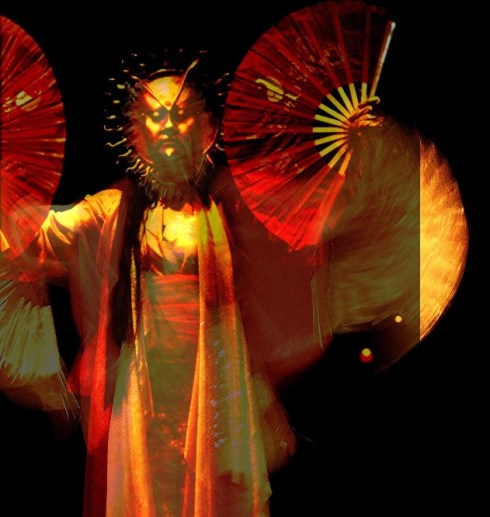
“What the audience saw when a dancer looked through the eyes of the mask was the Goddess Herself, an ancient and yet utterly contemporary presence, looking across time, across the miles.”

Diane Darling,  Playwright

In Salt Lake City in  October  at the Parliament of World Religions a group of women and men will be  will be literally  “bringing the Goddess to life”.  “Goddess Alive!” is produced and written by M. Macha NightMare (Aline O’Brien), with Mary Kay Landon.  Participants will use my “Masks of the Goddess” Collection to create a ritual theatre event honoring the many faces of the Divine Feminine throughout the world.

The Masks of the Goddess Project began in 1998, and since then the ever-evolving, multi-cultural collection of masks have travelled around the U.S. to different communities for dance, storytelling, exhibit, and personal invocation, always collaborative.

OLYMPUS DIGITAL CAMERA

Continue reading “MASKS OF THE GODDESS: Bringing the Divine Feminine to Life by Lauren Raine”

Feminism, Race, and Religion: An Interview with Sikivu Hutchinson by Kile Jones

While black Churches are burning, and black children are being gunned down by police, I felt it important to speak with someone who is involved in raising awareness on the role of racism and cultural imperialism in American society. I am honored to present to you all, Sikivu Hutchinson.

??????????????

As a woman of color, and an atheist, how do you respond to the invocation of God in the Charleston tragedy?

It frustrates me but the invocation of God in crisis is a significant part of African American cultural and social history. As I wrote recently in an article entitled “Pushing Back on ‘God’ in Charleston”: “Radical black humanists, most notably Frederick Douglass and A. Philip Randolph, have challenged black religiosity under slavery while acknowledging the crucial role activist churches played in black self-determination.

Randolph’s critique of organized religion and the god concept was always coupled with a critique of capital and the imperialist occupation of black bodies and African countries. Churches dominated black communities because of the nexus of racial apartheid and capitalism.”

Organized religion and God belief continue to dominate African American communities because of these legacies. That said, clearly no loving god would allow a twenty six year-old in the prime of his life to be cut down in cold blood, nor abide by a five year-old having to play dead to avoid being murdered. And no moral god would demand forgiveness for a crime for which there has never—since the first African was stolen, chained, exploited and “imported”—been any reparations. Continue reading “Feminism, Race, and Religion: An Interview with Sikivu Hutchinson by Kile Jones”

Sappho, Frankincense, and Female Spirituality by Stuart Dean

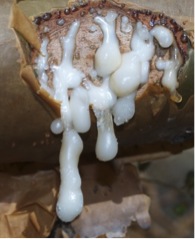
Frankincense

White Howjary Frankincense (photo: Trygve Harris (www.enfleurage.com))

Sappho is the first Greek author to attest to the usage of frankincense.  The word she uses to refer to it (libanos) is what comparative linguists call a ‘loan word,’ in this case from ancient South Arabic (the root meaning of which is ‘white’), the language spoken in the only region in the world still now, as then, where the trees grow that produce the resin that is frankincense (the finest being White Howjary from near Salalah Oman).

This was long before Amazon Same-Day Prime: that frankincense even made it to where Sappho was is astonishing given the thousands of miles of desert terrain that had to be covered.  That fact plus the fact that Sappho chose to use the Arabic word for frankincense suggests it must have been of special importance to her.  How important can be seen in the power she attributes to it.  In one prayer poem (S.2, composite translation and very brief notes here) she completes a stanza by referring to frankincense burning from Aphrodite’s altars; she completes the very next stanza with a reference to ‘sleep falling.’  The parallelism implies a reciprocity: the smoke goes up, the sleep comes down and a stanza later, there is Aphrodite. Continue reading “Sappho, Frankincense, and Female Spirituality by Stuart Dean”

From Mary Daly to the Emerging Church – An Unlikely Dissertation Trajectory by Xochitl Alvizo

Alvizo headshot smallIt was 2004 during the first semester in one of my classes for the master’s program when my TA presented a lecture on feminist critiques of atonement and introduced me to the writings of Mary Daly. It was my first introduction to feminism as theory and theology, and my first introduction to Mary Daly the writer.

Mary Daly was the first woman to preach at the Harvard Memorial Chapel in its three-hundred and thirty-six year history, back in 1974. On that occasion and in cahoots with some of her graduate students of the time, Mary Daly took the opportunity to invite people to give physical expression to their exodus from sexist religion by walking out of the church with her that day. Thinking that she would be leading the way out the door, she was surprised to find that people were very much ahead of her. She walked out of that church, out of sexist religion, as one among many who were ready to take their “own place in the sun.” This exodus, the act of leaving behind the silence and alienation from one’s own voice and from one’s own be-ing that is perpetuated by the prevailing patriarchal structures of church, is a choice I commit to make every day as I stay on the boundary of Christianity and church. Continue reading “From Mary Daly to the Emerging Church – An Unlikely Dissertation Trajectory by Xochitl Alvizo”

Holy Women Icons on Tour: A Motley Crew of Unlikely Saints Hits the Road by Angela Yarber

angelaSeveral months ago I introduced one of my newest Holy Women Icons with a folk feminist twist, the intrepid traveler and passionate nomad, Freya Stark. In writing about her fearless journeys to far-flung places women only dreamed of visiting in the early 1900s, I also shared that my wife, toddler, and I have decided to follow her fierce lead into the seemingly unknown. In less than one month, our journey will begin as we spend an entire year volunteer traveling throughout the United States. We have sold our home. We finish teaching summer courses at the end of the month. And in Freya’s courageous words, we have decided that “it is the beckoning that counts, not the clicking latch behind you.” The beckoning is calling us to live more gently with the earth, do more justice, and to create a more peace-filled world. And we have the privilege of radically altering our lives to follow this beckoning.

This time next month, we’ll be settled into our little pop-up camper in the Green Mountain National Forest of Vermont where we’re volunteering for three months. In the fall, we’ll do the same in the southernmost part of the Shenandoah Valley. December will find our trusty camper—aptly named “Freya Stark”—chugging east to west across the southern parts of the United States, parking in the San Francisco Bay Area so that we can fly to Hawaii to volunteer on an organic farm and lead yoga retreats for the first three months of 2016. Continue reading “Holy Women Icons on Tour: A Motley Crew of Unlikely Saints Hits the Road by Angela Yarber”

Aphrodite in Bagram Afghanistan & The ‘Friend of the World’ of the Flower Ornament Scripture by Stuart Dean

Stuart WordPress photo

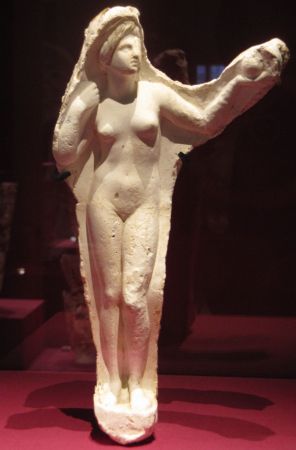
 In the 1930s two ancient storerooms in Afghanistan near what is now the Bagram US Air Base were discovered by French archaeologists and unsealed for the first time in about two thousand years.  They contained artifacts from all over the ancient world, evidencing just how active trade then was along the complex network of routes known collectively as the Silk Road.  Among the artifacts in one of the storerooms was a plaster statuette of Aphrodite (‘Bagram Aphrodite’).

BagramAphroditeThough it is not known what the motivation originally was for acquiring the Bagram Aphrodite, its presence in Afghanistan arguably evinces an interest in female spirituality–if not in the owner of the storerooms then among some of the people in the market for which she may have been destined.  Evidence of such interest among Buddhists is to be found in the Flower Ornament Scripture (FOS), a compendium of sutras dated to approximately the same time (and possibly the same region) as the storeroom containing the Bagram Aphrodite.  Female spiritual figures, both mortal and immortal, some portrayed as having official positions, others without any, are prominent in the final chapter of the FOS, so prominent that one scholar suggests Buddhist women of the time in some way influenced its composition (see Douglas Osto, Power, Women and Wealth in Indian Mahayana Buddhism).

Continue reading “Aphrodite in Bagram Afghanistan & The ‘Friend of the World’ of the Flower Ornament Scripture by Stuart Dean”

The Evil Powers are Well at Work and I’ve Lost My Spirit… by Valentina Khan

Valentina KhanIt has been over a year now that I haven’t been actively a part of my interfaith community. I find that especially odd since I graduated last May from the Claremont School of Theology with a Masters in Religious Leadership. I had hopes that I would be empowered by new education to go out and do more for my community, be invited to be a guest speaker at local houses of worship, or sit on panels; all the things I used to do more frequently and now have all stopped.

I am mostly to blame. Although my personal life has definitely changed with the birth of my son, two new businesses for my husband and me, and the ongoing pressure I put on myself to study for the bar exam any free moment I get (I really don’t have any leisure time to study, but thinking about it takes a lot of energy!), and now expecting my second child, I stopped attending my monthly meetings– whether it be with the Interfaith Youth Council of Orange County, the Muslim-Jewish forum of Los Angeles, or my own beloved organization “I Am Jerusalem.”

Continue reading “The Evil Powers are Well at Work and I’ve Lost My Spirit… by Valentina Khan”