Leonora Carrington’s THE HEARING TRUMPET – Book Review by Sally Abbott

Sally Abbott

Long a fan of Surrealist artist Leonora Carrington, I was initially hesitant when the New York Review of Books reissued her 1974 novel, The Hearing Trumpet.  I didn’t know what to expect when this extraordinary painter picked up a pen.

To my delight and surprise, Carrington shows the same artistry and whimsy in her writing that she does in her painting.  She also reveals herself to be an astute feminist and aficionado of the Goddess, well-versed in arcane lore, with which she accents her fantastical world.  The Hearing Trumpet is full of British humor and eccentricity, set in a finely spun, other-worldly landscape.

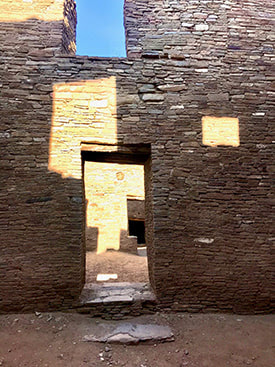
The World of the Maya

Her heroine Marian Leatherby is a 92-year-old, who lacks teeth, is hard of hearing, and sports a beard–a whimsical, endearing character who loves cats.  She has been given a hearing trumpet by her great friend Carmella, and thereby learns that her son and his wife plan to send her away to an old folks’ home run by a Dr. Gambit and the Well of Light Brotherhood.

Continue reading “Leonora Carrington’s THE HEARING TRUMPET – Book Review by Sally Abbott”

Talking about Death with my Daughter & Remembering Carol Christ

Recently, facing the reality that I do not have definitive or perhaps, static “answers” for my little one when she asks me about death, I find comfort in Carol’s words—in the idea that I don’t have to “answer” my daughter with one, forever “truth.” Because I have to ability to give her “enough,” at least for now.

As I sit down to write, I am reminded of a post I wrote many years ago entitled “Where Do Cat’s Go,” about my mother’s cat, Mimi, who passed away at the age of twenty-four. At that time, I was struggling with what death meant outside of an Evangelical Christian ideology. I had rejected the doctrine of heaven (and hell) itself; but doubt lingered. Fear still held sway over my emotions. I wanted to “believe in,” something else. Whether to regain control or simply for comfort, I hoped for new belief.

Carol Christ, who has touched so many of us, who was my teacher and whom I miss, replied to that post (paraphrasing here), “Why does [Mimi] have to go anywhere? Isn’t it enough that she is a loved and remembered part of life?”

At the time it was not enough. But recently, facing the reality that I do not have definitive or perhaps, static “answers” for my little one when she asks me about death, I find comfort in Carol’s words—in the idea that I don’t have to “answer” my daughter with one, forever “truth.” Because I have to ability to give her “enough,” at least for now.

 As a feminist mom, I frequently think about what will give my daughter strength and a sense of her value outside of hetero-patriarchal standards. I am also an ex-vangelical agnostic married to an atheist. He and I want our daughter to have choice in her spirituality and freedom to explore her own directions. I think this is a good commitment, though it is frequently a little more difficult in practice. My partner wants to protect our daughter from all religion and Christianity in particular. I tend to take an educational approach, answering her questions about spiritual matters with, “well, people believe all sorts of things about that,” then listing several beliefs or mythologies that might give her some information on the matter.

Continue reading “Talking about Death with my Daughter & Remembering Carol Christ”

Why Life Balance is a Feminist Issue by Mary Sharratt

The move to Portugal all but forced me to heal my relationship with time and productivity, to create a life that was sustainable and nurturing.

Hanging out in Obidos, the closest town to my village. Photo by Erika Mailman.

One year ago, I published my essay, The Grace of Letting Things End, about my bittersweet experience of leaving England in the wake of Brexit for a new life in Portugal.

One year later, my life in Portugal still feels radically new.

Time passes differently in Portugal. I set my intention, from the outset, to embrace this move as an opportunity to slow down and live a more authentic life.

My day-to-day life has irrevocably changed.

I’ve gone from being a livery yard customer in England, with all the drama and conflict this sometimes entailed, to becoming an independent small holder with two horses on my property to care for all by myself. Practically, this has translated into a lot more work, but also a lot more peace.

The ponies decided to help with the lawn mowing

I’ve also been devoting considerable time and energy into learning Portuguese. My husband and I have been taking classes once or twice a week for nearly a year now and are making slow but steady progress.

But the most deep-seated change has been to my whole relationship to work and life. In the UK, I led a very productivity-centered life, existing from deadline to deadline with barely any time to breathe in between. I often felt too busy and wrapped up in my projects to meet friends for lunch.

For years I have struggled to heal my dysfunctional relationship with time management, embracing lifehack after lifehack. I’ve all but abandoned social media. I’ve done my utmost to milk every single hour of the day in order to become more productive. This pattern led to disillusionment and epic burn out, something more and more women are facing, particularly those who balance the demands of their careers with childcare and other care-taking duties.

Even writers and artists can fall down the hole of the Cult of Productivity, taking the creative process, which is at its essence slow and organic, and trying to force it into an industrial process with regular, reliable yields that are judged on how well they can be monetized. Even the refuge of spirituality can be compromised if it’s just another task on a never-ending to-do list.

Thus, despite my official intention to slow down, I found myself trying doggedly to replicate my old hectic, tunnel-vision working schedule in Portugal only to discover that it just didn’t work here. I hit a brick wall. Because I couldn’t sustain the same level of busyness AND care for two horses AND learn a challenging new language AND keep my initial intention of slowing down and enjoying the life I moved here to experience.

Something had to give. The move to Portugal all but forced me to heal my relationship with time and productivity, to create a life that was sustainable and nurturing. No lifehack could help me anymore, because I’d already given up television. I don’t even watch Netflix.

We hear a lot about the Slow Living Movement, but actually slowing down involves so much more than decluttering your closet or posting pictures of photogenic hipsters in hammocks on Instagram.

Moving to Portugal forced me to slow down. Because life is slow here. It’s no accident that the Slow Food Movement had its birth in Italy, another slow country in southern Europe. Food is also big in Portugal. In fact, I like to joke that LUNCH is the national religion. No matter how busy or important you think you are, the whole world stops for lunch. Shops close. People pour out of offices and go to restaurants for beautiful, affordable meals. Proper, cooked meals, mind you. Not a sandwich or salad to be inhaled at speed. To say you are too busy to meet your friends for lunch in Portugal would be sacrilege. Even in the height of the pandemic when all the restaurants were closed, people went home for lunch and ate with their families.

Converting my visiting writer friend Erika Mailman to the religion of LUNCH!

Any culture that prioritizes good food also prioritizes human relationships. My social life here is unlike anything I’ve experienced anywhere in the world. I’ve met wonderful Portuguese people, such as our local Priestess, Luiza Frazao, as well as new friends from the U.S., the U.K., Canada, Columbia, the Netherlands, Israel, Russia, Germany, Spain, Poland, Hong Kong, and Belgium. My husband and I have made so many friends in our village. We can walk to each other’s houses and invite each other for dinner or go on long walks together. The other foreigners who move to Portugal have made the conscious decision to make time for friendship, not just shove it into a twenty minute “let’s meet for coffee” slot. I haven’t had this much fun since I was a student.

Other things are slow here, too. The post office can be painfully slow. My New Yorker subscription has gone AWOL and I’ve resigned myself to reading the digital version. Plumbers and technicians come when they come. Just when you think they’ve forsaken you, they manifest at your door. But then again neighbors I’ve never met before also show up unexpectedly with gifts of apples for the horses. One day an old man pulled his tractor up in front of our house and presented me with two sapling banana trees. 

What I’ve discovered is if I give up any notion of trying to control the clock or manage time, it becomes more expansive. When I’m with my horses or laughing with friends, time disappears and I’m living in an eternal now. The same is true when I’m deep in my writing flow or trying to speak my best Portuguese to thank my neighbor for the banana trees. In a rich and authentic life, there is time for everything.

Life Balance is a feminist issue, because too many women have been brainwashed by the Cult of Productivity for far too long and this has kept too many of us chained to a patriarchal machine that eats us up and spits us out when we’re too broken to go on doing anymore. Let’s rebel and meet our sisters for lunch!

Chilling with friends on a beautiful June evening

Further reading and listening:

Do Nothing by Celeste Headlee: how to work, live a value-driven life, and also have time for friends and hobbies.

Sacred Time by Christine Valters Paintner: how contemplative practice can heal our relationship with time. Highly recommended!

Mary Sharratt is on a mission to write women back into history. Her acclaimed novel Illuminations, drawn from the dramatic life of Hildegard von Bingen, is published by Mariner. Her new novel Revelationsabout the mystical pilgrim Margery Kempe and her friendship with Julian of Norwich, is now available wherever books and ebooks are sold. Visit her website.

Looking for Home by Esther Nelson

For as long as I can remember, I’ve been looking for home—home being both a beautiful, comfortable, geographic space as well as a peaceful state of mind/being.  For most of my life, I’ve “made do,” settling for wherever or whatever appeared before me.  I thought that was “good” and selfless behavior—shrinking my desires and wants to a size that made other people happy.  For women in our patriarchal society, shrinkage is a highly-prized quality, useful not just as a survival skill, but as a way of being in the world that allows things to run smoothly for somebody other than yourself. 

Recently, I’ve been trying to find some kind of balance while slogging through several major changes in my life that include loss of family, friends, and job.  Part of that balancing act involves looking for an esthetically-pleasing shelter/home in a place surrounded with natural beauty.  In addition, I would like to live in community with people who are adventurous, open to new ideas, and kind.

Continue reading “Looking for Home by Esther Nelson”

Governor Cuomo and How Far We Have Not Come by Janet MaiKa’i Rudolph

Once again, I find myself writing about a man in power getting caught abusing women. It turns my stomach. The ink is barely dry on my blogpost about Bill Cosby. This time it’s Andrew Cuomo, the governor of my state, New York.

The title for this blogpost came from a comment made by news anchor, Nicolle Wallace as she was hosting a discussion of men behaving badly. The history of holding powerful men to account is a slim one at best. When I think about the Bill Cosby case, I realize that the laws are working as they were designed to – to protect men. We still have an ex-President who hasn’t been called to account for anything. We have two Supreme Court justices who are credibly accused of abuse. And they have achieved the pinnacles of power, for life. There are just too many instances of abusers rising to power for it be accidental.

And if by some happenstance, a powerful man is called to account, the work and the time involved are staggering. As I write this, New Yorkers are discussing how to remove Andrew Cuomo from the governorship. Whether he is impeached or resigns, that is just baseline accountability. There is also talk about criminal prosecution. Go Letitia James (the NY Attorney General)! Still, I will believe that when I see it. Cuomo has been our governor for over 10 years. Those of us living in New York, have long been aware that Cuomo isn’t just a bully but a long-time abuser. But then so were Bill Cosby and Harvey Weinstein. In fact, their crimes went on so long that statues of limitations ran out in many cases. 

Continue reading “Governor Cuomo and How Far We Have Not Come by Janet MaiKa’i Rudolph”

Summer Magic, by Molly M. Remer

We take a slice of honey cake
and a pottery cup of grape juice
and leave it by the rose bush
as an offering,
arrayed on a bed of petals
and topped with a single daisy
and a ring of wild raspberries.
We make some wishes
in the dusty air,
kneel down
with our palms upon the warm earth

and sing for rain.
We walk under
a half-moon sky
beside a blood-red sun,
the sound of coyotes
rising into the night
as a silent deer watches us,
head a triangle of alertness,
black eyes staring across
the heat-weary field.
We catch fireflies,
winking
above the wildflowers
sparks of yellow-green,
and find a plump brown toad
waiting in the path.
Then, we stand quietly together,
mosquitoes beginning to cluster
around our legs,
our heads tilted back
watching carefully for fairy
silhouettes against the deepening gray
of the midsummer sky. 

It is summer here in the Northern Hemisphere. Deep summer. Dusty summer. Thirsty summer. Humid summer. In central Missouri, it is the type of thick, wet heat that soaks into you and saps your strength and enthusiasm about life. Life can feel faded, dull, and magic hard to see. The woods, where I find such solace, renewal, and enchantment, become closed to me as poison ivy, thorns, ticks and chiggers, resolutely bar my way. So, I walk on the road these days, in the mornings and at sunset, seeing what I can see from my vantage point on a dusty gravel road. Deep summer I find offers an opportunity to look around to see what flourishes of its own accord, to see what grows without tending, to see what rises wild and unfettered from the natural conditions in which they thrive.

Sometimes as humans we become used to controlling as much of the world as we can control and as much of ourselves as we can control. Sometimes we get focused on what we can cultivate and grow and intentionally tend. So focused on this conscious tending may we be, that we may even rip up or destroy or change what is naturally growing in our own little ecosystem, our own little biome, what is growing right where we are. We may even pull it up and put something else in its place that we think is prettier, or nicer, or even more beneficial or useful. I encourage us to consider summer as a time in which to pause with, appreciate and look at, savor and explore, learn about and discover, what really grows right where you are, what thrives right where you stand, without the need for you to manipulate or control or change it. And, I invite you to also consider how this might apply to the growing and thriving in your own personal life? How or what are you perhaps trying to manipulate or change or control in yourself or with the people in your life? Perhaps it is time to take a step back, to sit back, and to see what is already growing. What is already there? What is thriving in your world? What is thriving for you that doesn’t require wrestling with or changing or trying to make it fit in a certain way? I encourage you to soften and see. Perhaps the mulberry trees are green and spreading in your world. Perhaps the clover is in bloom. Perhaps there are daisies. Perhaps there are monarch butterflies still bravely persistent on the milkweed in the field. Perhaps there are wild onion scapes, with their little purple heads. Perhaps there is yarrow, white, and waiting, and interwoven in its own curious way with the health of your own blood and body. Perhaps that book you want to write is bubbling right behind your fingertips, waiting for your pen to be set against the page. Perhaps that project that sings your name is waiting for you to pause to see it.

We doubt sometimes our place in the natural world. And, yet these plants that surround us, that spring up around us, that grow right where we are, are here and growing, just like we, ourselves, are growing where we are. These plants are intertwined with the health of our own bodies. That is amazing and enchanting and wondrous to me.

My youngest son, Tanner, is six and we are working together on an earth science class, studying planets and the earth and geology and the universe. He came to me saying: “Mom, did you know, there’s real iron in us! There’s real iron in us.” And I replied, “there’s real iron at the core of the Earth too. Isn’t that amazing? The earth has iron in it and so do we.” He looked at me and asked then, “is magic real?” And I replied, “yes, honey, we walk around inside of it every day.” I pause here in the hot exhaustion of summer to marvel that so it is. In truth, it is not only that we walk around inside of it every day. We walk on top of it every day. We walk with it every day. It beats in our veins every day. We live with it every day. If we carry an awareness of this embodied magic with us, then every day becomes enchantment. Every day becomes sacred space in motion. Every day becomes the opportunity to fully inhabit our own living magic as we literally walk around within it each and every day.

So, what is growing for you? What is blooming for you? What is flourishing and healthy, just of its own accord, asking nothing else from you, but witnessing?

The earth is made
of days
beyond count
and roots beyond question.
The fire in your belly
is that which whirls worlds into being.
There is iron in your blood,
iron at the planet’s core,
iron in the stars,
iron in beak of hawk
and eye of crow,
and iron in the red rocks
beneath your feet.
This air you breathe is
river woven,
lightning laced,
tear salted,
iron eyed,
earth kissed,
raven winged.
Wait,
let this breath expand
your chest
and know:
here you are,
today,
in-dependence
with all things.

Molly Remer, MSW, D.Min, is a priestess, writer, and teacher facilitating ritual, making art, and weaving words together in central Missouri. Molly and her husband Mark co-create Story Goddesses at Brigid’s Grove. Molly is the author of nine books, including Walking with Persephone, Whole and HolyWomanrunes, and the Goddess Devotional. She is the creator of the devotional experience #30DaysofGoddess and she loves savoring small magic and everyday enchantment.

Legacy by Sara Wright

When I planted my cedar
in the garden
it seemed like an odd place –
Why bury her amongst
 a plethora of summer flowers
unless I feared she’d disappear?
I was afraid to name her –
 Guardian.
 When delicate fronds
 dulled, turned brown
I despaired.

Weeks passed.
I considered pulling
her up by the roots.
‘Replace her’,
an unpleasant voice nagged.
But another chimed in.
‘Give her time; be patient.
 Wait and see.’

 I listened to the
Voice of Patience
knowing how much
 I needed to learn.

All winter I walked by
 brushing ice crystals
 from frozen lacy fingers.
When April came
the absence of rain
unraveled the spring.

Continue reading “Legacy by Sara Wright”

Remembering Carol Christ – and going forward in her footsteps by Laura Shannon

When I was 17, I left the US to live and study in Europe for a year, with Womanspirit Rising crammed into my backpack. This book, edited by Carol P. Christ and Judith Plaskow, gave me the solid ground of a feminist worldview which honoured women, the body, and the earth. My favourite chapter was the last one: Carol’s foundational essay ‘Why Women Need the Goddess’, where she writes, ‘The simplest and most basic meaning of the symbol of Goddess is the acknowledgement of the legitimacy of female power as a beneficent and independent power’. These words, indeed that whole essay, became the pole star for my journey through the world, helping me name what was missing in both the academic world and the world of dance.

Continue reading “Remembering Carol Christ – and going forward in her footsteps by Laura Shannon”

Shofetim: The Divine Feminine, Magic, and the Role of Gender by Ivy Helman.

This post is dedicated to Carol P. Christ. I knew her first as my professor and then my friend for over 15 years. May her memory be a blessing.

This week’s Torah portion is Shofetim (also spelled Shoftim), or Deutoronomy 16:18-21:9.  I have written about this parshah before.   In that post from August of 2018, I reflect on how the patriarchal elements of the portion should not detract from its larger concern for justice, compassion, and peace. Yet, there is more to the parshah.  In fact, I have recently begun exploring Judaism’s connection to all things magical, and interestingly enough, this parshah fits right into my recent inquiries.   Let me share with you some of what I have learned as it relates to this parshah.  

Where Shofetim and magic meet is idolatry.  There are three instances in Shofetim where idolatry is condemned, punished by stoning to death.  All three of these prohibitions involve polytheism, either directly worshiping other deities or participating in practices associated with the worship of those deities.  What are they?

Continue reading “Shofetim: The Divine Feminine, Magic, and the Role of Gender by Ivy Helman.”

Feminist Parenting About Sexuality Part 4: What to tell my daughters by Trelawney Grenfell-Muir

In this blog series, we have discussed:

—The importance of admitting how painful this subject is

—Reminders that I am NOT saying all men are bad or maleness is bad, because men and maleness are truly inherently beautiful and divine

—The necessity of facing honestly just how scary and horrifying the epidemic of violence against females is in our world today

—The truly evil, vicious destruction pornography is causing to female bodies and male psyches in training many, many males to rape and abuse females, and grooming females to normalize and comply with rape and abuse by males

Continue reading “Feminist Parenting About Sexuality Part 4: What to tell my daughters by Trelawney Grenfell-Muir”