

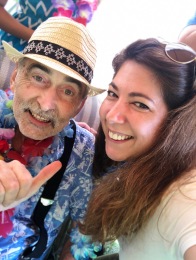
 I’ve written some very personal things in my most recent posts sharing that I am working towards a rebirth. The terrain has been rough and I keep waiting for a smooth path to appear on the horizon; but it isn’t quite visible yet. There are many factors: single parenting, career, the mid-life crisis, menopause…NOT the musical (peri-menopause really, but you know what I mean). It’s like going through puberty all over again with bad skin, mood swings, insecurities abound; but a thousand times worse and with hot flashes, rage, and memory loss. I imagine some of you nodding your heads and laughing as you read this…or maybe crying depending on which way your mood is swinging. I’m learning to embrace Evelyn’s alter ego “Towanda” in Fried Green Tomatoes.
When we are struggling, it is easy to sink into despair and disconnect from the love that surrounds us. I often find myself overwhelmed with day to day life: prepping for classes, grading, packing lunches, helping with homework, getting dinner on the table, laundry, dishes, paying bills, etc. As women, we are supposed to be nurturers balancing it all while taking care of everyone around us. We are told this is our “god-given” role and that pressure can be crushing. I often wonder, who is going to take care of me?
Sometimes making a simple phone call or sending a text message feels like more than I can bear. I can’t make myself do it. I get stuck in the never ending cycle of the daily grind and I think I’ll get to the phone call, text message, or email tomorrow. And then, I blink and a month has passed.
As I write this, I am grieving a great loss for our family. My dear Uncle Ralph, who I wrote about in a previous post, has made his journey to the spiritual realm. I last saw him a little over a month ago when my daughter Sarah and I baked him a cheesecake – a favorite family recipe that invoked the presence of the some of the women we’ve lost – my mother, grandmother, our Great Aunt Dee Dee (who the recipe originated with). When we left I promised to send a link with some articles, a recipe, and Sarah and I had planned to head back for another visit with a batch of cupcakes. I thought about it every day. And I put it off in favor of the daily grind, the aggravation, the despair, the hot flash, or “adulting.”
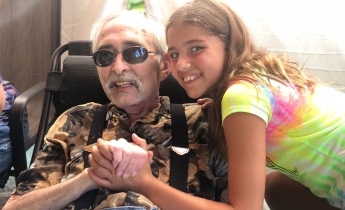 Sarah talked about Uncle Ralph often asking when we would go back and expressed her fear of not seeing him again. And then this morning, I heard the news. It sunk in my gut like a brick. And I thought about this song, “Some Lessons We Learn the Hard Way” where Melody Gardot laments:
Life goes away in a flash
Right before your eyes
If I think real hard well I reckon I’ve had some real good times
Well why do the hands of time
So easily unwind
Some lessons we learn the hard way
Some lessons don’t come easy
That’s the price we have to pay
During my last conversation with my uncle, he said he was so grateful for a second chance; entering hospice gave him the opportunity to recognize what is really important in life and all that he often lost sight of because of the daily grind — love. He knew that God was with him and he recognized the beauty of life as a divine gift.
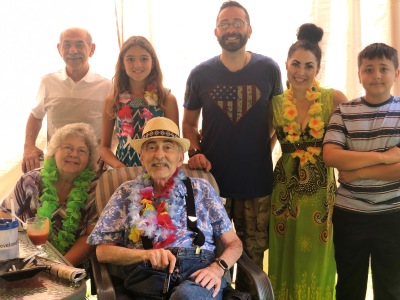 Uncle Ralph said it was as if he was having a living wake. Everyday people came to visit him; they shared stories and laughs, and he was reminded of how many people loved him. Now, he focused on spending every last moment deeply engaged in relationship. Uncle Ralph, Aunt Mary, their children Colleen and Tim, and grandson Jacoby spent their days sitting together appreciating the family they had grown into. Some might say they were wasting time; but really they came to understand the greatest lesson of our lives. It is those precious moments that we share with one another that matter. God is present in those moments. We experience the divine in relationship. My dear uncle has given me such a gift in this lesson.
Tonight, as I am writing, strangely a notification from Uber Eats popped up on my phone. It said I had a dozen Krispy Kreme donuts in my cart ready to be delivered. I opened the app and was going to delete it. But I accidentally placed the order. (Really it was an accident!) In pursuit of a healthier lifestyle, I haven’t had a Krispy Kreme donut in ages. I’ve convinced myself that the donuts were Uncle Ralph granting me grace from the other side…or maybe playing a practical joke; he was always the prankster. A reminder of the sweetness that life can bring if we embrace what we are supposed to.
Rest in peace, my dear Uncle Ralph.
Gina Messina, Ph.D. is an American feminist scholar, Catholic theologian, activist, and mom. She serves as Associate Professor of Religious Studies at Ursuline College and is co-founder of FeminismAndReligion.com. She has written for the Huffington Post and is author or editor of five books including Jesus in the White House: Make Humanity Great Again and Women Religion Revolution. Messina is a widely sought after speaker and has presented across the US at universities, organizations, conferences and on national platforms including appearances on MSNBC, Tavis Smiley, NPR and the TEDx stage. She has also spoken at the Commission on the Status of Women at the United Nations to discuss matters impacting the lives of women around the globe. Messina is active in movements to end violence against women and explores opportunities for spiritual healing. Connect with her on Twitter @GMessinaPhD, Instagram: @GinaMessinaPhD, Facebook, and her website ginamessina.com.
 I was a pastor for 14 years. Yes, a queer, feminist, Baptist pastor. We exist. Simultaneously, I completed a PhD and was a professor, both at divinity schools and in a Women’s, Gender, and Sexuality Studies Dept. I could never find full-time, tenure-track work as a professor, which was my “in the box” dream. And my job as a pastor became incredibly toxic. Between the thick file folder full of hate mail and the sexist and heterosexist microaggressions, it was ultimately the microaggressions that did me in. I experienced a brief reprieve when I went to a little retreat center designed specifically for activists and artists. There, I began to heal. In healing, I discerned that it was time for me to leave. Not just that church, but perhaps the Church altogether. That little retreat center was a balm that gave me the space I needed to turn inward, recharge, examine the power systems designed to disempower queer women like me, and leave feeling inspired and empowered.
  Once the new white pine forest that stretches out before me was part of a larger field that belonged to an old farm. The woods cascade down a steep hill on the east side of the house and run parallel with the brook that empties into another that crosses my property in the wetlands below.
  I grew up within Christianity—one of the faiths that many religious scholars label as a Western tradition. It can be difficult at times to wrap my head around religious concepts and symbols labeled by those same religious scholars as Eastern traditions. Judaism, Christianity, and Islam come under the rubric of Western traditions while Hinduism, Buddhism, Sikhism, and Jainism are categorized as Eastern traditions.



 Enter
Enter 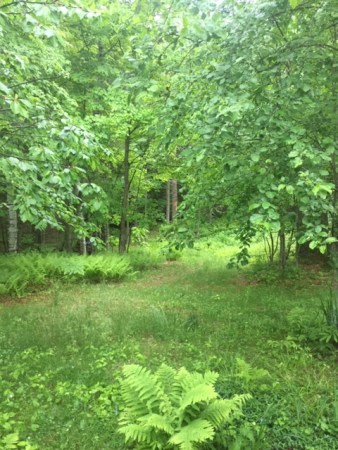
 One of the projects I am working on these days is an essay on the religion of ancient Crete for a series of books on various aspects of the Minoan site of Gournia.
