Lessons from a Tragedy by Beth Bartlett

It’s been over a week now since I first heard the news on MPR that four people had been shot in their homes near a golf course in Brooklyn Park where my son once lived.  My first thought was that I was glad my son was no longer living there.  A little while later I learned that this was not a random act of violence, but rather political violence targeting two Minnesota lawmakers and their spouses.  Gradually the details came in.  The lawmakers were Democratic lawmakers, former Speaker of the House Melissa Hortman and State Senator John Hoffman and their spouses. And then came the tragic news that Hortman and her husband had been killed. As I drove to pick up a friend to attend the “No Kings” protest downtown, I listened to the news reports of warnings not to attend the protests out of an abundance of caution, with the shooter still at large, as well as the voices of protest leaders saying the tragic events of the morning only strengthened their resolve. In the first few moments of the protest, we observed a moment of silence for Hortman and her husband, and for the recovery of Hoffman and his wife. The entire rally felt like a strange mix of grief and rebellious revelry. 

As the identification and eventual arrest of the suspected shooter became known, the tragic events took on an even more ominous tone.  The suspect, Vance Boelter, is a far-right Christian nationalist extremist who had preached against abortion and gay rights. He was schooled in his religious beliefs at the Christ for Nations Institute in Dallas, Texas[i] and was aligned with a charismatic Christian movement whose leaders, in the words of The Atlantic columnist Stephanie McCrummen, “speak of spiritual warfare, an army of God, and demon-possessed politicians.”[ii]

Continue reading “Lessons from a Tragedy by Beth Bartlett”
Mother Blues: Interfaith Somatic Reflections on Support Systems, Chronic Pain, Tension Relief, and Supporting Oneself by Chaz J

I have had a weird relationship with my stomach or core BEFORE birth. 

My back has been hurting since giving birth.

I’ve carried fragments of my birth story like heirlooms,
passed down in murmurs from my mother and family.
They say she went into labor at home,
a warm plate of food in her hands,
My aunt Akami recalls she refused to leave for the hospital
until every bite was finished.

I came into the world under sudden urgency—
an emergency C-section,
my first act a quiet rebellion:
I had soiled the waters before taking my first breath.

My mother remembers it in a haze,
“I was pregnant, went to sleep…
when I woke up, there was a baby in the corner.”

I do not know if every detail is true,
but the outline fits—
the origin of a loneliness that has followed me
like a shadow that never unhooks from the heel.

Continue reading “Mother Blues: Interfaith Somatic Reflections on Support Systems, Chronic Pain, Tension Relief, and Supporting Oneself by Chaz J”

NO KINGS Day June 14, 2025 by Marie Cartier

#nokings #nokingsday 
Many actions took place in Southern California. I participated in one which was so unusual and historic I want to share it with you all on FAR.

My wife and I and friends stood and protested in Seal Beach, CA and then drove through 1000s and 1000sof people lining both sides of Pacific Coast Highway for 30 miles from Seal Beach to Dana Point. I was up through the moon roof screaming “NO KINGS!” for hours!

Continue reading “NO KINGS Day June 14, 2025 by Marie Cartier”

#ShareTheirStories, June updates

Mahmoud Khalil, one of the first people arrested under the administration’s ICE raids. He was targeted because of his outspoken views on Palestinian rights. He is a legal green card holder and was never charged with a crime. Nevertheless the administrations flew him to a holding cell in Louisiana (from NY) in a particularly cruel move that prevented him from being present at the birth of his first child. Even after the baby was born, the government tried to put up roadblocks for his family to visit him and for him to touch his newborn son. He has now been freed by court order but US government is still trying to deport him. He has vowed that he will not be quiet and has already been seen at protests. He is a profile in courage.

Kilmar Albrego Garcia is another case entirely. The eyes of the government have turned his way and now that this has happened, they are doubling down on their cruelty. Just think for a moment of what it is for the government which the power of law enforcement, the powers of detainment to focus their sights on one person. He was originally deported to El Salvador in March. After the government ignored court orders for months he was finally brought back to the US to face federal charges. It is likely this was a face-saving move on the part of the government so they could say, “see he’s a bad guy who deserves this, look at these horrible criminal charges.”

Continue reading “#ShareTheirStories, June updates”

Healing Soul Loss Through Movement

We tend to imagine soul loss as something rare and dramatic, or reserved for those with deep trauma. But in shamanic paradigms across cultures, soul loss is a normal part of being human. The concept refers to moments when a vital piece of our essence disconnects, often as a survival mechanism. In psychology this is called dissociation. This can happen through shock, illness, relational rupture or subtle decisions we make to fit in, stay safe or succeed. A piece of us leaves in order to preserve the rest.

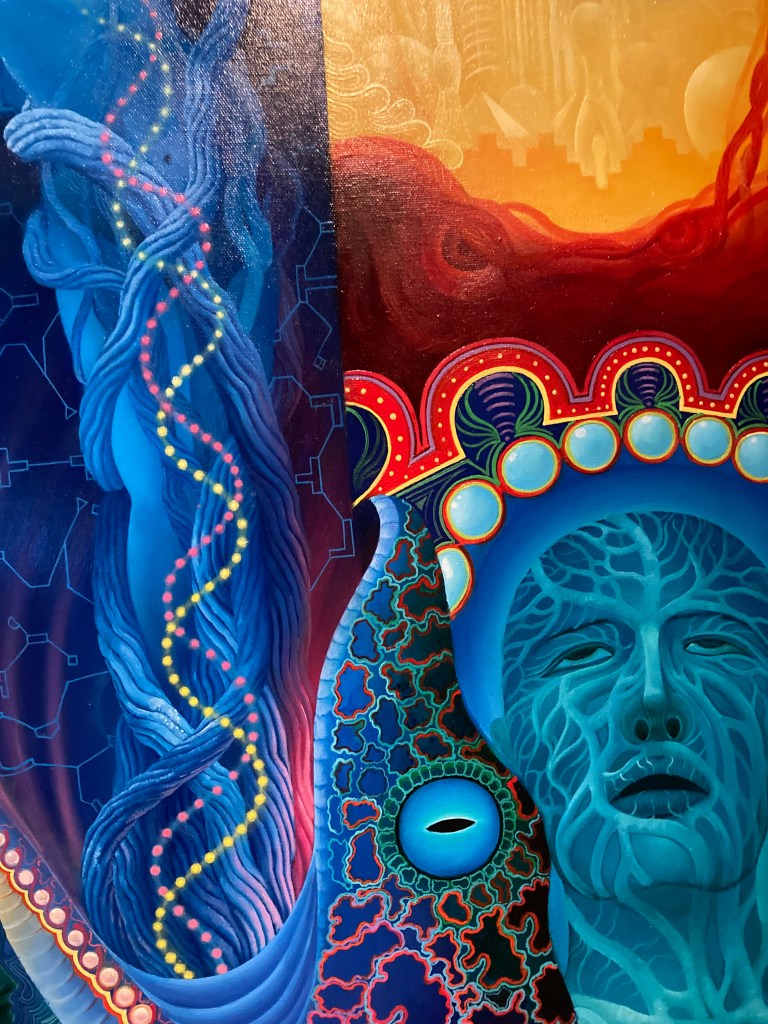
[Image credits: Detail from Anderson Debernardi’s painting “Iniciacion Shamanica”, seen at Exhibition Visions Chamaniques. Arts de l’Ayahuasca en Amazonie Péruvienne, ‎⁨Musée du Quai Branly, 2024. Photo by Eline Kieft.]

Continue reading “Healing Soul Loss Through Movement”

Honeysuckle Jewels and Women with Wings by Sara Wright

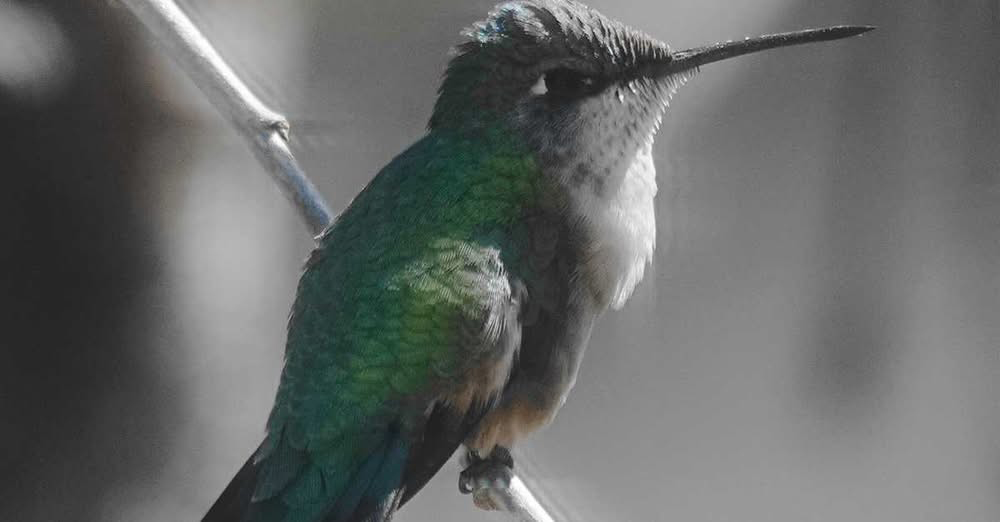
Female Hummingbird in Maine, April 26

Initially I wrote this article for publication at a plant site but was forcibly struck by the reality that what we are doing to plants is exactly the same thing we are doing to humans, women in particular. Separating, Othering, Judging, Dismissing, Eradicating. I could go on here. When you read this article about invasives think about how we are being treated as women. It alarms me that no matter I turn I see the same story played out with humans (women and children suffer most overall), trees, plants, and the animals we are so busy annihilating if not physically then in some other monstrous way. Fill in the blank with your own story.  Then imagine yourself as a bird with wings who carries the seeds of new life into unexpected places.

When I first moved to this area many years ago, I used to spend most of the time in the forests that surrounded my house except in the spring. Then I walked along what used to be a country road to see the wild trilliums, arbutus, lady slippers, bunch berry, violets and columbine that peppered the road edges. 

All the trees and flowers were so plentiful and so beautiful that it took me a few years to pay closer attention to the bushes like the various pussy willows and wild cherries, beaked hazelnut, witch hazel and hobblebush that I also came to love. 

Continue reading “Honeysuckle Jewels and Women with Wings by Sara Wright”

Legacy of Carol P. Christ: ETHICS OF INDIVIDUAL RIGHTS AND CARE SENSITIVE ETHICS IN THE CONTEXT OF THE GAY MARRIAGE DEBATE

This was originally posted on December 9, 2013

carol-christIs care the beginning of ethics? Has traditional western ethical thinking been wrong to insist that in order to reason ethically, we must divorce reason from emotion, passion, and feeling?

In Ecofeminist Philosophy, Karen Warren criticizes traditional ethical thinking–advocating a “care-sensitive” approach to ethics.  Traditional ethics, as Warren says, are based on the notion of the individual rights of rational moral subjects. Like so much else in western philosophy traditional ethics are rooted in the classical dualisms that separate mind from body, reason from emotion and passion, and male from female.  In addition to being based in dualism, western philosophy focuses on the rational individual, imagining “him” to be separable from relationships with others.  Western ethics concerns itself with the “rights” of “rational” “individuals” as they come into relationship or conflict with the “rights” of other “rational” “indiviudals.”

Those who would think ethically are advised to “rise above” the “emotions” and “passions” or “feelings” of the body, in order to reason dispassionately about the rights and responsibilities of rational individuals.  According to this theory, emotions and passions “get in the way” of rational thinking.  Continue reading “Legacy of Carol P. Christ: ETHICS OF INDIVIDUAL RIGHTS AND CARE SENSITIVE ETHICS IN THE CONTEXT OF THE GAY MARRIAGE DEBATE”

Herstory Profiles: Bletchley Park, the 6888th, and Communication by Anjeanette LeBoeuf

There is so much going on in our current state of affairs, that I found myself reaching for some sort of touchstone, centering agent, even some sort of calming force. As a scholar, as someone drawn to the humanities, I knew the path forward had to include our histories. This post will look at three examples of extraordinary women during WWII and beyond: the 6888th Unit, the women of Bletchley Park, and Julie Moore.

All three were introduced to me through popular culture, storytelling, and our dedication to preserving whole histories. At a time where we are seeing an active attack on our histories, humanities, arts, and our education systems it is even more vital that we continue to tell the stories, remember their names, and continue to walk the paths they have forged.

Continue reading “Herstory Profiles: Bletchley Park, the 6888th, and Communication by Anjeanette LeBoeuf”

We Don’t Have to Live Like This by Trista Hendren

A Tribute to Carol P. Christ’s Legacy of Peace

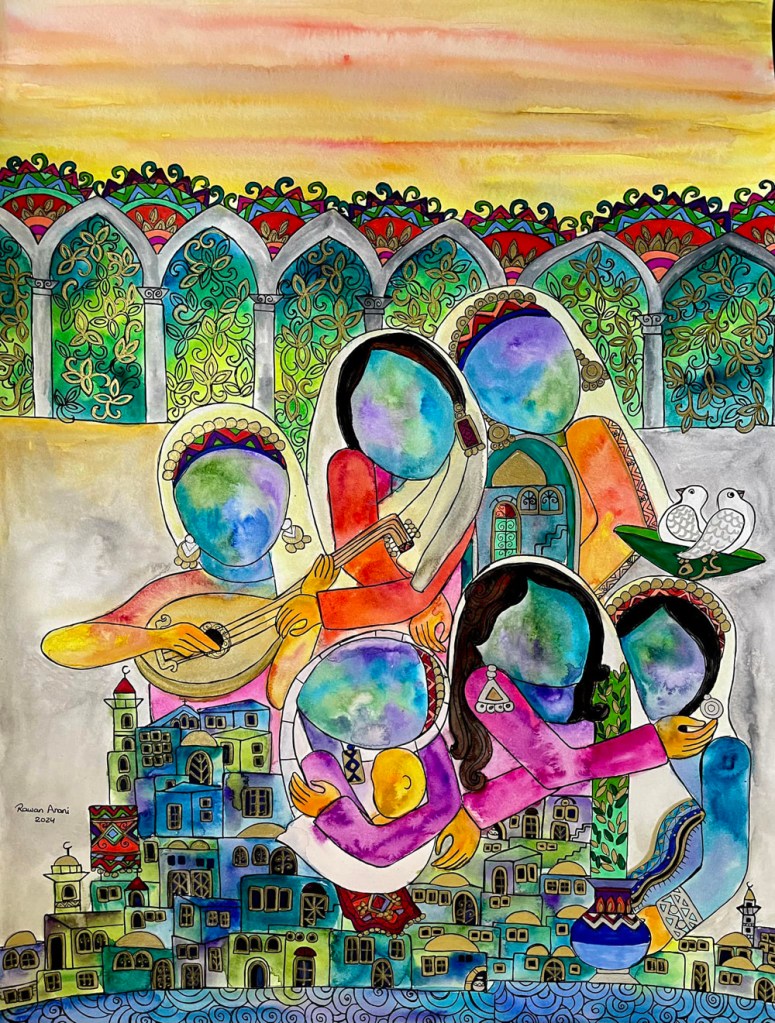
Rawan Anani, The Melody of Freedom, Gaza Palestine

Carol P. Christ was a feminist scholar and thealogian I deeply admired from afar for many years. That changed when I read her post in Feminism and Religion describing “washing wet clothes cast off by refugees who crossed the Sea of Death.”[1]

In that moment, she became a woman I connected with on a soul level. What could be more profound than washing and folding the clothing of tiny dead children? What other metaphor could be more vivid for how desperately we need to change the world?

“A tiny pink long-sleeved shirt with a boat neck, for a girl, size 3 months. 

A pair of leggings with feet, grey with pink, orange, brown, white, and blue polka-dots, to be worn over diapers.” 

The week before, she asserted that “the only ‘solution’ to the problem of people leaving their homes in fear for their lives is TO END WAR.” She continued, “No one takes this suggestion seriously enough to engage it.”[2]

I remember sitting inside the Idean cave with our Goddess Pilgrimage group when Carol read, “We Need a God Who Bleeds Now” by Ntozake Shange. I knew the poem well, but hearing Carolina read it so forcefully shook something deep inside me.

While I have had the privilege of having several wonderful female pastors, they were never particularly affirming of my womanhood—or my divinity. They certainly never celebrated my period.

Continue reading “We Don’t Have to Live Like This by Trista Hendren”

Miriam Is For the Girls by Zoe Carlin

The Book of Exodus is a well-known scripture, and it is one that many Jews, Christians, and even people who are non-religious are very familiar with. Growing up, our family continued to tell this story year after year during Passover. It was one of many classic Torah readings shown to us in our temple. So, one of the key figures in this story is Miriam, Moses’ older sister. Most remember that she helped her mother deliver Moses in secret at the Nile River when he was an infant due to the Pharaoh setting an order to kill every Hebrew son because of concerns of the population growing too much (Exodus 11:5-6). She also assisted in leading the Israelites across the Red Sea when Moses opened it up for the Hebrews to cross (Exodus 14:21-22). An article titled “Miriam: Midrash and Aggadah” shares a deeper analysis of the roles that Miriam upheld as a sister, a daughter, and a woman during this time. It has also informed my understanding of Miriam’s story.

Continue reading “Miriam Is For the Girls by Zoe Carlin”