Note from Carol Christ: I returned home from the Goddess Pilgrimage to Crete a week ago to find my island, Lesbos, and my village, Molivos, overwhelmed with a refugee crisis of enormous proportions. We are a town of about 1000 permanent residents, and I would estimate that 10,000 or more refugees from the wars in Syria and Afghanistan have passed through our village in recent months. Local authorities and volunteers are exhausted, and there is an urgent need for help from the European Union. This week instead of my own blog, I am offering my translation of a moving plea for help from my dear friend and colleague in the Green Party, Michael Bakas, who by the way is himself a feminist.
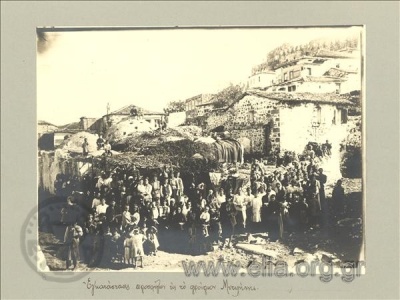 There is nothing new about refugees fleeing from war. At the beginning of World War I, more than 50,000 people arrived in Lesbos from the nearby shores of what is now Turkey. At the end of the war many of these refugees returned to Asia Minor, but after the Greek army invaded and was driven back, the Asia Minor Catastrophe of 1922 sent nearly a million refugees to Greece.
Faced with an ocean of refugees flooding the island, the local population was dumbfounded, fearful, and tied up in knots. They shut their doors and averted their eyes: “it was as if a dark cloud of death had descended on their minds, and so they felt nothing. They did not want to see anything or to hear anything that was happening on the other side of their doors.” The end of this story is well-known: with courage and a great will to live, the refugees put down roots and found their way.
In the first decade of the 21st century Lesbos again experienced a wave of refugees who came via Asia Minor. This group, mainly from Afghanistan, came to the island with the hope of putting war behind them. Most of them were held for a year or more in cramped conditions near the capital of Lesbos. This center was closed in 2009 due to the efforts of local volunteers who had alerted European groups to the problem.
But the Greek debt crisis soon followed. For several years, the flow of refugees lessened. When it began to increase at the end of 2012, volunteers from all over the island came together without any government support to provide help. Thousands of refugees were housed in a former campground for children’s holidays, where they were offered clean clothing, blankets, and food, as well as love and compassion.
Lesbos became known as an all-European model for solidarity. Resisting the xenophobia that was growing in Greece and in Europe as a whole, the citizens of Lesbos reached out to the refugees, refusing to listen to those who were promoting hate. The neo-fascist anti-immigrant party known as Golden Dawn gained less support in recent elections in Lesbos than in most of the rest of Greece.
 The good will of the people of Lesbos is currently being tested by the wave of migrants now arriving on our shores. Estimates are that more than 20,000 refugees have arrived in our island alone in the first five months of 2015. There are no systems in place to deal with them. Yes, the European Community has dedicated resources to the “refugee problem,” but most of that has gone into patrolling the borders in hopes of stemming the flood of refugees—not to helping those who arrive on European shores.
Those who arrive in northern Lesbos are being welcomed and fed by volunteers, but the Coast Guard does not have the resources to transport them to the capital city for processing. Thus they are being told—mothers and babies among them—that they must walk 60 kilometers on mountainous roads in summer heat to reach their next destination.
Once they arrive in the capital city, the Coast Guard is not able to accept and process all of them, because the reception center cannot cope with the numbers. Thus, thousands of refugees sit in the harbor, hoping the authorities will arrest them and thus be forced to process them.
The residents of Lesbos are once again beginning to become afraid of the influx of refugees. In the touristic village of Molivos, at the same time that both locals and foreigners are helping the new arrivals, others are saying that “it spoils the vacations of tourists to be faced with seeing so many refugees.”
The situation seems to be more than government officials can cope with. The mayor of the island has been trying to find a place where the refugees can stay while they are being processed. The regional government has not yet lifted its hand. The Minister of Immigration visited the island, but no interventions followed. The European Community has yet to act. The UN and international aid groups have not arrived.
This state of affairs plays right into the hands of the racists and xenophobes. Rumors are spreading about the refugees—lies about diseases they are carrying and threats they pose to local and tourist women. People who in the past have been sympathetic to the refugees and the volunteers are getting fed up. Their pent up anger could lead to violence within our own communities or against the migrants.
At the same time more and more refugees are arriving, sleeping in the streets, relieving themselves without toilets–among them pregnant women, babies and old people, and even disabled individuals—all trying to save themselves from violence in their own countries.
Instead of fighting each other, it is time to get serious about finding a solution to a humanitarian crisis of vast proportions. Lesbos—along with other islands of the Aegean—must be declared an “Emergency Zone.” The Greek government, the European Community, and international organizations must provide resources.
We need arrival centers in northern Lesbos, where the immediate needs of the migrants can be met—including shelter from the sun, food, toilets, blankets, and a place to sleep if necessary. Processing centers adequate to the numbers of refugees need to be opened in the island’s capital. Transport to these centers must be provided. Trained Greek or EU officials must be sent to staff them.* We also need a plan for August when the ferryboats being used to transport the refugees to Athens will be full, and if no alternate plans are made, large numbers of migrants will be forced to stay on the streets or in already crowded centers in the worst of summer’s heat.
It is time for us to move forward–Greeks, Europeans, and migrants together–in the name of our common humanity and in concern for the lives of all human beings on our planet. We also need to work to end the wars and the violence that drives people from their homes and homelands.
*We have just learned that the EU is planning to send a team of officials to assist with processing the refugees.
 Michael Bakas is a leader of the Green Party in Lesbos, Greece and has been working for many years with its committee on Human Rights. This call to action was originally published in longer form in Greek on June 16, 2015 on Apolotaria.gr., and was published in English in Green European Journal on June 19, 2015, the International Day of the Refugee.
 Timothy Jay Smith has been working closely with volunteers in Molyvos and Mytilini to provide for the refugees. If you wish to contribute to these efforts, you can donate through Tim’s account at PayPal: kosmosfilms@gmail.com or send a personal check to Timothy Jay Smith in U.S. dollars or Euros (French banks only). Also see his “Mister, They’re Coming Anyway.”
 Carol P. Christ leads the life-transforming Goddess Pilgrimage to Crete (facebook and twitter). Carol’s books include She Who Changes and and Rebirth of the Goddess; with Judith Plaskow, the widely-used anthologies Womanspirit Rising and Weaving the Visions and forthcoming next year, Goddess and God in the World: Conversations in Embodied Theology. Explore Carol’s writing.


 In May, I attended the Cleveland Symphony Orchestra’s presentation of Berlioz’ Damnation of Faust. This work, featuring four soloists, a full choir and orchestra, and a children’s choir, was first performed in Hungary in 1846. Its composition was inspired by a French translation of Goethe’s Faust, following the basic storyline of Faust in four acts: Faust’s disillusionment; Faust’s encounter with Mephistopheles and the allure of happiness; Faust’s seduction of Marguerite; and Faust’s damnation/ Marguerite’s redemption. With such limited space, the opera/cantata plays more as a précis of Faust than a full telling of the story, which is perhaps why the dramatis personae seem rather more like caricatures of themselves than richly developed characters. There were beautiful moments in the music, and the performances were brilliant, but the whole left me feeling apathetic… that is, until I went to the bathroom.
 In
In 

 One thing about the Nation of Islam (NOI) mosques that I have always enjoyed in comparison to mainstream Islamic mosques is that the gender separation is side-by-side rather than front-to-back with the women always in the back on the same level or in the back on a balcony or in a completely separate room in the back.
 This reflection was initially a part of an attempt to create radical liturgies that might connect the frequent theological bias towards ‘light’ and the implicit White Supremacy that such theologies perpetuate. In addition, this particular reflection was inspired by a friend’s resistance to societal gender norms.




 Feminism and Religion