Have you visited Feminism and Religion’s Feminist Sparks page?
Here you will find upcoming events, announcements, and other Sparking news related to feminism and religion at the intersection of scholarship, activism, and community. Feel free to send in your own suggestions of upcoming events and announcements to be added to the page. Please email those to feminismandreligionblog@gmail.com and include “Feminist Sparks – submission” in the subject line of the email.
Now scroll down to read the most recent Sparking News!
~~~~~~~~~~~~~
Feminism and The Church
Call for papers deadline is Friday, February 21 (two more days to submit a proposal!)
March 21-23, 2014
Boston University School of Theology
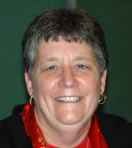
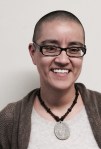 The Center for Practical Theology and the Doctoral Student Association at Boston University will host the second Graduate Student Conference at BU’s School of Theology. Feminism and The Church is one of its four streams of inquiry under the larger theme, “Theological Research and The Church.” There is still room for paper and workshop proposals in the Feminism and the Church stream. Please submit your proposals and join Xochitl Alvizo and Mary Hunt, both FAR contributors, who will also be presenting. Additionally, Xochitl will be conducting an interview with Mary Hunt as part of the conference program. It should be fun – join us!
~~~~~~~~~~~~~
A Revolutionary Moment: Women’s Liberation in the late 1960s and early 1970s
March 27, 28, 29, 2014
Boston University
Program Schedule is now posted
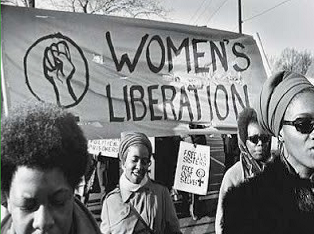
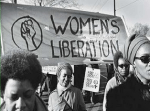 Hosted by the Women’s, Gender, & Sexuality Studies program at Boston University, in partnership with many others, this conference aims to do some historical remembering and celebrating of the Women’s Liberation Movement as well as critical analysis and discussion of the unfinished business that still continues today. It will inevitably be a reunion of many of the women, and men, who were directly involved in the movement, but its scope is also much larger than that. It’ll be a very exciting event! Plan to attend and register now!
~~~~~~~~~~
Goddess Pilgrimage to Crete with Carol Christ
May 31-June 14. 2014 and September 27-October 11, 2014
 Find the Goddess and a Society of Peace on a Sacred Sites Tour for women in Greece with Carol Christ, author of Rebirth of the Goddess. The Goddess Pilgrimage to Crete is a two week tour for women. Carol will lead you in rituals celebrating the grace and joy of life and introduce you to a pre-patriarchal culture where the Goddess was revered as the Source of Life, women were honored, people lived in harmony with each other and with nature, and there was no war. The pilgrimage will engage your body, mind, and spirit. Tours are small and intimate enough for community to develop. Join us now!
~~~~~~~~~~~~~
Seminar on Debates about Religion and Sexuality
Harvard Divinity School
June 10-19, 2014
Applications are due February 5, 2014.
We are pleased to announce the 2014 summer seminar at Harvard Divinity School for scholars, other writers or artists, religious leaders, and activists who are working on a first large project in which they hope to change the terms of current debates around religion and sexuality. For scholars, this project would be either a doctoral dissertation or a first book. For other writers and artists, religious leaders, and activists, it might be a first book, though it might also be a new curriculum, a series of public presentations and performances, or a media piece. The seminar understands both “religion” and “sexuality” broadly. It especially seeks participants from outside the United States. Harvard Divinity School will pay for participants’ travel to Cambridge and lodging and meals during the seminar. The seminar will be directed by Mark D. Jordan (Washington University in St. Louis) and Mayra Rivera Rivera (Harvard University). Faculty from Harvard and other institutions or organizations will lead sessions in their areas of interest. Large portions of the seminar’s time will be devoted to discussing participants’ writing in workshop format. Applications are due February 5, 2014. Invitations to the seminar will be issued by February 20. Details of the application and further information about the program are available online at http://www.hds.harvard.edu/faculty-research/conferences-and-seminars/debates-about-religion-and-sexuality. Questions may be directed to rsseminar@hds.harvard.edu.
~~~~~~~~~~


 How do we make sense of loss, great loss, and everyday disappointment? Some would tell us that “everything has a purpose” or that whatever happens “must be the will of God.” I have found that these answers to questions raised by life as we know it often do more harm than good. Yet they have a sticking power–we hear them all the time, sometimes even from other feminist seekers.