Rape Culture, Sexual Violence, and Spiritual Healing by Gina Messina-Dysert

Gina Messina-Dysert profileRecently I had the great pleasure of presenting on the WATER Teleconference Series and dialoguing with women from around the world about how to promote healing in a rape culture. Likewise, in a previous post I discussed rape culture in the Church and its impact on victims of sexual violence and the greater community.  Within a rape culture, those who experience sexual victimization endure physical, emotional, and spiritual wounding. It is a victimization unlike any other, and one that we must continue to discuss in search of healing.

This topic is important to me for obvious reasons. As a woman, mother, and social justice activist, I am passionate about eradicating gender based violence.  This said, I also have direct experience with this brutality that plagues our society. Having worked with rape survivors for more than a decade, I have witnessed the suffering endured as a result of such violence.  My own mother died prematurely as a result of sexual and domestic violence; having come to learn of the horrors she lived through has greatly impacted my understanding of the deep spiritual wounding experienced due to our culture of shaming and blaming – our rape culture.

Han has become a key concept in the way I understand the suffering of the rape victim.  Continue reading “Rape Culture, Sexual Violence, and Spiritual Healing by Gina Messina-Dysert”

Thanks for Coming (Out): Sexuality, Sports, and Spirituality by John Erickson

I have to be honest, Jason Collins’ admission that he was a homosexual, albeit brave, upset me. While coming out is an completely unique experience to every individual that does it, Jason Collins’ story was just another example of the rampant sexist and heteropatriarachal world that privileges male bodies and sexualities over women’s similar experiences. While I applaud Jason’s story and it’s timing, the first thing I asked to my colleagues was: Where was the hubbub over Sheryl Swoopes or Martina Navratilova?

John Erickson, sports, coming out. Like marking off items on a proverbial checklist, closeted LGBTQ individuals who exist within and outside of the world of professional sports, can recount the numerous things they struggle with in terms of their sexuality.  From fearing of the actual coming out process, dressing in their car or at home to avoid the subtle glances and whispers of individuals in the locker room, to wondering what coming out would mean not only for their game but also for their social and, if they choose, spiritual lives, closeted and out LGBTQ individuals within the multi-billion dollar professional sports industry must grapple with that age old question: what does it mean to be gay and open about it?

The Locker Room

I have to be honest, Jason Collins’ admission that he is a homosexual, albeit brave, upset me.  While I understand that coming out is an completely unique experience to every individual who does it, for me Jason Collins’ story was also an example of the rampant sexist and heteropatriarachal world that privileges male bodies and sexualities over those of women.  While I applaud Jason’s story and the timing, the first thing I asked to my colleagues was: where was the same hubbub over Sheryl Swoopes or Martina Navratilova? Continue reading “Thanks for Coming (Out): Sexuality, Sports, and Spirituality by John Erickson”

The Morning After Pill and Obama’s Daughters by Carol P. Christ

carol p. christ 2002 colorBy now it should be clear to feminists that when Barack Obama thinks about women, he does not view us as independent individuals, but rather as he said in his 2nd term inauguration address–to my consternation—as “our” mothers, wives, and daughters.  Obama does not address us–he addresses the men he expects to make decisions for us.  I almost wrote a blog on this egregious error in perception and judgment on the part of the President in January, but in order not to be seen as nit-picking, I held my tongue.  The recent decision of the White House to continue to restrict the availability of the Plan B , brings this question to the fore again.

Plan B is a brand name for the “morning after pill.”  If taken within 3 days of unprotected intercourse, it will prevent conception.  There is now a much cheaper generic version as well.

After reviewing the effects and side effects of Plan B, the Federal Drug Administration found it safe and reliable and advised the US Department of Health and Human Services that it should be made available without prescription or age restrictions.  In late 2011, the Obama administration and Kathleen Sibelius made the unprecedented decision to overturn the recommendations of the FDA and to allow Plan B to be purchased without prescription only by women age 17 or older.  Just over a month ago, US District Court Justice Edward Korman of New York ruled that the Plan B and the generic alternatives should be made available without restriction.  Before the ruling could take effect, the Obama administration lowered the age restriction to 15, while announcing that it would appeal Justice Korman’s decision to make the morning after pill as available as aspirin.

“Current and former White House aides said Obama’s approach to the issue has been heavily influenced by his experience as the father of two school-age daughters.”   Continue reading “The Morning After Pill and Obama’s Daughters by Carol P. Christ”

Review of “The Book of Mormon” by Ivy Helman

IMG_5998My friend and I won two tickets to “The Book of Mormon” showing as part of Broadway in Boston.  Having known nothing about the musical, we were curious and excited to be going.  Nearly two weeks later, we are still discussing how we feel about the production.  We agree that overall we like it and there are some very funny parts, but we are also troubled and disgusted by it on a number of levels.  Moreover, the fact that we like it makes us quite uncomfortable.

As a Broadway production, the cast was amazing!  The songs were creative.  Characters were dynamic and showed marked growth.  “Spooky Mormon Hell Dream” was outright brilliant with its use of humor, satire and fear to explain the Mormon preoccupation with hell as punishment for immorality and/or disbelief. Continue reading “Review of “The Book of Mormon” by Ivy Helman”

Painting Isadora Duncan By Angela Yarber

A dancing woman stands center stage, her arms outstretched in natural, free, and unbound movement, as her heart cries out to us…

In May of 1877 a dancing, feminist, revolutionary was born.  She was not constrained by the corsets, morals, or traditions of her time.  Barefoot, clad in flowing garments, with a diaphanous scarf in hand, she stepped onto the stage and rocked the world: the world of dance, the world of women, and the world of religion.

Born in San Francisco as Dora Angela Duncan and known to us as Isadora Duncan, or Holy Isadora.  This wild woman rejected the rigidity of ballet, conventional roles for women, and traditional religion.  After feeling constrained by the pointe shoes, corsets, and unyielding technique of American ballet, Duncan left for Europe, intent on revolutionizing the world through dance.  She claimed, “I have come to bring about a great renaissance of religion through the dance, to bring the knowledge of the beauty and holiness of the human body … (Duncan quoted by Terry Walter in Isadora Duncan).” Continue reading “Painting Isadora Duncan By Angela Yarber”

Lust in the Heart by Linn Marie Tonstad

Linn Marie TonstadLove the sinner, hate the sin. We are all familiar with the bludgeon this statement represents in Christian circles. It functions as a way to maintain one’s goodness and Christlikeness (supposedly!), while simultaneously condemning and persecuting those who find themselves drawn to live lives outside the constraints of heteronormativity in all its variations. The statement hardly needs to be deconstructed – it proves its own emptiness in relation to the way sexuality is understood as identity in the contemporary context. (There are Foucaultian reasons to be unhappy with this understanding of sexuality – one of the disciplinary functions of power on his account is the desire to find a name that will express one’s true identity – but we’ll save that for another day.)

Instead, I think we should consider a much more fundamental contradiction in the way Christian churches today speak and think about sexuality. In many mainline congregations in the US-European context, the debate has been framed around celibacy versus “practice” for persons identifying as gay and lesbian. Excluding the fringe ex-gay movement and its horrors, there are three typical positions that churches take up. One, celibate gays and lesbians may participate fully in church life. Two, married and monogamous gays and lesbians may participate fully in church life. Three, neither marriage nor monogamy are required for gays and lesbians (or anyone else) – the latter is perhaps not a frequent position for churches to take, at least officially, other than in the MCC. For most mainline denominations, the fault line lies between those who assert the ‘vocation’ of celibacy for gay and lesbian persons, and those who permit marriage. Continue reading “Lust in the Heart by Linn Marie Tonstad”

A Calling, A Vocation by Elise M. Edwards

Elise Edwards

In my previous post The Feminist Influence, I began discussing what a feminist perspective might bring to a theological study of architecture.  I asserted that a feminist perspective on the ethical function of architecture offers at least two contributions: (1) it provokes questioning about what flourishing is for all peoples and the Earth, and (2) it provokes examination of systems of power and privilege and how they are constructed into our built landscape.  I think a feminist vision of architecture could help all of us (even those of us who are not design professionals) promote design that respects and responds to our environment, addressing the harm we have done.  I do want to give some thought, though, to what it means especially for architects and other design professionals. Continue reading “A Calling, A Vocation by Elise M. Edwards”

Lady of the Trees by Mama Donna Henes

Donna Henes, Urban Shaman, Queen of my  self, crones,

Her roots reach to the very center of the Earth where they wind around the sacred wells, the deep source of wisdom…

Possessing the potent powers of fertility, growth, resilience and longevity, the tree is widely seen as the progenitor of the world. Family Tree. The Tree of Life. The tree goddess was seen as a sylph, an airy tree spirit who resides among the green leaves, sustaining and nurturing the vegetative forces. She is the symbol of the flow of life, a Mother Goddess who is Herself the Tree of Life.

The Maasai people claim their descent from an original parent tree. For the Slavs, the world tree is the symbol of all relationship, and as such, is held as the central philosophical image in that culture. The Maya of Central America understand themselves to be part of a great celestial ceiba tree. This silk-cotton tree, which stands for all life is the pole at the center of the Earth and serves to hold up the heavens. The Koran refers to the cosmos as a tree. Continue reading “Lady of the Trees by Mama Donna Henes”

What About Contraception in Pope Francis’s Promise to the Poor? by Dawn DiPrince

Pope Francis, at nearly every opportunity – including the choice of his name, has symbolically expressed a commitment to the poor. In just a little over a month, he has declined the customary gold papal cross, the ermine-trimmed red velvet cape, and the showy red loafers worn by his predecessor. He has refused the palatial papal penthouse apartment and is currently living in a two-room suite among the Vatican’s cardinals.

In additional to a more austere lifestyle, Pope Francis has spoken out about the world’s poor. His namesake is St. Francis of Assisi, who famously worked for the poor and for peace. The Pope claims he was inspired to take the name Francis when remembering a friend’s urging to “not forget the poor.” More to the point, Pope Francis has stated that he wants “a Church which is poor and for the poor!” Continue reading “What About Contraception in Pope Francis’s Promise to the Poor? by Dawn DiPrince”

Rituals Of Spring and Greek Easter by Carol P. Christ

carol p. christ 2002 colorThough I am not a Christian any more, I don’t want to sit home alone on Easter Day.  Besides being a Christian ritual, Greek Easter is a time to eat lamb with family and friends, and to celebrate the coming of spring by feasting out-of-doors in flowering fields or in a garden filled with flowers, bees, butterflies, and birds.  Such rituals have been celebrated from time immemorial.

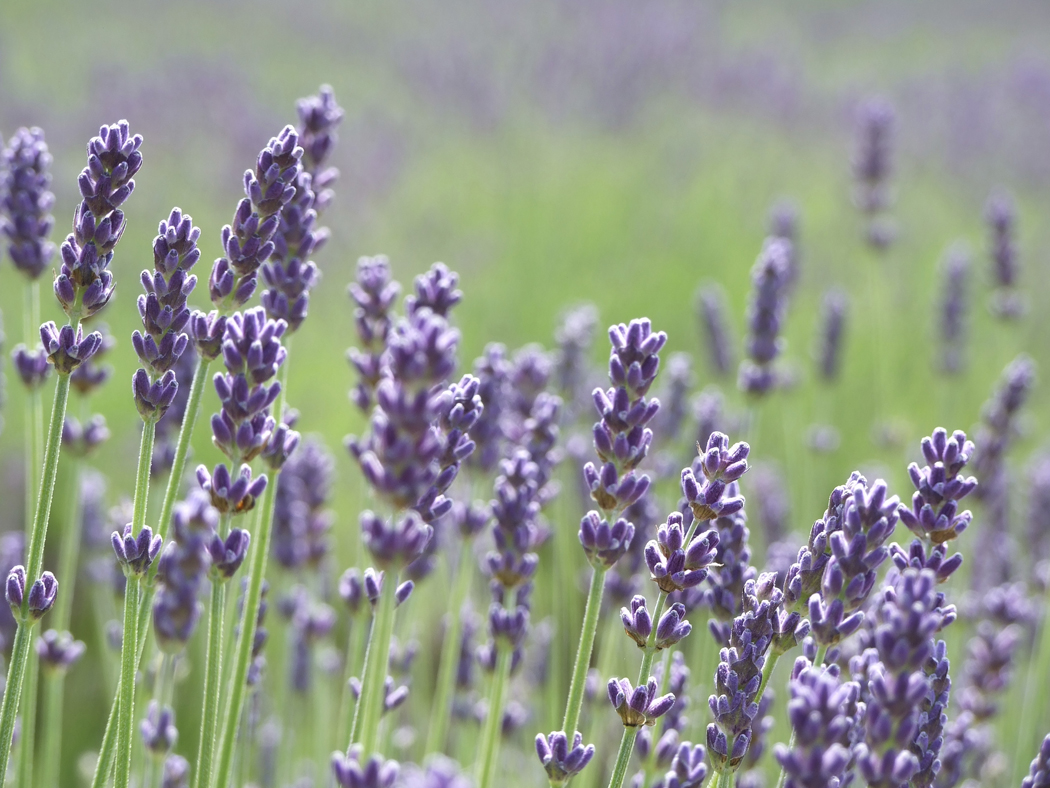
lavenderGreek Easter came late this year, only yesterday, May 5.  I prepared for an Easter party in my garden for weeks.  My garden is planted with herbs and aromatics—lavender, thyme, oregano, rosemary, curry plant, rue, sage, cistus, rose-scented geranium, sweet william, cat mint and several other kinds of mint, bee balm, and roses and fruit trees, including lemon, bitter orange, pomegranate, olive, quince, and cherry.  Everything blossoms in spring, attracting bees and butterflies.

purple sageI began weeding and pruning about 6 weeks ago.  This year I had to remove many overgrown lavender plants.  For the last 3 weeks in addition to ongoing weeding and pruning, I have been replanting lavender which I have promised myself to prune “way back” in the fall, along with purple sage, blue daisies, and thyme.  Though there is bare ground in some parts of the garden, in other parts mature plants and trees are in full flower. Continue reading “Rituals Of Spring and Greek Easter by Carol P. Christ”