Legacy of Carol P. Christ: GODDESS AND SACRED COW: A RE-EXAMINATION OF THE MYTHOLOGY OF THE SACRED BULL

This was originally posted on August 5, 2013
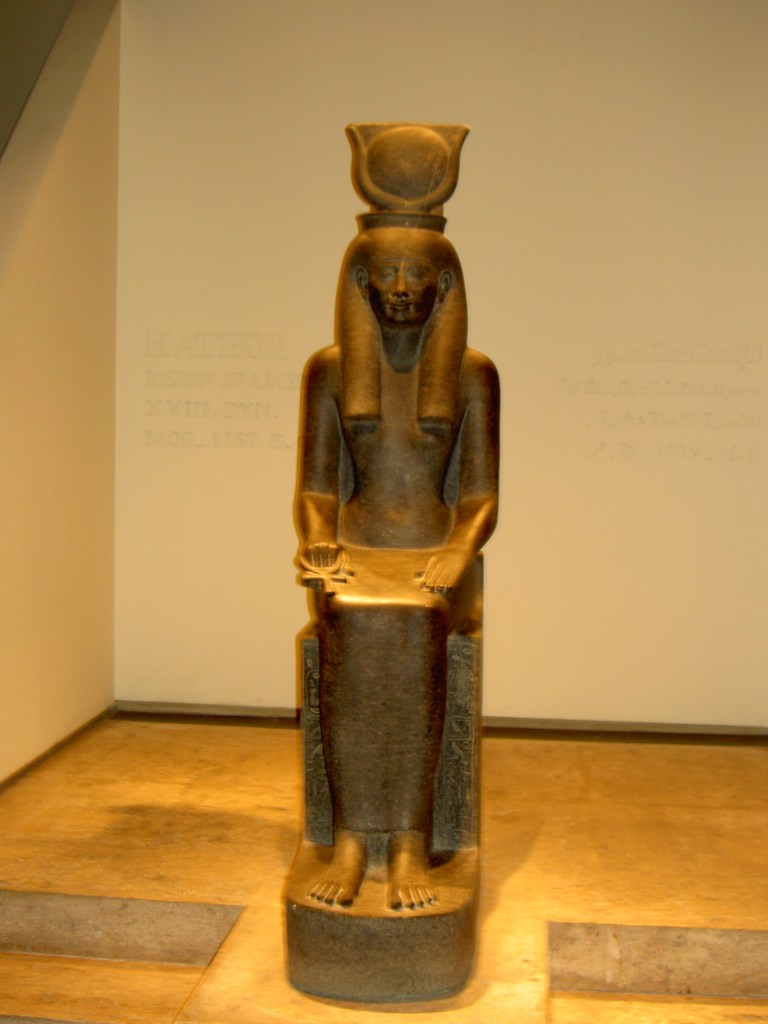
Most archaeologists and visitors to museums assume that when they see a horned bovine, they are faced with the image of the male God or the image of the bull sacrifice.  In the minds of many, these two are one, as we have been taught that the male God who was the consort or son-lover of the Goddess was sacrificed. Yet horned Goddesses are not infrequent in the history of religions and Hindus still revere the sacred cow.  

Cattle have played an important role in human life from the beginning of agriculture.  Cows provide milk which is also turned into butter, cheese, and yogurt.  Most of the young males and some of the females are killed for meat or leather, while a few males are kept to impregnate the females.  Though the “raging bull” is the lens through which most of us think about mature male bovines, I have been told by a friend who raised cattle that in fact bulls are for the most part gentle and even sweet–though of course they are also potentially dangerous.

Continue reading “Legacy of Carol P. Christ: GODDESS AND SACRED COW: A RE-EXAMINATION OF THE MYTHOLOGY OF THE SACRED BULL”
Legacy of Carol P. Christ: Reading Plato’s Allegory of the Cave as Matricide and Theacide

This was originally posted on October 22, 2012

When I read Plato’s allegory of the cave as an undergraduate, I was told it had something to do with the idea that the “form” of a table is more “real” than the table itself. I must confess that I had no idea what this could possibly mean.

As a graduate student, I struggled with philosophical and theological ideas rooted in Platonism.  Rosemary Radford Ruether named the flawed worldview created by a “classical dualism” that separates mind from body, spirit from the world, rationality from emotion, and male from female.  Her ground-breaking essay “Mother Earth and the Megamachine” clarified the difficulties I was having.

Continue reading “Legacy of Carol P. Christ: Reading Plato’s Allegory of the Cave as Matricide and Theacide”

Legacy of Carol P. Christ: Religions and the Abuse of Women and Girls: God Is the Problem

This was originally posted on November 12, 2018

At the 2009 meeting of the Parliament of World Religions, former US President Jimmy Carter called the worldwide abuse of girls and women the greatest unaddressed human rights crisis of our time. In the book that followed the speech, he compared sexism to the racism he witnessed in the US South, stating:

There is a similar system of discrimination, extending far beyond a small geographical region to the entire globe; it touches every nation, perpetuating and expanding the trafficking in human slaves, body mutilation, and even legitimized murder on a massive scale. This system is based on the presumption that men and boys are superior to women and girls.

Continue reading “Legacy of Carol P. Christ: Religions and the Abuse of Women and Girls: God Is the Problem”

Return to Mountain Mother[1] by Jeanne F. Neath

Mountain Mother, I hear you calling me.
Mountain Mother, we hear your cry.
Mountain Mother, we have come back to you.
Mountain Mother, we hear your sigh.

Lyrics by Carol P. Christ [2]. Sung to the tune of “Ancient Mother.” (origin unknown)

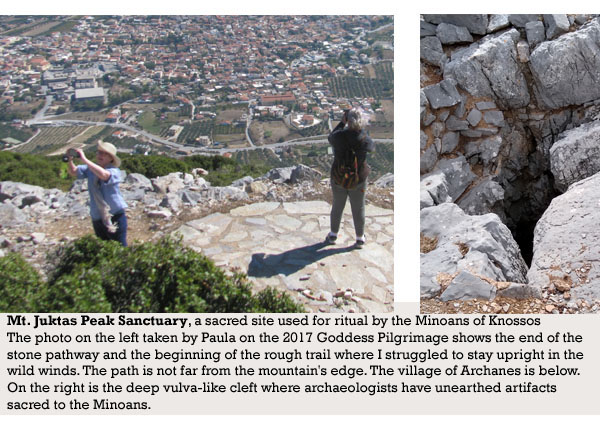
What do a bunch of feminist women do while riding a tour bus around the Mediterranean island of Crete? If they are on the Goddess Pilgrimage started by Carol Christ and continued by Laura Shannon, they sing songs honoring the Goddess. The song that drew me most from the first time I heard it on the fall 2022 Goddess Pilgrimage was “Mountain Mother.” Not surprising since the rocky, sparsely vegetated, yet hauntingly beautiful mountains of Crete surrounded us much of the time as our trusty bus wound its way up and down and around the island.

Continue reading “Return to Mountain Mother[1] by Jeanne F. Neath”

Legacy of Carol P. Christ: Woman and Nature: Our Bodies Are Ourselves

This was originally posted on June 26, 2017

This earth is my sister; I love her daily grace, her silent daring, and how loved I am how we admire the strength in each other, all that we have suffered, all that we have lost, all that we know. We are stunned by this beauty, and I do not forget: what she is to me, what I am to her.

These words are from Susan Griffin’s Woman and Nature which I often recommend as one of my favorite books. Over the years I have read this passage and others from Woman and Nature aloud with my students, and we have always been moved, most  of us to tears. More recently these words have become the center of the “Morning Blessing” on the Goddess Pilgrimage to Crete.

Continue reading “Legacy of Carol P. Christ: Woman and Nature: Our Bodies Are Ourselves”

Legacy of Carol P. Christ: FORGIVENESS or TRUTH: WHICH IS THE BEST REMEDY?

This was originally posted on March 5, 2012

What happened to you really was bad. This should not happen to any child. It should not have happened to you.

In our culture there is often a rush to forgiveness that precedes acknowledging the harm that has been done. When I was a child and my father yelled at me or withheld love, I was told by mother, “He really does love you. He just does not know how to show it.” She sometimes added, “Even though he will never say he is sorry, you should forgive your father, because he did not really mean what he said.”

Continue reading “Legacy of Carol P. Christ: FORGIVENESS or TRUTH: WHICH IS THE BEST REMEDY?”

Woman’s Sacred Hand – and Handkerchief by Laura Shannon

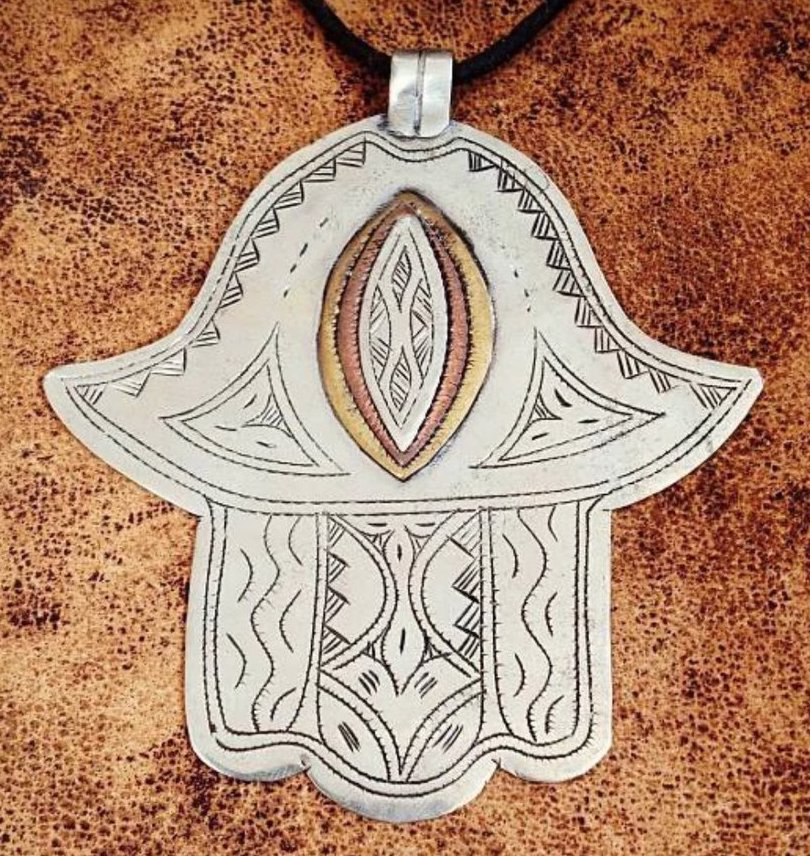
Berber Hamsa. Photo: public domain.

In my recent post ‘Forty Days After Childbirth, Mary Returns to the World,’ I wrote that ‘the woman’s power to bless and protect, as well as to create, is shown in the symbol of her hand.’ We see expressions of this power in the Orthodox Christian icon of the Three-Handed Madonna, whose third hand is over her womb, and the Hamsa, the hand-shaped talisman common to Jewish, Christian, and Islamic traditions. Also known as the Hand of Fatima, Miriam, or Mary, the Hamsa often incorporates eye or vulva motifs, which also offer protection.

Hand, womb, and eye all signify female creative power, personified in the image of Goddess and revered in Neolithic Old Europe. This life-giving principle is expressed in many ways apart from childbearing: as Carol Christ affirms, early technologies of spinning, weaving, pottery, and agriculture, along with Neolithic religion, were most likely invented by women. 

Continue reading “Woman’s Sacred Hand – and Handkerchief by Laura Shannon”

Legacy of Carol P. Christ: Speak the Truth about Conflict, Pain, and Suffering: It Is Not All Love and Light

This was originally posted on July 23, 2018

Nurture life.
Walk in love and beauty.
Trust the knowledge that comes through the body.
Speak the truth about conflict, pain, and suffering.
Take only what you need.
Think about the consequences of your actions for seven generations.
Approach the taking of life with great restraint.
Practice great generosity.
Repair the web

Continue reading “Legacy of Carol P. Christ: Speak the Truth about Conflict, Pain, and Suffering: It Is Not All Love and Light”

From the Archives: Forty Days After Childbirth, Mary Returns to the World by Laura Shannon

This was originally posted on Feb 6, 2021

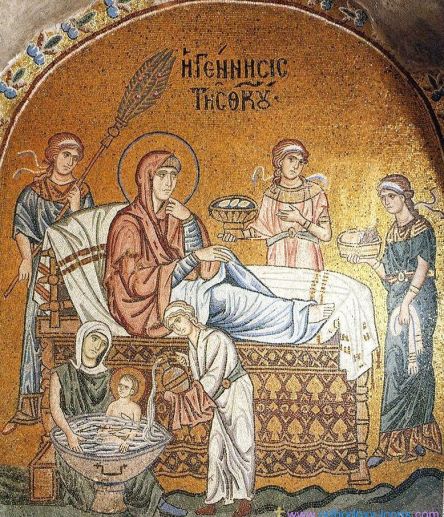
image of Mosaic of the Nativity

Mosaic of the Nativity

All week we have been warming our spirits at the sacred fire of Candlemas / Imbolc, the Celtic holiday in honour of Brighde, Irish saint and Goddess of poetry, smithcraft and healing. Imbolc falls approximately 6 weeks between the winter solstice and the spring equinox, one of the 8 festivals of the Celtic year.

In the Greek Orthodox Church, February 2 is celebrated as Ypopantis, the presentation of Jesus at the Temple, 40 days after his birth, in accordance with Mosaic law. This day also marks Mary’s ritual return to the world after forty days of postpartum seclusion. This practice was known in the Western Church as ‘churching’ or blessing a new mother after 40 days; Hindu tradition also recommends women spend up to 40 days in rest and isolation after childbirth.

Continue reading “From the Archives: Forty Days After Childbirth, Mary Returns to the World by Laura Shannon”

Legacy of Carol P. Christ: “What Would Happen If One Woman Told the Truth about Her Life?”

This was originally posted on September 24, 2018

According to poet Muriel Rukeyser, “the world would split open.”

This poem accurately describes what many women experienced in consciousness raising in the 1970s and what many women experience today in the #MeToo movement.

For many of us the world did split open. We began to take ourselves and our experiences seriously. To do so we had to question received wisdom encoded in such questions as: “What was she doing there in the first place?” “Was she drinking too?” “Why didn’t she change out of her bathing suit?” Underlying these questions is the assumption that: “whatever happened, she must have asked for it.”

A lot of people are wondering why congressmen and voters who claim to uphold Christian principles are not more outraged about credible allegations of sexual assault against a child whose name was Christine Blasey. What this question fails to address is the fact that the Christian principles (if any) held by conservatives are steeped in patriarchy. Liberals may argue that Jesus would have cared about the girl, and I believe they are right. But the Christianity that developed after his death was centered on the Father, Son, and Holy Spirit, all of whom are male. This Christianity is patriarchal to the core: its deep message is that power belongs the hands of males and that male power is not to be questioned.

Continue reading “Legacy of Carol P. Christ: “What Would Happen If One Woman Told the Truth about Her Life?””