Thinking About Thanksgiving by Carol P. Christ


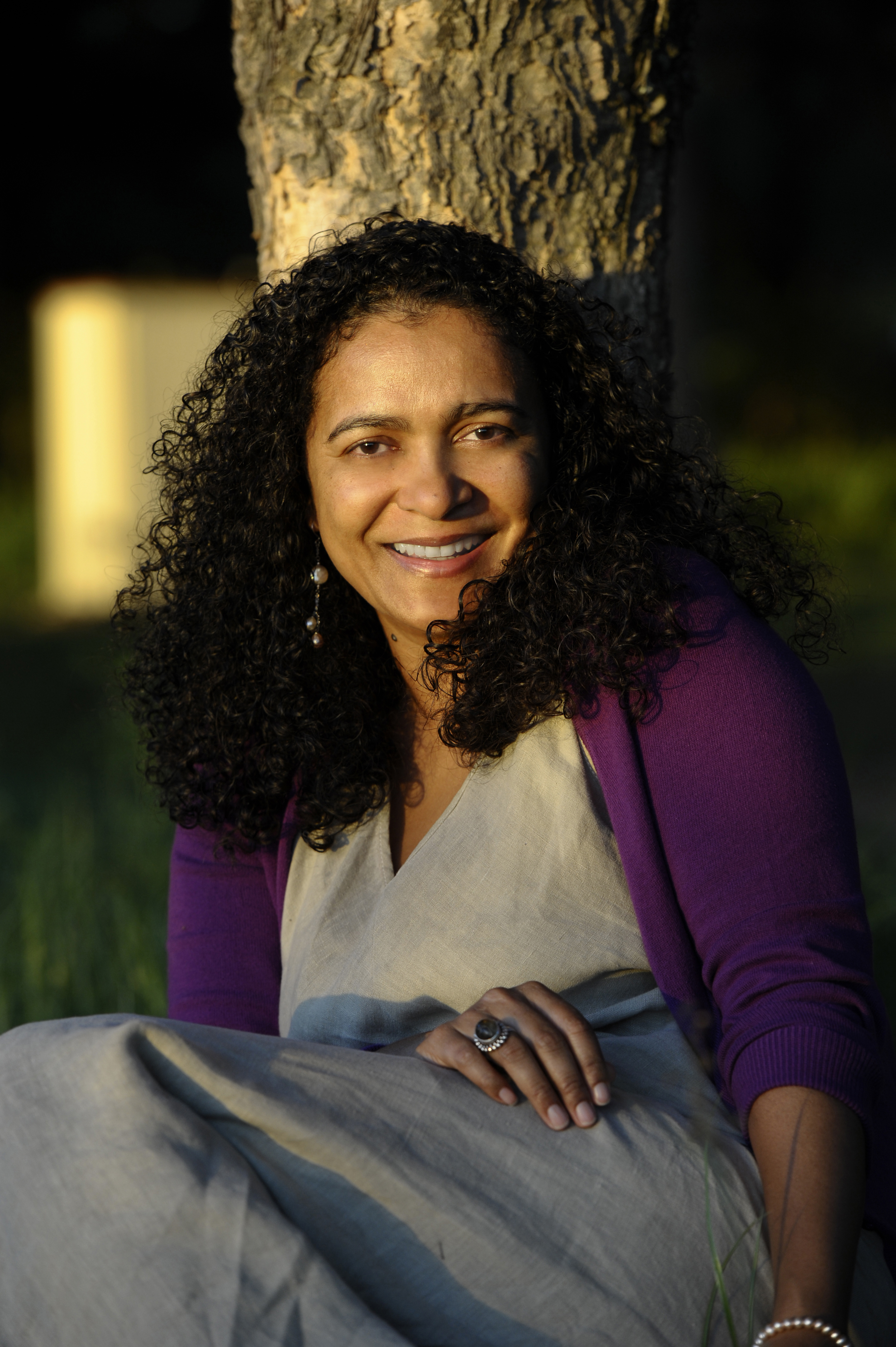
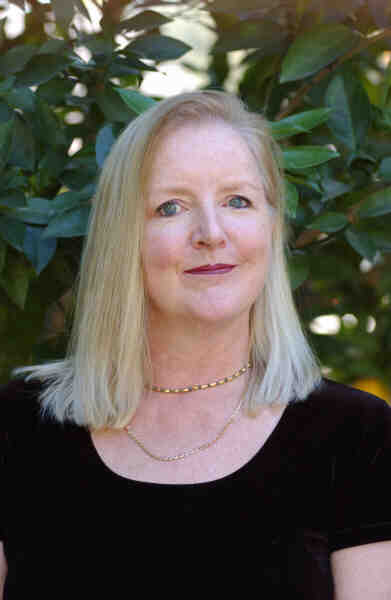
carol p. christ 2002 colorThanksgiving evokes deep memory and raises questions about what we are celebrating, now that we know the stories we were told about the Pilgrims and the Indians are not the whole truth about America’s early history.  I thought about all of this as I prepared for Thanksgiving this year and cleaned up for days afterwards.

Although I do not live in America, I have celebrated Thanksgiving with a group of friends in my home in Greece many times during the past twenty years.

For me, Thanksgiving brings up happy memories of family gatherings in a time when my extended family, including Mom and Dad, brothers, great-aunts and great-uncles, aunts and uncles, cousins and second cousins, gathered at Grandma’s to eat turkey with all the trimmings.  Grandma Lena Marie Searing Bergman was not only a great cook but also an excellent hostess.  Her tables were laden with turkey, stuffing, mashed potatoes, gravy, sweet potatoes, biscuits with butter and homemade jam, corn and green peas, pumpkin and mince pies, and also with crystal, china, and silver, and flowers from her garden.

Uncle Emery, my grandmother’s older brother, told stories about life on the farm in Michigan, where they had a pony and he lost parts of his fingers in a threshing machine. We children played croquet in the garden and ran races all around it while our mothers, aunts, and grandmother laid out the feast and cleaned up afterwards.  These were the blessed days before television and televised football games came to dominate holidays in the United States. My memories are laced with the sadness of knowing that those days are in the past. Continue reading “Thinking About Thanksgiving by Carol P. Christ”

What Was Your Childhood Religious Tradition And Do You Still Follow It? by Carol P. Christ

Recently, in an interview with the Women’s Living History Project of Claremont Graduate University, I was asked: What religious tradition did you identify with as a child and how did it impact your childhood? and: Is your tradition the same today that you had when growing up?

I was surprised that the interview questions didn’t ask anything about feminism, experiencing exclusion in patriarchal religions, or belief.  My religious and political convictions, which are intertwined, have alienated me from family members.  Therefore, I was suspicious of questions that seemed to have been formulated by someone for whom religion and family go together, and for whom believing or not believing (!) did not seem to be an important issue.

After expressing criticism of the questions, I agreed to work with them.  My answer to the first question was that I did not have a single religious tradition as a child. I had four.  Continue reading “What Was Your Childhood Religious Tradition And Do You Still Follow It? by Carol P. Christ”

WOMEN FOR PEACE–TAKE TO THE STREETS by Carol P. Christ

Sometimes we are told that domination and violence and war are innate in human nature; therefore, it is futile to protest war.  But this is not true.

I oppose war because I oppose all forms of power-over, domination, and violence.  As a radical feminist and ecofeminist I believe that power can and should always be power-with, the power that nurtures the growth and development of self and others.  The power of Goddess/God is always and everywhere power-with and not ever power-over. 

Are violence and domination innate in human nature?  We have been told that we are the “naked ape” descended from “apes” who, like the chimpanzees with whom we share 98% of our DNA, were male dominant and violent. Do we, then, have any hope not to be violent and dominant?

Franz de Waal’s studies of the other “ape” species that shares 98% of our DNA, the bonobo, debunks this popular myth.  The bonobo live in peaceful matriarchal clans, and their response to conflict is to rub each others’ genitals until the desire to fight goes away.  They are living proof that species very much like us can choose to “make love not war.” De Waal says that the most we can conclude from studies of our ape relatives is that ancestors of human beings, chimpanzees, and bonobos had the capacity to evolve toward dominance enforced by violence, or toward more peaceful ways of resolving conflict.

Continue reading “WOMEN FOR PEACE–TAKE TO THE STREETS by Carol P. Christ”

Please Excuse Me for Having a Penis: Taking a Back Seat to Privilege and Power by John Erickson

Male feminists must be aware that we not only engage in an ongoing struggle against sexual and gender inequality, but more importantly an ongoing fight with ourselves.

I have often struggled with that little voice, call it my conscience if you will, that speaks to me during times of distress.  Although I consider myself a proud feminist, I still struggle with aspects of what I call, internalized misogyny, or more aptly defined as a male born characteristic trait that imparts the idea that men are not only dominant but also more powerful than the other 50% of the species.

For many reasons, I believe religion is one of the main culprits of this growing evil, one that we all witnessed throughout this last election cycle.  However, instead of placing blame solely on religion and images of the male Godhead we have to begin deconstructing the sociological consequences these subconscious social, sexual, religious, and gendered norms have on men but more importantly men who identify as feminists. Continue reading “Please Excuse Me for Having a Penis: Taking a Back Seat to Privilege and Power by John Erickson”

IN THE NEWS: Global Climate Change by Carol P. Christ

Climate change is in the news again due to the devasting storm known as Hurricane Sandy.  Scientists, activists, journalists, and politicians are telling us that Sandy is not just another “unpredictable event” brought to us by “Mother Nature.”  Will we listen this time?

Hurricane Sandy is a human-made and entirely predictable and sure to be repeated environmental consequence of the use of fossil fuels, especially oil and coal. Burning fossil fuels puts carbon dioxide into the atmosphere. This raises the global temperature in the air, land, and sea. Melting of polar ice caps is a result of the rise in global temperatures. This will cause a 3 foot or more rise in the seas, leading to the permanent flooding of the seacoasts and sea coast constructions, including homes, restaurants and shops, office buildings, and harbors and ports.

The warming of the seas is also producing extreme weather conditions, including high winds and hurricanes, along with colder winters and hotter summers.  Extreme weather conditions will lead to regular storm-related flooding of rivers and sea coasts, erosion of hills and mountains in winter, followed by catastrophic fires in summer.  Prolonged droughts and unseasonal rains will devastate farms and food production. Wildlife habitats will be destroyed. Places where people live will become too hot, too cold, too wet, and generally unfriendly to life.

Continue reading “IN THE NEWS: Global Climate Change by Carol P. Christ”

WHAT DOES “GOD INTEND”? by Carol P. Christ

Indiana Republican candidate Richard Mourdock’s statement that pregnancies resulting from rape are “something God intended” not only shows an appalling lack of empathy and distain for the experiences of raped women, it also is bad theology.

The controversy ignited by Mourdock provides a good opportunity to discuss the theological mistake of “divine omnipotence” also known as the “zero fallacy.”  Mourdock’s belief that God intends the pregnancies of raped women is rooted in the notion that “whatever happens” is the will of God.

The theological category of “divine omnipotence” means that God is all-powerful.  It also means that God has all the power. From this it is said to follow that everything that happens must in some way be the will of God.  Such views are held not only by many devout believers, but also by everyone else who asserts that “there must be a reason” when bad things happen.

The notion that a good God is responsible for all the events that occur in the world is rendered questionable by every bad thing that happens–particularly by bad things that happen to good people. This was the question of Job, and there has never been a satisfactory answer to it. If God can intervene to stop the innocent from being harmed, why does he not do so?  God’s failure to stop rape suggests that either that God is not good, or that a good God chooses a really bad outcome, or that God is not the cause of everything that happens in the world.

Charles Hartshorne called the notion of divine omnipotence the “zero fallacy.” Continue reading “WHAT DOES “GOD INTEND”? by Carol P. Christ”

Reading Plato’s Allegory of the Cave as Matricide and Theacide by Carol P. Christ

When I read Plato’s allegory of the cave as an undergraduate, I was told it had something to do with the idea that the “form” of a table is more “real” than the table itself. I must confess that I had no idea what this could possibly mean.

As a graduate student, I struggled with philosophical and theological ideas rooted in Platonism.  Rosemary Radford Ruether named the flawed worldview created by a “classical dualism” that separates mind from body, spirit from the world, rationality from emotion, and male from female.  Her ground-breaking essay “Mother Earth and the Megamachine” clarified the difficulties I was having.

Western philosophy, described by Alfred North Whitehead as a series of footnotes to Plato, had gotten off on the wrong foot. At its very beginnings, western philosophy had attempted to sever mind from the body and nature, alleging that “man’s true home” was not life in the body on planet earth. Continue reading “Reading Plato’s Allegory of the Cave as Matricide and Theacide by Carol P. Christ”

The Turtle Goddess from Myrtos in Ancient Crete by Carol P. Christ

“As we bless the Source of Life, so we are blessed.” Song by Faith Rogow

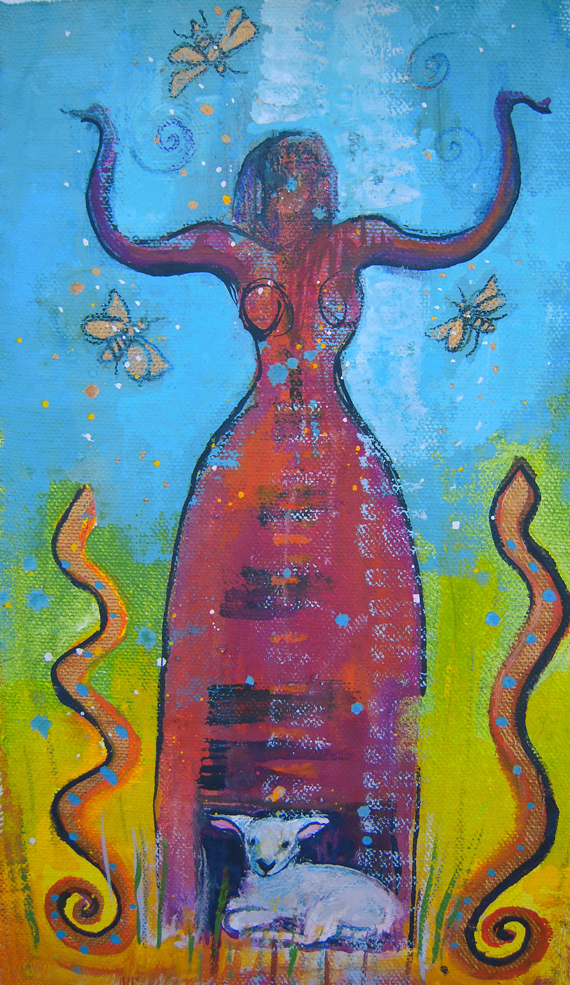
The strange and cheerful figure portrayed in this ancient Cretan vessel comes from the site known as Fournou Korifi near Myrtos, in Crete.  Dated before 2000 BCE, she was called the “Goddess of Myrtos” by the excavator, Peter Warren.  This little Goddess was found on an altar in a small room in the ritual area of a complex of small rooms on a hill above the sea that was home to up to 120 people.  The Goddess of Myrtos is a vessel holding a vessel.  In ritual libations, liquid would have been poured from the pitcher she holds onto an altar.


She is obviously female, with breasts and a sacred triangle. Continue reading “The Turtle Goddess from Myrtos in Ancient Crete by Carol P. Christ”

Why a Goddess Pilgrimage? by Carol P. Christ

What is a Goddess Pilgrimage and why are so many US, Canadian, and Australian women making pilgrimages to ancient holy places in Europe and Asia?  The simple answer is that women are seeking to connect themselves to sources of female spiritual power that they do not find at home.

Traditionally pilgrims leave home in order to journey to a place associated with spiritual power.  “Leaving home” means leaving familiar physical spaces, interrupting the routines of work and daily life, and leaving friends and family behind.  For the pilgrim, “home” is a place that has provided both comfort and a degree of discomfort that provokes the desire to embark on a journey.  The space of pilgrimage is a “liminal” or threshold space in which the supports systems of ordinary life are suspended, as Victor Turner said.  A pilgrim chooses to leave the familiar behind in order to open herself to the unfamiliar—in hopes that she will return with new insight into the meaning of her life.  Continue reading “Why a Goddess Pilgrimage? by Carol P. Christ”

Goddess as Love: From Experience To Thealogy by Carol P. Christ

If theology is rooted in experience, how do we move from experience to theology? In my life there have been a number of key moments of “revelation” that have shaped my thealogy. One of these was the moment of my mother’s death.

In 1991 my mother was diagnosed with cancer. While she was being treated, I realized that I had never loved anyone as much as I loved her. When I wrote that to her, she responded that “this was the nicest letter” she “had ever received” in her life and she invited me to come home to be with her and my Dad.

My mother died only a few weeks after I arrived, in her own bed as she wished. She was on an oxygen machine, and I heard her call out in the dark of early morning. When my Dad got to the room, he tried to turn up the oxygen, but it didn’t help. Then he called the doctor who reminded him that my mother did not want to go to the hospital under any circumstances.

My Dad then sat by my mother’s bed and held her hand.  As my mother died, I felt that the room was” filled with love.” I sensed that my mother was “going to love.” Continue reading “Goddess as Love: From Experience To Thealogy by Carol P. Christ”