Rituals Of Spring and Greek Easter by Carol P. Christ

carol p. christ 2002 colorThough I am not a Christian any more, I don’t want to sit home alone on Easter Day.  Besides being a Christian ritual, Greek Easter is a time to eat lamb with family and friends, and to celebrate the coming of spring by feasting out-of-doors in flowering fields or in a garden filled with flowers, bees, butterflies, and birds.  Such rituals have been celebrated from time immemorial.

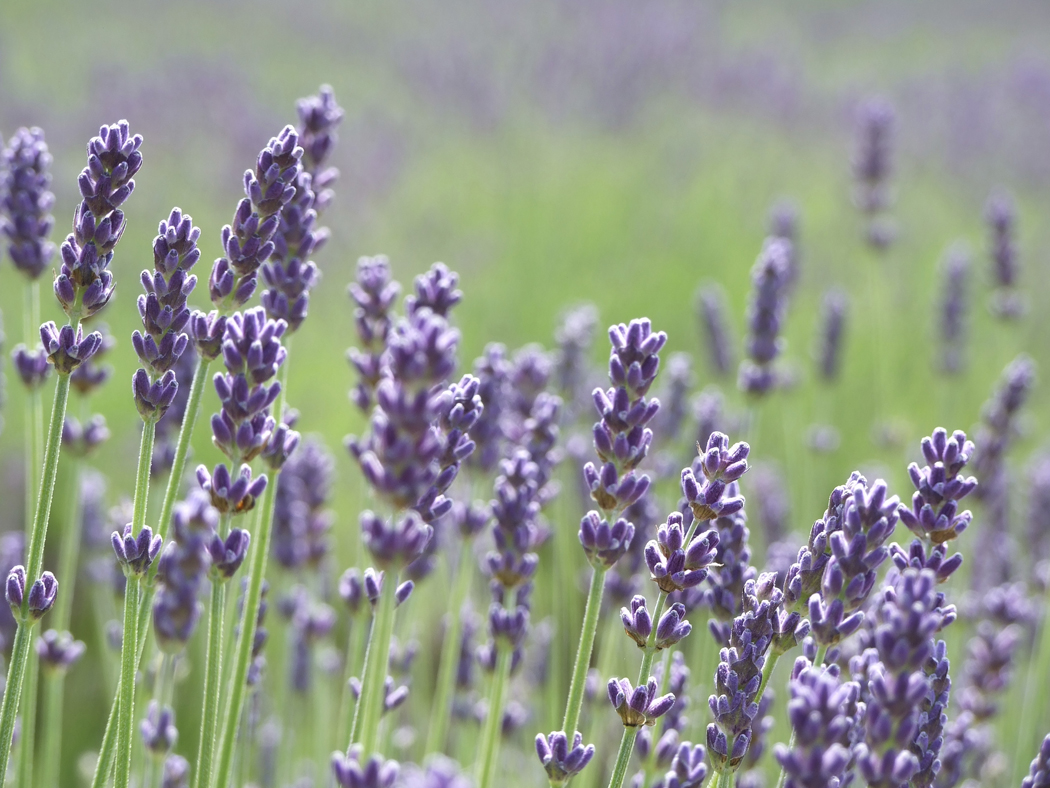
lavenderGreek Easter came late this year, only yesterday, May 5.  I prepared for an Easter party in my garden for weeks.  My garden is planted with herbs and aromatics—lavender, thyme, oregano, rosemary, curry plant, rue, sage, cistus, rose-scented geranium, sweet william, cat mint and several other kinds of mint, bee balm, and roses and fruit trees, including lemon, bitter orange, pomegranate, olive, quince, and cherry.  Everything blossoms in spring, attracting bees and butterflies.

purple sageI began weeding and pruning about 6 weeks ago.  This year I had to remove many overgrown lavender plants.  For the last 3 weeks in addition to ongoing weeding and pruning, I have been replanting lavender which I have promised myself to prune “way back” in the fall, along with purple sage, blue daisies, and thyme.  Though there is bare ground in some parts of the garden, in other parts mature plants and trees are in full flower. Continue reading “Rituals Of Spring and Greek Easter by Carol P. Christ”

Creiddylad, Welsh Goddess of Flowers and Love by Judith Shaw

judith Shaw photo

May Day/Beltane (Calan Mai to the ancient Celts) is almost here and our hearts turn to thoughts of love, flowers and the bounty of our Mother Earth. Both Beltane and Halloween/Samhain (Calan Gaeaf) were liminal or threshold days, considered to be outside of normal time. These sacred, mystic days were more important than the solstices in the Celtic world view.

Creiddylad painting by Judith Shaw

Creiddylad, Welsh Goddess of Flowers and Love, is celebrated at this time. (Her name is pronounced cree-THIL-ahd)  She is the eternal May Queen, always seeking peace and stability.  She remains eternally constant in the face of all change.  She is the promise of love, golden glowing moon-flowing love, enduring through all hardship and despair.  Creiddylad also shows us the necessity of self-love. Only by truly loving ourselves can we love another.

Creiddylad is mentioned only briefly in The Mabinogion but her symbolism reveals that she is surely an ancient and important Goddess, whose original stories have been lost to the mists of time.

Creiddylad, the daughter of Lludd Silver-hand, was promised in marriage to her heart’s desire, Gwythyr ap Greidawl. But before the marriage could be consummated she was abducted by Gwyn ap Nudd, who possessed many dark aspects akin to the Lord of the Underworld.

Gwythyr gathered together his warriors and set out to rescue his love, Creiddylad, from Gwyn.  A fierce battle ensued, during which Gwyn, who emerged as the victor, committed horrendous acts of brutality and butchery.

Continue reading “Creiddylad, Welsh Goddess of Flowers and Love by Judith Shaw”

Liminal Time and Space by Deanne Quarrie

Deanne Quarrie

The word liminal comes from the Latin word limen, meaning “a threshold.” The word threshold has several definitions.  It can be the sill of a doorway or the entrance of a building.  Ultimately, it means any place of point of entering or beginning. In psychology the term limen means the point at which a stimulus is of sufficient intensity to begin to produce an effect.

Liminal time therefore, is that moment when something changes from one state to another.  Examples would be dawn, the morning sun rising high enough in the sky to bring daylight.  Another is dusk, the evening sun sinking into the horizon bringing nightfall. Continue reading “Liminal Time and Space by Deanne Quarrie”

Gender in Kabbalah by Judith Laura

Judith LauraI first started delving into both Jewish Kabbalah and Hermetic Qabalah in the 1990s, after friends told me these forms of mysticism included both female and male representations of divinity and therefore were gender equitable. They were right about the first part: Kabbalah/Qabalah contain both divine masculine and feminine imaging and male and female images.  But as far as gender equity goes, to use today’s slang, not so much!

tree of life kabbalah

Though they are both transliterations of the same Hebrew word, as is common I use “Kabbalah” for the Jewish versions, and “Qabalah” for the Hermetic version, best known through its association with the British Hermetic Order of the Golden Dawn, which began in the 19th Century. The word means “that which is received,” with the understanding that it was “received” from ancient times. Though there is one tradition that says Adam was given Kabbalah in the Garden of Eden, the first written material for Kabbalah, Sefir Yetsirah (Book of Creation), is dated to between 200 and 500 C.E. Kabbalistic concepts changed over the centuries, with writings becoming more significant in the 13th century and even more popular in the 16th and 17th centuries.

Beginning with the Sefir Bahir (Bright Book) in late 12th century France, Kabbalah is represented by the Tree of Life, which has round areas transliterated sefirot (Heb. pl.; sing. sefirah) that I think of as fruit and others call “spheres,” but which in the Bahir, are more accurately translated “sapphires.”*  These “divine emanations,” as they are often called in English, are gendered. How equal is the gender representation? Continue reading “Gender in Kabbalah by Judith Laura”

The Body of Goddess by Deanne Quarrie


In the earliest of times, I believe, humans did not see themselves as separate from all that was around them.  All of life was known as interdependent.  This is how I see it today.  When we are born, we are born to a mother.  Our lives are solely dependent on her for survival.  We are birthed by her, nourished by her, protected by her, and sometimes forced out to experience on our own, by her.  She is at first, our own Original Uncultured Mother.  Once we move from her shelter, we begin to experience our world in the same way, looking not only for what nourishes, what protects and what shelters, but also for what we need to be mindful of for our own safety, those forces far out of our control.  Those forces, which were uncontrollable, the ancients held in high esteem, and honored with reverence.    Continue reading “The Body of Goddess by Deanne Quarrie”

Water, Spiritual Source By Deanne Quarrie


We are creatures of water.  Water is our original source as well as what makes up at least 70% of our bodies. It is part of every cell and fiber in us and is our essence.  What if water were the common denominator weaving all of life (earth, animal, human, and plant) together? Is it what connects us all?   It is pretty incredible when you realize that the water we have here on Earth right now is the same water that has always been here.   Do you suppose there are messages contained within water?  Do you think it is possible for our ancestors to speak to us through water?

When I think about water I am immediately taken down memory lane to the various “waters” I lived near or visited.  As a child I spend several summers on Hermosa Beach in Southern California where the intertidal zone reaches far out, gently sloping to deeper waters.  There is an abundant kelp forest off the shore there in the warmer Southern California waters.  For a child, kelp was the food for imagination, as we dressed ourselves in it, becoming sea monsters chasing each other about! In addition, I found pleasure in popping the pods, which sprayed seawater upon bursting. Continue reading “Water, Spiritual Source By Deanne Quarrie”

Rhiannon, Goddess of Birds and Horses by Judith Shaw

judith shaw photoRhiannon, Goddess of Birds and Horses, is also know as the Queen of  Fairies.  She is a Sovereignty Goddess who the king must wed to legitimate his rule.  A Goddess of Transformation, she uses her powers for love of others or self.  She shines in our hearts as an example of true love and beauty. She appears in both the first and third branches of the Medieval Welsh stories, The Mabinogion, a narrative which grew out of the ancient myths of the Celtic Gods and Goddesses.

Rhiannon is associated with Epona, the Gaulish Horse Goddess.  They are probably both derived from the ancient Celtic Goddess, Rigatona, whose name means “Great Queen”.  Unfortunately, Rigatona’s stories  and meaning are lost to us today.

Things sacred to Rhiannon are the moon, horses, horseshoes, songbirds, gates, the wind, and the number 7.

In the Mabinogion Rhiannon first appears to Pwyll, King of the new tribes of Dyved, as a beautiful  dream vision, riding a glowing white horse. Her hair shining in the sun, her birds twittering in circles around her head, She seems to be clothed by golden light.   Thus begins her journey to attain the man of her desires.  She possesses deep magic and can manifest her dreams and desires both for herself and for the good of all.

Rhiannon painting by Judith Shaw

Continue reading “Rhiannon, Goddess of Birds and Horses by Judith Shaw”

Inanna’s Return and Bread and Waters of Life By Deanne Quarrie

Most of us know the story of Inanna’s descent into the Underworld to visit with her sister Erishkigal. The reason for her visit is that Erishkigal’s husband has died.  Inanna was a childhood friend of his, and she will visit to pay her respects.  As she travels to meet her sister, Inanna must pass through seven gates where she is asked to to remove and part with aspects of herself before she approaches Ereshkigal.

Upon Inann’s arrival, her sister, who is angry because she believes that her husband loved Inanna, hangs Inanna from a meat hook to die.

While Inanna was in the Underworld, Ninshubur waited three days for Her to return, and when she did not she thought all was lost and began to mourn for her. Continue reading “Inanna’s Return and Bread and Waters of Life By Deanne Quarrie”

Bird Watching and Geology in the Body of Goddess by Carol P. Christ

carol p. christ 2002 color

The notion of the earth as the body of Goddess has taken on deeper meaning for me in recent years.  I have felt connected to nature all of my life.  Yet often, though not always, I have related to nature in general rather than in specific ways. Some years ago, after reading Hartshorne’s essay “Do Birds Love Singing?” I stopped for the first time in the wetlands of Kalloni, Lesbos, to see the flamingoes that live in the salt pans there.

Flamingo's-Kalloni3-Saltpan

One thing led to another, and I met someone with whom I spent the next six weeks visiting every pool and puddle where birds were stopping in Lesbos that spring.  Continue reading “Bird Watching and Geology in the Body of Goddess by Carol P. Christ”

Textual Religion and the Marginalization of Two Huldas by Dirk von der Horst

DirkI am a Protestant in large part because I like to read.  Even after grappling with feminist critiques of patriarchal religions, a spirituality rooted in the Word (capital “W”) is very deep-seated in me.  One reason I think of my faith as biblical is that a scriptural religion engages me in my favorite activity.  At the same time, there are real connections between exclusive dependence on written records and the erasure of women’s history, as well as various ways in which women have been excluded from literary production.  The opposition between text and world often becomes a manifestation of the hierarchy of mind and body that many feminists have seen as damaging.  It’s like the question of “why are there no great women composers?”  The problem with this question is not only that it ignores great women composers such as Hildegard of Bingen, Barbara Strozzi, Louise Farrenc, or Thea Musgrave.  As feminist musicologists Marcia Citron and Suzanne Cusick have shown, the question reinforces a hierarchy in which composers, those who create musical texts, have precedence over those who perform and listen.  It also relegates places where women’s contribution has been essential to the production of music – educating children, for example – to irrelevance. Continue reading “Textual Religion and the Marginalization of Two Huldas by Dirk von der Horst”