

This time one year ago, our world here in Appalachia seemed like it hadn’t changed in a thousand years. The giant, churning, awesome power of Hurricane Helene had not yet whipped our waters into a frenzy, and caused the mountains to slide downhill, carrying our lives away. And yet, from just below the earth’s surface, Spring reappears with all Her perseverance, Her steadfastness, Her fertile abundance. The slow, steady regeneration of our Mother inspires me to keep going, day by day, hour by hour.
Primavera
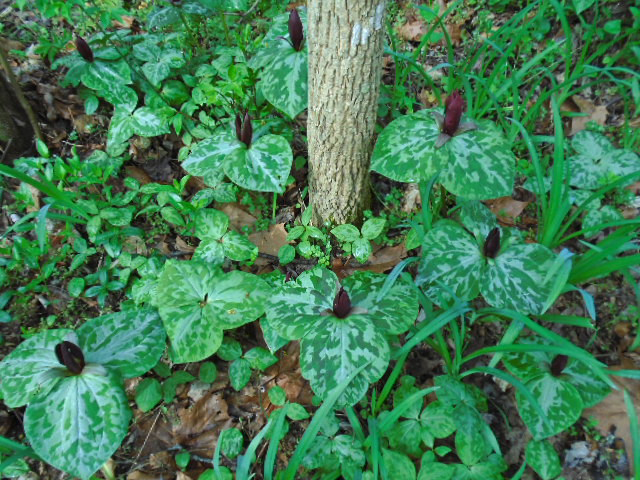
The newness of Spring, Primavera,
”first green,”
soft petals that banish Winter’s icy grip,
the return of the Galax, the trillium,
the return!
Full-blown rebirth,
bright, brilliant green shining in the sun,
Spring!
Rebirth decked out like a debutante
with a roomful of courtiers,
flipping the world from darkness to light.
Ferns unfurl,
fiddleheads play on the forest floor,
insects awaken and buzz
in a hundred keys of life.
Humans awaken too, reminded once more
of the richness of the return.
A breeze blows over the galax,
the Mayapples spread their elegant leaves
The promise of the Great Mother:
we will begin again.
 When I moved to Maine from New Orleans 15 years ago, I was delighted to discover how many birch trees were on the property where I lived with my new partner. Previously I had had little contact with these beautiful white trees, other than in pictures and stories. The name always evoked images of birch bark canoes and messages to fate scrawled with bits of burnt wood.
 Warning…TMI ahead. I’ve thought a lot about writing this piece. I believe in the spirit of sharing experience; learning from one another—recognizing our own stories and finding we are not alone—when someone is willing to speak her truth. My gratitude to
 I think being a mother must be an amazing experience. I don’t really know the glimmers and shadows of any life but mine, even though I would be more than happy to listen. Recently, I’ve been reading the poems of Carol Ann Duffy, Scottish poet, U.K. Laureate, and once partner to poet Jackie Kay, and she writes something in one of her poems (“A Clear Note”) that I resonate with: “Never have kids. Give birth to yourself.” It is not Duffy, the narrator, who says this, but a character named Moll.
 In the ancient world, snakes represented fertility, creativity, rebirth, wisdom and, even, death. They were often closely connected to female goddesses, priestesses and powerful human females who were the embodiment of such powers. For example, there is the Minoan goddess/priestess holding the two snakes in her outstretched arms. She is closely linked with fertility and domesticity. Similar figurines, with similar associations and dating to approximately 1200 BCE, have also been founded in the land of what once was Canaan, where Israelites also lived. Medusa, in whose hair lived venomous snakes, turned men who looked at her to stone. Ovid’s account of the creation of Medusa credits the Greek goddess Athena with Medusa’s lively hair. Another Greek legend says Perseus, after killing Medusa, gave her head to Athena who incorporated it into her shield. Athena, the goddess of wisdom, is portrayed often with snakes wrapped around her as a belt and/or on the floor next to her.
  It is, I think, quite common knowledge that most Jewish holidays relate to the seasonal cycles of the Earth. Sukkot celebrates the fall harvest. Chanukah sheds light on the winter darkness. Tu B’Shevat marks the end of the dry season and so begin the prayers for rain in Israel. For Purim, we throw off our winter doldrums and let off a little steam to settle our cabin fever. Pesach is no exception: welcome spring: birth, renewal and even creation. The leaves return to the trees, baby animals are born, flowers bloom, warmer weather arrives and somehow the possibilities of the coming summer are endless.
 Feminism and Religion