
God Doesn’t Live Here Anymore: Gay Bars and the Growing Divide Between Sexuality and Spirituality by John Erickson

oes God exist within the LGBTQ community anymore or has the community itself abandoned God for all-night raves, dance clubs, alcohol, and hypersexualized and over commoditized fetishized forms of femininity and masculinity? Oftentimes, I find myself answering yes to the above questions. After surviving hate crime after hate crime and endless batches of newly elected conservative politicians hell bent on ignoring medical and social epidemic plaguing the very country they were elected to serve and protect, why would a community, oftentimes linked to sin itself, believe in a holy entity?

John Erickson, sports, coming out.My good friend and fellow Feminism and Religion Contributor Marie Cartier’s forthcoming book, Baby You Are My Religion: Women, Gay Bars, and Theology Before Stonewall argues that American butch-femme bar culture of the mid-20th Century should be interpreted as a sacred space.  Specifically, gay bars served as both communal and spiritual gathering spaces where butch-femme women were able to discover and explore not only their sexuality but also their spirituality.  An opus of an academic accomplishment based off of the amount of in-depth interviews she conducted, Professor Cartier explores lived religion in an area that has become all too common within the LGBTQ community: the bar
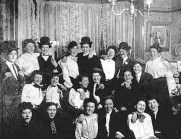
The Palms, the last local and only lesbian bar to be found in city of West Hollywood, CA is closing its doors and I can’t help but wonder where its patrons or parishioners will now go? Continue reading “God Doesn’t Live Here Anymore: Gay Bars and the Growing Divide Between Sexuality and Spirituality by John Erickson”

“Free-Speech or Speech-Free?” by Kile Jones

Kile Jones, atheist[This post is written in response to the chilling effect taking place in the U.K. since the Woolwich Attack.  It is also in response to the uses of the Public Order Act of 1986.]

In any “liberal democracy” that has constitutional protections for “free speech,” there will also be laws against “inciting violence,” “hate speech,” “threats,” “slander,” “libel,” “harassment,” and other “speech codes.”  This is because the government, or those who voted on the passing of such laws, worry about the potential threat un-regulated speech will have on the levels of violence and disharmony in society.  They worry about people being able to yell “fire!” in a theatre, which can cause (which is a key word here for legal reasons) physical harm, not being held liable for such speech.  As much as I understand these worries, I am of the opinion that the potential evils brought about by a lassez-faire approach to speech morally outweigh the evils of blasphemy laws and censorship. Continue reading ““Free-Speech or Speech-Free?” by Kile Jones”

It Was a Rainbow Graduation by Grace Yia-Hei Kao

Distributing rainbow tasselsI have the privilege of serving as Co-director of the Center for Sexuality, Gender, and Religion at Claremont School of Theology. I am ecstatic that we just hosted our version of a “rainbow graduation” at this year’s Commencement.

Continue reading “It Was a Rainbow Graduation by Grace Yia-Hei Kao”

Thanks for Coming (Out): Sexuality, Sports, and Spirituality by John Erickson

I have to be honest, Jason Collins’ admission that he was a homosexual, albeit brave, upset me. While coming out is an completely unique experience to every individual that does it, Jason Collins’ story was just another example of the rampant sexist and heteropatriarachal world that privileges male bodies and sexualities over women’s similar experiences. While I applaud Jason’s story and it’s timing, the first thing I asked to my colleagues was: Where was the hubbub over Sheryl Swoopes or Martina Navratilova?

John Erickson, sports, coming out. Like marking off items on a proverbial checklist, closeted LGBTQ individuals who exist within and outside of the world of professional sports, can recount the numerous things they struggle with in terms of their sexuality.  From fearing of the actual coming out process, dressing in their car or at home to avoid the subtle glances and whispers of individuals in the locker room, to wondering what coming out would mean not only for their game but also for their social and, if they choose, spiritual lives, closeted and out LGBTQ individuals within the multi-billion dollar professional sports industry must grapple with that age old question: what does it mean to be gay and open about it?

The Locker Room

I have to be honest, Jason Collins’ admission that he is a homosexual, albeit brave, upset me.  While I understand that coming out is an completely unique experience to every individual who does it, for me Jason Collins’ story was also an example of the rampant sexist and heteropatriarachal world that privileges male bodies and sexualities over those of women.  While I applaud Jason’s story and the timing, the first thing I asked to my colleagues was: where was the same hubbub over Sheryl Swoopes or Martina Navratilova? Continue reading “Thanks for Coming (Out): Sexuality, Sports, and Spirituality by John Erickson”

Feminism and Football By Marcia W. Mount Shoop

Marcia headshot“How did race and privilege affect the NCAA investigation of the football program at University of North Carolina?”

This was the question a student posed to me recently when I gave a Skype lecture to a Sports Ethics class at the University of Washington’s Center for Leadership in Athletics

I am going to take a wild guess (and I may be wrong), and assume that most readers of the FAR blog don’t know much about the NCAA investigation of the UNC football program.   I have outed myself on this blog before—I am more than just a feminist theologian; I am also a football coach’s wife.  Lots of people wonder how I manage to pull that off and still look at myself in the mirror.  That’s a complicated question.  I am finding that the challenges presented by our experience at UNC are creating more and more space for the feminist and the coach’s wife to find a common purpose.  Which brings us back to the question at hand—race and privilege and how it played into the football investigation at UNC.

You may want to investigate the many details of this investigation, but I would like to invite this feminist community to see what you think about this question of privilege in particular.   I will provide just a few factual statements for you all.  You tell me if you can think of ways that race and privilege may have been at work to the detriment of certain groups in this situation.  Continue reading “Feminism and Football By Marcia W. Mount Shoop”

Speaking Up for Animals by Grace Yia-Hei Kao

I hope that readers will rethink their consumer choices, monies that have long been offered at the expense of nonhuman animals–overwhelmingly female and exploited because of their female biology. We choose where our money goes, and in the process, we choose whether to boycott cruelty and support change, or melt ambiguously back into the masses.”  

Continue reading “Speaking Up for Animals by Grace Yia-Hei Kao”

What Does Exclusivism Feel Like? Part II by Janice Poss

This is part two of a post started yesterday. At the end of it I asked why a woman cannot be a follower of St. Ignatius and a Jesuit.

The days of separating religious communities because rape is a possibility should be behind us–as we all know separating the sexes does not prevent rape anyway.  Let’s get real, if I can understand the Ignatian exercises, use them in discernment, prayer, and reflection, understand the concepts and gain the graces, through doing them in a similar fashion as male Jesuits, what’s the big mystery, what’s keeping me out of the Jesuits–except that that it is a male club that is exclusive.  Exclusion of any kind is oppressive, whether it is for racist, sexist, or other reasons.

Communities based on separation and exclusion because of sexual temptation ignore the simple fact that all people need to be responsible for their own actions.  Male religious in exclusivist communities are like the Iowa  dentist who fired his assistant because she was “too” good looking.  He said could not control his own urges, his own temptations.  An all-male court was unanimous in upholding his right to fire his assistant of more than 10 years. Is not an all male court a biased court? The woman in question certainly did not get a decision rendered by her peers!

That such a trial could even take place is an aberration of colossal proportions and reeks of the male, misogynist, supremacist backlash that is going in society right now in America and everywhere.  Continue reading “What Does Exclusivism Feel Like? Part II by Janice Poss”

What Does Exclusivism Feel Like? Part I by Janice Poss

In the last few weeks of 2012, a sister parishioner recommended I read Transforming Knowledge by Elizabeth Kamarck Minnich.  Many in academia perhaps have already read this book, but I am just getting to know the world of scholars and have found this book refreshing.  It puts its finger on the messy entangled core issues that we grapple with on this blog site.

Minnich enumerates errors prevalent the way we think, suggesting that we need to restructure knowledge traditions that privilege the few and create “higher/lower” thinking, categorical “kind” thinking, and hermeneutical circles of presuppositions that only get reinforced time and again.  Such circles are never broken into by any other thoughts or ideas because they are believed to be epistemologically and ontologically normative.

Imbalances that start in academic disciplines and then trickle down to and through society at large in all areas, not just religion, must be brought into consciousness so they can be corrected with new thinking that no longer oppresses those outside these circles, but brings them into the dialogue so that new more creative thinking happens.  The point is to level the playing field, but not to relativize knowledge.  The goal is create a new way of thinking that is a diverse and pluralistic.

Much that currently passes for reasoning is based on four errors in thinking that Minnich identifies as:

  • faulty generalizations – thinking that uses the few to create maxims about the many;
  • circular reasoning – thinking that reinforces its major premise over and over again without evolving even in the view of new information that might refute the original thesis;
  • mystified concepts – thinking evolving out of circular reasoning by surrounding the idea in a mythical membrane of illogically, believed legends that endure;
  • partial knowledge – one-sided thinking that refutes impartiality never considering the whole picture. Continue reading “What Does Exclusivism Feel Like? Part I by Janice Poss”

When Feminists Disagree by Linn Marie Tonstad

Linn Marie TonstadA while back I gave a talk on feminist trinitarian theology to an audience of mostly progressive academics, including feminist and womanist scholars of religion. In the course of analyzing what I called the ‘trinitarian imaginary’ in Christianity and its often-patriarchal and masculinist forms, I suggested that transforming that imaginary might require recognizing the hypothetical character of theological statements until the eschaton, a theme that has been developed in depth by a German theologian named Wolfhart Pannenberg. Now, Pannenberg is decidedly neither a feminist nor a progressive theologian. To name just one example: in his three-volume Systematic Theology, his few explicit references to feminist or female theologians include a brief mention of Mary Daly (volume 1, p. 262) in connection with a critique of feminist theologians for projecting (!) masculinity into God in their readings of divine fatherhood, and a critique of Valerie Saiving and Susan Nelson Dunfee’s positions on the traditional Christian doctrine of sin as pride (volume 2, p. 243). So when I mentioned Pannenberg as a resource in my talk, one of the feminist scholars in the audience audibly gasped and flinched – it became clear in the Q&A that she had significant concerns about whether I could count as a feminist at all. After all, to mine someone like Pannenberg for constructive feminist theological work might imply an endorsement of his other positions, or might entail taking over aspects of his system that would taint my own project in anti-feminist directions – all legitimate concerns.  Continue reading “When Feminists Disagree by Linn Marie Tonstad”

A Pro-Science, Skeptical Woman Speaks by Kile Jones

Kile Jones, atheistIn my last post, “Feminism and Religion: Where Do I stand?” I talked about how I support an atheistic, secular, and liberal feminism that criticizes organized religion and certain religious beliefs.  After reading the comments and responding to them, I figured that having a brief interview with a woman who holds these sorts of views would be a good way to introduce them to this blog.  I met Anondah Saide at a course at Claremont Graduate University titled, “Evolution, Economics, and the Brain,” taught by the Executive Director of the Skeptics Society and Founding Publisher of Skeptic Magazine, Dr. Michael Shermer.  Anondah was the TA for the course, and I found her comments in class to promote science, reason, and skepticism towards religious and spiritual claims of all kinds.  So without further ado, here is the interview: Continue reading “A Pro-Science, Skeptical Woman Speaks by Kile Jones”