A Plant that would Feed the World by Marie Cartier

I have thought a lot about planting seeds—seeds I want to plant and of course grow– the new varietal of blue mustard green, for instance.

It’s the thing to think about in fall– harvesting and planting.

But what else? What if I could plant—anything. Anything at all.

What would I want to grow? What would I want to plant?

Continue reading “A Plant that would Feed the World by Marie Cartier”

Archives from the FAR Founders: Learning Compassion from Inmate Number 74799 by Cynthia Garrity-Bond

This was originally posted on July 21, 2017. This is the first post of our new series to highlight the work of the four founders of FAR, Garrity-Bond, Caroline Kline, Gina Messina and Xochitl Alvizo

Technically I was employed as a lab assistant at our community

Considered standard prison procedure, Michael was scheduled for an autopsy the following day. While my grief over Michael’s death was considerable, it was the pending autopsy that caused my immediate concern. As I pictured Michael on the cold table of steel, the crude instruments sawing and cutting into his already weathered body, I took it upon myself to somehow ease this last assault. I phoned the Tucson corner’s office, hoping to speak to the pathologist who would be performing Michael’s autopsy. With surprising bureaucratic ease, I was transferred to him. After introducing myself, I explained he would be receiving Prisoner 74799, my brother, from Tucson General, and that by all appearances this was just another disposable inmate whose criminal past simply caught up with him, sort of a karma-like ending. His thin, emaciated body, I warned, is covered in tattoos, which I feared might induce a harsher judgment upon this cast away soul. I asked the pathologist that when he begins the post, he please remember Prisoner 74799 was somebody’s son, somebody’s brother, father and friend and more importantly, that this man was loved. “Please” I pleaded, “try to see beyond the obvious signs of poor choices mapped onto his body, instead see he is more than his prison issued number and that Michael Paul, while far from saint, was a man who loved and was loved.”

Continue reading “Archives from the FAR Founders: Learning Compassion from Inmate Number 74799 by Cynthia Garrity-Bond”

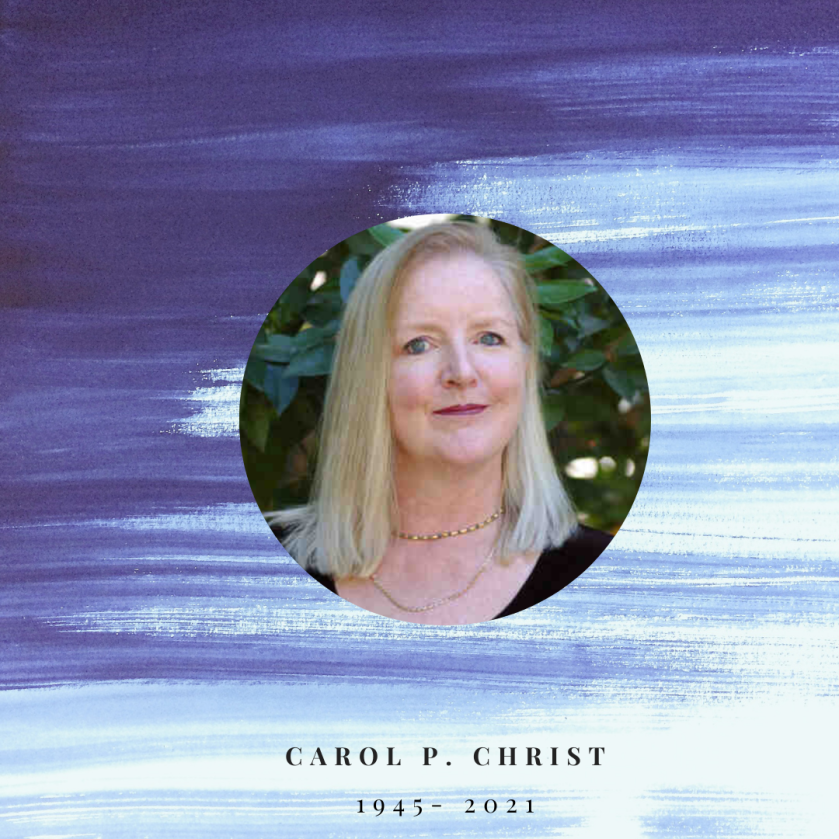
Legacy of Carol P. Christ: When Violence is Normal and Normalized

This was originally posted on January 14, 2019

Warning: this blog discusses spanking and bodily violence

“No Whips, No Punishments, No Threats: Women’s Control of Social Life” is the title of one of the chapters in Iroquoian Women, Barbara Alice Mann’s stunning reconstruction of female power in a matrilineal society. According to Mann, the European settlers were “unsettled” by the lack of strict punishment systems for children in Indian societies. “Spare the rod and spoil the child” was the backbone of European child-rearing practices. The settlers viewed Indian children as naughty, disobedient, disrespectful, and horror of horrors: self-possessed.

It is perhaps no coincidence that after reading this chapter, bodily memories of violence inflicted on me as a child began to resurface. My strongest bodily memory is of being hit repeatedly on my left upper arm by my younger brother’s fist. It is as if my arm is still stinging in that particular place. My mother wanted us to play together, but when we did, we usually ended up fighting. My brother, who was two and a half years younger, was later diagnosed with dyslexia and given “little red pills” to help him control his temper. I was a quiet child (there must have been reasons for that too), and though I soon realized that if I hit back I would only be hurt more, I learned to use my tongue against my brother. This too was a form of violence and my brother remembers my cruelty to this day. Once when I asked my mother what she wanted for her birthday, she responded, “Two children who do not fight.” I didn’t even try to give her that because I didn’t know another way.

Continue reading “Legacy of Carol P. Christ: When Violence is Normal and Normalized”

Legacy of Carol P. Christ: WANGARI MUTA MAATHAI AND SACRED MOUNT KENYA

This was originally posted on September 23, 2013

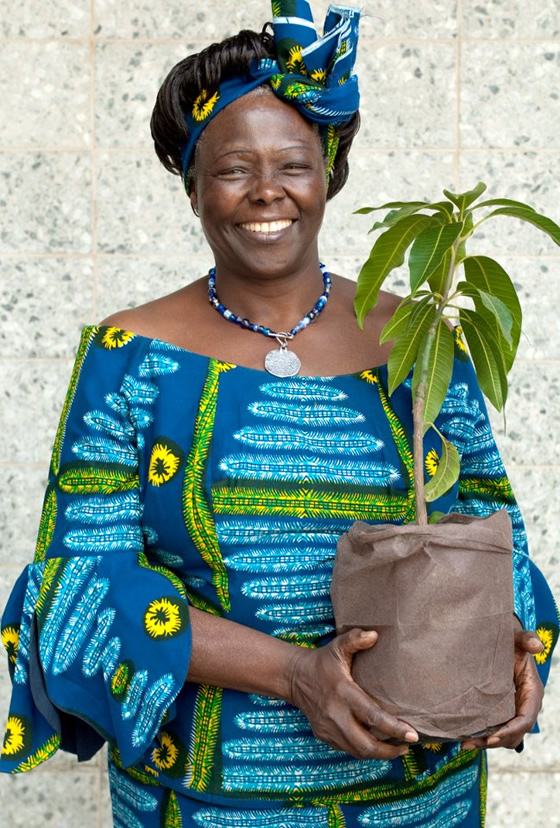
September 25, 2013 is the second anniversary of the death of environmental, peace, justice, and democracy advocate and Nobel Peace Prize recipient Wangari Muta Maathai.

Wangari Muta was born in 1940 in a round hut in rural tribal Kenya.  Wangari’s tribe considered the fig tree to be holy, and she was taught that one is never to cut a fig tree down or to use its branches for firewood.  Wangari spent many happy childhood hours in the shade of a fig tree that grew by a nearby stream.  Fig trees play an important role in the ecological system of the Rift Valley of Kenya.  Their roots penetrate the hard rock surface of the mountains to find underground water, thus opening channels where the water flows upward to fill streams and rivers.

Continue reading “Legacy of Carol P. Christ: WANGARI MUTA MAATHAI AND SACRED MOUNT KENYA”

Legacy of Carol P. Christ: The Ninth Touchstone: Repair the Web

This was originally posted on September 3, 2018

As I reflected on the Nine Touchstones again recently, I was pleased to discover that the first and the eighth touchstones are articulations of the central values of egalitarian matriarchal societies. Few of us live today in egalitarian matriarchies, and it would not be possible for all of us to return to cultivating the land. I offer the Nine Touchstones in the hope that they can help us to find a way to express and embody the values of egalitarian matriarchal cultures in the modern world. The touchstones are intended to inform all our relationships, personal, communal, social, and political.

Continue reading “Legacy of Carol P. Christ: The Ninth Touchstone: Repair the Web”

Legacy of Carol P. Christ: Walk in Love and Beauty: A Touchstone for Healing

This was originally posted on July 9, 2018

Nurture life.

Walk in love and beauty.

Trust the knowledge that comes through the body.

Speak the truth about conflict, pain, and suffering.

Take only what you need.

Think about the consequences of your actions for seven generations.

Approach the taking of life with great restraint.

Practice great generosity.

Repair the web

In Rebirth of the Goddess, I offered Nine Touchstones of Goddess Spirituality as an alternative to the Ten Commandments. The Nine Touchstones are intended to inform all our relationships, whether personal, communal, social, or political.

Continue reading “Legacy of Carol P. Christ: Walk in Love and Beauty: A Touchstone for Healing”

From the Archives: The Deep Exhale by Chris Ash

This was originally posted on November 13, 2018

There’s this thing that happens to advocates when the world around us burns with injustice and fury and we shift into what we know, the holding-fighting, fierce-eyed, tender-hearted caring that pours out compassion and links lives with survivors, shedding trails of sweetness as it goes. It’s a professional skillset and personal practice — a vocation, even? — that girds our own hearts with the structure of listening skills, crisis response, and open-ended questions. We wrap ourselves in the safety of our modalities while we float steadily alongside others, occasionally sharing an oar when someone is stuck.

It is an act of ministry when we exhale-blow out-breathe hard into darkness, trusting in the moment when the deep inhale comes to re-inflate our lungs and faith.

~ inhale ~

Continue reading “From the Archives: The Deep Exhale by Chris Ash”

Legacy of Carol P. Christ: Can You Kill the Spirit? What Happened to Female Imagery for God in Christian Worship?

This was originally posted March 16, 2015

When I first began to think about female language and images for God I imagined that changing God-He to God-She and speaking of God as Mother some of the time would be a widespread practice in churches and synagogues by now. I was more worried about whether or not images of God as a dominating Other would remain intact. Would God-She be imaged as a Queen or a Woman of War who at Her whim or will could wreak havoc on Her own people?

Forty years later, very little progress has been made on the question of female imagery for God. I suspect that most people in the pews today have never even had to confront prayers to Sophia, God the Mother, or God-She. Most people consider the issue of female language in the churches to have been resolved with inclusive language liturgies and translations of the Bible that use gender neutral rather than female inclusive language.

Continue reading “Legacy of Carol P. Christ: Can You Kill the Spirit? What Happened to Female Imagery for God in Christian Worship?”

Life Still Shaped by the Witch Hunts? by Eline Kieft

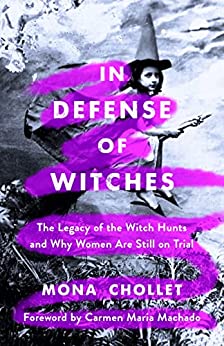
In this article I reframe my understanding of feminism through the lens of Mona Chollet’s In Defence of Witches, and reflect on how my psyche as a woman today is still deeply influenced by the effects of the witch hunts in mediaeval times. 

Continue reading “Life Still Shaped by the Witch Hunts? by Eline Kieft”

From the Archives: Awakening to the Mystery of Absolute Beginnings by Carolyn Lee Boyd

This was originally posted on February 1, 2013

As I rise at 5:30 each morning, my spirit reawakens in a between-the-worlds realm of absolute beginnings. For those few minutes of quiet and slowly revealing dawn light, I revel in mystical newness, endless possibility, a horizon that is only the future.  By 7 am, when I can hear cars on the road and see television screens through windows as I walk to work, normal, plodding space-time has taken over, leaving just a shimmer to linger in my memory.

I remember living all day with this feeling of being at the very beginning of my world when I was a young child and everything that I did and thought was for the first time. I believed this sense was lost forever when I was later taught by society, as so many of us are, that I was only the tiniest, most ordinary mite in a world already built many eons ago by people with a much brighter genius than me. 

And then, on my 25th birthday, I heard Merlin Stone speak about When God Was a Woman As I truly envisioned the Divine with a female face for the first time in my life, I felt a joyful excitement as if I had been transported back to that first second in human history when the insight dawned that a sacred presence exists within ourselves and all of creation that is unseen, but real, and that it can be expressed and shared. Because I had never been taught about Goddess or how to interact with Her, I was able to discover and act on what I knew intuitively within myself about Her in a way that was completely my own. With great fervor I began my own individual journey of the spirit and found that this exhilarating profound newness never left me because the territory I was exploring was completely unfamiliar to me in my own experience.

Continue reading “From the Archives: Awakening to the Mystery of Absolute Beginnings by Carolyn Lee Boyd”