
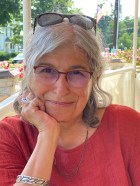
Gratitude and Hope: With a  Lot of Help from My Friends by Carol P. Christ

Last Friday my oncologist gave me the best birthday present I could have imagined. (My birthday was 7:30 pm last night December 20, California time.) Without going into details, my latest CT scan was so much more positive than the last one that it feels like a miracle. I have reason to hope.

Today I am full of gratitude. I am grateful to my doctor Dimitrios Mavroudis who is the head of Oncology at the University of Crete and at the Pagni Hospital in Heraklion. I am grateful to medical science for the chemotherapy that is healing my body.

I am grateful for the national health system of Greece that is covering the cost of my treatment because I am a Greek citizen even though I never contributed to the national health insurance.

I am grateful to the nurses at the Pagni hospital who are unfailingly kind as they take my blood and regulate my chemotherapy.

I am grateful to Vera Dervesi, my cleaning lady and now friend, who with her husband Eddie, took me to the hospital where I was diagnosed, and who has helped me finish unpacking and moving in to my new apartment, and for her sweet presence in my home that soothes my soul. Continue reading “Gratitude and Hope: With a  Lot of Help from My Friends by Carol P. Christ”

Women’s Spiritual Power Is All Around Us by Carolyn Lee Boyd


Carolyn Lee Boyd

In this most challenging time, women are showing the world what women’s spiritual power can do. They are guiding nations, states, and communities through the pandemic and towards environmental sanity; feeding the hungry bodies and spirits of their neighbors by organizing community assistance projects; offering hope and care to vulnerable family members; and leading and healing in so many other ways. They are calling on their inherent, profound belief in their own sacredness and that of others to gain access to the strength and clarity that leads to wisdom and effective action.

Yet, finding and using your spiritual power is easier when it is affirmed by the people and subtle messages you experience every day.  In our society, too often girls and women may struggle to find encouragement to identify and use their spiritual power, whether because of present or past experiences or the sheer overwhelming nature of our individual and societal challenges.  Yet, symbols of women’s spiritual power are all around us, everyday, and can help guide us to that deep well within we have all carried since birth.

Continue reading “Women’s Spiritual Power Is All Around Us by Carolyn Lee Boyd”

Feminist Parenting Part 3—Les Misérable Mothers, why is this so %$@# haaaaard?! by Trelawney Grenfell-Muir

Life has been challenging lately – I’m sure you can relate. Normal emotional and financial stress are worsened by COVID-19 and the election— and I’ve often said that there’s nothing like motherhood for making us feel like failures…  It’s as though our brains are incapable of seeing anything but the things we have left undone or done badly. And it is often excruciatingly hard to be a calm, patient parent when the kids start getting wild, or someone breaks something, or the <expletive> online form won’t <expletive> work on my <expletive> phone.
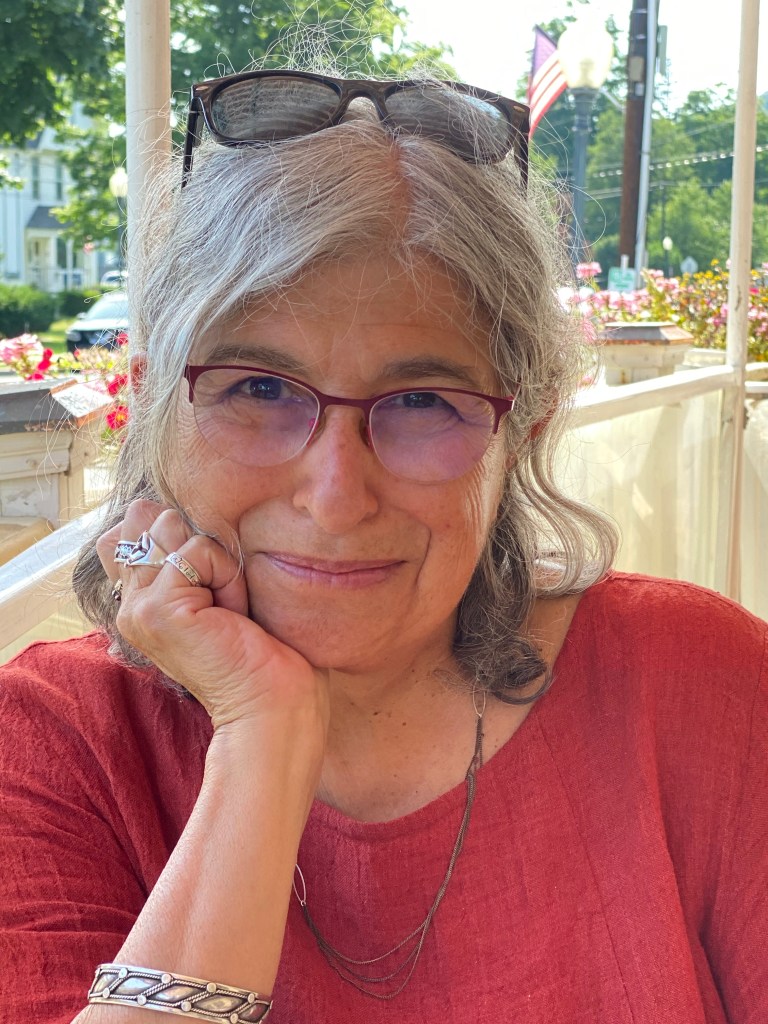
…Why is it so hard to feel “good enough?” Could it be because patriarchy benefits from making the female class feel constantly insecure and unworthy? Continue reading “Feminist Parenting Part 3—Les Misérable Mothers, why is this so %$@# haaaaard?! by Trelawney Grenfell-Muir”

Glimpsing La Vièio ié Danso – “The Untouchable Wild Goddess” – in Jóusè d’Arbaud’s Beast of Vacarés by Joyce Zonana

Nearly a century later, d’Arbaud’s words still have the power to startle and delight, vividly evoking Earth’s sacredness.


Early in Jóusè d’Arbaud’s 1926 Provençal novella, The Beast of Vacarés, the narrator, a 15th century gardian or bull herder, describes how in summer la Vièio ié danso—the Old Dancer— “can be glimpsed on the dazzling salt flats” that surround the Vacarés lagoon in the Camargue region of Southern France.

In a note, d’Arbaud explains that la Vièio is how locals refer to mirages in this liminal landscape where earth, sea, and sky merge. “Mirages are common in the Camargue,” he tells us:

They begin with a vibration in the air, a trembling that runs along the ground and seems to make the images dance; it spreads into the distance in great waves that reflect the dark thickets. How not to see in this mysterious Vièio, dancing in the desert sun, a folk memory of the untouchable wild goddess, ancient power, spirit of solitude, once considered divine, that remains the soul of this great wild land?

The untouchable wild goddess . . . once considered divine . . .”

Nearly a century later, d’Arbaud’s words still have the power to startle and move us, vividly evoking Earth’s sacredness. Here is a man, himself a bull herder in the region he so lovingly describes, who seems to have been a devotee of the Goddess, the “ancient power” he venerates and bring to life for his readers. Indeed, in an early poem, “Esperit de la Terro” — “Spirit of the Earth”— d’Arbaud explicitly dedicates himself to the old gods sleeping below the earth, vowing to “defend” and “aid” them. How extraordinary to discover this writer making such a commitment, well before the rise of our recent feminist spirituality and ecofeminist movements. D’Arbaud speaks directly to our current environmental, theological, social, and political concerns.

Continue reading “Glimpsing La Vièio ié Danso – “The Untouchable Wild Goddess” – in Jóusè d’Arbaud’s Beast of Vacarés by Joyce Zonana”

Poem: In These United States- The Court Supreme By Marie Cartier

We have nine justices usually but one of our most beloved, and notorious,
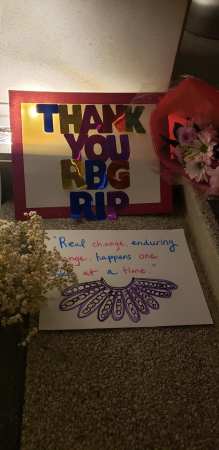
Ruth Bader Ginsberg, RBG, has gone to the Summerland, across

the Rainbow Bridge, to the afterlife—wherever that is for her, she’s

gone there. May her memory be a blessing. May her memory be a revolution.

And we are left with eight, five conservatives and

three liberals. RBG was liberal. Our current Pennsylvania Avenue occupant has already

nominated someone to replace RBG. This someone believes that god

speaks to the wife through her husband, the wife is submissive to the husband in all things,

she must submit in all things to her husband.

Sigh. As someone joked, this someone is walking through and slamming shut,

all the doors that RBG kicked open.

This nominated replacement believes that a woman has no choice in the matter of pregnancy,

and being gay is (once again) a sin in the eyes of the law, as well as her church.

This RBG replacement is Catholic, I guess.

I’m Catholic, too.

Maybe you’ve seen that meme on social media?

“I’m Christian. Oh…classic Jesus or Republican Jesus?”

That’s a joke: Ha. Ha.

Continue reading “Poem: In These United States- The Court Supreme By Marie Cartier”

Yes There are Goddesses in the Bible, Part 3

This blog post is the 3rd in a series of looking for female deities in the bible who have been translated out of easy reach or otherwise hidden within its words. In my last blog post I discussed bird imagery and the bible. It is available here
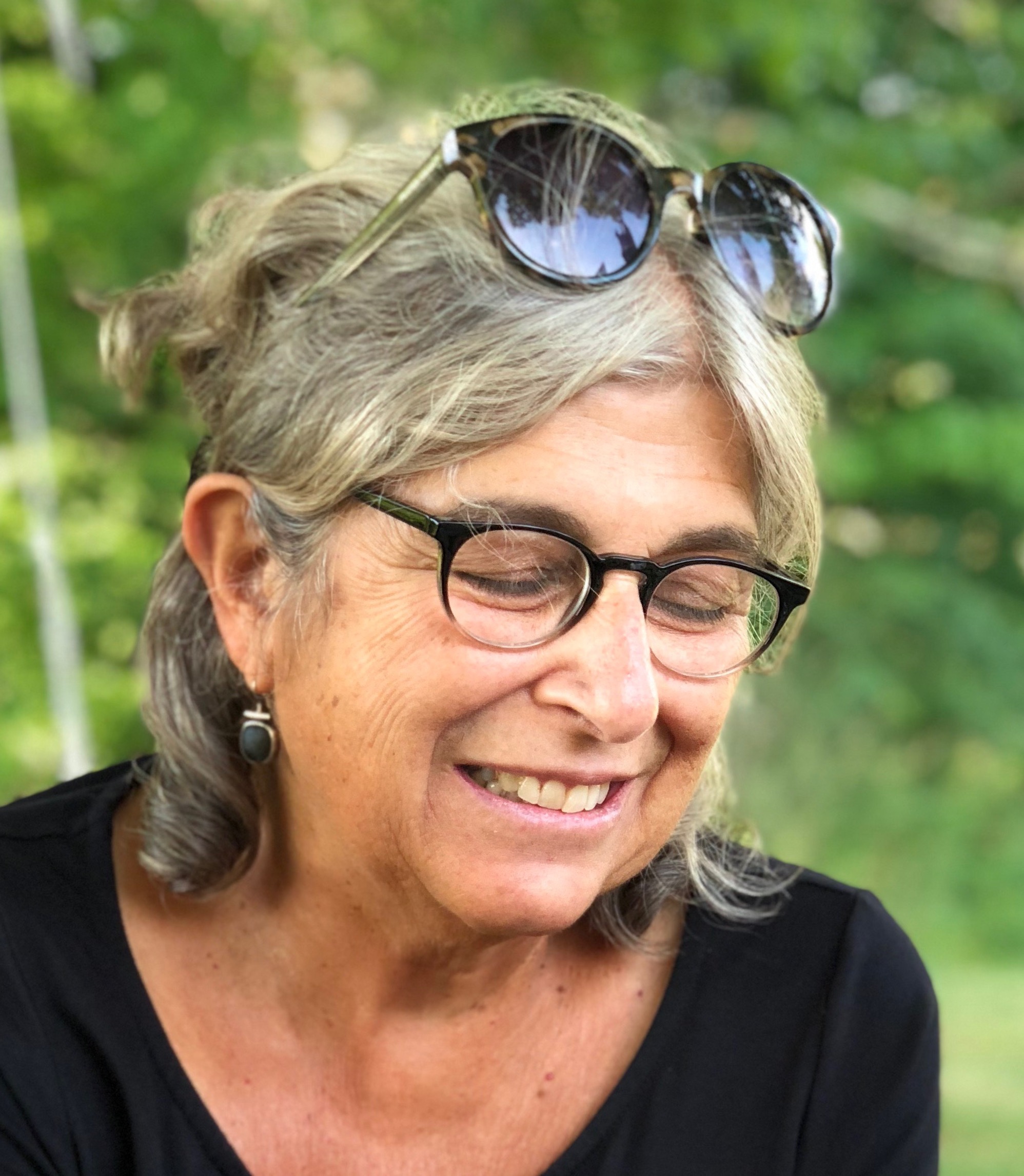
 You can’t complete a discussion about birds without also bringing up Lilith. She appears by name only in one place in the bible; Isaiah 34:14. Isaiah uses the word liyliyth as a feature in a hellish landscape. Although it is also a name, liyliyth is treated as a common noun. The most prevalent translation is “screech owl” although others have included such names as night creature, night monster, night hag, and she-vampire. Continue reading “Yes There are Goddesses in the Bible, Part 3”

ANNA’S DANCE: A BALKAN ODYSSEY by Michele Levy – Book Review by Joyce Zonana

Toward the end of her complex odyssey, Anna finds herself alone in an ancient Istanbul synagogue, where at long last she unreservedly “name[s] herself” a Jew and experiences connection with a God that “fuse[s] both male and female” and “from that wholeness birth[s] mercy and love.” Vowing to work to “help repair [the] world”–tikkun olam–she moves forward to face her life with a “sense of wholeness” that had eluded her for so long.

202002_Zonana_JoyceHow to come to terms with the most maligned or vulnerable aspect of ourselves—whether it be race, ethnicity, religion, gender, sexuality, physical ability, or any other trait—remains among the most pressing questions of our time. Should we try to “pass,” identifying with the oppressor and denying or rejecting who we are? Should we assume a militant, defiant stance, wreaking vengeance on those who have harmed us? Or can we find a way to embrace and affirm ourselves, neither denying nor reifying the pain of our individual and collective pasts? Can we love those who have harmed us?
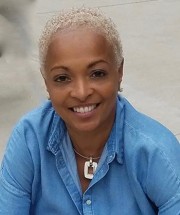
These are among the questions faced by 23-year-old Anna Rossi, the central character in Michele Levy’s complex, lyrical new novel Anna’s Dance: A Balkan Odyssey (Black Rose Writing, $20.95), set in the turbulent summer of 1968. 

Raised in the U.S. as a non-observant Jew, Anna has nevertheless been seared by anti-Semitism—both the indignities experienced by her parents, and those she has encountered herself. Her mother, a brilliant mathematician, had been denied admission to Purdue’s engineering school— “You’re a woman and a Jew”—and rejected by her Irish-American mother-in-law as a “filthy immigrant Jew.” Growing up in a Northern Virginia suburb, Anna was branded “Miss Israel” in the ninth grade and given low marks by a teacher who insisted she was “not like us.” Later, in college, a professor called her a “Jewish bitch.”

Continue reading “ANNA’S DANCE: A BALKAN ODYSSEY by Michele Levy – Book Review by Joyce Zonana”

Hagar and Intersectionality by Marilyn Batchelor

I began to follow Kimberlé Crenshaw a little more than five years ago when I first learned of her theory of intersectionality as a more concise description of oppressions stemming from race, age, gender, sex/sexual orientation, religion and socio-economic status. 

In Delores Williams’ book, Sisters in the Wilderness, there is a closer look at womanist theology as it relates to Intersectionality. The focus on traditions of biblical appropriation that emphasize liberation of the oppressed “showed God relating to men in the liberation struggles,” Williams says in the introduction. “In some African American spiritual songs, in slave narratives and in sermons by black preachers, reference was made to biblical stories and personalities who were involved in liberation struggle.”  Continue reading “Hagar and Intersectionality by Marilyn Batchelor”

Elder – Berry Musings by Sara Wright

I first became interested in herbalism as a young mother who kept a small herbal garden outside her back door. There is nothing better than fresh herbs to spice up any dish (as any good cook knows well) and baking my own bread, making homemade granola, etc., like gardening, was simply part of what I did. In retrospect, I see that cooking served as a highly creative endeavor that helped me to create some balance between the millions of mundane jobs associated with single motherhood and my need for creativity…

It seemed quite natural to begin to explore herbs for medicinal purposes. I first experimented with plants that grew wild near my house on the island on which I lived. I sensed that developing a personal relationship with the plants I was using mattered, an intuition that continues to inform my growing and preparation of herbal remedies to this day. If I don’t have the right growing conditions for an herb I need, I wild craft responsibly. Until recently I have never used store bought preparations.

When I studied with medicine folk in the Amazon thirty years after first using herbs for culinary and then medicinal purposes, I learned that each healer only used his/her own garden grown herbs and preparations differed based on the knowledge that each medicine person received directly from the plants, so perhaps the importance of having a personal reciprocal relationship with individual plants is tied to their efficacy – my sense/experience is that it is. The ways of the natural world are not well understood by most westernized people. Continue reading “Elder – Berry Musings by Sara Wright”

Ancient Mothers, I Hear You Calling Me to Crete by Carol P. Christ

On a cold and rainy morning in Lesbos, I ponder the advice of my intuitive friend Cristina to reflect on the spiritual dimensions of my decision to move to Crete. When asked why I am moving from Lesbos to Crete, I tend focus on the negative: I am lonely in my small village; and I am disheartened by my neighbors’ lack of compassion for the refugees who come to our island from Syria, Iraq, Iran, and Afghanistan.

As I begin to think again, I recall the many wonderful things I have experienced in Lesbos. This is the island where Sappho sang, and I too have been inspired by the muses who arise from the land. It is here that I first felt Greece calling me to leave my home. It is here that I learned to speak Greek. It is here that I listened to the stories of the old people who remembered a time when everyone lived closer to each other and the land. It is here that I learned to dance the traditional dances of Greece. It is here that I learned to identify over 300 species of birds that visit the wetlands on spring migration or are year-around or summer and winter residents. It is here that I dedicated a decade of my life to the effort to protect the wetland home of the birds I came to love. It is here that I was asked to run for regional and national office by the Green Party Greece. It is here that I met green friends I will always hold in my heart. It is here that I became an amateur geologist, learning the volcanic history of an island that has been declared a UNESCO Geopark. It is here that I imagined the time before 1922 when Turks, Armenians, and Greeks lived together in my village. It is here that I renovated a small Turkish house in a neighborhood that once had a mosque and later, a Neoclassical “mansion” (not particularly large by American standards) built by a Greek shipowner who transported goods brought by camels along the silk road from China. It is here that I learned to drink retsina and to relish food drenched in olive oil. I will carry all of this with me, for it is in my blood and in my bones.

But now, Crete is calling me. Continue reading “Ancient Mothers, I Hear You Calling Me to Crete by Carol P. Christ”