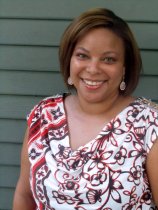
“JC” by amina wadud

Amina Wadud 2 I am Muslim, by choice, practice and vocation

It’s been more than three decades, and certainly most of the influential time of my own theological/social justice career, since I was first introduced to Joseph Campbell (may he rest in “bliss”).  He was still alive then, and my husband and I were like geeks following his PBS series on Myths and Metaphors, and reading all his books.  We called him “JC”, an intentional play on initials and Jesus Christ.  Both of us Muslims by choice, we embrace the Gospels as part of the divine legacy of revelation and accept that they come from the same Source as the Qur’an, the Torah, and other sacred texts, but we fall short of the divination of Jesus.  The grey area of this is hard put for some Christians because “accepting Christ” means to accept the story of his birth, death and resurrection as formula bringing salvation.

We accept his extraordinary divine mission.  Our sacred text not only recaps the virgin birth but also gives Jesus the gift of speech from the cradle where he confirms that his unmarried mother was not a loose woman, but rather the bringer of a Divine miracle, and as such, a miracle herself.  Maybe at another time I will discuss how Mary configures so uniquely in my own feminist theology as read through the Qur’an, but, today I have in mind something about the transformation I went through with Joseph Campbell, starting with the virgin birth.  Continue reading ““JC” by amina wadud”

Interview an Atheist at Church Day by Kile Jones

Kile Jones, atheistAs some of you may know, I run a project called “Interview an Atheist at Church Day.”  This project aims at bettering understanding and furthering dialogue between atheists and Church-going religious persons.  So far we have had over a dozen interviews take place, and we have more in the making.  If you are a pastor interested in interviewing an atheist during service, or an atheist willing to be interviewed, please contact us here.

Our most popular interview so far is with Neil Carter (atheist) at a church in Mississippi.  You can read up on it here and watch it below.  At Feminism and Religion, I have made it my task to highlight some strong atheist women, and discuss some of the ways in which they can work together with religious women (sometimes this can cause a little friction).  Gretta Vosper, a pastor in Canada, is just such a woman.  She was interviewed as an atheist IN HER OWN CHURCH!  If you are not familiar with her work, I highly recommend it.  Another strong atheist woman who has participated in this project is Sarah Kaiser.  She works with the Center for Inquiry promoting LGBTQ rights. Continue reading “Interview an Atheist at Church Day by Kile Jones”

Who is the Church? by Linn Marie Tonstad

Linn Marie TonstadThe headlines blared, “Who am I to judge?” News outlet after news outlet led with the pope’s conciliatory stance toward gays, expressed during an interview aboard the pope-plane as he returned from Brazil. Among the several headers from Fox News (I encourage not clicking!), we find discussions of the pope’s “reaching out” to gays and even one that combines this development with his “urging” of a “greater role” for women. The New York Times story introduced the pope’s comments as follows: “For generations, homosexuality has largely been a taboo topic for the Vatican, ignored altogether or treated as ‘an intrinsic moral evil,’ in the words of the previous pope.” Ignoring the astonishing comment that this has been the case “for generations,” as though homosexuality has historically been the kind of issue for the church it has become in the wake of radical queer movements – see Mark Jordan’s several books on this for the most helpful treatments – the story went on to say that the pope’s comments “resonated throughout the church.” Although the NYT article did a better job than some contextualizing and nuancing the pope’s comments, they were still termed “revolutionary” in an assessment better suited to an opinion page than to a news report. Better-informed commentators, such as James Martin, offered a measured response. Martin said that although the pope’s remarks didn’t really signal a significant change in policy, “in the church, style often proves substantial,” implying that the “pastoral” tone might have effects in the implementation of policy. More significantly, Martin praised the pope’s adherence to Jesus’ injunction not to judge as an instance, first and foremost, of the pope’s commitment to mercy as the hallmark of his pontificate.

My Facebook feed, predictably, lit up with links to and discussions of these comments. While most were thrilled, a few posts noted that, even if Pope Francis is in fact (which is not proven) walking back Benedict XVI’s language of “intrinsically disordered,” the church’s policy has not and will not change in any significant way. What was missing in all but a few instances was attention to the pope’s comments in the same interview on women, and the deep theological problems with the assumptions contained in those comments. And while I, as a queer theologian, would never wish to downplay the struggles of LGBTQI people in the Roman Catholic church, there are rather more women than queers in that church (as elsewhere!). What’s more, it is arguable that it is the sexism and heterosexism of what Marcella Althaus-Reid memorably termed “T-Theology” that underlies condemnation of homosexuality in Roman Catholic theology. Continue reading “Who is the Church? by Linn Marie Tonstad”

5 Interesting Facts about Women and Religion by Kile Jones

Kile Jones, atheistPart of my research is focused on how the social sciences relate to “religion” and religious studies.  More specifically, I spend time examining the sociology of religion.  I look at stats, demographics, and polls.  I look at rates of attendance, frequency of prayer, levels of “religiosity,” apostates (or the less religiously-loaded term “exiters”), and political outlooks.  I also look at how bias this area of study is in favor of religion.  One facet of this work that has always interested me, is the differences in “gender” and “sex” as they relate to religious beliefs and observances.  Accepting the fact that there are spectrums of sex, gender, and identity, and the presence of difficult philosophical questions surrounding self-identification and the limits of labels, some really interesting facts and statistics crop up time and time again.  In what follows I will lay out a couple of these interesting facts, along with some thoughts on them: Continue reading “5 Interesting Facts about Women and Religion by Kile Jones”

Two Ultimates: The Ground of Being and Goddess by Carol P. Christ

carol p. christ 2002 colorThe concept of two ultimates, the ground of being and Goddess, can be helpful in understanding differences of emphasis within and among religions.  Some religions or strands within religions focus on relationship with or worship of a personal God, while other religions or strands within religions focus on identifying with or merging with the impersonal ground of being or the whole of which we are part.  These two ultimates are found in feminist spiritualities and theologies.

In “Being Itself and the Existence of God”* process theologian John Cobb identifies two ultimates.  The ground of being as the metaphysical principles that structure all of life is unchanging; as the whole of which individuals are part, the ground of being is impersonal.  God, on the other hand, is an active presence in the world, is personal, and cares about individuals in the world.  If God is understood to be in some sense an individual in relation to other individuals, then God cannot be identified with the whole, because the whole is made up of God and other individuals.  Yet God is not simply one individual among other individuals.  Only God has perfect knowledge of the world and every individual within it and only God cares for the world in light of perfect knowledge of it.

I find Cobb’s notion of two ultimates helpful in understanding some of the differences in feminist views of Goddess and God.  Some spiritual feminists, especially Goddess feminists, view the sacred as the whole of which we are a part, structured by the seasons and cycles of birth, death, and regeneration.  Starhawk’s tree of life meditation in which the individual identifying with the tree draws energy from its ground imagines Goddess as the ground of being and life.  Z Budapest’s song “We all come from the Goddess, and to Her we shall return” connects us to the cycles of birth and death.

The view of Goddess as a personal presence who loves, understands, and inspires us to love is based on the notion of God as a person with whom individuals are in relation.  Jennifer Berizan invokes a Goddess who cares in her song “She Who Hears the Cries of the World,” addressed to the Goddess in the form of Chinese Goddess Kwan Yin.  Prayer to Goddess and a sense that She is always with us are based on the idea of a relational, personal God.  According to Cobb religions do not have to choose between the two ultimates. If both are real, then religions can and should recognize both.  Continue reading “Two Ultimates: The Ground of Being and Goddess by Carol P. Christ”

Creating Ritual by Linn Marie Tonstad

Linn Marie TonstadLast time, we considered whether the creation of rituals, I mean habits, might serve as an antidote to depression, or as a way of managing depression. But the creation of ritual has had a much more significant role in feminist religious practice than such an approach might suggest. Currently, WATER – Women’s Alliance for Theology, Ethics, and Ritual, a leading center for feminist religious thought – creates multiple rituals marking various seasons and events in the year, most recently for the summer solstice. These rituals can provide alternative ways of marking the year’s rhythms, and they can serve as ways to take control of liturgical spaces that have tended to exclude women or to allow women to serve only in various subordinate roles.

Yet the terminology is odd. What does it mean to create a ritual? If I think of the rituals of my childhood, what presented itself to me as ritual was connected either with religious practice, or with seasons of exception. Indeed, the most stylized rituals of the year were areligious (as I understood religion). They took place on Christmas Eve. First, during the distribution of presents, my father would put on a terrifying, horrifying, grotesque Santa mask. It was intended, clearly, to be a friendly Santa, which was why its leering was so fundamentally disturbing. My sister and I would try to run away, emotionally and sometimes physically petrified by the transformation of our father into this monster. Second, after Christmas dinner, we would eat cold rice porridge with cream and try to get an almond – “mandel i grøten” in Norwegian tradition. Getting the almond, which is blanched and hidden in the porridge, is considered an auspicious omen for the new year, and requires that the finder be given a gift – traditionally, a marzipan pig. Continue reading “Creating Ritual by Linn Marie Tonstad”

Adventures in Churchgoing by Elise M. Edwards

Elise EdwardsI am often greeted by warm smiles and handshakes–and sometimes even hugs–from churchgoers around me.  But I wonder if the friendly people would be so welcoming if they knew that I identify as feminist.

It’s hard being a feminist and visiting a new church.  I’ve recently moved to Texas from California and I’m looking for a church to attend.  There are many things I love about church: corporate worship, talks with people of faith, gatherings where friendships are built, and opportunities to serve and to learn. I also love to sing, and my not-ready-for-primetime voice would love to join a choir with and contribute to other people’s worship experience.

In my past, I’ve been a member (or regular attender) of churches where I felt welcomed and affirmed. Yet, I always feel defensive when I seek out new places to worship.  I question whether a church will be affirming to women and girls as whole selves – as embodied, thinking, feeling beings.  I mentally prepare myself to hear male imagery and language for God and I pray themes of male headship vs. female servanthood are not expressed.  I feel like an investigator seeking out clues to determine our compatibility.  It’s no wonder that I’ve recently heard several people compare visiting churches to dating.

Continue reading “Adventures in Churchgoing by Elise M. Edwards”

To Have and to Hold: Gay Marriage and the Religion Question

If a conservative religious traditions can’t give their mothers or sisters full equality, how can we expect them to give a GLBT individual the time of day?

John Erickson, sports, coming out.Outrage.  Anger.  Fear.  Hatred.  These are just a few of the words that flashed across my Twitter feed as I woke up on that fateful Wednesday, June 26 morning when the Supreme Court of the United States ruled that the Defense of Marriage Act (or DOMA) was unconstitutional and that supporters of Proposition 8, the hotly contested voter initiative in California that banned same-sex marriage, had no standing.   People were mad.  However, it wasn’t just the typical kind of mad that is associated with hatred, it was a type gay_marriage_81102178_620x350of mad that was met with impossible anguish because what I was reading and feeling was a result of one thing: there was nothing more they could do.

What does all this mean?  Questions from friends and family were filling up my inbox and although I wanted to take a moment to just hit “Reply All,” and input the words: Equality, I had to hold back and start to examine the notion that although equality may now be firmly on the proverbial table, there is still a lot of work to be done, specifically for gay marriage and those wanting to marrying inside the traditional church spaces they grew up in and not just the ones that have come out as open and affirming in recent years towards LGBT individuals. Continue reading “To Have and to Hold: Gay Marriage and the Religion Question”

“We Are Atheism” and Amanda Brown by Kile Jones

Kile Jones, atheistSo far, as a regular contributor to Feminism and Religion, I have interviewed a “pro-science” woman and one who started an online community for grieving unbelievers.  In this post, I will interview Amanda Brown, an atheist activist who co-founded a project called We Are Atheism.  Amanda grew up in Independence, MO, in the Assemblies of God and the Restored Church of Jesus Christ of Latter Day Saints. Since then, she has been involved in helping atheists “come out” and share their experiences.  So without further ado, here is the interview:

943021_10100185792782141_825478688_n

Why did you start “We Are Atheism”?

I started We Are Atheism because I saw a gap in the age of atheists coming out of the closet.  I also wanted a way for people to see for themselves that atheists are real people.  We Are Atheism is focused on the fact that atheists are mothers, fathers, teachers, brothers, friends, and so much more. When I was at the 2011 Secular Student Alliance Conference in Columbus, OH, I heard most of the leaders tell stories about their groups and how many of them didn’t know other atheists. I thought this was horrible, and being a person who was in the same position, I wanted to start something that would bring our community together.  Those who met on the internet could take their community from online to the neighborhood. Continue reading ““We Are Atheism” and Amanda Brown by Kile Jones”

The ‘Other’ as Target Market in Pentecostal Brand Evangelism by Andreea Nica

Andreea Nica, pentecostalismIn my last post, Leaving Behind My First Love, I mentioned I would examine the historical significance of Pentecostalism and how it relates to the marketization of the church and patriarchal standards. I realize this is a complex topic that involves many theoretical frameworks and conceptualizations, so I do welcome your thoughts. In this post, I will be highlighting trends regarding the marketization of Pentecostalism, brand evangelism as a marketing strategy, and how concepts of neo-liberalism intersect with the Pentecostal faith.

Pentecostalism stems from Evangelical Protestantism incorporating spiritual elements such as speaking in tongues (glossolalia), charismatic leadership, religious healings, and ecstatic praise and worship. Modern Pentecostalism dates back to 1906 at the Azusa Street Revival. However, the First Day of Pentecost can be found in the Book of Acts when Jesus’ disciples gathered in a room and began to speak in different languages. Continue reading “The ‘Other’ as Target Market in Pentecostal Brand Evangelism by Andreea Nica”