The Women of Lech Lecha by Ivy Helman.

29662350_10155723099993089_8391051315166448776_oThe parshah for this week is Lech Lecha (Genesis 12:1-17:27).  I’ve actually written about Lech Lecha on this forum before, concentrating on the parental aspects of the divine.  See here.  However, this time I want to look at the Torah portion from a different angle: what happens to the women?
While I’m concentrating on this theme, the parshah is rich with other material on which one could comment.  For example, the Holy One asks Abram to leave his home and all he’s known to travel through and eventually live in a foreign land.  There seems to be much fighting and strife between various rulers in the area through which they travel.  Abram too goes to war when Lot is kidnapped.  The first covenant between G-d and humanity takes place.  The deity promises many blessings (from land and material prosperity to innumerous descendants) for Abram and Sarai if they obey the terms of the covenant.  We also learn of the markers of the covenant: name changes and circumcision. Continue reading “The Women of Lech Lecha by Ivy Helman.”

On Vayelech, Its Context and Theodicy by Ivy Helman

29662350_10155723099993089_8391051315166448776_oThe Torah parshah for this week (to be read on 15 September) is Vayelech (Devarim/Deut. 31:1 – 30).  September 15th is also Shabbat Shuvah (return), the Shabbat that falls between Rosh Hashanah and Yom Kippur.  It is the time of the year when we focus on repentance for all of the ways in which we have failed to live up to G-d’s standards.

Perhaps it is fitting then that this parshah is also preeminently about how our ancestors believed they continually failed to live up to G-d’s standards.  It concerns itself quite repetitively with three things: one, the passing of the leadership of the Israelite community to Joshua and G-d’s last requests of Moses, two, the rants of a jealous G-d who already knows of the Israelites betrayal and, three, an invitation for the entire community (Israelite and non-Israelite men and women and children) to hear the words of the Torah and Moses’ song (which follows in Duet. 32).  This is prefaced by the occasion of Moses’ birthday as well as the reminder that Moses can’t enter the Promised Land. Continue reading “On Vayelech, Its Context and Theodicy by Ivy Helman”

Lessons from Shofetim by Ivy Helman.

29662350_10155723099993089_8391051315166448776_oThis is the first part of a series of reflections on the weekly Torah portions.  For those of you unfamiliar with Judaism, we read the Torah in sections.  There are 52 parshot (or portions), one parshah (portion) is read each week (most often during Shabbat morning services).  It is common for rabbis, prayer leaders or someone of the congregation to offer reflections on the week’s parshah at Shabbat services.
The parshah for this week is Shofetim.  It is Devarim/Deuteronomy 16:18 – 21:9 and will be read this Shabbat, 18 August.  Shofetim discusses a range of topics: setting up of a system of judges to make important decisions for Israel; the entitlements of the Levites; the rules of warfare; the importance of justice and just governments; and the acknowledgment of G-d as the true and highest Judge.  It also warns Israel against false prophets and practices of idolatry.  Shofetim contains a number of well-known verses including ‘justice, justice you shall pursue…(16:18),’ and notorious punishments like “…a tooth for a tooth; an eye for an eye…(19:21)”  Continue reading “Lessons from Shofetim by Ivy Helman.”

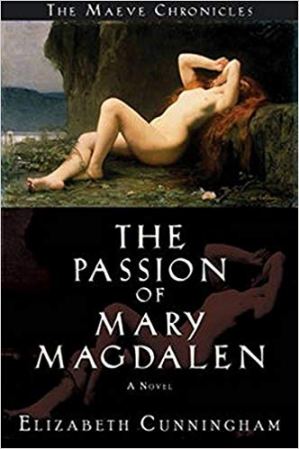
Did You Have to Make Her a Prostitute? by Elizabeth Cunningham

When I toured with The Passion of Mary Magdalen, opening by belting out the first paragraphs of the novel’s prologue in song, (ending with the line “when only a whore is awake!”) that question almost always came up.  In celebration of Mary Magdalen’s feast day, I’d like to offer answers that continue to evolve.

There is no scriptural evidence that Mary Magdalen was a prostitute. In a sermon, 6th century Pope Gregory I gave as his opinion: “This woman, whom Luke calls a sinner and John calls Mary, I think is the Mary from whom Mark reports that seven demons were cast out.” (This confusion and proliferation of Marys inspired me to make a joke. Q: How many holy Marys does it take to change a lightbulb? A: I don’t know. I keep losing count.)

In fact, very little is known about Mary Magdalen. There are fourteen references to her in the Gospels, then she disappears from the New Testament. The possibly Gnostic gospel of Mary dates to the 2nd century CE, and there is no scholarly consensus as to which Mary is the source of the tradition. Early on Mary Magdalen gave history the slip and took on an extended life in legends, which take her to Ephesus as well as to France where her alleged fingernails, bones, and skull reside and continue to be venerated.

Continue reading “Did You Have to Make Her a Prostitute? by Elizabeth Cunningham”

Thus Saith Eve BOOK REVIEW by Katie M. Deaver

“I am the Queen of Sheba and I am not impressed.”  This is the first line of one of the monologues from chris wind’s book Thus Saith Eve.  This book features 18 stories of biblical women, and a 19th, Lilith, from Jewish mythology.  Each monologue offers a new interpretation and gives a voice to the women that we think we know.

In this book the voices and personalities of women such as Noah’s wife, Mary of Bethany, Zipporah, and Vashti are reimagined in an exciting and empowering way.  Each of the stories also features an appendix where the reader can learn more about the biblical or mythological context of the woman who is telling her story.

As in her other works, wind uses historical people, events, and understandings to build a truly wonderful source of feminist fiction.  In addition to being an extremely enjoyable and thought provoking read, the monologues can also be used for audition and performance pieces.  On her website wind explains that two of the monologues, “I am Eve” and “I am Mary” can be performed with specific musical selections in the background.  You can find those selections linked to her website above.


Continue reading “Thus Saith Eve BOOK REVIEW by Katie M. Deaver”

Protecting the Children, Jesus Christ Superstar Style by Marisa Goudy

“Where is my mother? I am thirsty.”

My four year old is crooning quietly to her dolls. She is making sense of the crucifixion through play, asking her Disney princesses to stand in for Jesus, the Marys, and “the bad guys.”

Whatever she’s working through has more to do with the voice of John Legend and the cast of Jesus Christ Superstar In Concert than it does with a reading of the gospels. My children were raised with an eclectic mix of goddess spirituality, “all gods are one god” thinking, and occasionally attending a holiday mass. Thanks to this soundtrack, however, they’re suddenly saying things like, “Mama, I really love Jesus!” and “can I be Mary Magdalene for Halloween?” Continue reading “Protecting the Children, Jesus Christ Superstar Style by Marisa Goudy”

Ethics of Goddess Religion: Healing the World by Carol P. Christ

Nurture life.

Walk in love and beauty.

Trust the knowledge that comes through the body.

Speak the truth about conflict, pain, and suffering.

Take only what you need.

Think about the consequences of your actions for seven generations.

Approach the taking of life with great restraint.

Practice great generosity.

Repair the web.


In a recent interview on Voices of the Sacred Feminine on “Gratitude and Sharing: Principles of Goddess Spirituality,” Karen Tate asked me to review the “Nine Touchstones” of Goddess religion I offered in Rebirth of the Goddess as an alternative to the Ten Commandments. Tate expressed concern about the lack of social and political ethics in New Age spirituality and in some parts of the Neo-pagan movement at a time when ethical discernment and action is more necessary than ever.

Before discussing the ethical principles of Goddess feminism, it is necessary to dispel a common assumption that there can be no ethics in Goddess religion because ethics stem from a transcendent principle of justice that stands outside the world. Christian liberation theologians usually identify this transcendent principle with the commanding “Word of God” in the prophetic traditions of the Bible. They often assume that this word comes from outside ourselves and outside nature and as such is the only firm basis for ethics. Continue reading “Ethics of Goddess Religion: Healing the World by Carol P. Christ”

The Blessing of Spiritual Direction by Elise M. Edwards

elise-edwardsFive years ago, I moved to Texas from California. In that time, my spiritual practice and my feminist and womanist worldview has grown through contemplative practices.  It’s ironic. “Everything’s bigger in Texas!” the saying goes, but in the presence of big, sweeping landscapes and open skies, big storms, and big egos, I’ve found the sacred in the small things.  I have deepened my connection to God through a small group of women who practice group spiritual direction.

This past Sunday evening, I gathered with these women at my church for our spiritual direction group.  We sat comfortably in  a circle, relaxing on a couch and chairs around a coffee table, as the evening sun streamed in from a large picture window and lit the room.  As we read a passage from the Bible (Mark 3:34-35) in which Jesus looks at the people sitting around him and says, “Here are my mother and my brothers! Whoever does the will of God is my brother and sister and mother,” I saw my companions more clearly.  Although my eyes were closed, I had a vision of these women sitting around me, halos made of sunbeams shimmering over their heads.  I thought, “Here are my sisters!”

Continue reading “The Blessing of Spiritual Direction by Elise M. Edwards”

I’m not proud to be Christian – and no one else should be, either by Trelawney Grenfell-Muir

I hear a lot of people talking lately about how they are no longer proud to be Christian. They point to the vocal conservative churches and leaders who support Trump, condemn and exclude LGBTQ people, oppress female bodies and sexuality, exhibit breathtaking racism, classism, sexism, nationalism, and ecocide… and they struggle to call themselves “Christian” anymore, in light of these shameful behaviors by modern American “Christianity.”

I completely understand. The most visible examples of self-identified Christian organizations and leaders in the US today make me cringe— or pale in horror. How could any ethically responsible moderate or progressive Christian want to be associated with such bigotry, violence, and dysfunction? Continue reading “I’m not proud to be Christian – and no one else should be, either by Trelawney Grenfell-Muir”

A Feminist Retelling of Noah’s Ark by Trelawney Grenfell-Muir

My daughters came to me after Sunday School one day, concerned about a story they had heard in which God drowned almost everyone on Earth. So I sat down and thought about why a community might want to tell that story, and what valuable wisdom might be lifted from it for my children. Here is what I told them:
God/ess  has  many  faces,  which  help  us  understand  different  things we  need  to  know  at different  times.  Sometimes we think of God/ess  as  Crone,  an  old,  old  woman  crowned  with  silver  hair  as  an  emblem  of  her  wisdom,  who helps  us  learn  to  let  go  of  anything  that  is  holding  back  the  wellness  of  our  community  and ourselves.  Continue reading “A Feminist Retelling of Noah’s Ark by Trelawney Grenfell-Muir”