In was in October that my last grandmother died, my last living grandparent. As the leaves turn to red and gold once more, I wake thinking of her each morning. I wake thinking of my maternal grandmother too, who died seven years ago, in springtime as the iris bloomed. I dream of my husband’s grandfather, he stands shoulder to shoulder with my oldest son, white hair and smile flashing as he compares their heights and laughs.
We’ve just returned from a two week long trip to Florida and have arrived back in Missouri to a life in full swing, books to write, projects to plan, new products to develop for our shop, old requests waiting for our attention. But, the leaves will only be this color for a moment. The air will only be this sweet and pleasant for a moment. The sun will only glint across the cedar branches in this way that brings my soul to life right now, the colors of the day so sharp and vivid, clear and bright to my eyes, that it is almost like stepping into another reality. We have only this moment to join hands and slip off into the woods beneath the early morning sun, stepping past pools of slowly dripping water, over sharp and uncertain stones, soft green moss, and carpets of fallen leaves. It is only this moment in which we will hear the hawk’s cry ring out across the trees. Only now in which we will turn over leaves and discover shining mushrooms, gleaming in the October sun.
I stepped into the woods holding memories of my grandmothers next to my heart. The leaves were lit gold from within and below, forming an 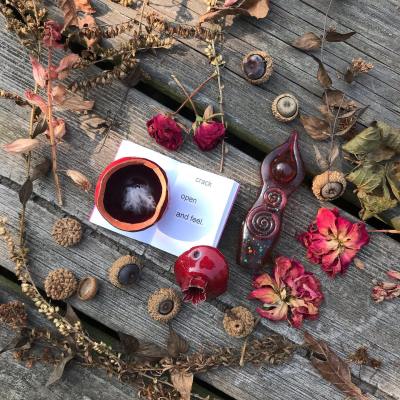 enchanted tunnel into the trees near where we have built our new work studio. As I moved into the clearing, I heard two crows raise an alarm call. I stood silently and looked, curious about the source of their alarm. They called again sharply, once, twice, and right in front of me a quiet brown deer, previously unseen, lifted its white tail and leaped gracefully away through the trees. It took a breath, a beat of time, for me to realize that it was me, my own small form standing relatively motionless among the trees watching the morning sun illuminate the yellow leaves, that was the cause of the raised alarm, this communication between species, sharing the same ground.
We set off along a stony gully that bisects the land of my parents, pausing by a series of small pools and gazing through the backs of dogwood leaves turning to rich red with veins of green still lightly tracing through their round centers. Suddenly, the scent of cedar filled the air and I crouched beneath the tree to see the ground beneath it littered with small snippets of evergreen, strewn across a thick blanket of brown oak leaves and yellow maple, glowing in a stained glass impersonation in the perfect touch of the sun upon their surfaces. My breath made a fog in the air and I looked up into the tree to see that it, too, was breathing in this cool morning, steam lifting off its trunk and rising into its thin fingered branches. There are small blue juniper berries brightly laid against the wet green moss beneath the tree and I turn to see the peachy-rose globes of persimmons hanging on thin branches against the sky. I have the sensation that they are watching me there, kneeling on the wet ground, caught between rays of sunlight and enchantment.
We continued picking our way carefully across the lichen-laden gray stones until we came to fallen tree, carpeted with a beautiful array of fungus. Small brown knobs that look like new potatoes spring from what was once the top of the trunk and a panoply of beautifully spiraled whorls of turkey tail mushrooms form small cups which hold last night’s raindrops.
As we descended into the gully, the view opened up before us, slabs of stone forming a naturally terraced series of platforms dropping lower and lower into the round stone pools. The trees are yellow here, sun gleaming on the leaves, forming a temple bower of golden branches. I felt full of delight and joy, so pleased that we had chosen to lay aside the to-dos and come on this ramble together. I asked my husband to take a picture of me in the trees and stones telling him with a smile that this is the only moment in which the leaves will be this color and in which I will be this fabulous.
Being in the world, noticing what blooms and breathes and flows around us, is the fullest expression of my spirituality to me. Seeing what 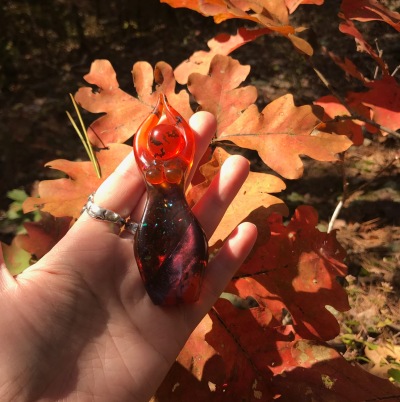 emerges, what fades, what rises and falls, this is a living magic. Honoring the passage of time, the turn of the wheel, the cycles of the land, the earth as an ensouled presence, and my own footsteps on her an act of devotion, these are the cornerstones of feminist spirituality for me. Look. Learn. Listen. Feel. Care. Act. Goddess worship and the symbol of the Goddess plays an important role in re-conceptualizing and restructuring the role of women, the value of nature, and the social order. In her book Ecofeminist Philosophy, Karen Warren writes: “Many spiritual ecofeminists invoke the notion of ‘the Goddess’ to capture the sacredness of both nonhuman nature and the human body…the symbol of the Goddess ‘aids the process of naming and reclaiming the female body and its cycles and processes.” Rather than something to dominate and control, the earth becomes the body of the Goddess and is acknowledged as both literal and spiritual home and is something inseparably linked to personal well-being—planetary health and personal health become synonymous—and both are treated with reverence and respect.
I have wondered if I try too hard to make my life be magical, to make it meaningful and then I realize, if you look for evidence that the world is made of magic, for evidence that your life is magical, that you will find it everywhere. This isn’t wrong. This is beautiful and powerful and real. Yes, my life is magical. So is yours. The whole world is magical. We need only step right up to it and look, to see that we are surrounded by magic, woven right into the threads of it.
The stones were slippery with water and moss as we skirted our way carefully to the bottom of the gully, where a wide, curving, bowl-shaped basin has been formed of rock and rain and time. Gazing at it, tranquil and still, gently rippled rocks forming the sides and leaves filling its bowl, I said aloud: “When I die, you can leave me curled up here and I’ll be happy.” For a crisp moment I could clearly see my own bones lying nestled, smoothed and ivory, across this bed of leaves and sunbeams.
Something bright red caught my eye then, looking at first like the domed half of a large cherry tomato partially covered by brown leaves and I squatted down to discover a burst of crimson mushrooms grouped together and bright against the decaying foliage.
Mark didn’t answer me, but he laid his hand across my hip and together we scrambled like mountain goats past the crimson mushrooms and up the steep slope, the oak leaves giving way to a carpet of pine needles as we climbed, the now bare stems of lowbush blueberries catching on our socks and pants. At the top of the hill, we sat on the stones, chests heaving, breath fast from our ascent, smiling silently as we looked at the sunshine through the pines.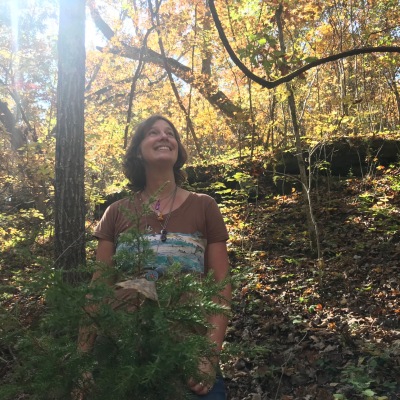
Molly Remer’s newest book of poems, Sunlight on Cedar, was published in March. Molly has been gathering the women to circle, sing, celebrate, and share since 2008. She plans and facilitates women’s circles, seasonal retreats and rituals, mother-daughter circles, family ceremonies, and red tent circles in rural Missouri. She is a priestess who holds MSW, M.Div, and D.Min degrees and wrote her dissertation about contemporary priestessing in the U.S. Molly and her husband Mark co-create Story Goddesses, original goddess sculptures, ceremony kits, mini goddesses, and more at Brigid’s Grove. Molly is the author of Womanrunes, Earthprayer, the Goddess Devotional, She Lives Her Poems, and The Red Tent Resource Kit and she writes about thealogy, nature, practical priestessing, and the goddess at Patreon, Brigid’s Grove, Feminism and Religion, and Sage Woman Magazine.



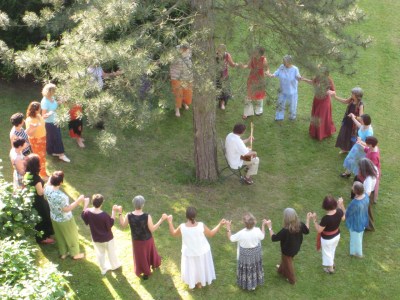 In Part One of this article, I described dancing Jewish, Romani, and Armenian dances for forgiveness and reconciliation with groups in Germany and all over the world. I also offered danced rituals of remembrance at former concentration camps and other places scarred by the atrocities of war.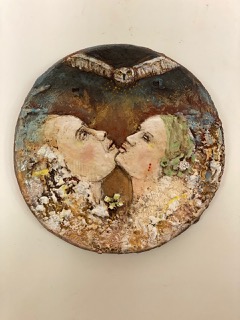

 This blog post is the 3rd in a series of looking for female deities in the bible who have been translated out of easy reach or otherwise hidden within its words. In my last blog post I discussed bird imagery and the bible. It is
  Feminism and Religion