

Moderator’s Note: This piece is in co-operation with The Nasty Women Writers Project, a site dedicated to highlighting and amplifying the voices and visions of powerful women. The site was founded by sisters Theresa and Maria Dintino. To quote Theresa, “by doing this work we are expanding our own writer’s web for nourishment and support.” This was originally posted on their site on Oct 22, 2024. You can see more of their posts here.
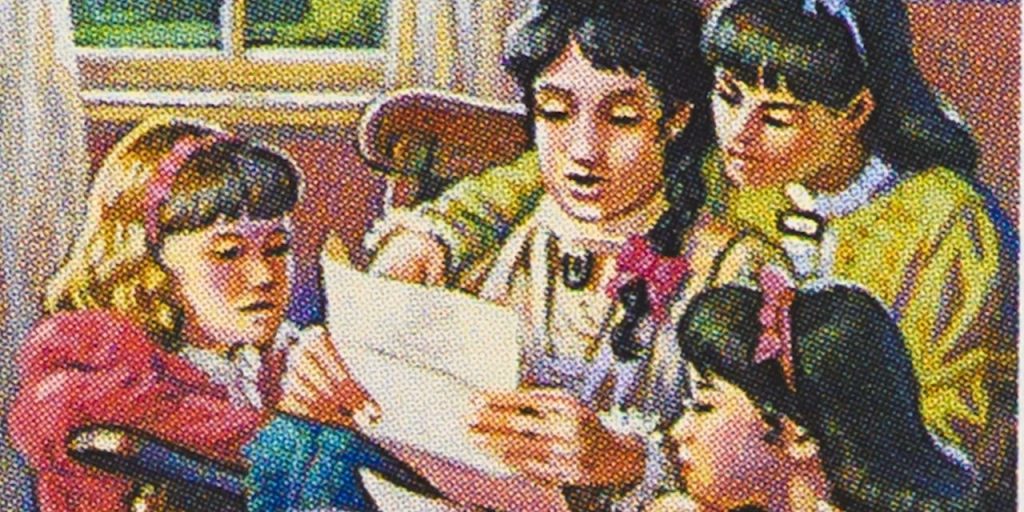
The youngest sister of Little Women author Louisa May Alcott, May Alcott Nieriker, was a successful artist. Her accomplishments were many and her unflappable relationship with her sister Louisa made it all possible. Here’s to sisterhood of all kinds, where unwavering love and support make so much possible!
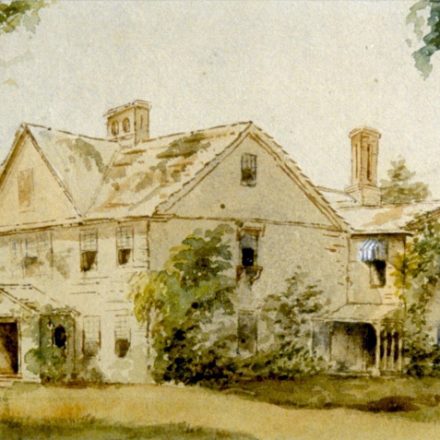
Visiting the literary houses lining the streets of Concord, Massachusetts, I found myself in the Orchard House, a house and family made famous by Louisa May Alcott’s blockbuster novel Little Women (1868).
Entering an upstairs bedroom, I was struck by the artwork on the walls and was told it is the work of May, the youngest Alcott sister, Amy in Little Women. Her parents, progressives in their time, allowed her to paint and sketch on her bedroom walls. I was informed that most of the artwork displayed in the house is also that of May’s.
My curiosity was stoked: Who was this woman?
Louisa May Alcott and her littlest sister (Abigail) May Alcott were not much alike but meant everything to each other. Unintentionally, Louisa’s fame casts a mighty shadow on her three sisters. Youngest sister May was fiercely independent and a talented artist who deserves her share of the Alcott spotlight.
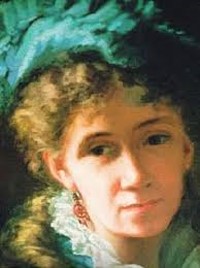
May Alcott was said to have been born with the rising sun. Her family called her the lucky one, their ‘Concordia Queen.’ Her steady brightness and love of beauty and nature delivered constant joy to her family, which they often needed.
Louisa, second born, took everything upon herself, including the overall well-being of her family. She decided it was incumbent on her to rescue her family from dire financial straits since her lofty-minded father was not able to provide. While Louisa did this, to great success, her sparkly little sister May provided much-needed hope for the future. This tall, slender, graceful girl possessed a gift, and her sketches and paintings provided such joy to Louisa that when she could, she happily funded May’s art endeavors.
Louisa saw to it that May acquired an art education, in the Boston area and abroad. Together these sisters explored parts of Europe and then May traveled abroad twice more, alone. Initially supported by Louisa, these trips enabled May to manifest her life as the artist she’d always dreamed of being.
May gave back to Louisa by living frugally, working diligently, and becoming successful. May’s ultimate gift to Louisa was her daughter, Lulu, named for the older sister she knew could never fully repay. When May died in France at the age of thirty-nine, seven weeks after giving birth, she had been at her height of fulfillment,
“So free, so busy, so happy am I that I envy no one, and find life infinitely rich and full”(Dabbs).
May, forever grateful for the assistance she received, was aware not all aspiring artists, especially women, were as fortunate as she ended up being. Moving from appreciation to action, she determined to find ways to help others realize their dreams.
On one of her visits home from Europe, she helped establish a community art center in Concord, Massachusetts, her hometown: “In June, 1875, one of May Alcott’s dreams was realized in the opening of an Art Center in Concord,” writes her biographer, Caroline Ticknor. Ticknor includes an excerpt from a local paper,
“We cannot fail to enlarge our ideas, at least upon the subject of Art under the guidance of and encouragement so heartily tendered by Miss May Alcott, to whose untiring energy and disinterestedness we are indebted for all; the origin of the plan, the use of the Studio itself, and everything it contains”(121-22).
May aimed to do more:
“When I become rich and great, I shall found a school for the indigent artists and inspiring young students, as Rosa Bonheur had done in Paris, for girls under twenty years of age”(165).
Although May didn’t have the chance to fulfill all her aspirations, she did satisfy this one:
“Daily I long for an opportunity to tell many of the girls who are struggling to find the right help in America, how easy a thing it is to cross the Atlantic with no escort but one of the kind and courteous captains of the Cunard Line”(Dabbs).
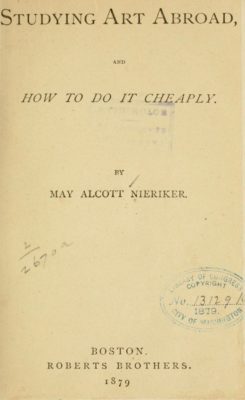
In her book Studying Art Abroad and How To Do It Cheaply, May acknowledges that although there are other guidebooks,“none of these writers report the actual cost of living, instruction, or rent of studio abroad; or how one in search of such can most easily and economically obtain them, in order to realize the desire of one’s heart”(Alcott 5)
She provides invaluable advice to her readers:
“Let me impress upon them at the outset the importance of considering well what is one’s particular taste or talent, aim or ambition, and to have a definite notion before starting of what one wants to learn, so as to insure the greatest amount of profit and enjoyment in a given time”(6).
Part 2, tomorrow
Discover more from Feminism and Religion
Subscribe to get the latest posts sent to your email.


What a wonderful herstory of May, and I had never heard of any of this.
“When I become rich and great, I shall found a school for the indigent artists and inspiring young students, as Rosa Bonheur had done in Paris, for girls under twenty years of age”
Rosa Bonheur was the incredible lesbian artist who inspired me as a girl. So this puts more of the puzzle together. Thanks!!!
LikeLike