Matriarchies are not just a reversal of patriarchies, with women ruling over men – as the usual misinterpretation would have it. Matriarchies are mother-centered societies. They are based on maternal values: care-taking, nurturing, mothering. This holds for everybody: for mothers and those who are not mothers, for women and men alike.
Matriarchal societies are consciously built upon maternal values and motherly work, and this is why they are much more realistic than patriarchies. They are, on principle, need-oriented. They aim to meet everyone’s needs with the greatest benefit. So, in matriarchies, mothering – which originates as a biological fact – is transformed into a cultural model. This model is much more appropriate to the human condition than the patriarchal conception of motherhood which is used to make women, and especially mothers, into slaves.
Within matriarchal cultures, equality means more than just a levelling of differences. Natural differences between the genders and the generations are respected and honoured, but they never serve to create hierarchies, as is common in patriarchy. The different genders and generations each have their own dignity, and through complementary areas of activity, they function in concert one other. More precisely, matriarchies are societies with complementary equality, where great care is taken to provide a balance. This applies to the balance between genders, among generations, and between humans and nature. Maternal values as ethical principles pervade all areas of a matriarchal society. This creates an attitude of care-taking, nurturing, and peacemaking. Continue reading “Matriarchies Are Not Just a Reversal of Patriarchies: A Structural Analysis by Heide Goettner-Abendroth”
 The term “panpsychism” is made up of two Greek words: pan, meaning all, and psyche, often translated mind or soul. Panpsychism is the view that (forms of) soul or mind or consciousness are found throughout the web of life. This view is in contrast to the traditional western philosophical and theological consensus that having a soul or a mind is what sets human beings apart from other forms of life. In contrast, mystics, children, and many indigenous people assume that human beings are not the only form of life with consciousness.
 Scientist Susan Simard is a professor of forest ecology at the University in Vancouver, British Columbia, who has been studying the below-ground fungal networks that connect trees and facilitate underground inter-tree communication and interaction. Over a period of more than thirty years this field scientist and her students have learned how fungi networks move water, carbon and nutrients such as nitrogen between and among trees as well as across species. Her research has demonstrated that these complex, symbiotic networks in our forests — at the hub of which stand what she calls the “mother trees” — mimic our own neural and social networks. This groundbreaking work on symbiotic plant communication has far-reaching implications that include developing sustainable ways to ‘manage’ forests, and to improve tree and plant resistance to pathogens. Although much of Simard’s research occurs in forests, she has also studied the underground systems of grasslands, wetlands, tundra and alpine ecosystems.

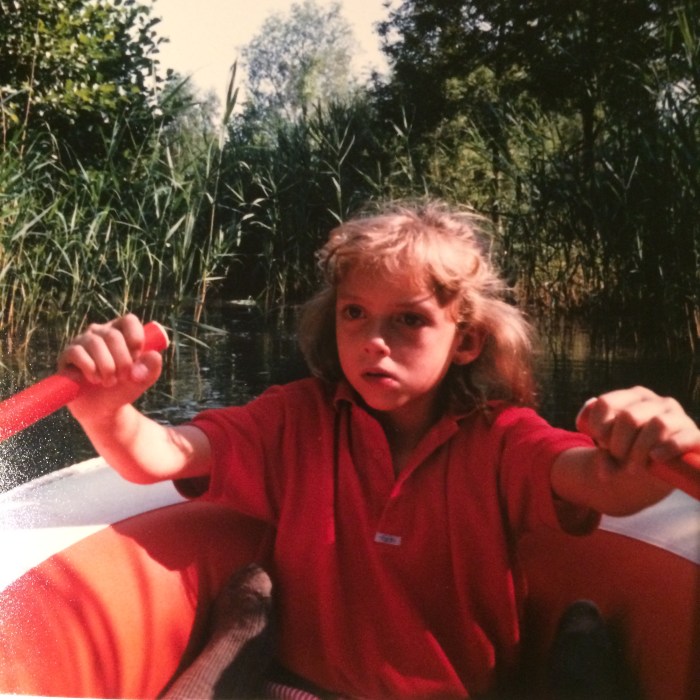
 For almost 35 years nature has been my sacred place. As an 8-year old, I started to pray to Mother Earth even though the protestant tradition in which I grew up only recognised ‘God the Father’. I went outside in my inflatable rowing boat to seek solitude (as an only child in a quiet family!) on a small island in the lake of our local park. I practised rowing and walking quietly to not break the sacred silence. I collected herbs to brew infusions in my little thermos flask with boiled water brought from home. I sung to the moon, and danced my love for all creation back through my moving body. Over the last 15 or so years, I spent many days and nights at Neolithic monuments, dreaming in ancestral burial mounds, time traveling in stone circles in Cornwall, Wales, Scotland, England, Ireland and Brittany. This nature-based practice evolved naturally, and later incorporated my training with the Scandinavian Centre for Shamanic Studies and the School of Movement Medicine. Nature is where I reconnect most easily with the Sacred, and listen to the whispers on the great web of life in which all of nature is a great teacher. Nature, for me, is a strong place of prayer, solace, awe, reverence, gratitude, joy, guidance, reconnection, healing and transformation.
 When I walked into the space a bolt of