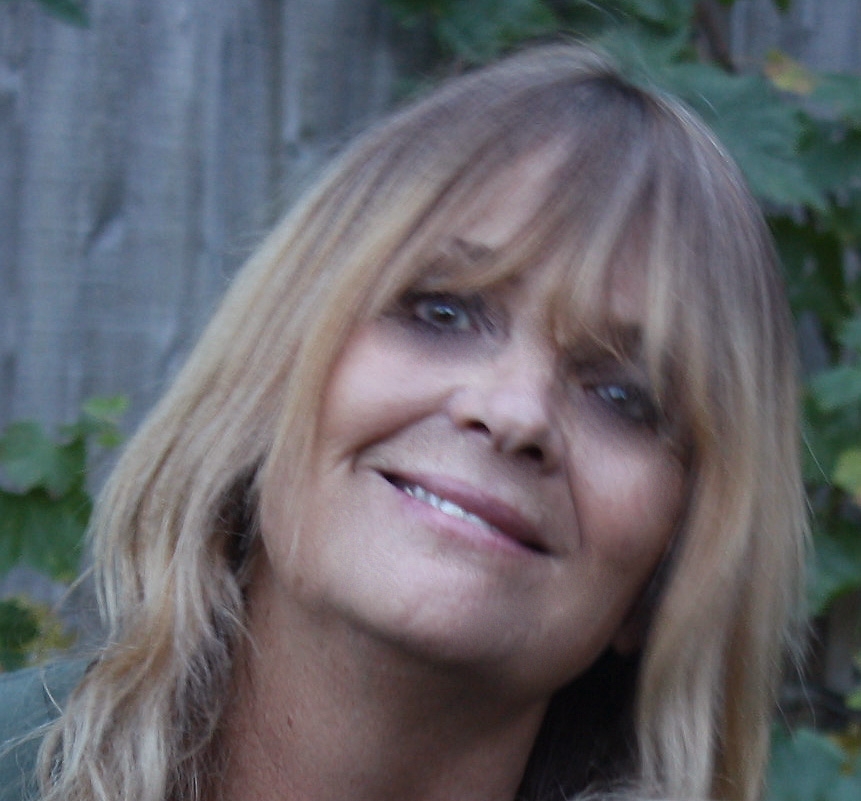
Why Should We Care About Birds? By Carol P. Christ

I believe that we should we care about birds because it is right to do so.  If we do not, we will contribute to extinction of species, and we will leave a diminished world to those who come after us. We must not give up hope that we can save the world for birds, for other wildlife, and for our children’s children.

On February 2, 2012, the International Day for Wetlands, the Greek government signed into law a Presidental Directive mandating protection of the small wetlands of the Greek islands.  There is no assurance that this law will be enforced.  There are still no measures in effect to protect most of the larger wetlands in Greece, even though this is required by the European law Natura 2000, which requires all of the countries in the European Union to protect bird and wildlife habitats.

When I became a birdwatcher, I could not have told you what a wetland is.  Now I know that wetlands are fragile bodies of water shallow enough for wading birds from flamingoes to sandpipers to stand in “without getting their bottoms wet” while feeding on shrimp, small fish, frogs, and other watery treats.  Wetlands often take the form of pools near the sea, but they also include the deltas at river mouths and seasonally flooded fields.  In the twentieth century and today many wetlands were designated “swamps” and drained. Continue reading “Why Should We Care About Birds? By Carol P. Christ”

Where do Cats Go?: Reflections on Death Post Patriarchal Christianity by Sara Frykenberg

The reason I am speaking about death today is two-fold.  First, I have been somewhat preoccupied with the concept of death since entering a new decade of my life.  I no longer believe in the evangelical vision of heaven I learned about in my youth; but as an uncomfortable “un”-Christian, I also have no satisfactory vision to replace it.  Or rather, there are many visions I find appealing, but none that I “believe in,” as I had believed in heaven.  My family is getting older, my parents have been sick in the last few years, and I often feel that I have more to lose now than I used to.

My second reason for considering death today is that last Wednesday, Mimi, our family cat of 24 years—yes, 24—passed away.  After spending all nine of her lives living, Mimi could no longer eat and was suffering.  My mother had her put down after we all said goodbye; we held a funeral for her and buried her among the lilies in our yard, her home.

My sisters and myself were very, very saddened by Mimi’s passing; but my mother took it hardest of all.  Mimi had been her companion, her friend, her lap warmer, her snuggle buddy, her alarm clock and, we often joked, her favorite child for over two decades.  I wanted to comfort my mother; but my protest that it didn’t matter what the (her) Church said, Mimi was with the God/dess, was maybe, not very helpful.  It perhaps, only reminded her that in her view, I too am not going to heaven.

I remember sitting in church, as a child being told that animals did not have souls and that there was no “kitty heaven.”  That was perhaps, one of the first times in my life that I thought, “that’s just ridiculous,” in a church.  Not just ridiculous, but mean and cruel even.  “What,” I thought, “is the point in saying such a thing?”  Continue reading “Where do Cats Go?: Reflections on Death Post Patriarchal Christianity by Sara Frykenberg”

In the Web of Life — No Exceptions By Carol P. Christ

Carol P. Christ is a founding mother in the study of women and religion, feminist theology, women’s spirituality, and the Goddess movement.  She teaches in the Women’s Spirituality program at CIIS and through Ariadne Institute offers Goddess Pilgrimages to Crete. Her books include She Who Changes and Rebirth of the Goddess and the widely used anthologies Womanspirit Rising and Weaving the Visions.

Does God love me more than She loves my doggies? Does She love animals more than She loves trees and flowers? Does She love trees and flowers more than She loved the first cells that formed in the waters of our planet? Did She not also love the atoms and particles of atoms that coalesced to form the earth?

In her books Sacred Gaia and Gaia’s Gift Anne Primavesi questions the notion that the dialogue between God and the world began with “our entry onto the scene.”  Primavesi argues that “human exceptionalism,” the view that the world exists for us, and that we are an “exception” to the world, has been and is the predominant Christian view.  In the stories of Adam and Noah, God gives dominion over the creatures of the earth to man.  Theologians asserted that of all the creatures that inhabit the earth, only man is in the image of God, and the image of God in man is found in his rational intelligence, which is shared with no other creature.  Because he is in the image of God, man will escape death, which is the lot of every other living thing.  Rather than challenging human exceptionalism, modern science furthered it, asserting that “matter” was “dead,” and that therefore it was right and just for man to subdue “nature” through technology and to harness it for his needs.   Continue reading “In the Web of Life — No Exceptions By Carol P. Christ”