Go, Dodger Blue? by Xochitl Alvizo  

Attending a Dodger game as a four- or five-year-old with my uncle, the biggest Dodger fan I ever met, was my first professional sporting events experience. To this day, I’m not a sports fan by any means, but if you ever do catch me watching or rooting for a sports team, it will be for the Dodgers, as it got wired into me at a very young age. 

So, I was one of the 51 million people across the U.S., Canada, and Japan tuning-in to watch the 7th game of the 2025 World Series between the Dodgers and the Blue Jays. I cheered, clapped, and whoo-hoo’d as the Dodgers made the final winning double-play in yet another extra-innings game in the series. But it was not without mixed feelings that I cheered on the team that has been part of my life and family upbringing.  

Continue reading “Go, Dodger Blue? by Xochitl Alvizo  “

THIS IS  HOW WE DO IT: In These United States, September 2025 by Marie Cartier

Poem:

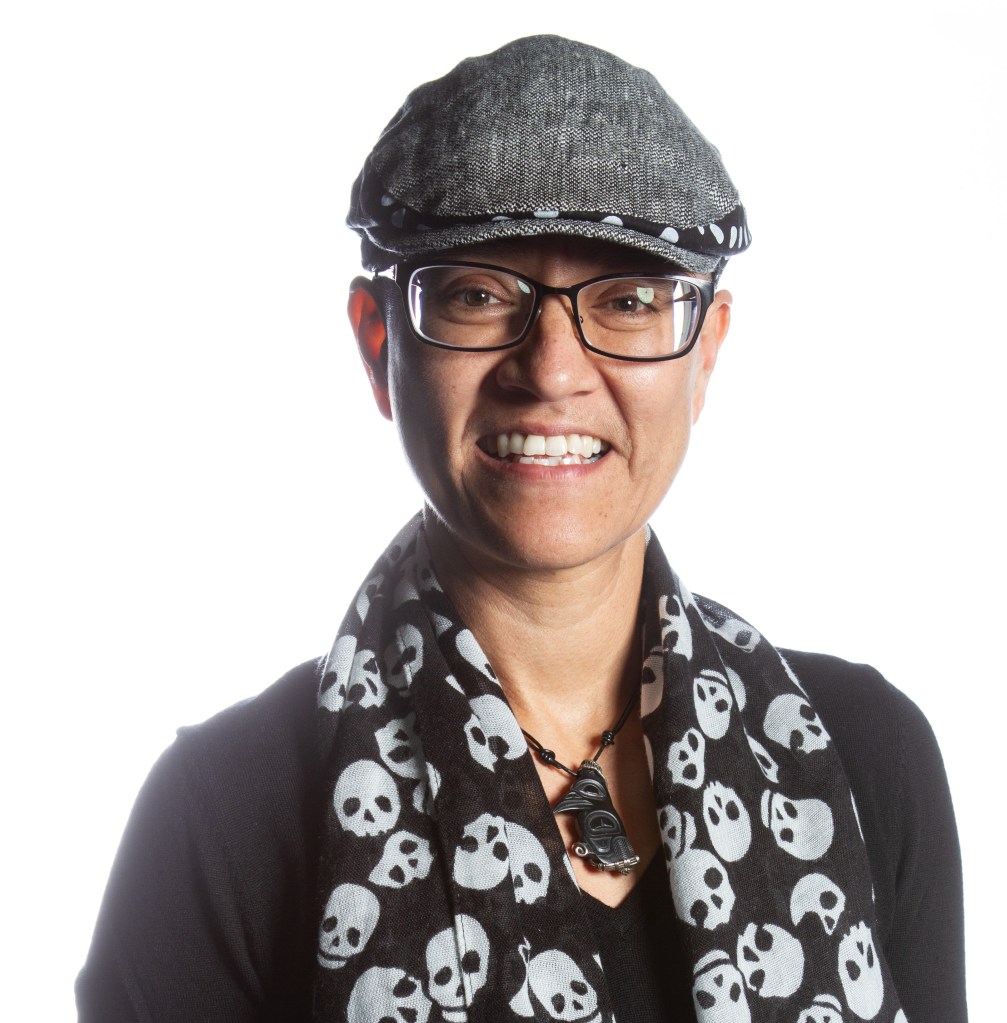
Photo of author at banner drop action, August 2025, “Be Brave With Us.”

Part I

We didn’t want to believe we had lost so much, so fast-

Our dignity perhaps and certainly our ability to speak entirely freely

We didn’t want to believe that we had lost so much so fast—

          Our ability to be connected to each other, to form a more perfect union

We didn’t want to believe that we had lost so much so fast—

But when they took away the comediennes whose job it was to help us make fun of ourselves…when they took away the gatekeepers of clean water and renewable energy and when they took away the scientists working to cure children’s cancer…

when they took away took away took away

You see we didn’t want to believe that we had lost so much so fast

Our flag for instance didn’t make sense and our statue of liberty and justice for all,

her torch reaching into a sky littered with planes of those being deported to cages without due process

It happens so fast –the loss it happens so fast
We learned that it takes a long time to build good
We realized it doesn’t take long to tear it down meaning the failure to keep the good
The holes in the flag were gaping and we could see through them
we saw images of the sick, the old and …women and children always go first.
We didn’t realize we had lost so much… until it was gone

Continue reading “THIS IS  HOW WE DO IT: In These United States, September 2025 by Marie Cartier”

Let’s Have The Talk – What Does “The Birds and The Bees” Actually Mean: By Zoe Carlin

Recently, I have thought about a common idiom that has been used to refer to sexual reproduction, the birds and the bees. I became curious why animals that appear in most gardens were used as an example to explain where babies come from, until I did some research. It turns out that since the birds lay eggs, that is their representation of the female body and the bees represent the sperm due to pollination. It is a very subtle, overlooked message that can be disguised as being more age-appropriate to young children. However, I decided to dig a bit deeper. Ed Finegan, a USC professor of linguistics and law, has stated that this phrase has existed a lot longer than one might think. There is evidence of it being used in a somewhat sexual context going back to at least two authors, Samuel Coleridge Taylor (1825) and an entry from John Evelyn’s The Evelyn Diary (1644). 

In Work Without Hope, Samuel Coleridge Taylor quotes, “All nature seems at work . . . The bees are stirring, birds are on the wing . . . and I the while, the sole unbusy thing, not honey make, nor pair, nor build, nor sing.” This separation of the birds and bees is indicating the loneliness and sadness of missing out on a potential romantic connection. When going even further back in time to 1644, it was noticed in the Evelyn Diary that there was an entry discussing the interior design of St. Peter’s in Rome: “That stupendous canopy of Corinthian brasse; it consists of 4 wreath’d columns, incircl’d with vines, on which hang little putti [cherubs], birds and bees.” This description is illustrating that there is a possible sensual or sexual meaning of the architecture in St. Peters.

Continue reading “Let’s Have The Talk – What Does “The Birds and The Bees” Actually Mean: By Zoe Carlin”

Legacy of Carol P. Christ: ETHICS OF INDIVIDUAL RIGHTS AND CARE SENSITIVE ETHICS IN THE CONTEXT OF THE GAY MARRIAGE DEBATE

This was originally posted on December 9, 2013

carol-christIs care the beginning of ethics? Has traditional western ethical thinking been wrong to insist that in order to reason ethically, we must divorce reason from emotion, passion, and feeling?

In Ecofeminist Philosophy, Karen Warren criticizes traditional ethical thinking–advocating a “care-sensitive” approach to ethics.  Traditional ethics, as Warren says, are based on the notion of the individual rights of rational moral subjects. Like so much else in western philosophy traditional ethics are rooted in the classical dualisms that separate mind from body, reason from emotion and passion, and male from female.  In addition to being based in dualism, western philosophy focuses on the rational individual, imagining “him” to be separable from relationships with others.  Western ethics concerns itself with the “rights” of “rational” “individuals” as they come into relationship or conflict with the “rights” of other “rational” “indiviudals.”

Those who would think ethically are advised to “rise above” the “emotions” and “passions” or “feelings” of the body, in order to reason dispassionately about the rights and responsibilities of rational individuals.  According to this theory, emotions and passions “get in the way” of rational thinking.  Continue reading “Legacy of Carol P. Christ: ETHICS OF INDIVIDUAL RIGHTS AND CARE SENSITIVE ETHICS IN THE CONTEXT OF THE GAY MARRIAGE DEBATE”

#SHARE THEIR STORIES by Janet Maika’i Rudolph

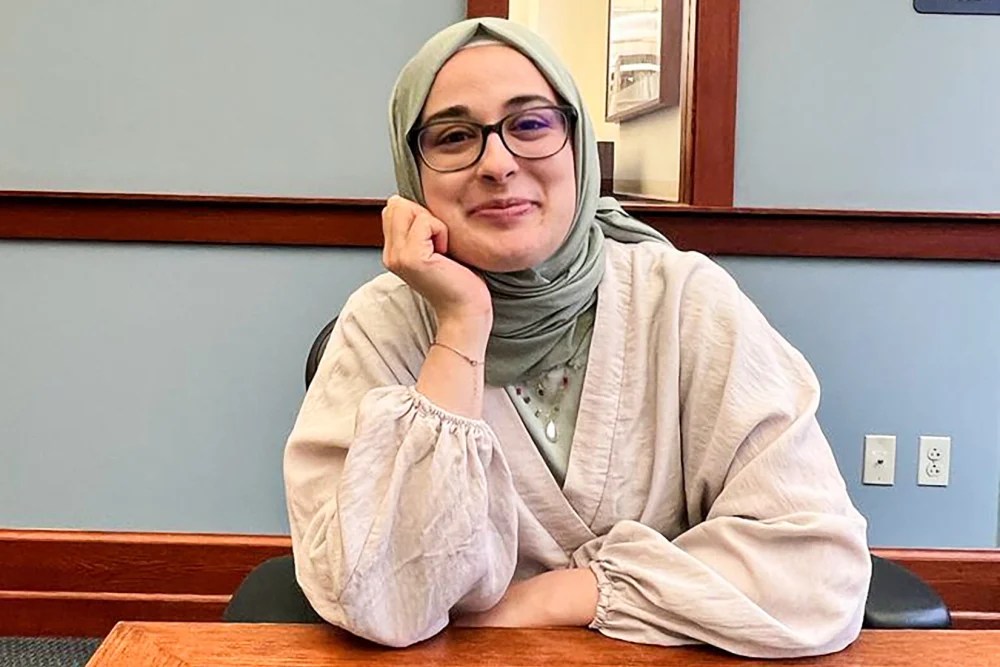
I was walking along the street the other day thinking about the comforts I find at home, my favorite tee-shirt, the three or four books I’m reading at a time, photos of loved ones. Around that time, I heard the news that Rümeysa Öztürk, a Turkish PhD student at Tufts who was whisked off the street by ICE agents in Massachusetts. She disappeared into the system until she showed up in detention in Louisiana. This is the facility that has been called “a black hole” by civil rights groups. So many have been swept off the street, how do we keep track? Ozturk had a valid student visa until the State department revoked it without notice nor telling her. She was on her way to break her Ramadan fast with friends. After her arrest she asked for food, not having eaten for 13 hours. She was given snacks. She still hadn’t eaten a meal by the next day and was feeling faint. She was given more snacks.

I began thinking, who are her friends? What was she going to eat? In fact, what are her favorite foods? In other words, who is she as a person. Her name is foreign, she comes from another country so it might be too easy to dismiss her as one of many. But if we know her story, if we humanize her, her story becomes harder to dismiss. The first step in the authoritarian playbook is to dehumanize people for some feature of who they are. When someone is dehumanized, it is far easier to do hateful things.

The antidote is to know their stories, share their stories, speak their stories.

Continue reading “#SHARE THEIR STORIES by Janet Maika’i Rudolph”

From the Archives: Is Baptism a Male Birthing Ritual? By Michele Stopera Freyhauf

This was originally posted on March 22, 2012

Quite a number of years ago I had a conversation with one of my professors, a feminist theologian, who posed the question “Why do I need a man to purify my baby with the waters of baptism?  Is there something wrong or impure about the blood and water from a mother’s womb – my womb?”  Before you jump and shout the words Sacrament or removal of original sin, this question bears merit in exploring, especially in today’s world where women are taking a serious beating religiously, politically, and socially.  In today’s world, violations and rants are causing women to stand up and say STOP!  This is MY Body.  This outcry was provoked by chants of ethical slurs against women– Slut! Prostitute! Whore!  The cry got even louder when the issue of religion and government was raised in the fight of healthcare coverage of contraception. The cry got even louder with the enactment of the laws in Virginia and Texas (and many other states to follow suit) that forces women to undergo transvaginal ultrasounds in early stage abortions.  The mandatory insertion of a wand into a woman’s vagina (mandated by the government, mind you), is a violation and has women crying RAPE!

Continue reading “From the Archives: Is Baptism a Male Birthing Ritual? By Michele Stopera Freyhauf”

Legacy of Carol P. Christ: Why Should We Care About Birds?

This was originally posted on Feb. 6, 2012 with updates added later.

I believe that we should we care about birds because it is right to do so.  If we do not, we will contribute to extinction of species, and we will leave a diminished world to those who come after us. We must not give up hope that we can save the world for birds, for other wildlife, and for our children’s children.

On February 2, 2012, the International Day for Wetlands, the Greek government signed into law a Presidental Directive mandating protection of the small wetlands of the Greek islands.  There is no assurance that this law will be enforced.  There are still no measures in effect to protect most of the larger wetlands in Greece, even though this is required by the European law Natura 2000, which requires all of the countries in the European Union to protect bird and wildlife habitats.

When I became a birdwatcher, I could not have told you what a wetland is.  Now I know that wetlands are fragile bodies of water shallow enough for wading birds from flamingoes to sandpipers to stand in “without getting their bottoms wet” while feeding on shrimp, small fish, frogs, and other watery treats.  Wetlands often take the form of pools near the sea, but they also include the deltas at river mouths and seasonally flooded fields.  In the twentieth century and today many wetlands were designated “swamps” and drained.

Continue reading “Legacy of Carol P. Christ: Why Should We Care About Birds?”

Archives from the FAR Founders: Extending Compassion and Vegetarianism by Xochitl Alvizo

This was originally posted on June 26, 2013 and continues to be a story I love retelling!

“I did not know to recognize you as individuals when I bought you, but I know to recognize you as individuals now…”

I had been a vegetarian, and sometimes pescatarian, for more than 10 years before becoming vegan. Despite the length of my vegetarianism, in all that time I had not been inclined to go vegan. First, I really didn’t know too much about veganism and only began meeting a few vegans about five or six years ago here in Boston, none of whom had shared a compelling enough reason for their choice (at least not compelling to me). Further, I had no imagination for life without cheese or Cherry Garcia ice cream(!), and so I happily continued with my vegetarian ways. Then enters Carol Adams…

Continue reading “Archives from the FAR Founders: Extending Compassion and Vegetarianism by Xochitl Alvizo”

Legacy of Carol P. Christ: Should Our Children and Grandchildren Live Better Than Us? And Whatever Happened to Our Dreams?

This was originally posted on November 4, 2011

Last Sunday on Meet the Press Tom Brokaw spoke about the breakdown of what he felt had been a common consensus about American life. He said that Americans are questioning the American dream which tells us that “our children and grandchildren will live better than us.”  He found it disturbing that people now feel their children will not be better off than they were.  The poor no longer see a way out of poverty and the middle class fear that their children will be unemployed for long periods in their lives, burdened with college debt, and unable to afford mortgages and college educations for their children.  I have heard this idea expressed many times in the recent economic crisis, including by progressive journalist Adrianna Huffington.

Continue reading “Legacy of Carol P. Christ: Should Our Children and Grandchildren Live Better Than Us? And Whatever Happened to Our Dreams?”

From the Archives: The Found Goddesses of Good Eats by Barbara Ardinger

This was originally posted on August 1, 2013. We usually do Carol Christ’s legacy posts on Mondays. Given the closeness of Lughnasadh, it felt appropriate to share the work of one of our other long-time writers today. Carol’s legacy posts will be back next week.

Lughnasadh (pronounced LOON-us-uh) or Lammas—is the first of the three traditional harvest festivals of the traditional Celtic calendar that most pagans follow today. And what naturally follows harvest? Feasting, fairs, and festivals. To help us celebrate the season, here are two Found Goddesses of good eating. The term “found goddesses” was created in 1987 by Morgan Grey and Julia Penelope, authors of a hilarious book titled Found Goddesses. After reading this book and having never met a pun I didn’t instantly love and being of a naturally satirical state of mind, I started Finding—i.e., inventing—my own goddesses shortly before the turn of the century. After I found a hundred of them, they were published in 2003 in my book, Finding New Goddesses.

Continue reading “From the Archives: The Found Goddesses of Good Eats by Barbara Ardinger”