Since the U.S. has elected a reality TV show billionaire to represent our nation, we should be no longer be able to shy away from the ignorance, violence, and frivolity that is within us. Happiness and peace in humanity seem to be in short supply. How many of us experience continuing bliss, or do we only fantasize and find brief reprieves in our suffering? Even the more extreme privileged among us most likely share the same emotional landscape.
In Indian cosmology, Hinduism specifically, there are four stages (yugas) of humanity that occur in a cycle. They represent the ascending and declining spiritual, psychological, and physical well-being of humanity. The Satya Yuga is first (descending) and last (ascending) era, where people are without strife, disease, or fear. Satya means “truth.” Life increasingly deteriorates through out the Treta Yuga to the Dvapara Yuga to the Kali Yuga.
Out of all of these things, the one thing that has kept coming to my mind is G-d. What is he (or she) thinking? I feel like I’m back in one of my Old Testament classes discussing the harsh and cruel G-d that thrust so many horrible things onto their believers. Maybe, the worst part about the election isn’t Donald Trump, but it is the realization that G-d may be dead after all.
Dear [Insert Name Here],
Something died on November 8, 2016, and I do not think I’ll ever be able to get it back. I sat there, walking back to my house, in disbelief and utter shock and scared about the next 4 years of my life.
For weeks leading up to the election, I had found myself praying in the copy room at my work almost daily. I would sit there, silent and alone, having just read some misleading article or alt-right post from a family member that called Hillary Clinton the devil, and wonder: when did everything go so off the rails?
Although we’ll spend years trying to figure the answer to my above question out, for me, it is a question I have been asking myself ever since election night and specifically knowing how certain members of my family would, and ultimately did, vote. Continue reading “A Letter to Those I’ve Lost by John Erickson”
How will the world end? No, it isn’t Lucifer himself coming from hell to bring in the end times, it is someone far worse, and his name is Donald Trump.
When I was a little boy I was terrified that I would live to experience the end of the world. Whether it was by an asteroid, Y2K, or a zombie plague, I would make myself sick by picturing these horrible things that could befall me and my family. Although I was a precocious child, the crippling fear that would lurch its way up my stomach and into my head would sometimes make it impossible to sleep at night. While I like to think I grew out of that phase, I now sit here feeling that way again. I’m crippled with fear that the end of the world is at hand and there may be nothing we can do to stop it. How will the world end? No, it isn’t Lucifer himself coming from hell to bring in the end times, it is someone far worse, and his name is Donald Trump.
By the time you’re reading this post, the first Presidential debate between Hillary Clinton and Donald Trump will have occurred and, no matter where you look, the aftermath will haunt us for weeks to come. We will either be sitting here, coaxing in the sunlight that Clinton has, in proper fashion, just goaded Trump into revealing to the 100 or so million viewers that will have chimed in to viewing how completely dangerous he truly is, or will we be scurrying to uncover decade old bunkers that were used during the 1950s and the Cold War to take shelter from the fallout to come should, Donald Trump become the next President of the United States. Continue reading “The End is Nigh by John Erickson”
Elie Weisel is interviewed by Bob Edwards in New York, Wednesday, June 20, 2007. (AP Photo/Seth Wenig)
This blog is dedicated to Elie Wiesel, September 30, 1928-July 2, 2016
During the summer following my second year [as a graduate student] at Yale, I read Elie Wiesel’s The Gates of the Forest[1], which someone had recommended as a book in theology and literature. Elie Wiesel was not well-known, and I had not heard of him. I was totally unprepared to enter into his world. I had heard about the concentration camps and had read Anne Frank’s The Diary of a Young Girl, but I had not faced the reality that was the Holocaust, nor had I connected what happened to the Jews to my belief in the God of the Old Testament.
Remember the loss, because we’re going to need it for the tomorrows to come and for those that need our protection the most: the next generation. Remember, we are Orlando; now, tomorrow, and always.
I want to tell you a short story about the small town of Ripon, WI. On May 19, the local newspaper, The Ripon Commonwealth, which has served as the town’s paper since 1864, published a story regarding the political right’s uproar concerning President Barack Obama’s executive order that all public schools must allow transgender individuals to use the bathroom which matches that of their gender identity. Angry and upset, the paper’s education reporter wrote an article expressing his clear disdain for the President and also expressing a clear lack of empathy, understanding and sheer bigotry towards the transgender community.
Growing up in Ripon, I always read the paper when it came out on Wednesday evenings. Those of you who grew up in a small town can attest to the luxury of seeing friends, family members, and even the smallest ongoings in one’s town in print for the entire town to see and talk about. However, one thing I never saw in the paper was the clear hate I read in Mr. Becker’s article (the author of said piece). Enraged, I immediately asked myself: what can I do? Having connections back in Wisconsin, I immediately turned to friends who owned businesses, a friend who is the Director of a vocal and important group in the town, and community organizations and friends to begin to write letters. Continue reading “Remember by John Erickson”
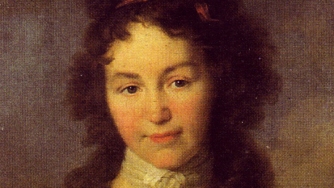
Of the many letters Caroline wrote to her lifelong friend Luise, one of the most intense (the 57th Letter) dates from seven years after the 4th Letter discussed in my last post. By then both were married; only a few months earlier Caroline had given birth to her first child (Auguste); though Luise already had children, Caroline knew that one of them was terminally ill. In the first paragraph Caroline describes how difficult Auguste’s birth was for her; in the second she consoles Luise over the impending death of her child. She thus subtly parallels birth with death and hence the labor for one with mourning over the other.
Fifteen years later, only a few months after the death of Auguste–the last of her four children to die–Caroline’s generally positive disposition evidenced in the 4th Letter and her experience in grappling with birth and death evidenced in the 57th Letter were being put to the test. Though she was holding up well, Friedrich Schelling (Friedrich), the man who was to be her third husband, seems to have been suicidal from feeling guilty (rightly or wrongly) for having failed to do enough to cure whatever illness killed Auguste. Caroline wrote frequently and urgently to him, offering advice and comfort. In one of those letters (274d) she characterizes the challenge of overcoming grief as a formula to be solved: “(death/pain) x (love/bliss) = (life/peace).” She terms this one of her ‘primal axioms’ (the “Ursatz”), although she seems playfully to concede to Friedrich that he or perhaps someone else shares responsibility for it.Continue reading “Caroline Schelling on Birth & Death by Stuart Dean”
Where is the humanity? Why are my sisters and brothers continuously subjected to persecution? Who will help and stop this madness?
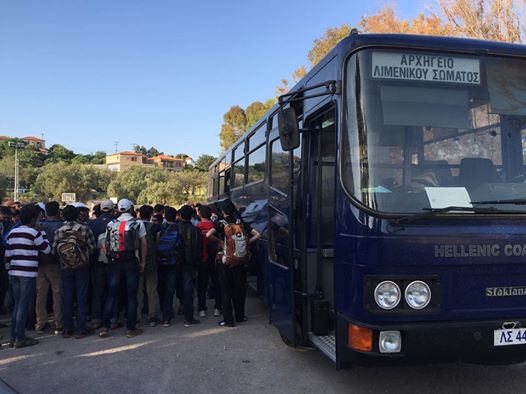
I am a member of the human race. Collectively I identify with those who need help and are oppressed. I do not identify with the oppressors, for they are like Pharaoh whose heart was hardened. In identifying with this group, I will provide a label of humanity; for the oppressors do not show care or love but evil and sin towards my people – they cannot be part of this group. As my people flee the boarders from the oppressors, the world has opened their gates to let them in. The world has not turned their back on them. However the oppressors continue to mar their homeland, destroy their culture, and attempt to erase their history, their identity, their footprint on this earth. They are not oppressors but are in fact committing cultural genocide. They are committing genocide against humanity, against anyone who does not follow their ideology, their way of life.
Why should we care? Should we care? For this I say yes. My people need protection and help, but like the Israelites in the story of the Exodus, they yearn for their homeland – a place they were forcibly exiled from. They yearn for food and clean water. They yearn for safety and protection. While you may think that my people were not forcibly exiled – they were. They fled for their own lives – for their own people, and the community’s hearts became hardened to their pleas for help.
The Syrian crisis is one that we have allowed to repeat over and over again. According to World Vision, nearly 12 million Syrians have been forced from their homes – half of which are children. At least 7.6 million have been displaced within Syria and more than 4 million have fled the country. Children affected by this crisis are at risk of becoming ill, malnourished, abused, or exploited. Save the Children produced a video that shows what happens to a girl after three years of conflict:
Recently, Valentina Khan touched many of us when she wrote a blog entitled The Powers of Evil are Well at Work and I’ve Lost My Spirit. Valentina spoke of the weariness and despair many of us feel when we think about the problems the world is facing today. She said that “right now it just seems like my voice of peace is lost to the voice of fanatics who get more media attention than I ever will.”
Last week I met a young man who has recently begun to try to save a large wetland pool on the island of Lesbos. He told me he feels frustrated that “no one else” is doing anything to save the important and fragile ecosystem of our island. I explained to him that there are many of us who have been working to save the wetlands of Lesbos for fifteen years, but with few or no results.
I was trying not to fidget as I sat on the hard, unforgiving walnut pew. It was a gorgeous summer day out, and I was locked inside breathing stale air and with nothing to look at but the dreary speaker, and, behind him, a life-sized, picture of a sweet-looking man about to be hung from nails driven through his hands. I was visiting my parents, who love to take me to church, and I just wasn’t able to say no.
As I sat I daydreamed about our indigenous European ancestors. They did “church” outdoors, in fragrant, airy forests with wild bluebells, warbling birds, and gentle breezes caressing their skin, ears and eyes. Instead of doing hard time on walnut benches, they got to dance, chant, hold hands and jump through fires.
In the past few weeks, there have been renewed debates throughout the US about death with dignity laws and the role of government is providing or securing access to health care. The tragic story of Brittany Maynard and the incessant election-year politicking about the Affordable Care Act (Obamacare) have made issues about human suffering more visible and volatile than usual. These are topics I deal with in two courses I am teaching this semester–one about Christian ethics and the other about bioethics.
I truly admire those who work in the presence of suffering daily by caring for others. It’s difficult to even talk about suffering in the classroom day after day. My intention behind doing so is for my students to resist simplistic responses by either valorizing human pain and suffering or retreating to escapism. I caution them about using religion to legitimize suffering when it accompanies from evil, yet encourage them to see the meaning in suffering as well. We try to maintain the fine line of affirming the experiences of those who claim to gain strength or some other good from their pain without crossing into discourse that names the pain itself as something good. We debate whether there can be any way of discussing suffering as redemptive. We discuss disparities in medical treatment and health care along economic, racial, gendered, cultural, and international divides and what the responses of clergy, medical providers, and everyday people to remedy them.


 Since the U.S. has elected a reality TV show billionaire to represent our nation, we should be no longer be able to shy away from the ignorance, violence, and frivolity that is within us. Happiness and peace in humanity seem to be in short supply. How many of us experience continuing bliss, or do we only fantasize and find brief reprieves in our suffering? Even the more extreme privileged among us most likely share the same emotional landscape.
 When I was a little boy I was terrified that I would live to experience the end of the world. Whether it was by an asteroid, Y2K, or a zombie plague, I would make myself sick by picturing these horrible things that could befall me and my family. Although I was a precocious child, the crippling fear that would lurch its way up my stomach and into my head would sometimes make it impossible to sleep at night. While I like to think I grew out of that phase, I now sit here feeling that way again. I’m crippled with fear that the end of the world is at hand and there may be nothing we can do to stop it. How will the world end? No, it isn’t Lucifer himself coming from hell to bring in the end times, it is someone far worse, and his name is Donald Trump.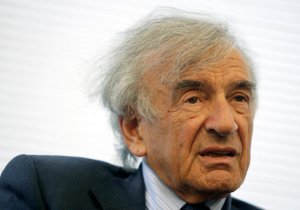

 I was trying not to fidget as I sat on the hard, unforgiving walnut pew. It was a gorgeous summer day out, and I was locked inside breathing stale air and with nothing to look at but the dreary speaker, and, behind him, a life-sized, picture of a sweet-looking man about to be hung from nails driven through his hands. I was visiting my parents, who love to take me to church, and I just wasn’t able to say no.
 Feminism and Religion