“Closer to Fine:” Trans Femme Reflections on the Sacred Found in Lesbian Music Culture by Nathan Bakken

“I’m trying to tell you something about my life.” I joke with my friends that if the 1990’s weren’t so transphobic, I would have thrived as a trans lesbian. Citing my knowledge of the L Word, Pacific Northwest flannel sensibilities, and Spotify playlists as my reasoning; I embody a millennial genderqueer take on lesbian stereotypes. The only thing missing is an exclusive attraction to women which― I would argue―is the main factor holding me back from waving the lesbian pride flag high. Though I write with a particular levity, I cannot deny the role that lesbian singer songwriters and folk/rock singers have played in cultivating my sense of self and my sense of the Divine. The Holy, for me, is wrapped up in the the harmonies of the Indigo Girls, the raspy blues of Melissa Etheridge, the heart-breaking riffs of Tracy Chapman, and the tear-jerking truths of Brandi Carlile.  These women have gifted me Divine Imaginaries of what justice is, who God is, and how I fit in.

In full trans-parency (pun intended), I hold a small level of fear in writing this piece. As the rhetorics of Transgender Exclusive Radical Feminists (TERF) appear to be touching the mainstream, I am reminded that these rhetorics are deeply tied to lesbian music culture. The Michigan Womyn’s Music Festival holds itself as a historic cultural object created by the amazing and radical work of lesbians and feminists and lasted from 1976 – 2015. MichFest, as it was later known, also uplifted and validated the concept of “womyn-born-womyn” only spaces. A concept with the intention to center the experiences of cis women, and the impact of  discriminating against trans people.  I reference this not to tear at the scabs of these two communities as we continue healing. Rather, I am naming the irony that my anthems for my survival are also the songs that have historical ties to mindsets and movements that prohibited my community from experiencing them first hand.

But this piece isn’t about trans exclusive feminists. This piece is about the soundtrack of my survival, and the powerful women who’s wise words guide that experience. The following four songs are invitations into my survival.

Closer to Fine – Indigo Girls

“The less I seek my source for some definitive, the closer I am to fine.” Since I was 17, this lyric has echoed in my mind. I would drive around Seattle listening to this song on a mix CD, wondering if I would ever get close to fine. Masked in their flawless harmonies, Amy Ray and Emily Saliers words gave me comfort and language to articulate my experiences. They mixed joy and laughter with the harsh truth of growing older. They gave room for a multiplicity of perspective and called out institutions and dominant epistemologies as inefficient modes of knowledge gaining. I was gifted a queer critical lens, a slightly Gnostic view of God, and an acknowledgement that “[t]here’s more than one answer to these questions/ Pointing me in a crooked line.”

Silent Legacy- Melissa Etheridge

To say that Melissa Etheridge’s 1993 album “Yes I Am” is not one of the best albums―let alone queer albums―ever created is homophobic. I wish I could tell you I’m being facetious. I am not. While her singles “I’m the Only One” and “Come to My Window” remain as her most popular hits; the song “Silent Legacy” is a testimony to queer feminist survival. I encourage you to set aside some time to listen to this song as if it were a prayer. In five minutes, Etheridge manages to describe and enflesh the impact of spiritual trauma on the queered body. Each verse unpacking the silent internalization of misogyny, homophobia, and transphobia. Each chorus echoing a prayer to heaven. Only to finish with Etheridge repeating the phrase “Oh my child,” building her emotions from tenderness to rage as if she, herself, embodies God calling us home to protect us.

Talkin’ Bout a Revolution – Tracy Chapman

I confess, my conversion to the Gospel of Tracy Chapman occurred later than I would prefer. Knowing her for her iconic lesbian anthem “Fast Car,” it wasn’t until I discovered her full discography about two years ago that I felt held in her words. With “Talkin’ Bout a Revolution” as the first track on her first album, “Tracy Chapman.” Chapman sets a specific tone for the album. The album is a protest. She reveals a portrait of her experiences of the United States in 1988, one that does not shy away from harsh realities of racial injustice and domestic violence. And at the same time gives tender insights into how to love someone. Chapman’s wisdom grounds my survival in the hardest truths of our world. That if I am to survive, I must ensure others’ survival as well.

The Joke- Brandi Carlile

Brandi Carlile feels like home. As an out lesbian musician of my home state of Washington, Carlile’s music reaches the depths where few dare to dive.  I recognize the majority of this soundtrack dates to the late ‘80’s and early ‘90s, Brandi Carlile’s “The Joke” is from her Grammy Award winning 2018 Album “By the Way I Forgive You.” Carlile is contemporary, current, and continuing the legacy paved before her. Her song―“The Joke”―echos like a ghost of queer future. Carlile’s voice is moving forwards while reaching back. She gives assurance, not that it gets better, rather that it gets different. Carlile invites the listener into the act of survival.

As a queer theologian, I tend to search for scripture in the most secular of places. These women have formed a gospel where the Divine Imaginary provided is an invitation to all people to the radical act of survival. As a trans femme person, I know, and these women testify, that one can survive and thrive simultaneously. Because “there’s more than one answer to these questions/ Pointing me in a crooked line/ And the less I seek my source for some definitive / The closer I am to fine.”

P.S. I believe that my fair, sincere, and soft mention of the “TERF/trans exclusion” conversation can spark strong push back from some of the readership of this blog. I am aware that we (cis and trans) who are in Feminist theological spaces need to continue engaging seriously in conversation around this topic and start working together to construct something from it. I would like for my post to be a part of starting that conversation. The heart of my post is that there is something profound in the liberative music created by these amazing and powerful women. Part of that profundity, is that I, a trans feminine queer person, heard an invitation into a legacy of liberation and justice. So I invite you, whoever you are, reading this to reread my piece. Reread it, knowing this is a small part of a larger conversation, and the heart of the conversation is a painful history of exclusion and transphobia and simultaneously a history of liberation and justice.


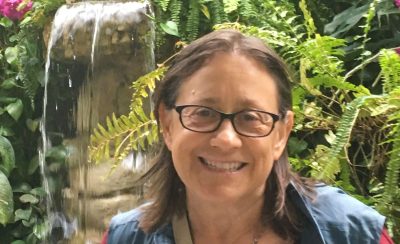
Nathan Bakken (they/them), originally from Seattle, WA, has found home in Boston, MA. Raised Roman Catholic, Nathan stands firm in the intersection of Christianity and Esoteric Spirituality. They earned their Master of Divinity, and Master Certificate in Religious Conflict Transformation, from Boston University School of Theology with particular focus in trans and queer theologies, queer spiritual practice, and the intersection of pop culture and theology.

Seared by Vietnam by Carol P. Christ

Warning: This post discusses and includes images of the violence of war. 

Recently I have been binge-watching the American comedy-drama series This Is Us. I am of the same generation as Jack and Rebecca, the parents of the triplets, but I didn’t think much about that connection during the first two seasons. The middle class father works-mother stays home family and the “father knows best” story line seemed like a throwback to the generation of my parents. Though everyone was supposed to have loved him, I didn’t like Jack, and I didn’t identify with Rebecca. The children’s lives seemed much more interesting to me, and I resented it when the flashbacks to the parents’ lives began to take over the script.

When the plot turned to Jack’s experiences in Vietnam, I fast-forwarded. “Been there, done that,” I said to myself, “I don’t need to see it again.” But eventually I realized I had to watch some of the scenes of the Vietnam War or I would not be able to follow the plot. Continue reading “Seared by Vietnam by Carol P. Christ”

My Body, My Self by Carol P. Christ

The other night I was invited out by a new friend to meet a group of his friends. It was a lovely gathering, and I felt welcomed. As we hugged good night outside the restaurant, one of the women commented, “Wow you really are tall.” Without missing a beat, I responded, “Yes it has been the bane of my life.” As the words tumbled out of my mouth I was aware that I spoke them dispassionately, not as is usual with a catch in my throat.

Don’t get me wrong about this. I don’t go around hating myself or my body. I know I am striking. I know I stand out in a crowd. I believe I am beautiful even as I age. Still, it is difficult to be singled out as different—especially when you are just going about your business. Moreover, comments about a woman’s height are never neutral: women who are taller than men challenge gender norms by our sheer physical being. Part of what is being said is almost always: you shouldn’t be so tall.

One of these things is not like the others, one of these things just isn’t the same. Continue reading “My Body, My Self by Carol P. Christ”

Where the Dance Is . . . On Cultivating a Daily Practice by Joyce Zonana

Although Goddess traditions invite us to embrace a world of immanence and change, rather than to seek to escape into transcendence—which some yoga teachings seem to point toward—I have come to believe that the “still point,” is, as Eliot writes, where “the dance is.” In other words, daily practice might grant us the capacity to always move through the world with grace and joy. The mind will be steady as it encounters and embraces the turning world. We will be whole.

jz-headshotWhen I was growing up, I was fascinated to see my father each day recite the morning blessings mandated for Jewish men. While the rest of the household bustled sleepily—my mother in the kitchen, my brother and I taking turns in the bathroom, my grandmother slowly getting dressed—my father, still in his pajamas, would stand in the center of our small living room, yarmulke on his head, tefillin wrapped around his arm and forehead, tallit draped over his shoulders. Using a tattered old siddur he had brought with him from Cairo, he would face the east and begin the ancient Hebrew prayers: “Blessed art thou, Lord our God, King of the Universe . . .”

I never knew then the content of what my father intoned, but I knew how committed he was to his practice: he prayed every morning without fail, from the day of his bar mitvah at the age of eleven (the rabbi in Cairo had decided to initiate him early because he had lost his father as a young child) until he a few years before his death at 84, when he became debilitated by Parkinson’s Disease. Ours was not a traditionally Orthodox Jewish family—we did not observe the Sabbath or keep kosher—but my father’s faithful performance grounded him and all the rest of us, bringing us us to what T.S. Eliot called “the still point of the turning world.”

Continue reading “Where the Dance Is . . . On Cultivating a Daily Practice by Joyce Zonana”

Stopping to Smell the Flowers by Marie Cartier

Photo by: Kimberly Esslinger

There is a saying, “Take time to smell the flowers.” Attributed to many different sources, it means among other things–  take time and be grateful. Take time and relax. Take time.


Photo by: Kimberly Esslinger

In that spirit I am sending along pictures from the amazing “super bloom” California is experiencing this spring. It is the most magnificent we have ever had, I think. It happens once a decade, but we are lucky to have had a super bloom in 2017 and now this year as well.  California had an extreme drought last year and then extreme rain this past winter. And now we have flowers…and flowers. Poppies are the state flower of California and they are being celebrated—all over. And people dropping in by helicopter and influencers ruining some of the poppy beds by laying in them for Instagram pics. Yes, it’s been crazy. But, when we were there (my wife and I) on a past Sunday, it felt so magical that so much of Los Angeles it seemed was out to smell the flowers. You can see a picture of folks lined up (my wife at the end in the picture below) photographing the flowers. Flowers suddenly are the new super star!

Continue reading “Stopping to Smell the Flowers by Marie Cartier”

Slippery Package: A prayer poem by Isabella Ides

She speaks a various language.


Bound in the bardo bereft

vaguely present, almost dead.

For fucking shining aloud

let me


back in. Come again, sweet terror

Carve my shadow on your cave walls

Render me a soul, source me

mystify, crush, obscure me

in that deep gorge

confine, stretch, reveal me

Let me wobble

stand.

  Continue reading “Slippery Package: A prayer poem by Isabella Ides”

Befriending our Dragons by Sara Wright

“We are an overflowing river.
We are a hurricane.
We are an earthquake.
We are a volcano, a tsunami, a forest fire…”

These words written by Judith Shaw speak to the underlying merging of woman’s anger with Earth’s natural disasters, suggesting to me that women use “natural” violence in order to create change.

Violence, not the values of compassion and cooperation.

Violence and power over are the primary tools that Patriarchy uses to control women and the Earth.

Engaging in more violence will not solve the problems we face.

So many women including me are struggling like never before to survive on the edge of a culture that continues to sanction the vicious ongoing rape of both women and the Earth.

I use the death of trees as a primary example of the latter. By logging trees by the billions or killing them in “controlled burns” we are literally destroying human and non – human species. Without trees/plants we lose the oxygen we need to breathe.

We need “woman – centered” women to say NO!!! WE WON’T TOLERATE LIVING IN A DEATH DESTROYING CULTURE PREDICATED ON RAPE OF WOMEN AND THE EARTH.

We need women who are willing support other women – Women who refuse to remain neutral – Women who don’t wait until their mothers, daughters, sisters, nieces, granddaughters are assaulted to take a stand with other women – Women who refuse to stand behind their men when those men continue to support individuals (males or male identified women  – the latter are often “Father’s Daughters” in Jungian parlance) – Women who refuse to support a Patriarchal system that is destroying us all.

Continue reading “Befriending our Dragons by Sara Wright”

Kassiani’s Song: Woman at the Center of the Easter Drama by Carol P. Christ

Today I am reposting the song and story of Kassiani, the Byzantine composer, poet, and hymnographer, who is not well-known to western feminists or in western history in general. In Christian Orthodox tradition, Kassiani’s most famous song will be sung this week on Easter Tuesday night or very early Easter Wednesday morning, placing a woman’s love for Jesus at the heart of the Easter drama.

For many this song is the high point of Easter week.

Kassiani, also known as St. Kassia, was a Greek woman born into a wealthy family in Constantinople (now Istanbul) about 805 to 810 AD. According to three historians of the time, she was intelligent and beautiful and selected as a potential bride for the Emperor Theophilos. The chroniclers state that the Theophilos approached her and said: “Through woman, the worst,” referring to the sin of Eve. Clever Kassiani responded, “Through woman, the best,” referring to the birth of the Savior through Mary.

Apparently unable to accept being put in his place by a woman, Theophilos chose another bride. Perhaps relieved, Kassiani founded a monastery in Constantinople becoming its first abbess. She was an outspoken theological advocate of icons during the iconoclastic crisis (for which she was flogged). One of only two women to publish under her own name during the Byzantine Middle Ages, Kassiani wrote both poetry and hymns. Up to 50 of her hymns are known today, with 23 of them being part of the Greek Orthodox liturgy. Continue reading “Kassiani’s Song: Woman at the Center of the Easter Drama by Carol P. Christ”

Resurrections by Elizabeth Cunningham

Photo by: Douglas C. Smyth

As a minister’s daughter, I grew up almost literally in the church, its red door and ivied walls across the driveway from the rectory. On Easter the church was packed; every family received a pink or red geranium. There were Easter egg hunts, baskets stocked with chocolate rabbits and the jelly beans these magical creatures laid. The church rang with triumphant hymns: Jesus Christ is risen today. Although like all children I reveled in holidays involving excessive sweets, it was not the candy or the or the requisite rejoicing that moved me most.

It was the women, or in the Gospel according to John, the woman, bereft and brave, who went to the tomb to tend Jesus’s body. The male disciples had scattered and gone into hiding. In the Protestant Episcopal Church, Christmas Eve and Easter were the only times women played a prominent role in the story. Those were not the loud, triumphant moments. They lived in my child’s imagination as the quiet, mysterious times, Mary giving birth in the night attended by cows, donkeys, and stars. Dawn in a garden, wet with dew, the only sound birds waking and singing, the only people, the women, or the one woman who captured my imagination and, in my story, has her own apotheosis on that morning.

I did not question the miracle of resurrection. Miracles and magic made sense to me as a child. Theology didn’t. My father liked to expound on Jesus’s utterance from the cross “My God, my God why hast though forsaken me.” He insisted that Jesus was not crying out in despair but quoting Psalm 22, which ends in triumph. The Gospel narratives emphasize Jesus’s rising again “in accordance with the scriptures,” implying that he knew he would come back to life on the third day.

Continue reading “Resurrections by Elizabeth Cunningham”

The Lady Be With You – A Closer Look at Liturgical Idolatry by Tallessyn Zawn Grenfell-Lee

Even though I realized at least 17 years ago that it makes no theological sense to limit our symbols of the Divine to male symbols – Lord, God, Father – it took several years for this idea to embed itself into my subconscious. Over time, male language moved from ‘unnoticed’ to ‘noticed’ to ‘distracting’ to, eventually, ‘oppressively violent when used exclusively, without female images to balance out millennia of the idolatry of maleness.’

One of my favorite ways to dislodge this subconscious, internalized patriarchy has involved rewriting favorite old hymns. I usually try to incorporate a combination of images, to represent the incarnate divinity of all genders and all Creation. But let’s be honest: female terms for the Divine remain startling in many religious and secular, cultural contexts. In my own Methodist tradition, even though progressive Methodists sign up on paper to the idea that “God” (there we go again with the male terms) is bigger than any symbol or gender, I’ve as yet only ever been to one Christian church that used balanced gender images of the Divine, and that was a queer welcoming Methodist ministry with intentionally inclusive theology and liturgy.

I think that church saved my life. Some days, I also think it ruined my life. It showed us all what Methodism can be; and then, its time ended, and we alums drifted into the diaspora to try to take the hope and healing we experienced there into our own journeys. Some of us remain within Methodism and continue to work for the vision of welcome, of the kin-dom, that we sought together there. Personally, I love being Methodist. Grace, the journey, grace, the quadrilateral, grace.

Continue reading “The Lady Be With You – A Closer Look at Liturgical Idolatry by Tallessyn Zawn Grenfell-Lee”