God Doesn’t Live Here Anymore: Gay Bars and the Growing Divide Between Sexuality and Spirituality by John Erickson

oes God exist within the LGBTQ community anymore or has the community itself abandoned God for all-night raves, dance clubs, alcohol, and hypersexualized and over commoditized fetishized forms of femininity and masculinity? Oftentimes, I find myself answering yes to the above questions. After surviving hate crime after hate crime and endless batches of newly elected conservative politicians hell bent on ignoring medical and social epidemic plaguing the very country they were elected to serve and protect, why would a community, oftentimes linked to sin itself, believe in a holy entity?

John Erickson, sports, coming out.My good friend and fellow Feminism and Religion Contributor Marie Cartier’s forthcoming book, Baby You Are My Religion: Women, Gay Bars, and Theology Before Stonewall argues that American butch-femme bar culture of the mid-20th Century should be interpreted as a sacred space.  Specifically, gay bars served as both communal and spiritual gathering spaces where butch-femme women were able to discover and explore not only their sexuality but also their spirituality.  An opus of an academic accomplishment based off of the amount of in-depth interviews she conducted, Professor Cartier explores lived religion in an area that has become all too common within the LGBTQ community: the bar

The Palms, the last local and only lesbian bar to be found in city of West Hollywood, CA is closing its doors and I can’t help but wonder where its patrons or parishioners will now go? Continue reading “God Doesn’t Live Here Anymore: Gay Bars and the Growing Divide Between Sexuality and Spirituality by John Erickson”

Selfish Working Mothers Destroying the Natural Order? by Gina Messina-Dysert

Gina Messina-Dysert profileIt was nearly twelve years ago when I sat before my then pastor in pre-cana counseling and was told “how nice it is that you are trying to help women by working in a domestic violence shelter, but now that you are going to be married your role is to be a wife and mother.  Working outside the home will no longer fit into your life.  Your duty is to have children and care for your family.”

Our conversation continued and according to my pastor, God was not concerned with what I had to offer my community, but rather with how many children I could bear and raise as Catholic.  In that moment, I was told that my life and my efforts were of little value and that having children was the one thing I could do as a woman that would make my life worthy.  How funny – or sad – that in the 21st century, women’s worth continues to be tied to her womb and all other efforts are not valued.

Just this last week Pew Research released a report stating that 4 in 10 households have mothers who are either the main or sole breadwinners for the family.   Continue reading “Selfish Working Mothers Destroying the Natural Order? by Gina Messina-Dysert”

Unblocking Abundance: A Ritual by Sara Frykenberg

Sara Frykenberg

Rather than release the sadness, heartache and struggle we put into the bowl out into the world, we meditated …to transform what we could of this energy, re-membering the parts of ourselves that had helped to create these blocks and are responsible for transforming them.  We took the transformed energy back into ourselves.

As I have written about many times before, I believe that contemporary Western society operates within a largely abusive paradigm.  I often think of oppression in terms of an abusive cycle.  Theologians like Cater Heyward and Rita Nakashima Brock describe the impact of the theologies that generate such abusiveness, noting how we become smaller to ourselves and smaller to one another.  We do not believe that we are enough, nor are the people or the planet around us ‘enough’ to fill the vacuous alienation that substitutes itself for real relational need in an abusive context.  Judith Shaw wrote eloquently about the environmental impact of conflating need with greed in her Friday post, “Can We Honor Inanna and Her Gifts?”

Shaw writes, “At first glance we appear to be abundant with things, energy, experiences.  But in our mad desire for more and more and always more we neglect the balance of the very earth who provides us with all.”  Many people, particularly in industrialized nations, have been taught to fill the need for a sense of abundance, connection and ‘enough-ness’ with more stuff: more things, more money, more food, more land, etc.  And yet, ironically, this quest for ‘more’ can also prevent us from experiencing the very abundance we seek.  We can create blocks to abundance by trying to fill the vacuum instead of our actual needs: and difficultly, abusive patterns and cycles can prevent us from seeing the difference between the two.  Continue reading “Unblocking Abundance: A Ritual by Sara Frykenberg”

Leaving Behind My First Love by Andreea Nica

Andreea Nica, pentecostalismDuring these realizations, the words of Sue Monk Kidd permeated my mind, “The truth may set you free, but first it will shatter the safe, sweet way you live.”

When most people inquire who my first love was, I’m reluctant to give an honest answer. At times, I just uttered the first boy’s name that would come to mind. As I matured and developed into a confident young adult, I decided to provide a more honest answer. “My first love was God. Jesus. You know, the Trinity.” I would receive puzzled looks, quizzical faces, and frazzled exits. Given the multitude of embarrassing responses, I began to rephrase my answer in a way that prompted them to further question my response. “I fell in love with God as I grew up in a charismatic, Pentecostal religious community. During my college years I left Pentecostalism, my family unit, and the community.” Responses were drastically different with this answer. Many people desired to know more about my transition and how I found the inner strength to embark on an alternative path. I quickly realized I didn’t have all the answers. Although my B.A. in Psychology aided me in understanding aspects of the psychological implications of my departure from the religious institution and a family that identified as Pentecostal, there was still much to uncover. Continue reading “Leaving Behind My First Love by Andreea Nica”

“Free-Speech or Speech-Free?” by Kile Jones

Kile Jones, atheist[This post is written in response to the chilling effect taking place in the U.K. since the Woolwich Attack.  It is also in response to the uses of the Public Order Act of 1986.]

In any “liberal democracy” that has constitutional protections for “free speech,” there will also be laws against “inciting violence,” “hate speech,” “threats,” “slander,” “libel,” “harassment,” and other “speech codes.”  This is because the government, or those who voted on the passing of such laws, worry about the potential threat un-regulated speech will have on the levels of violence and disharmony in society.  They worry about people being able to yell “fire!” in a theatre, which can cause (which is a key word here for legal reasons) physical harm, not being held liable for such speech.  As much as I understand these worries, I am of the opinion that the potential evils brought about by a lassez-faire approach to speech morally outweigh the evils of blasphemy laws and censorship. Continue reading ““Free-Speech or Speech-Free?” by Kile Jones”

Tug-of-Warring over the Female Body (Part 1 of 2) by Jameelah X. Medina

Cover up! No, get naked!

Haraam [Sin]; cover yourself! Be free; show some skin!

AstaghfirAllah [seeking forgiveness from God]; aren’t you ashamed?! Damn, aren’t you hot in that?!

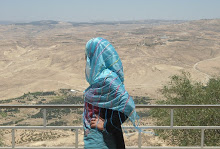
The Muslim woman’s body feels like a battleground, especially during times like last month (April) with the whole FEMEN “topless jihad” controversy sparked by the Tunisian woman who protested the female body as a source a familial honor. On one side is essentialized feminism and patriarchy on the other end with both sides pulling hard. Both sides have Muslim women on their team, but both sides also harm them. Let’s start with “Team Femesential.”

Questioning the headscarf and certain covering practices is mostly a healthy endeavor in which many Muslim girls and women engage before and after deciding (if they do) to wear a headscarf. However, questioning the headscarf can also be an oppressive and even dismissive strategy that is disrespectful to Muslim women and to all women in general. Continue reading “Tug-of-Warring over the Female Body (Part 1 of 2) by Jameelah X. Medina”

Deciding to Leave or Remain in the Religion of Your Birth – Part II by Judith Plaskow

Photo by Manhattan College

This is a response to Carol P. Christ’s blog of April 29, 2013 on why she decided to leave the Christian tradition. Carol and I discuss these questions further in our forthcoming book Goddess and God in the World: Conversations in Embodied Theology.

You raise the important question of what factors lead feminists to leave or remain within the religion of their birth. Your central challenge to me is how I can commit myself to a tradition in which God is imagined as a violent warrior when these images have harmed and continue to harm women and the world. How can I not recoil from using such images in worship? Why is the power of symbols less important to me than to you?

The first thing I would say is that, like you, I find these images profoundly problematic. One of the projects I have taken on in my retirement is reading the Bible from cover to cover, and I was appalled in going through all the prophets together at the amount of violence in their teachings. When I have spoken on the topic of dealing with difficult texts in the Jewish and Christian traditions—a subject that is dear to my heart—I always talk about God’s violence in addition to texts that demean women. And, yes, I have sometimes asked myself how I can remain part of a tradition in which God is depicted in this way. So I do not disagree with your critique of this imagery, but obviously for me, it is not decisive. Why not? Continue reading “Deciding to Leave or Remain in the Religion of Your Birth – Part II by Judith Plaskow”

Are Buddhist Women Happy? Part II by Oxana Poberejnaia

oxanaIn Part I of this post I started asking questions about whether Buddhism in the West is part of patriarchy. Today I offer a possible link between practices of men’s Initiation Rites and some of the elements of Buddhism.

Men’s Initiation Rites

When we consider principle practices of Western Buddhists, primarily daily meditation and meditation retreats we might enquire something like this: since monastic practice is a model for our Western lay practice, do Buddhist monasteries constitute an extension and continuation of men’s long houses, places of men’s initiation rites?

Continue reading “Are Buddhist Women Happy? Part II by Oxana Poberejnaia”

Thanks for Coming (Out): Sexuality, Sports, and Spirituality by John Erickson

I have to be honest, Jason Collins’ admission that he was a homosexual, albeit brave, upset me. While coming out is an completely unique experience to every individual that does it, Jason Collins’ story was just another example of the rampant sexist and heteropatriarachal world that privileges male bodies and sexualities over women’s similar experiences. While I applaud Jason’s story and it’s timing, the first thing I asked to my colleagues was: Where was the hubbub over Sheryl Swoopes or Martina Navratilova?

John Erickson, sports, coming out. Like marking off items on a proverbial checklist, closeted LGBTQ individuals who exist within and outside of the world of professional sports, can recount the numerous things they struggle with in terms of their sexuality.  From fearing of the actual coming out process, dressing in their car or at home to avoid the subtle glances and whispers of individuals in the locker room, to wondering what coming out would mean not only for their game but also for their social and, if they choose, spiritual lives, closeted and out LGBTQ individuals within the multi-billion dollar professional sports industry must grapple with that age old question: what does it mean to be gay and open about it?

The Locker Room

I have to be honest, Jason Collins’ admission that he is a homosexual, albeit brave, upset me.  While I understand that coming out is an completely unique experience to every individual who does it, for me Jason Collins’ story was also an example of the rampant sexist and heteropatriarachal world that privileges male bodies and sexualities over those of women.  While I applaud Jason’s story and the timing, the first thing I asked to my colleagues was: where was the same hubbub over Sheryl Swoopes or Martina Navratilova? Continue reading “Thanks for Coming (Out): Sexuality, Sports, and Spirituality by John Erickson”

A Calling, A Vocation by Elise M. Edwards

Elise Edwards

In my previous post The Feminist Influence, I began discussing what a feminist perspective might bring to a theological study of architecture.  I asserted that a feminist perspective on the ethical function of architecture offers at least two contributions: (1) it provokes questioning about what flourishing is for all peoples and the Earth, and (2) it provokes examination of systems of power and privilege and how they are constructed into our built landscape.  I think a feminist vision of architecture could help all of us (even those of us who are not design professionals) promote design that respects and responds to our environment, addressing the harm we have done.  I do want to give some thought, though, to what it means especially for architects and other design professionals. Continue reading “A Calling, A Vocation by Elise M. Edwards”