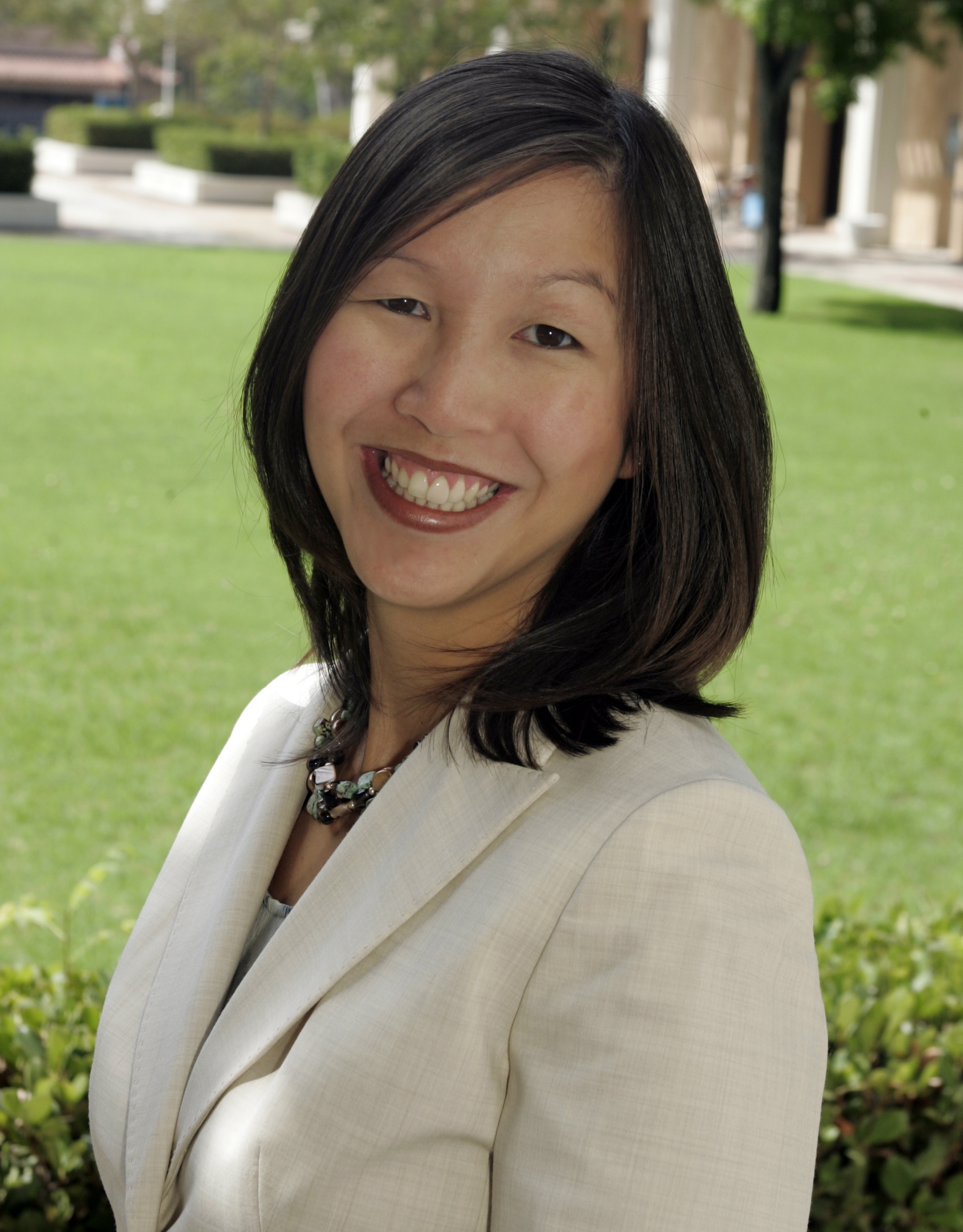
“If You Allow Gay Marriage…” by John Erickson

“We need to start examining the underlying questions of counter-cultural relationships that view one man marrying many women to be hip because we begin to see that although a polygamist idea of marriage may be sexy from a popular culture standpoint, the thought of legally recognized gay marriage always then gets likened to bestiality.”

… you have to allow polygamy, bestiality, and everything else!” The title for my post this week is a quote from an individual I used to associate with.  This individual, haling from a conservative evangelical background, tried to explain to several others and myself the reasons why gay marriage would eventually lead to the repeal of anti-polygamy and bestiality laws across the United States.

The problems that I have with this particular argument are conflating gay marriage with religious freedom.  Activists and scholars can draw comparisons to anti-polygamy cases such as the 1878 U.S. Supreme Court case Reynolds v United States and the 1882 Edmunds Act and 1887 Edmunds-Tucker Act that disfranchised and led to the imprisonment of Mormon polygamists. But in the end, gay marriage is not about religious freedom but rather human rights.

I often feel that there is this need both within and outside religious communities to promulgate the idea that LGBTQ individuals want to get married within the sanctified walls of “the church” just as much as heterosexual couples do.  Although I do not want to disqualify those who desire to see LGBTQ equality within their faith based communities, buying into a heternormative ideal of what traditional marriage should look like needs to result in LGBTQ individuals asking why marriage should be performed in sacred spaces in the first place The normative traditions that have often defined marriage have also served as shackles keeping LGBTQ couples in the mindset that to achieve fully marriage equality with their heterosexual counterparts is to fully immerse themselves within the same traditions and practices. Continue reading ““If You Allow Gay Marriage…” by John Erickson”

Preying on Victims: Radical Christianity and Exploitation of Tragedy in the Name of God By Michele Stopera Freyhauf

It is our moral responsibility, whether we identify as Christians or not, to pray for not prey on the victims of tragedies.

Over the last month, dare I say years, society has witnessed or been subjected to an all out war from radical Christians across America deploying the wrath of God and reveling in the tragedy of others to perpetuate their apocalyptic message of rhetoric and terror.   As I hear the news over the last few months, an old Billy Joel song starts to play in my head “We didn’t start the fire.”  Whether we started the fire or not, we should not feed the flames of hatred but figure out a way to extinguish it.

Here is a brief synopsis of current events that reflect this hatred and radicalism perpetuated in the name of God – examples of Christianity terrorizing or preying on victims through their actions.

The Westboro Southern Baptist Church: Preying on Victims at Funerals and Thanking God for their Tragic Deaths

Original Picture found at http://www.newsnet5.com

Their web address says it all: www.godhatesfags.com.  This group, which one cannot call Christian but rather “hate-mongers,” threatened to burn the Qur’an, was banned from Facebook for spreading hatred against homosexuals, and recently had the audacity to picket funerals of Americans killed in natural disasters, most recently, a teen-age shooting victim, Daniel Parmertor (age 16), from Chardon, Ohio.  Thankfully, volunteers across Ohio and a local group of bikers formed a human barricade to keep these people away from the funeral and grieving family and community.

This group preys on tragedy.  They “praise God for sending a shooter to a High School in Ohio.”  They “praise God for killing a coast guard member.’  They praise God for killing UK Singer Davy Jones.”  They also picketed the funerals of the Arizona shooting victims where Congresswomen Gabrielle Giffords was shot and six others, including federal Judge John M. Roll was killed stating, “God sent the shooter to shoot you!  And He’s sitting in Heaven laughing at you!”  The article goes on into quite graphic detail, which you can read for yourself  but concludes with the statement “Thank God for his Righteous Judgments!”  This group picketed over 47,500 funerals and events to date. One has to wonder what bible they are reading and what God they are praying to. Continue reading “Preying on Victims: Radical Christianity and Exploitation of Tragedy in the Name of God By Michele Stopera Freyhauf”

A FEMINIST TAOIST VOICE PART 2: MY DIALOGUE WITH ELISA FON, ACUPUNCTURIST, TAOIST, FEMINIST AND FRIEND by Sara Frykenberg

Taoism is a philosophy that, for me, has been around so long because it is meant to move and change with society…

Acupuncturist, healer and friend, Elisa Fon and I began a discussion of Taoism and feminism in Part 1 of this interview.  Elisa defined her vision of feminism and Taoism, explained Taoism’s relational and yet, individual emphasis on what is particular in each of our experiences and considered the basic relationship of yang and yin.  Part 2 picks up where she and I left off, returning to the discussion of yin, yang and supposed dualisms.

Sara: I was wondering if you could talk a little about the complementarity of yin and yang?

Elisa:  In Taoism any type of imbalance should be adjusted.  So any major abundance or deficiency of yin or yang would be considered unhealthy. Yin and yang are interrelated: without one aspect of this relationship the other couldn’t exist. Day comes and it brings certain dynamic energy with it: the light is transformed to energy for plants.  But night is equally valuable, the nurturing yin, where things fall asleep, heal themselves and prepare to go forward again in the morning.  They are considered mutually interchangeable too.  If you had an over excess of yin at some point it would actually become yang.  It’s a fluid cycle.  Like we see in the yin/yang Taiji symbol, there is yin found within yang and yang within yin at all times. Continue reading “A FEMINIST TAOIST VOICE PART 2: MY DIALOGUE WITH ELISA FON, ACUPUNCTURIST, TAOIST, FEMINIST AND FRIEND by Sara Frykenberg”

Get Your Laws off my Body! by Elise Edwards

After considering Virginia’s Transvaginal Utrasound Bill in light of the womanist critique, I wonder if religiously-motivated lawmakers considered that they alone do not have access to God’s intentions, but that the divine spirit is operative in a pregnant woman as well, would they be so willing to negate her moral agency?

On Tuesday, the senate in Virginia approved a law that would require women to get an external ultrasound before an abortion.  This is a scaled-back version of an original bill that mandated transvaginal ultrasounds prior to abortions. According to this Washington Post article, opponents like Sen. Janet D. Howell describe the measure as “state rape,” since it is the state, not the woman and her doctor who decides that she must undergo this procedure  requiring the insertion of a probe into the vagina.  Although proponents of the bill say that it is designed to give women more information about a fetus’ gestational age and development, most would agree that it is ultimately intended to discourage the women from having an abortion.  This is why bloggers like Kendra Hamilton believe that religion is the moti­va­tion behind this and the other 5 abortion-related bills introduced in the Virginia General Assembly connected to issues of women’s sovereignty over their bodies.  Yet, as I heard about these bills, another religious response came to mind – one that expresses horror and condemnation of coercive practices regarding women’s childbearing. Continue reading “Get Your Laws off my Body! by Elise Edwards”

A FEMINIST TAOIST VOICE PART 1: MY DIALOGUE WITH ELISA FON, ACUPUNCTURIST, TAOIST, FEMINIST AND FRIEND by Sara Frykenberg

“So it all kind of depends… even in men compared to men, and women compared to women, you would have to have a counterpart to judge something as yin or yang—you are never statically just yin or just yang…”

Elisa Fon is a student of acupuncture, graduating this semester from Yo San University in Santa Monica, CA.  She also studies reiki, energy healing, meditation and yoga.  Elisa and I have known each other for most of our lives as friends, as one another’s support and as chosen family.  Over the last few years, however, we have more consciously fostered an intentional aspect of our intimacy: a challenge to each other to live more authentically, to walk counter-abusively and to live towards physical, spiritual and emotional empowerment.  One privilege of this relationship has been the opportunity to create a language together in order to speak across our differences and share our respective passions: feminist theo/alogies (mine) and Chinese medicine/ healing arts (Elisa’s).

Searching for a way to better understand and teach feminist Taoism, I reached out to Elisa for dialogue and language, which gave birth to the following interview about the relationship of one feminist to Taoism, or a Taoist to feminism. Continue reading “A FEMINIST TAOIST VOICE PART 1: MY DIALOGUE WITH ELISA FON, ACUPUNCTURIST, TAOIST, FEMINIST AND FRIEND by Sara Frykenberg”

Feminist Theologies: Past, Present, and Future

On February 7, 2012, a panel discussion focused on the past, present, and future of feminist theologies took place at Claremont Graduate University to celebrate the release of TheOxford Handbook on Feminist Theology.  The panel was organized by John Erickson, moderated by Grace Kao, and featured Karen Torjesen, Rosemary Radford Ruether, Gina Messina-Dysert, Zayne Kassam, and Sheila Briggs as presenters.  What resulted was a terrific discussion about women, religion, and feminist theologies.  Many were in attendance and participated in the panel; for those who were unable to attend, here is a video of the presentations from that evening.  We look forward to you sharing your thoughts and comments about the past, present, and future of feminist theologies.

Women being “Raped too much?”: Fox News, Liz Trotta, and Rape Culture by Gina Messina-Dysert

I may be a bit late to the conversation, but it is impossible for me not to comment on the infuriating statements made by Liz Trotta on Fox News about the staggering 64% increase in sexual assaults against women in the military since 2006.  Responding to reports from the Pentagon about women serving in combat, Trotta complained that money is being wasted on women in the military who are “raped too much.”  The statements by the Fox News pundit well demonstrate the existence of rape culture within our society and the continued problem of victim blaming and double victimization experienced by women who have been raped.

In her rant, Trotta claimed that women want to be “warriors and victims at the same time.”  She argued that women who want to serve in the military should expect to be raped and not raise such a fuss about it. She also alleged that “feminists” have demanded too much money to fund programs for sexual abuse victims.

“I think they have actually discovered that there is a difference between men and women. And the sexual abuse report says that there has been, since 2006, a 64% increase in violent sexual assaults. Now, what did they expect? These people are in close contact, the whole airing of this issue has never been done by Congress, it’s strictly been a question of pressure from the feminists… You have this whole bureaucracy upon bureaucracy being built up with all kinds of levels of people to support women in the military who are now being raped too much.”

First, I must ask, is there an acceptable amount of rape?  Trotta’s tone is outrageous as she implies that we should expect rape to occur if women and men are going to be in such “close contact” with each other.  Rape is not about sex; it is about violence.  Thus, the disturbing notion that men in the military rape because they cannot control their sexual urges is one that is ill-informed (not to mention a major insult to all men!). Continue reading “Women being “Raped too much?”: Fox News, Liz Trotta, and Rape Culture by Gina Messina-Dysert”

REMEMBERING MERLIN STONE, 1931-2011 by Carol P. Christ

“In the beginning…God was a woman.  Do you remember?”  Feminst foremother and author of these words Merlin Stone died in Feburary last year.

I can still remember reading the hardback copy of When God Was a Woman while lying on the bed in my bedroom overlooking the river in New York City early in 1977.  The fact that I remember this viscerally underscores the impact that When God Was a Woman had on my mind and my body.  Stone’s words had the quality of revelation:  “In the beginning…God was a woman. Do you remember?”  As I type this phrase more than thirty-five  years after first reading it, my body again reacts with chills of recognition of a knowledge that was stolen from me, a knowledge that I remembered in my body, a knowledge that re-membered my body.  My copy of When God was a Woman is copiously underlined in red and blue ink, testimony to many readings.

Though I could then and can now criticize details in the book, the amassing of information and the comprehensive perspective When God Was a Woman provided was news to me when I first read it.  Despite having earned a Ph.D. in Religious Studies from Yale, I did not “know” that Goddesses were worshipped at the very dawn of religion.  I had not heard of the theories of Indo-European invasions of warlike patriarchal peoples into areas already settled by peaceful matrilineal, matrifocal cultures in Europe and India.  I had written my undergraduate thesis on the prophets, studying their words in the original Hebrew, but I did not understand that their constant references to the Hebrew people “whoring” after “idols” and worshipping “on every high hill and under every green tree” referred to the fact that many of the Hebrew people were choosing to worship Goddesses in sacred places in nature.  Nor did I understand that the Genesis story which I had studied and taught took the sacred symbols of Goddess religion– the snake, the tree and the fruit of the tree, the female body—and turned them upside down.  Continue reading “REMEMBERING MERLIN STONE, 1931-2011 by Carol P. Christ”

Bareed Mista3jil: Negotiating Gender, Sexuality, and Religion in Lebanon by Amy Levin

It’s not often (enough) that I (have the time to) come across non-academic books that articulate and reflect some of the most complex intersections between religion, gender, and sexuality. Those that do are commonly produced in the Western hemisphere, often representing the voices of Euro-American cultures and religious traditions. That is why I want to give voice to Bareed Mista3jil, a book, or collection of “41 true (and personal) stories from lesbians, bisexuals, queer and questioning women, and transgender persons from all over Lebanon.” Bareed Mista3jil was published in 2009 by the organization Meem, a community of lesbian, bisexual, queer women and transgender persons (including male-to-female and female-to-male) in addition to women questioning their sexual orientation or gender identity in Lebanon. The purpose of the book is to give voice to those in Lebanon with non-conforming sexualities and identities in order to give hope to this under-represented, often silenced population. Here is a description from Meem on the origin of the book: Continue reading “Bareed Mista3jil: Negotiating Gender, Sexuality, and Religion in Lebanon by Amy Levin”

Feminism and the Emerging Church By Xochitl Alvizo

What is emerging in the emerging church will not be faithful, liberative, or just if it continues to perpetuate the erasure of women’s herstory. 

There has been on ongoing conversation among Christian identified people for about 20-30 years now. It originally started in the U.K. and Australia before making its impact in the U.S.  It has its roots in evangelical Christianity but has since extended more broadly to Christians of all stripes including Catholic ones. This conversation is often referred to as the Emerging Church, the emerging church movement, or, as preferred by many, the Emerging Conversation. Phyllis Tickle has written a book, The Great Emergence, suggesting that this movement represents a much larger historical transformation of Christianity that occurs about every 500 years prompting a kind of house cleaning and rummage sale of the church. Continue reading “Feminism and the Emerging Church By Xochitl Alvizo”