Surviving and Thriving: For My Defender by Sara Frykenberg

Sara FrykenbergLast year many of my actions, choices and emotions could have been characterized as a part of my ongoing efforts towards what I recognize as survival: I was often ‘trying to make it through,’ live ‘despite,’ exist ‘even though,’ grapple with violence or choose in such a way that I could continue to live in the midst of chaos.

Survival is an extremely important skill, practiced by many people for many different reasons.  And before I continue here, I would like to say that in all of my struggles last year, I always had the basic necessities required to live my life.  Many people do not; and for many, survival is an everyday practice that may or may not be achievable, requiring access to necessities that may or may not be accessible.  No one tried to kill me last year.  I had access to food.  I did not lose my home or livelihood; though I felt these things threatened.  I am privileged to live where and how I do, with many resources available to me.  These resources helped me to make it though, where other people survive with far, far less.  I choose to share my own feelings of survival because I want to decry the self-dehumanizing shame that tells me I am bad or wrong for feeling my own experience.  I identify my survival in an attempt to also, thrive. Continue reading “Surviving and Thriving: For My Defender by Sara Frykenberg”

“Enlightened Sexism” and The Media: The Cultural Attack on Feminism by Michele Stopera Freyhauf

Freyhauf, Feminism, Religion, Durham, Old Testament, Blogger, Bible, Gender, Violence, Ursuline, John CarrollWhat is a feminist mother of four daughters to do these days?  Look at our media and how girls and women are portrayed to our daughters, teens, and young adults. Then take a look at how media portrays the face of feminism, promoting every negative stereotype out there.  As I scroll through the magazines, listen to songs on the radio, and watch the programming targeted at girls in junior high and up, I cannot help but ask the question – Is the media trying to destroy feminism?

While this introduction might sound drastic, much truth lies behind the questions.  One merely needs to look around and watch former Disney Star, Miley Cyrus, twerk and make lewd gestures with a foam finger while grinding against a man, almost twice her age, as he sings about the blurred lines of sexual consent. When I saw the news stories and yes, watched the video, I was utterly mortified and stunned.  Gloria Steinem, in a statement that seems to condone this behavior stated that Cyrus’ performance (actions) is not a new phenomenon, but a product of American culture.  Instead of looking at it through the lens of degradation and influence, she defended the young star by saying:

 “I wish we didn’t have to be nude to get noticed. But given the game as it exists, women make decisions.  For instance, the Miss America contest… the single greatest source of scholarship money for women in the United States.  If a contest based only on appearance was the single greatest source of scholarship money for men, then we would be saying ‘this is why China wins.’ You know?  But that’s the way culture is.  I think that we need to change culture, not blame the people that are playing the game that exists.”

When Cyrus’ actions are boiled down to being “nude to get noticed,”  and we accept this behavior by merely chalking her performance up to  culture – isn’t it time to change culture?  Continue reading ““Enlightened Sexism” and The Media: The Cultural Attack on Feminism by Michele Stopera Freyhauf”

Truths My Mother Taught Me by John Erickson

I never gave much credence to religion but through my mother, I met G-d, and through her I understood that I’m not a feminist because of the books I’ve read but rather because of the woman I call mom.

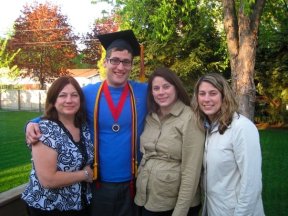
Graduation PhotoThe first question I always get asked when I’m in feminist spaces is: “What inspired you to become a feminist?”  Although I could go into the various histories revolving around men’s involvement in the early stages of the women’s movement to the similarities between the LGBTQ and women’s movements, my simple answer has always relied on one person: my mother.
I’ll be the first to admit (as well as many other people who will join me in the same chorus) that my mother deserves Sainthood for having put up with all the shenanigans I have, and still continue to, put her through. From running away from our local Catholic church the moment she dropped me off at Sunday School, to swearing like a sailor on leave at a very early age in front of Father Schmidt (who still fondly remembers me and the list I brought in with me to the confessional booth). Continue reading “Truths My Mother Taught Me by John Erickson”

The Difference a Feminist Makes by Elise M. Edwards

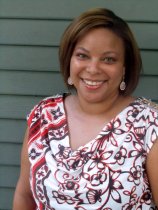
Elise EdwardsOf the many reasons I am grateful for feminismandreligion.com, I have to say that I am most grateful for the time it requires of me to reflect about feminism’s impact in my life, faith, and work.  I decided it was time to reflect on this question: What difference does feminism make for the way I structure and approach my classes?

I recently started a new position as a full-time lecturer in the Department of Religion at Baylor University.  Earlier this week, I attended a gathering for the department, where I was introduced, along with a few others, as new faculty.  At the end of the evening, the wife of a retired male professor introduced herself to me and remarked about how happy she was to see more women in the department. (Four full-time faculty members were hired this year, and three of us are women.)  She had been looking forward to this kind of change for quite a while.  I was appreciative of her remarks, just as I have been generally pleased with the warm reception I have received around the University.

Her excitement about the increase in the number of women faculty provoked me to reflect on what I add to my department, particularly for my undergraduate students.  I have thought before about how, from a purely representative standpoint, I bring something different to the faculty.  I have thought about how my students may not have previously had a professor–especially a religion professor–who looks like me.  Even if they had, I’ve had different life experiences than many of my colleagues, and that this bears on my approach to theology and ethics.  Therefore, the research I do and share is distinctive in its approach.  Yet, I am slightly embarrassed to admit that I have not given much thought about how my being a black feminist woman might impact my students.  I am tempted to blame it on the fact that I have just been trying to keep my head above water in a new position.  Of the many reasons I am grateful for feminismandreligion.com, I have to say that I am most grateful for the time it requires of me to reflect about feminism’s impact in my life, faith, and work.  So I decided to reflect on this question: What difference does feminism make for the way I structure and approach my classes? Continue reading “The Difference a Feminist Makes by Elise M. Edwards”

The Hot Seat by John Erickson

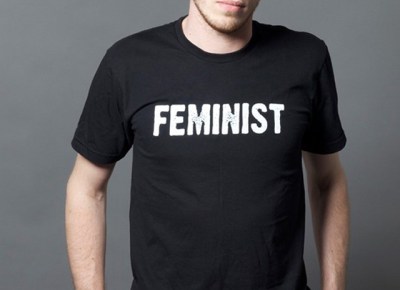
Being a man in feminism isn’t easy and that’s how it is supposed to be.

men_feminist_mainI’ve been thinking a lot about what it means to be a male feminist lately.  As the only man to be a permanent blogger on this very site until my colleague and friend Kile Jones came on board, I took my role, as a man in a traditional feminist (online) space very seriously.  Although the ongoing struggle to be a male feminist is one continually wrought with dialogues about power and positionality (amongst a host of many other topics), I am often conflicted when I see male feminists take advantage and destroy the hard work that many, specifically on this site and beyond, worked hard to build and defend.

Not wanting to reopen old wounds or start new online battles, men have been involved in feminism for quite some time.  From James Mott chairing the first women’s rights convention, to radical feminist Andrea Dworkin’s life partner John Stoltenberg, to Michael Kimmel and Michael Kaufman’s life long work to legitimize not only men in feminism but also what it means to be a man who works for gender equality, being a man in feminism isn’t easy and that’s how it is supposed to be. Continue reading “The Hot Seat by John Erickson”

Mindfulness of Putting Ourselves Down by Oxana Poberejnaia

oxanaFrom the Buddhist point of view, all phenomena are conditioned, i.e. they arise, carry on, and come to an end because of other phenomena. Buddhism does not look at anything we experience as “things”, but rather as processes.

Confusion arises due to various factors, chief among them : 1) vague sense of “ego”, and 2) language. The vague sense of ego is portrayed in Khemaka Sutta as the last delusion that a monk drops before getting Enlightened, so we won’t worry about it now. Where language is concerned, Buddhism stands on similar positions to those of postmodernism and feminism, i.e. our social world is defined by how we speak about it. One can say that we actually create society by the act of speaking.

Continue reading “Mindfulness of Putting Ourselves Down by Oxana Poberejnaia”

Emergence and the Spirituality of the Sacred Feminine by Anne Kathleen McLaughlin

goddesses
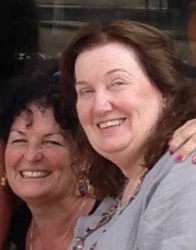
Kathleen and Marie (R-L)

Kathleen and Marie are friends who met at the event in Canada that inspired this post. Marie has given her monthly spot on Feminism and Religion to Kathleen so she can share her reflection with you. 

Emergence: the universe flares forth out of darkness, creating, over billions of years, through trial and error and trying again, astounding newness: carbon for life in the middle of a star…. the birth of planets, our earth holding what is required for life to emerge…. the creation of water from hydrogen and oxygen….the emergence of a cell with a nucleus.

Each of these seemingly impossible happenings did happen, offering us humans the hope that the impossible tasks confronting us in our time can be creatively addressed, showing us, as Brian Swimme expressed it, a domain of the possible beyond imagination. Our human endeavour has been powered by non-renewable energy resources. Our task now is to reinvent the major forms of human presence on the planet in agriculture, architecture, education, economics…. We need to align ourselves with the powers of the universe, consciously assisting, amplifying, accelerating the process of creative endeavour. Continue reading “Emergence and the Spirituality of the Sacred Feminine by Anne Kathleen McLaughlin”

Leaving Behind My First Love by Andreea Nica

Andreea Nica, pentecostalismDuring these realizations, the words of Sue Monk Kidd permeated my mind, “The truth may set you free, but first it will shatter the safe, sweet way you live.”

When most people inquire who my first love was, I’m reluctant to give an honest answer. At times, I just uttered the first boy’s name that would come to mind. As I matured and developed into a confident young adult, I decided to provide a more honest answer. “My first love was God. Jesus. You know, the Trinity.” I would receive puzzled looks, quizzical faces, and frazzled exits. Given the multitude of embarrassing responses, I began to rephrase my answer in a way that prompted them to further question my response. “I fell in love with God as I grew up in a charismatic, Pentecostal religious community. During my college years I left Pentecostalism, my family unit, and the community.” Responses were drastically different with this answer. Many people desired to know more about my transition and how I found the inner strength to embark on an alternative path. I quickly realized I didn’t have all the answers. Although my B.A. in Psychology aided me in understanding aspects of the psychological implications of my departure from the religious institution and a family that identified as Pentecostal, there was still much to uncover. Continue reading “Leaving Behind My First Love by Andreea Nica”

Thanks for Coming (Out): Sexuality, Sports, and Spirituality by John Erickson

I have to be honest, Jason Collins’ admission that he was a homosexual, albeit brave, upset me. While coming out is an completely unique experience to every individual that does it, Jason Collins’ story was just another example of the rampant sexist and heteropatriarachal world that privileges male bodies and sexualities over women’s similar experiences. While I applaud Jason’s story and it’s timing, the first thing I asked to my colleagues was: Where was the hubbub over Sheryl Swoopes or Martina Navratilova?

John Erickson, sports, coming out. Like marking off items on a proverbial checklist, closeted LGBTQ individuals who exist within and outside of the world of professional sports, can recount the numerous things they struggle with in terms of their sexuality.  From fearing of the actual coming out process, dressing in their car or at home to avoid the subtle glances and whispers of individuals in the locker room, to wondering what coming out would mean not only for their game but also for their social and, if they choose, spiritual lives, closeted and out LGBTQ individuals within the multi-billion dollar professional sports industry must grapple with that age old question: what does it mean to be gay and open about it?

The Locker Room

I have to be honest, Jason Collins’ admission that he is a homosexual, albeit brave, upset me.  While I understand that coming out is an completely unique experience to every individual who does it, for me Jason Collins’ story was also an example of the rampant sexist and heteropatriarachal world that privileges male bodies and sexualities over those of women.  While I applaud Jason’s story and the timing, the first thing I asked to my colleagues was: where was the same hubbub over Sheryl Swoopes or Martina Navratilova? Continue reading “Thanks for Coming (Out): Sexuality, Sports, and Spirituality by John Erickson”

A Valentine Towards an Ethics of Loving Women Making Art by Marie Cartier

It is still a radical and generous act to love a woman for who she is apart from, as well as with, others.

My favorite artist is Frida Kahlo because she was a woman who dared to do art about her own self, in fact often about her own physical self. When she did that it was brave; and it still is brave to consider your life as a woman important enough to focus on. Let’s face it– women are not considered a priority in a world which still underpays women for the same jobs that men do. When I entered the work force in 1976 women made 60.2% of what men make. In 1986 they made 64.3%; in 1996 73.8%; in 2006 76.9%; and in 2010 women made 77.4%.

Continue reading “A Valentine Towards an Ethics of Loving Women Making Art by Marie Cartier”