That Refreshing Change by Esther Nelson

Right now, I’m between semesters so find myself in Las Cruces, New Mexico, nestled into the house I plan to retire in—whenever that time comes.  Best to leave it all open.

While traveling here, I began feeling lighter and lighter—not unlike the sensation I got as a kid when school let out for summer recess.  Time stretched out forever, holding infinite possibilities.  Now that I’ve been in New Mexico three weeks, I wish time would slow down.  Christmas and New Year have come and gone with minimal fanfare.  I did not hang a single decoration, nor did I attend a single party.  Blessed relief.

Continue reading “That Refreshing Change by Esther Nelson”

Difficult Dialogues by John Erickson

Let’s have a conversation about men and feminism and how we can continue to abolish the patriarchy together rather than writing mean, hurtful comments online.

logo-CCWA few months ago Governor Jerry Brown appointed me to be the first man on the prestigious California Commission on the Status of Women and Girls. I am so excited and honored by this amazing opportunity to continue the great work that California is doing to tackle issues such as pay equality, advancing more girls in the STEM field, creating more opportunities for women in leadership positions across California, and a host of other hot topic issues.

From the moment I started telling people, the responses were extremely positive. People were very excited that we could have a conversation about how men can be included in creating change to better impact the lives of women and girls from all walks of life.  It felt great to see such a positive response from so many people that I love, trust, and admire. However, while much positivity still remains, it has come to my attention that some people are not so thrilled about my appointment. However, what these people and groups online do not realize is that I fully expected and am happy to see such conversations occurring about men in feminism.

Continue reading “Difficult Dialogues by John Erickson”

How Do We Heal Rape Culture? Part 2: How to Help Men Become Safer by Trelawney Grenfell-Muir

In Part 1, I presented a spectrum of male behaviors and attitudes, from violently misogynistic to safe ally. Next it is time to think about how we – as women, male allies, and society – can help men move up that scale to become increasingly safer for women. The strategies will differ depending on where a man starts out. However, using current research about change theory, we can find some concrete strategies to help us start to make progress.

The Research

Social scientists have conducted many studies about persuasion and social change, and I encourage everyone to follow these research trends. For this piece, I will focus on a few simple ideas about what works. I’m gearing this advice mainly toward men who want to become safer and to help other men become safer, but some of it applies to women as well. It also applies to religious communities – if they prioritize this issue, the men who attend will learn to be safer.

Continue reading “How Do We Heal Rape Culture? Part 2: How to Help Men Become Safer by Trelawney Grenfell-Muir”

Empowering Toys and the Problem of Class Divisions by Katie M. Deaver

I recently noticed that I’ve been spending a lot of time thinking about financial security, the way class systems work in the United States context, and how these types of realities inform my feminism.  Part of this is no doubt due to the fact that for the first time in my life I am not a student with multiple part time jobs, but rather am a “real” adult working full time at a job that offers retirement and medical benefits.

As I’ve written about before, I grew up in a poor family in rural Wisconsin and as a result I am often hyper vigilant about my finances.  While I likely go a bit overboard when organizing my budgeting, balancing, saving, and spending this type of organizing is something I can control.  The simple act of paying a bill, or determining how much I can spend on groceries this week gives me a profound sense of safety because for the first time there really is enough coming in to support my basic needs.

Continue reading “Empowering Toys and the Problem of Class Divisions by Katie M. Deaver”

Feminism and the Gender Revolution by Esther Nelson

The word “feminist” is familiar to most people today. It appears in news publications, television programming, popular literature, and even comes up in conversation occasionally.  Yet the term, “feminist,” writes Nigerian author Chimamanda Adichie in her little book, We Should All Be Feminists, is heavy with stereotypes and negative baggage.  “[Y]ou hate men, you hate bras, you hate African culture, you think women should always be in charge, you don’t wear make-up, you don’t shave, you’re always angry, you don’t have a sense of humour, you don’t use deodorant.”

Here is the YouTube video featuring Chimamanda Adichie’s Ted Talk, We Should All Be Feminists:

Many people, including some of my students, recoil from the term “feminist.”  At times, a student may use the word apologetically, quite aware of the scorn and derision the word elicits—often palpably present in the classroom, but rarely articulated.  It’s easier to speak of women’s humanity with its inherent rights under the broad phrase, human rights.  Chimamanda Adichie speaks and writes eloquently about that compromise in the following paragraph:

“Why the word feminist?  Why not just say you are a believer in human rights, or something like that?  Because that would be dishonest.  Feminism is, of course, part of human rights in general—but to choose to use the vague expression human rights is to deny the specific and particular problem of gender.  It would be a way of pretending that it was not women who have, for centuries, been excluded.  It would be a way of denying that the problem of gender targets women.  That the problem…[is]…specifically about being a female human.” Continue reading “Feminism and the Gender Revolution by Esther Nelson”

What I Believe (Post-2016) by John Erickson

Ever since the election of You-Know-Who, I have been doing a lot of creative writing.

Ever since the election of You-Know-Who, I have been doing a lot of creative writing. Unlike academic publications, policy reports, or my dissertation, creative writing, much like my mentor Dr. Marie Cartier has written about, provided me with a needed escape from a world that seems to grow darker with each passing day.  In college, I served as Poetry Editor for the Wisconsin Review, the oldest literary journal in Wisconsin. Continue reading “What I Believe (Post-2016) by John Erickson”

Householders’ Superstitions and the Higher Truth by Oxana Poberejnaia

I watched this short video on facebook about Sisa, an Egyptian woman who spent forty years a man in order provide for her family. There is a longer version on YouTube. Sisa, a widow, decided to work to feed her children, and consequently grandchildren. In Egypt, a woman can only do unpaid jobs within a home. So Sisa had to pretend to be a man by wearing male clothing and head wear. She takes casual jobs, such as shoe shining or brick laying.
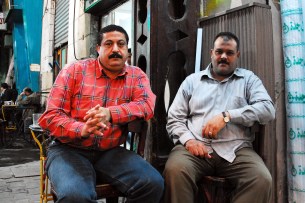
Then Sisa made the news and was honoured by governmental officials. There is footage in the report of Egyptian men watching that footage. Apparently, the men were impressed by Sisa’s efforts and they developed respect for her. One man, who knows Sisa personally, says for camera: “I treat her like a man, because she works like a man”.
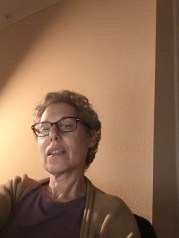
The implication being, I assume, that Sisa is only worthy of respect because she acts like a man is expected to act. And another implication is that Sisa is an exception. He only prepared to treat her differently, as all the rest of the women in Egypt apparently cannot work as men.

Continue reading “Householders’ Superstitions and the Higher Truth by Oxana Poberejnaia”

Missing a Teachable Moment: The Purple Dress by Marilyn R. Freedman

Intelligent and impish eyes took in my approach, and the little girl moved away from the post office doors. But not before I saw her sweet face with round cheeks still full of baby fat squished against the glass. With slightly messy, curly blond hair and wearing a shiny, deep purple, ruffled dress-up dress, she looked pretty, happy, and confident. This was her world, wherever she was. When I smiled, though, she turned away, shy of a stranger.

I got into the long line with my kid and listened to the little girl’s dad discuss gift card values with her older brother. The boy named an amount, and the dad commented about how expensive it was. “What a great way to teach a little economics and finance,” I thought.

Continue reading “Missing a Teachable Moment: The Purple Dress by Marilyn R. Freedman”

Gratitudo et Fortitudo by Natalie Weaver

One of the bigger problems with being the only Classics major at a Jesuit university is that all my friends were fairly old men before I had even reached drinking age. Now, they are pretty much gone back to the cradle of the grave, save one, who is on his way to a remote retirement home. As a young woman, my coterie wasn’t a terrible problem for me because some deep part of my psyche had been convinced, since I was about nine years old, that I myself was an old man. I sort of felt at home reading about the Second Punic War and identifying with the sexual ramblings of the naughty old Latin poets, noting between me and my teacher-purveyors of such materials only the occasional, modest differences in skin elasticity and dental sheen.

I never felt like a girl, although, to be sure, one’s ability to assess such a thing is limited to one’s observations and conceptions about what, for example, a girl is or does or thinks. I found myself “ungirlike” in comparison with my conceptions of “girl-ness,” perhaps most notably in the operations of my mind. I felt “old” and “serious.” I remember contemplating with enormous focus the abstractions of total being and absolute nothingness from my nursery room. My big wheel was solid black, and my Dad got me into fishing and hooking live bait. I had read Nietzsche’s Beyond Good and Evil by eighth grade; my favorite book was Camus’ The Plague until it was replaced by Hesse’s more romantic investigations in Narcissus and Goldmund; and I spent my days writing philosophical poems and trying to teach myself to paint in the style of Chinese ink and wash painting. I couldn’t stand Sweet Valley High novels, and even my doll play was odd. I had a gay Ken doll, whom I named David, and his best friend was a shaven-headed Western Barbie, whose backstory was a woeful tale of drugs and topless dancing.   Continue reading “Gratitudo et Fortitudo by Natalie Weaver”

Pride by John Erickson

When we come together, we are the Divine.  I didn’t think I could experience that twice in one year; clearly, I was wrong. 

If you’re anything like me you not only hate opening up your Twitter feed each morning but also feel compelled to in order to make sure you didn’t miss whatever new atrocity to come out of 1600 Pennsylvania Ave. After the Women’s March, I felt charged. I felt that whatever this administration threw at the proverbial “us,” I knew we could and would overcome it. Although that charge kept me going for a few months, there came a time where I just couldn’t go on anymore and that I was completely drained; then walked in a man named Brian Pendleton.

After the Women’s March on January 21, I didn’t know what to expect. The event was truly so successful that many of the organizers and coordinators were on an activist high as a result of what was a truly magical and divine moment. A few months came and went and the 45th President of the United States continued (much to our surprise) to be as awful as we all knew and expected. However, while I am able to exist in a world, no matter how oppressive, as a cisgendered white male and the full on privilege and power that comes along with that territory, many of the individuals and communities being attacked did not have those same freedoms; and like with the Women’s March and how that all took shape, in walked Brian Pendleton to my life to talk to me about the #ResistMarch.

Cover PhotoAlthough my involvement during the 120 days or more that led up to the #ResistMarch happened in a flash, one thing is for certain: miracles exist not because of divine intervention but because G-d places people on this Earth to make positive impacts. The beauty of the #ResistMarch was not just the passion of the organizers but the beauty of the rainbow that came out in full force on June 11

The strength shown by our community was one that, for all intensive purposes, proves that love does conquer all. RuPaul couldn’t have expressed the common and conquering theme better than when he said: “It’s all about love; giving love and being able to receive love. That’s our secret weapon; that’s the one thing they don’t have: our love and our music. That is our activism. That is what we use and what we always use to fight the ugliness.”

That is the one experience that I took most out of the #ResistMarch: the power of love and friendship; the beauty in the unexpected conversation that leads to changing the world, again.  Thank you, Brian. Thank you, for bringing us all together to resist, recharge, and love.

19055531_10158898620590385_6920780108892374453_o

When we come together, we are the Divine.  I didn’t think I could experience that twice in one year; clearly, I was wrong.

John Erickson is the President of the Hollywood Chapter of the National Organization for Women. John is a Ph.D. Candidate in American Religious History at Claremont Graduate University where he is finishing up his dissertation tentatively titled “Step Sons and Step Daughter”: Chosen Communities, Religion, and LGBT Liberation.” John holds a MA in Women’s Studies in Religion; an MA in Applied Women’s Studies; and a BA in English and Women’s Studies. He is the Founding and Past President of the University of Wisconsin Oshkosh’s LGBTQA+ Alumni Association and currently serves as the Chair of the Legislative Committee for the Stonewall Democratic Club, a Diversity and Inclusion Fellow at Claremont Graduate University. He is a permanent contributor to the blog Feminism and Religion, a Co-Founder of the blog The Engaged Gaze, and the Co-Chair of the Queer Studies in Religion Section of the American Academy of Religion’s Western Region, the only regional section of the American Academy of Religion that is dedicated to the exploration of queer studies in religion and other relevant fields in the nation. In April 2017, he was the first openly gay athlete to be inducted into the Wisconsin Volleyball Conference Hall of Fame. Most recently, John was one of the coordinators of the Women’s March Los Angeles, which brought together 750,000 people in downtown Los Angeles on January 21, 2017, and a Committee Member for the #ResistMarch, which brought together 100,000 people from Hollywood to West Hollywood in honor of LA Pride on June 11, 2017.