From the Archives:“Vaginas are Everywhere!”: The Power of the Female Reproductive System by John Erickson

Moderator’s note: This marvelous FAR site has been running for 10 years and has had more than 3,600 posts in that time. There are so many treasures that have been posted in this decade that they tend to get lost in the archives. We are beginning this column so that we can all revisit some of these gems. Today’s blogpost was originally posted June 19, 2012. You can visit it to see the original comments here.

I have a beautiful picture of vagina hanging on my wall.  However, for the longest time it was in the back of my closet, with a plastic bag covering it.  I wasn’t ashamed of it but my ex-boyfriend, like most gay men, refused to have it on the wall where he could see it.  He is now long gone; the vagina is now out and proud.

I bid on the picture one fall during a showing of the Vagina Monologues at Claremont School of Theology.  One of my best friends was in the show and I had always loved its powerful message.  I walked out of the theatre, waiting for my friend, and there it was: the picture of the vagina.  I found myself caught up in its beauty.  Its gaze had mesmerized me.  The outlying layers of red, the contours of its shape, they all began to mold into a figure before my eyes.  While I have never thought of myself as a religious person, I realized that at that moment I was no longer looking the old photo but rather I was staring at the outline of the Virgin Mary.  At that moment, I realized that I had to have the picture.

Continue reading “From the Archives:“Vaginas are Everywhere!”: The Power of the Female Reproductive System by John Erickson”
From the Archives: Still Practicing Her Presence By Barbara Ardinger

Moderator’s note: This marvelous FAR site has been running for 10 years and has had more than 3,600 posts in that time. There are so many treasures that have been posted in this decade that they tend to get lost in the archives. We have created this column so that we can all revisit some of these gems. Today’s blogpost was originally posted May 27, 2012. You can visit it here to see the original comments.

In my blog of May 11 about practicing the presence of the Goddess, I explained how Brother Lawrence of the Resurrection inspired me. Many thanks to everyone who read that blog and commented on it. One comment came via email from a friend, who said, “I kept thinking as I read about that expression ‘walking one’s talk.’” But of course. It would be lovely if anyone outside a nunnery or monastery could be as filled with their god or goddess as Brother Lawrence was. Though we try to be as mindful as we can, we obviously don’t always succeed as well as we’d like. But surely it’s better to have a positive intention than a negative one.

So let’s get practical. Instead of filling our heads with what’s been called monkey-chatter, let’s fill ourselves with the Goddess so that our thoughts of Her can go on autopilot. Instead of obsessing over, say, if the Lakers, Packers, or Cardinals are going to win their next whatever-they-play or who’s gonna win this week on Dancing With the Stars, let’s set our minds on the Goddess so our thoughts go to Her when we don’t have to concentrate on some specific, important task at hand.

Continue reading “From the Archives: Still Practicing Her Presence By Barbara Ardinger”

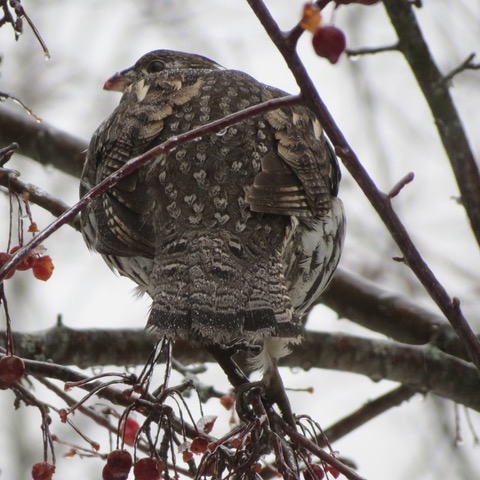
Mama Partridge by Sara Wright

Preface:

I would like to think that there are not many women out there who have had a mother like mine, but I am sure there are more. It is often hard to break the silence of abuse, especially when it is so severe. After I finished this poem I felt guilty – like I had done something wrong… a wonderful aspect of aging is that we begin to see through the ruses and I knew my feelings were temporary.

The Woman Who Birthed Me Was Not My Mother

Dedicated to the Abandoned Child in Myself, a child that suffered what Indigenous peoples call Susto or Soul Loss. This state occurs when abuse is so severe the soul of a baby cannot incarnate in its own body, but hovers around it in a disembodied state. The only way to heal this wound is to be embraced and loved by family…

Continue reading “Mama Partridge by Sara Wright”

Remembering Carol P. Christ: Online Memorial Gathering, December 20, 2021

Dear FAR community,

It’s been wonderful to read so many posts remembering Carol Christ. The FAR community was so important to Carol: as has been pointed out, she not only offered her own posts each Monday, she also read and responded to every post, every day. Through the FAR ‘family’ I feel comforted by connecting with others who knew and loved her and miss her as as I do.

Online Memorial Gathering On December 20, Carol’s birthday, all friends of Carol and friends of FAR are warmly invited to an online Memorial Gathering and ritual in Carol’s honour. Many of Carol’s friends will share cherished memories (please email me if you would like to say a few words) and I will show some photographs from her personal archive. (If you have photos of Carol you would like to share, please email them to me at laura@laurashannon.net.) We’ll also talk about the future of Carol’s Goddess Pilgrimage in Crete. Please register with your email address at this link.

Continue reading “Remembering Carol P. Christ: Online Memorial Gathering, December 20, 2021”

Vayechi’s Take on Fertility, Women and Theodicy by Ivy Helman.

This week’s Torah portion is Vayechi, or Genesis 47:28-50:26.  It is the last part of the Joseph saga (For my thoughts on two other parshot relating to Joseph, see Mikeitz and Vayigash).  While there is much that could be said, there are three aspects of the parshah which I would like to concentrate on for this post: blessings being associated with fertility; verses 50:19-20’s troubling theodicy; and its women.

Let us begin with the last topic: women.  Women are mentioned four times in Vayechi.  Jacob recalls the burial of Rachel in verse 48:7.  Joseph’s beauty is such that women often look at him (49:22). The blessing that Jacob gives to Joseph includes the blessings of both mother and father (49:25-26).  At present, I will focus my commentary on Jacob’s request for burial, the fourth mention of women in this parshah.

Continue reading “Vayechi’s Take on Fertility, Women and Theodicy by Ivy Helman.”

From the Archives: #MeToo and the Idolatry Trap by Tallessyn Zawn Grenfell-Lee

Moderator’s note: This marvelous FAR site has been running for 10 years and has had more than 3,600 posts in that time. There are so many treasures that have been posted in this decade that they tend to get lost in the archives. We are beginning this column so that we can all revisit some of these gems. Today’s blogpost was originally posted January 20, 2018. You can visit it here to see the original comments.

Really – everywhere we look – there are dead white guys. National holiday? Most likely in honor of a dead white guy. Statue on a green? Founder of a major Christian denomination? Dead white guy. Classic literature, painting, play, music ‘everyone’ is supposed to know about? Yup, probably by a dead white guy.

It’s a little exhausting.

It’s easy to develop a pretty negative attitude about all these dead white guys. I mean, some of them were pretty questionable if not downright oppressive people. Enough, already! Am I right?

Yes! Yes. Well… sort of. The thing is, some of them really did say and do wonderful, important things. I suppose we should not dismiss an entire portion of our history just on race and gender alone. And, truth is, I have a confession to make. I kind of really love the insights of some of these folks. I guess it’s easy to complain about all these dead white guys… until you fall in love with one of them.

Continue reading “From the Archives: #MeToo and the Idolatry Trap by Tallessyn Zawn Grenfell-Lee”

For Love of This Life: Carol Christ’s Contribution to Ecofeminist Thought by Elizabeth Ann Bartlett

Journeying with students into the woods to dive deep into our spiritual connections with nature, I would invoke these words from Carol Christ: “There are no hierarchies among beings on earth.  We are different from the swallows who fly in spring, from the many-faceted stones on the beach, from the redwood tree in the forest.  We may have more capacity to shape our lives than other beings, but you and I will never fly with the grace of a swallow, live as long as a redwood tree, nor endure the endless tossing of the sea like a stone.  Each being has its own intrinsic beauty and value….”[i]  How can one listen to these words and not be changed?  Taking in the meaning of these words, paradigm shift happens.  Herein lies the gift of Carol Christ to ecofeminism.

            Ecofeminism posits that the oppression and domination of women, nature, and colonized others are inextricably linked. This is largely due to two aspects of the Western cultural paradigm: 1) mind/body value dualism, and 2) what ecofeminist Karen Warren has called “the logic of domination.” Mind/body value dualism is the creation of an artificial binary of opposites which values everything associated with the mind — spirit, transcendent, men, humans, white-bodied peoples, over everything associated with the body – earth, immanent, women, nature, colonized Others.  The “logic of domination” is the use of this supposed inherent superiority of those associated with the mind to justify their domination of everything associated with the body. As Western culture has spread throughout the world, this value system is now found practically every on earth.

Continue reading “For Love of This Life: Carol Christ’s Contribution to Ecofeminist Thought by Elizabeth Ann Bartlett”

Reflection: Winter Light by Sara Wright

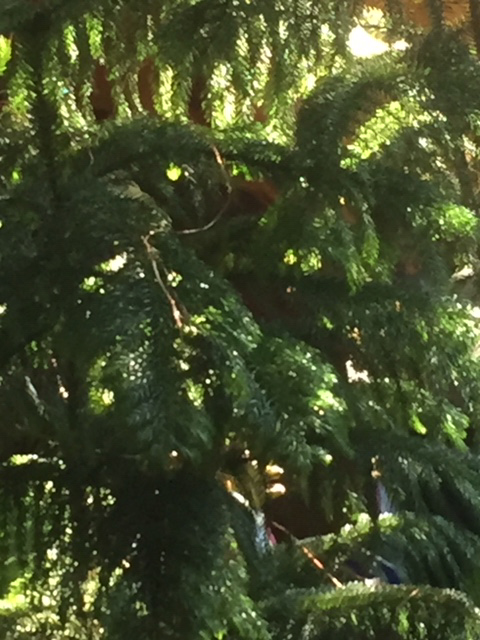
Norfolk Pine

What does this little narrative have to do with feminism you ask? Why everything! It speaks to the journey of one woman from young adulthood into old age, a woman who learns along the way that Nature/ Earth/Immanence is also the Way of the Goddess, and that living a life of meaning (in a finite loving body) is the path the goddess set her upon at birth…

It is the day before thanksgiving. For too many years, this was a time of great sorrowing – a day on which a young motherless woman said goodbye to her grandmother… a grandmother she couldn’t afford to lose, and later, much later, a grandmother she couldn’t become….

Continue reading “Reflection: Winter Light by Sara Wright”

The Holidays Are Coming: Let’s Celebrate the Saturnalia by Barbara Ardinger

Here we are in December—and what a year 2021 has been. Let’s not even think about what we’ve survived—continuing pandemic, climate change, people with guns, violations of voting rights, the Orange T. Rex still at large. No no no. Let’s celebrate the coming holidays with the antique ancestor of the Feast of Fools. Let’s celebrate the Saturnalia.

Some background: Saturn, who was sometimes conflated with the Greek Titan, Cronus (who became a god of time), was an ancient Latin agricultural god whose name may derive from satur, “stuffed,” or sator, “a sower”; in either case, he stands for abundance. He was a working god who oversaw viniculture and farming and was the king of Italy during the golden age before the rise of imperial Rome. When Jupiter came to conquer him, he hid himself (latuit) in the region that came to be called Latium. The Romans soon proclaimed that Saturn’s body lay beneath the Capitol in Rome. Because his reign (and presumably his hidden corpse) brought prosperity to the city, the state treasury and the standards of the Roman legions were kept in his temple when the army was at home. Saturn’s statue was bound in woolen strips to keep him from leaving Rome. In addition to Saturn, the Romans honored Ops and popular gods like Sol Invictus, Mithra, Consus, Juventas, and Janus in their winter festivals.

Continue reading “The Holidays Are Coming: Let’s Celebrate the Saturnalia by Barbara Ardinger”

The Blessing of the Elders by Rachel Thomas

, elders are people who have illuminated my path, inspired me to see my own potential. To open my eyes, all my senses, even those I did not know I had. Elders show bravery and model for us how to be strong.

What is an Elder?

The word elder comes from an Old English word which also meant ancestor or chief. A lot can change in a thousand years and many of us no longer honor older people or seek out them out for advice.

In my experience, elders are people who have illuminated my path, inspired me to see my own potential. To open my eyes, all my senses, even those I did not know I had. Elders show bravery and model for us how to be strong.

My first wise woman teachings came from my family. My mother, and her mother, taught me to be myself, to love being outdoors and the importance of having a garden. Feeling the joy of flowers, cooking with fresh herbs, planting a tree to honor the dead. These are a few ancient traditions of my ancestors that have survived even in a modernized and urban setting.

Continue reading “The Blessing of the Elders by Rachel Thomas”

As I rediscover my connection with the earth, my eco-consciousness inspires me to transform. As I go back to nature, I re-awaken my ancient cellular memories of living in harmony with the earth. I feel called to dance barefoot, play drums, make offerings, bathe in moonlight, harvest with my own hands. As I move forward on a path which is both new and old, it is my beloved elders who have shown me how to find my way.

What is an Elder?

The word elder comes from an Old English word which also meant ancestor or chief. A lot can change in a thousand years and many of us no longer honor older people or seek out them out for advice.

In my experience, elders are people who have illuminated my path, inspired me to see my own potential. To open my eyes, all my senses, even those I did not know I had. Elders show bravery and model for us how to be strong.

My first wise woman teachings came from my family. My mother, and her mother, taught me to be myself, to love being outdoors and the importance of having a garden. Feeling the joy of flowers, cooking with fresh herbs, planting a tree to honor the dead. These are a few ancient traditions of my ancestors that have survived even in a modernized and urban setting.

Continue reading “The Blessing of the Elders by Rachel Thomas”