With May coming to a close in a few days, I am feeling nostalgia. This month is both elusive and dramatic – from bare trees to lime green, and now lilacs so heavily laden with blooms that some are bowed as if in prayer. Wood frogs and peepers bring in the night and the first toads are hopping around my overgrown flower garden; in the forests I surprise them when peering closely at small flowers. Gray tree frogs trill at dusk. Violets of every hue grace the earth outside my door along with robust dandelions, forget – nots, rafts of deep blue ajuga, delicate bells of solomons seal, mayapple umbrellas, false solomon’s seal, wild columbine and golden celandine all nestled in long grasses and moss. No mowing happens here!
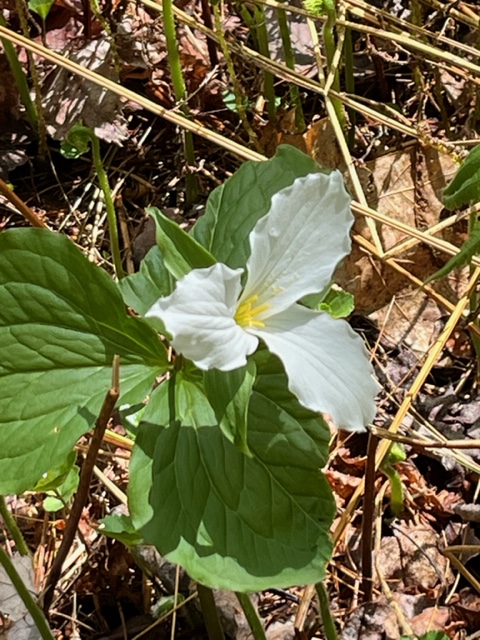
On my woodland paths starflowers and Canada mayflowers are now so thick I fear treading on even one, as if one foot could destroy the whole. Down by the brook white trillium bloom on, both painted and purple are setting seed, while bloodroot, arbutus trumpets and delicate anemones have transformed into leafy memory. Ostrich and hay ferns are unfurling, creeping blue phlox and dames rocket are budded or blooming; pink and white lady slippers are beckoning both here and in the woods. June is in the air.
Child abuse does not have to be physical or sexual. The most widespread forms of child abuse are psychological, and therefore harder to see, acknowledge, and eradicate. As abused children, we unconsciously pass on patterns of abuse visited on us to children, and to others we have power over including students, employees, and even friends and lovers.
The recent visit of a friend who is suffering greatly in a “battle” with her own “demons” reminded me of the important work of Alice Miller. My friend’s “demons” take the form of a persistent self-criticism laced with the feeling that “if only” she did or didn’t do certain things, her world would fall into place. My “demons” generally take a different form, telling me that I am helpless and that there is nothing I can do to ease my suffering.
Such “demons” were not implanted in my friend and me by the devil. They took root in interactions with our own parents, who were not themselves any different from most of the parents of their time and place. Recognizing that our parents were not “bad” people should not blind us to the great harm they did to us. However, when abused children speak of their abuse, the statement that their parents did not intend to harm them usually functions to deflect attention away from child abuse that really did occur. What happened to my friend and me was something like this. In many small and perhaps also a few traumatic interactions, we learned that our feelings do not count. “Don’t talk now, your father is tired.” “Stop making so much noise, your father has a headache.” “Don’t ask your mother for attention, can’t you see that she has more than enough to do with your younger brother.” Harmless in themselves, such messages, when repeated over and over, lead the child to believe that there must be something wrong with the feelings she has.
Very early in Henri Bosco’s 1948 novel Malicroix, a young man, Martial de Mégremut, living placidly amid fruitful orchards in a tame Provençal village, receives a letter informing him he has inherited “some marshland, a few livestock, a ramshackle house” from a reclusive great-uncle, Cornélius de Malicroix. Against his family’s strenuous objections–with alarm they speak of “marshes, mosquitoes, miasmas”–Mégremut resolves to travel alone to the remote Camargue to claim his “wild” Malicroix inheritance. The house is on an island, and to reach it Mégremut must cross a rough river, at night, in a frail wooden boat piloted by a taciturn old man who meets him at dusk in the middle of a vast plain.
So begins a deeply internal quest narrative, an initiatory journey that forces Mégremut to come to terms with himself and with the elements–earth, water, wind, and fire–that are ever-present, sometimes terrifyingly so, on the island. For once he arrives, he learns that he must remain there alone for a full three months if he wishes to obtain the inheritance. Torn about whether to stay or leave, he finds that the decision to stay is made of its “own accord,” unconsciously.
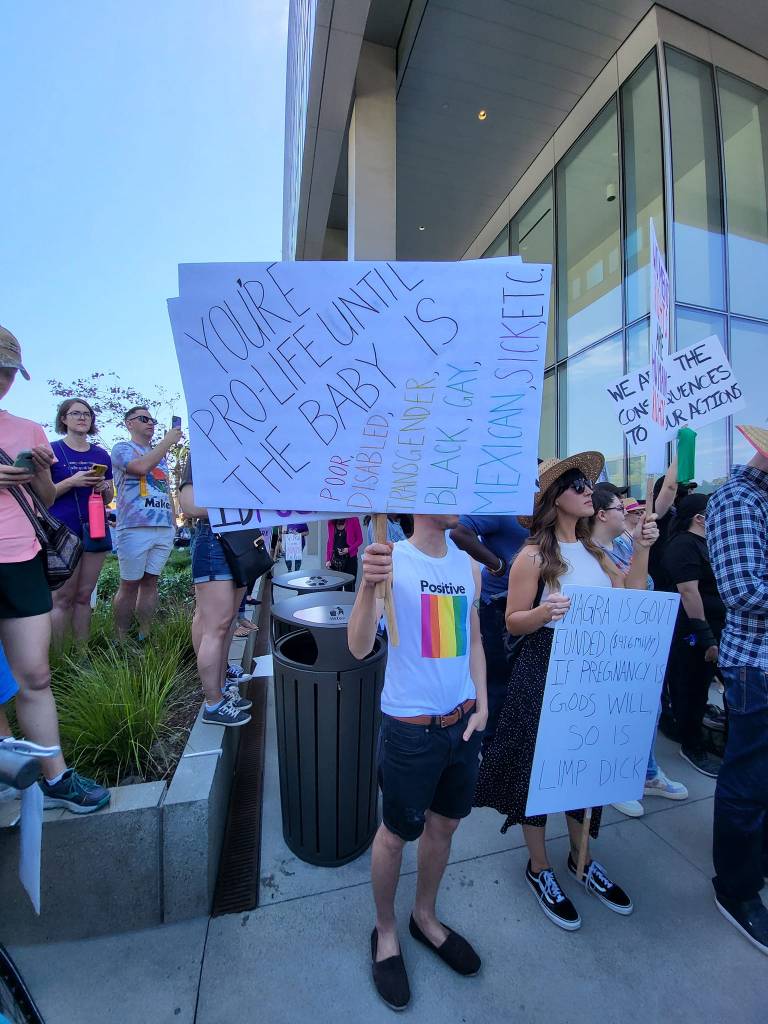
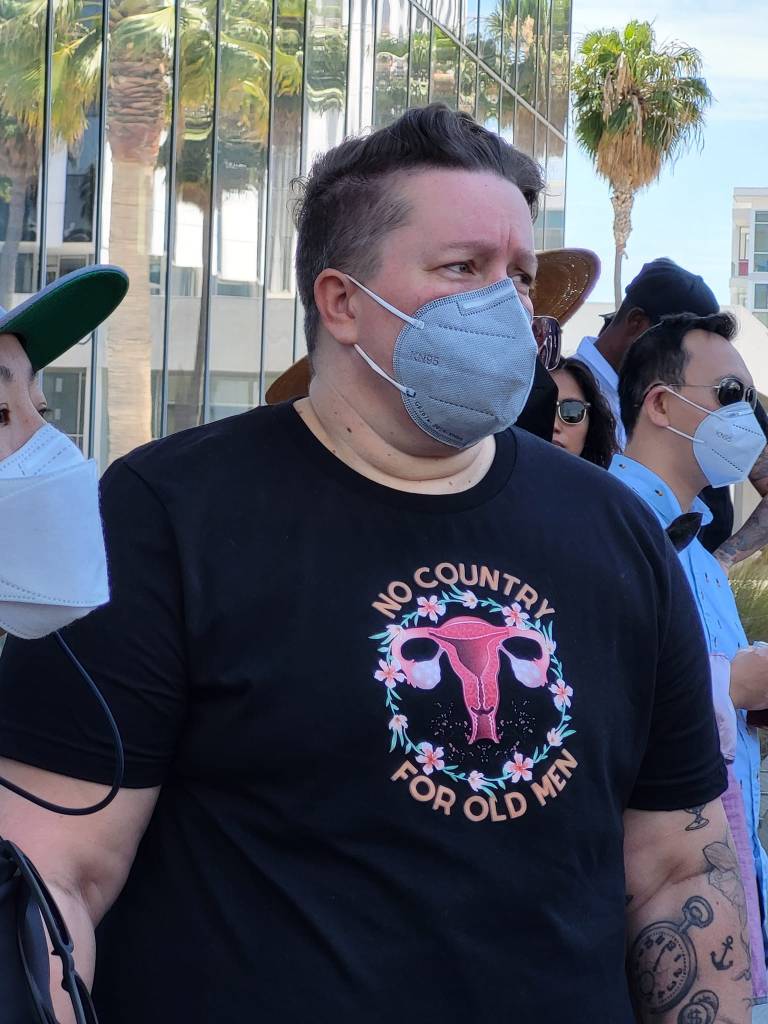
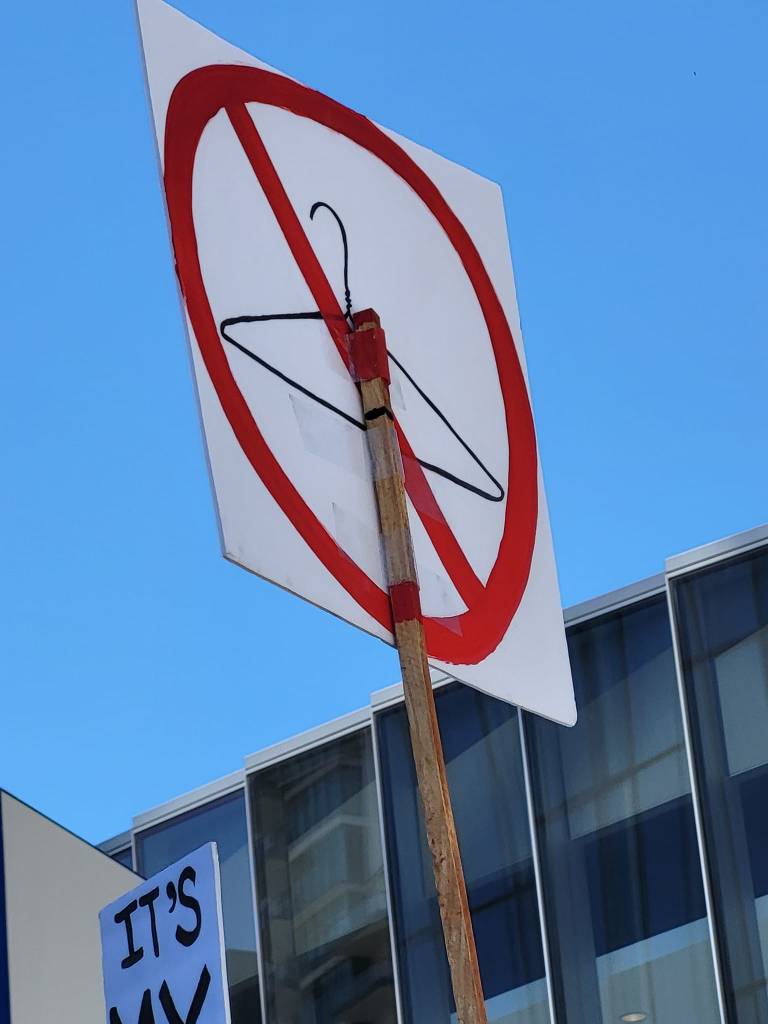
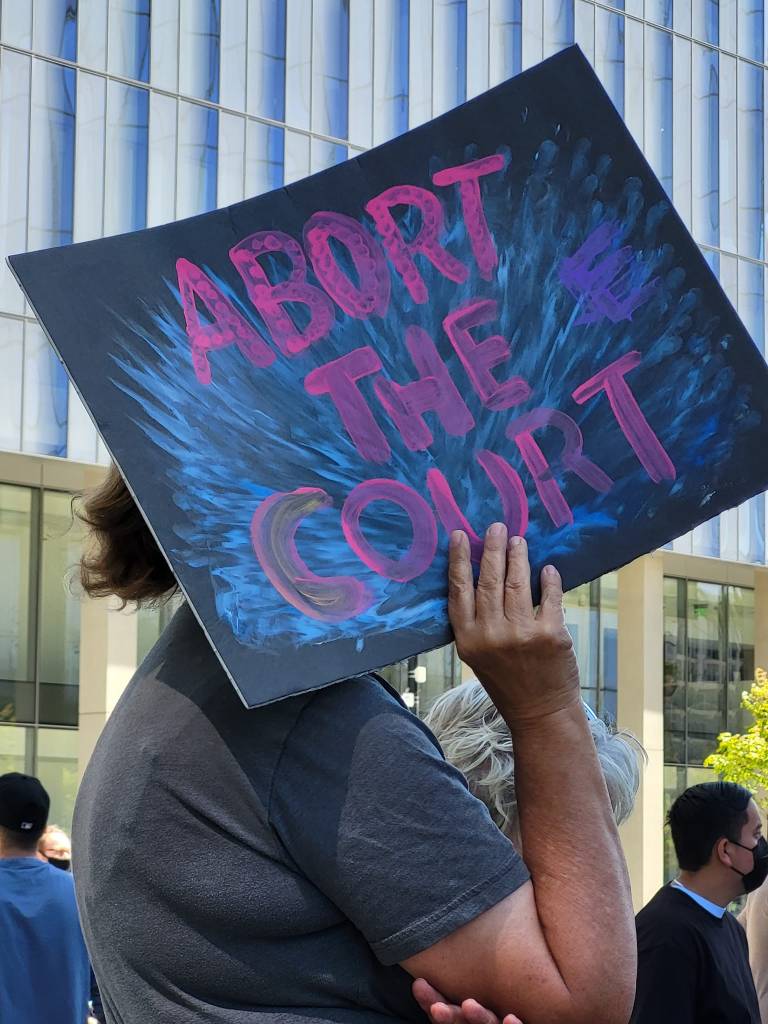
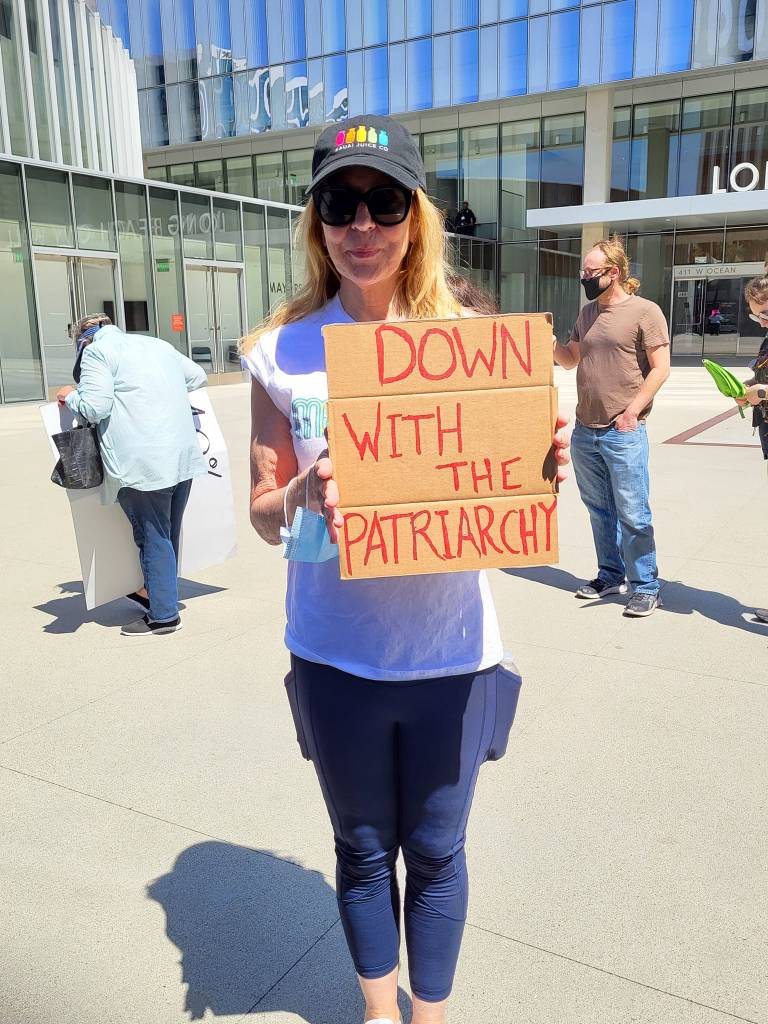
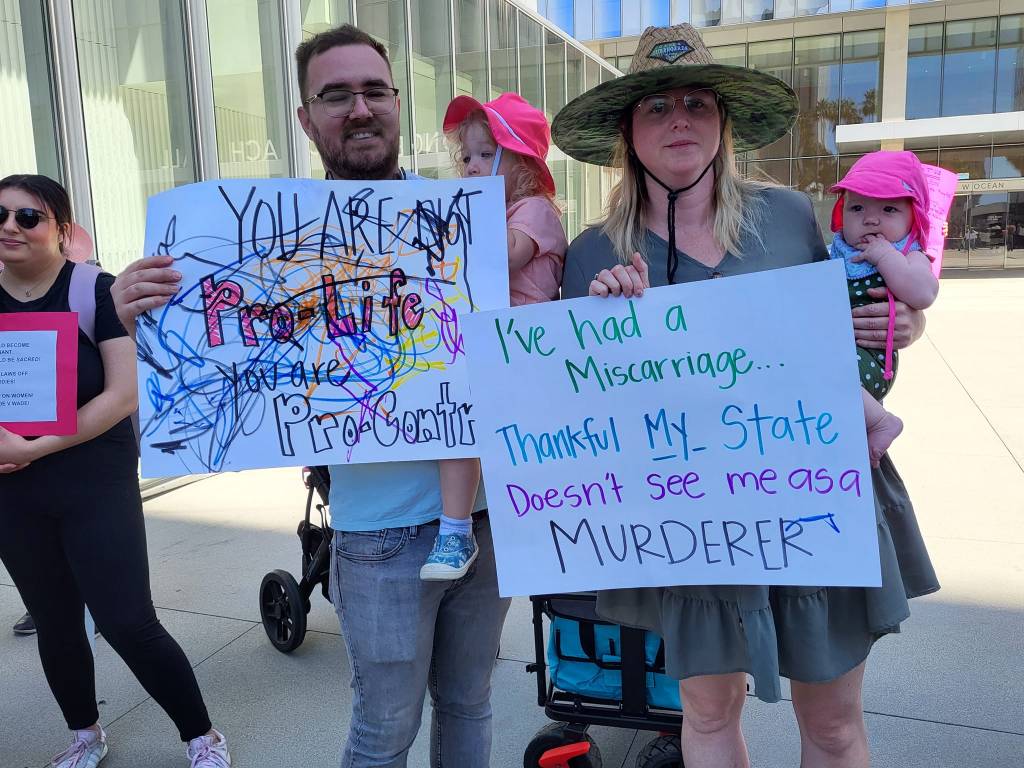
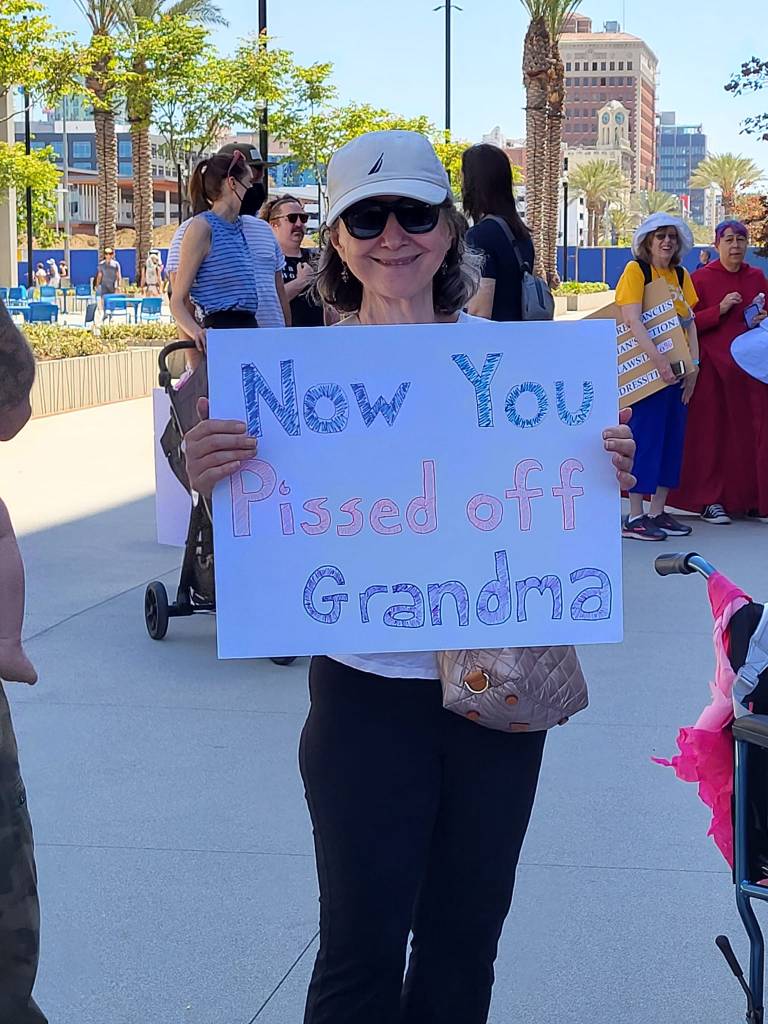
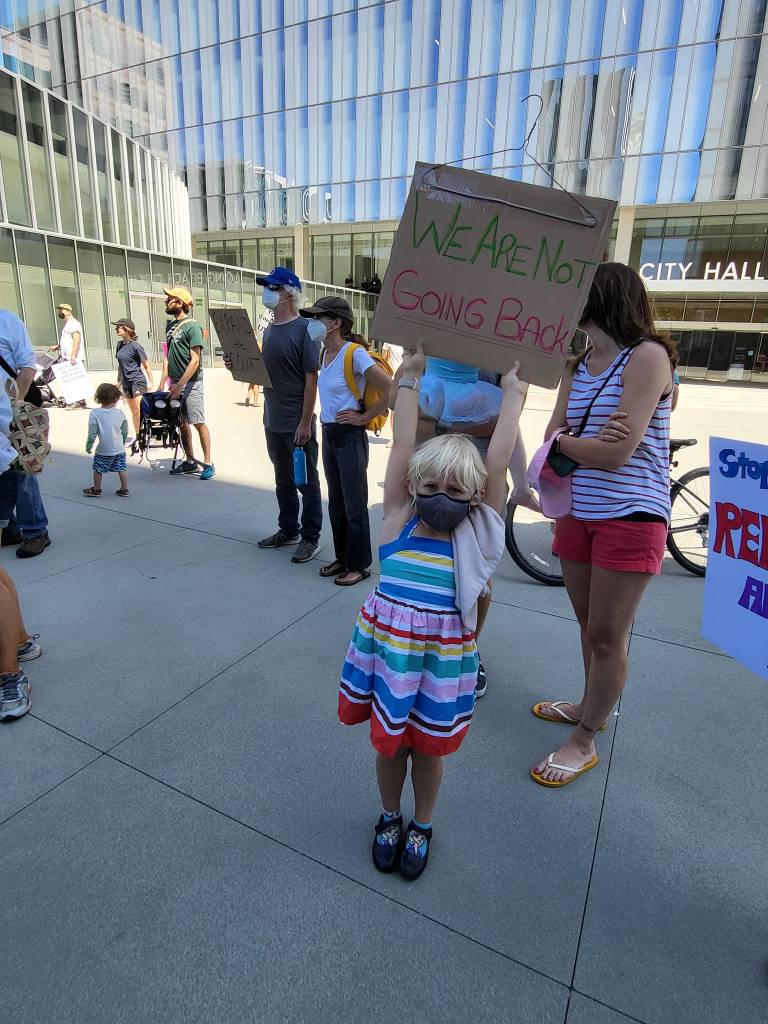
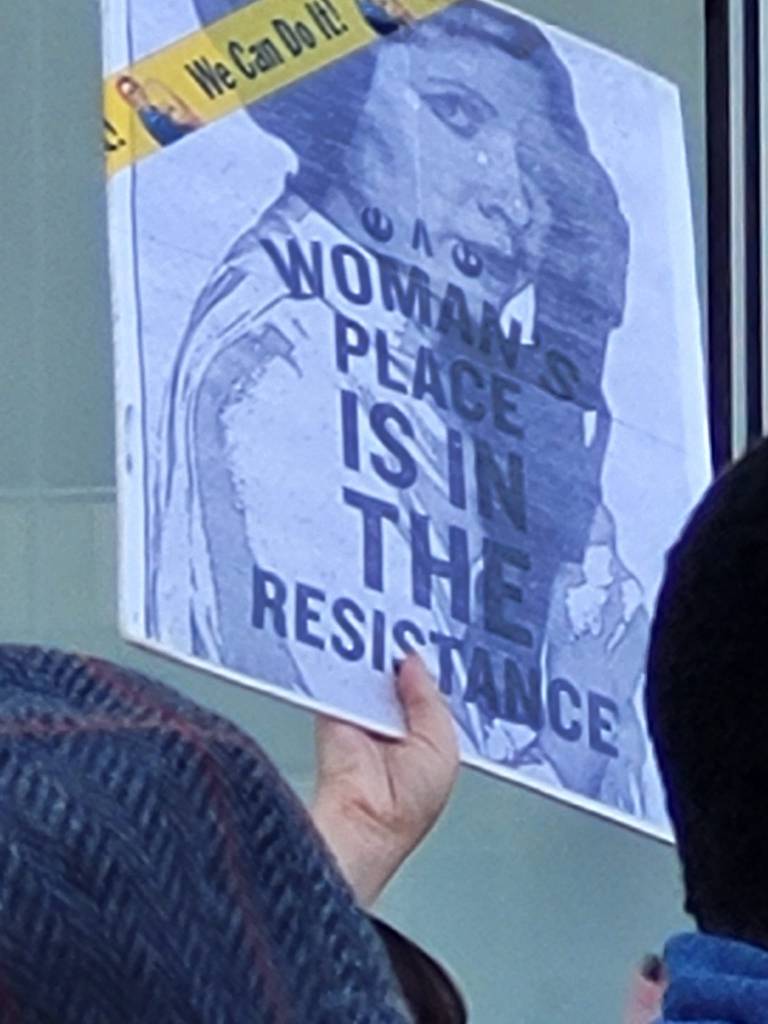
photos from bans off our bodies rally, long beach ca may 14, 2022
all photos by: marie cartier
BIO: Marie Cartieris a teacher, poet, writer, healer, artist, and scholar. She holds a BA in Communications from the University of New Hampshire; an MA in English/Poetry from Colorado State University; an MFA in Theatre Arts (Playwriting) from UCLA; an MFA in Film and TV (Screenwriting) from UCLA; an MFA in Visual Art (Painting/Sculpture) from Claremont Graduate University; and a Ph.D. in Religion with an emphasis on Women and Religion from Claremont Graduate University.
Moderator’s note: This is the 2nd of the two part series. Part 1 was posted yesterday.
photos from bans off our bodies rally, long beach ca may 14, 2022
all photos by: marie cartier
BIO: Marie Cartieris a teacher, poet, writer, healer, artist, and scholar. She holds a BA in Communications from the University of New Hampshire; an MA in English/Poetry from Colorado State University; an MFA in Theatre Arts (Playwriting) from UCLA; an MFA in Film and TV (Screenwriting) from UCLA; an MFA in Visual Art (Painting/Sculpture) from Claremont Graduate University; and a Ph.D. in Religion with an emphasis on Women and Religion from Claremont Graduate University.
moderator’s note: There are so many powerful photos that they will be posted in two parts, today and tomorrow.
I was writing this blog post on the same day that Rosemary Radford Ruether died, receiving the news during my writing process. The timing of that still has me feeling something I cannot yet express…
One of the most meaningful concepts I learned very early on from my education in feminist theology was “hearing to speech,” from Nelle Morton. I have written about this before, sharing that at times when I have struggled with my academic writing, I try to imagine that I am writing to my peer group, which helps open the path because not only are they a trusted circle of friends that I know loves me deeply, but they are friends who hear me into speech (and in that way, to writing, as well).
Nelle Morton coined this feminist principle of “hearing to speech.” [1] Morton’s new understanding of hearing and speaking came to her while she was with a group of women who gathered to tell their stories. As one woman shared her story – a story which at times reached points of excruciating pain – no one moved or interrupted, everyone seemed to be holding their breath. At the end, when the woman finally finished, she said, “You heard me. You heard me all the way – I have the strange feeling you heard me before I started. You heard me to my own story.”
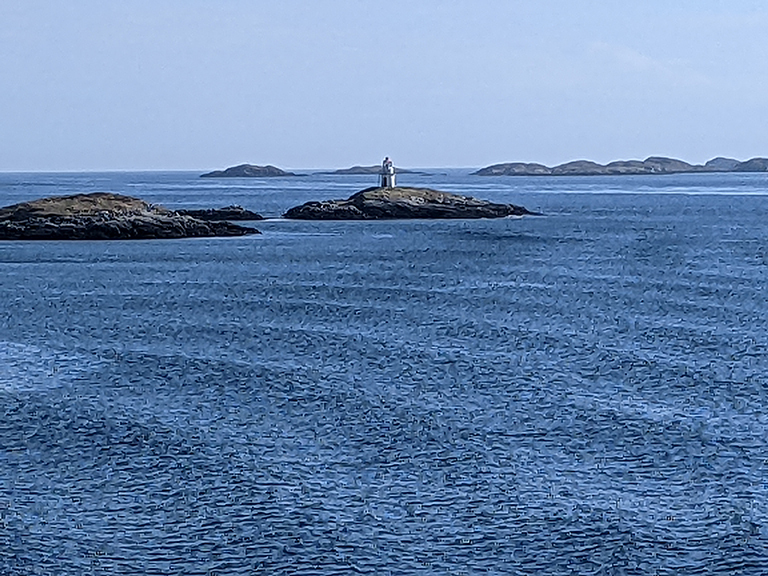
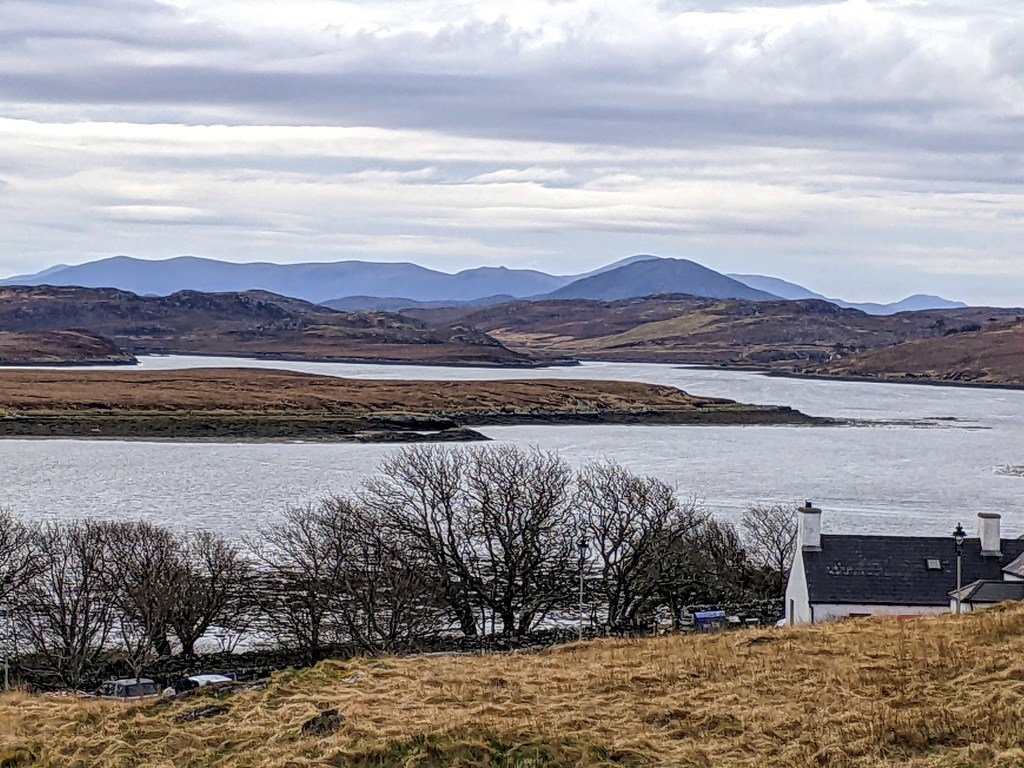
I felt compelled to visit Scotland without truly understanding why. I said I was called by my studies of Celtic mythology and by images I had seen of the land. I told people in Scotland I was on an artist’s journey. But now I see that Mother Earth wanted my attention – and in Scotland, particularly in the Highlands, Earth energy is strongly present. From the start, a major part of that calling was the ancient Callanais Stones – pronounced like the English translation “Callanish” – located on the remote Isle of Lewis.
Getting around the Hebrides and the Highlands was difficult without a car as bus access is very limited. Though a little restricting, it kept me connected to Earth as I walked and I walked. With every step I felt the call of Earth – from even before the human family began.
It was a glorious sunny afternoon when I arrived by ferry on the Isle of Lewis/Harris. Next was a bus ride north to Stornoway, my base for exploring Callanais. Here I first learned of the Stones connection to the Cailleich, an ancient goddess whose origins are unknown. Her name literally means “the Veiled One” but has come to mean “Old Woman or Wife.” Yet she was all powerful and ageless.
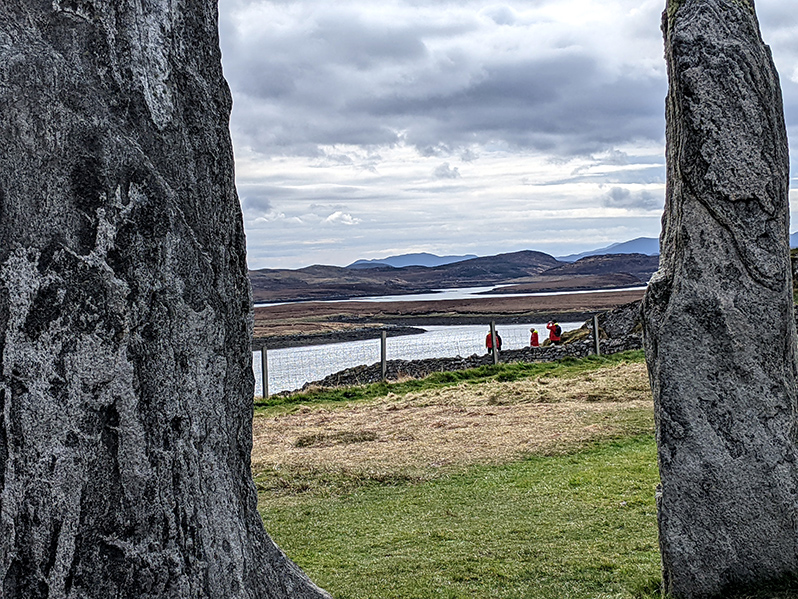
An elder man spoke about Callanias and the Stones’ connection to the nearby mountain – “Cailleach na Mointeach” – Gaelic for “The Old Woman of the Moors” or affectionately called “Sleeping Beauty” as the mountain looks like a woman lying on her back with bent knees. He said you could see this mountain through the stones. His storytelling got me searching for more info on the Cailleach’s connection to the Stones.
Cailleach na Mointeach, Isle of Lewis
First, I learned of the extreme age of the islands and of the stones that make up the land. The Callanais Stones date back to 3500 BC but the rocks that created Scotland come from an inconceivable 3 billion years ago as the landmasses of Earth were created from out of the waters.
Around 450 million years ago, at the beginning of the Caledonian Orogeny, Scotland, Scandinavia and North America were one continent with the now, non-existent Iapetu Ocean separating them from England, which was joined with the rest of northern Europe. This was a long geological period of continental collision and mountain building, that turned Iapetu Ocean into land and fused Scotland and England together.
Quieter conditions occurred for several millennia, covering Scotland with layers of sediment forming various sedimentary rocks until 60 million years ago when Earth moved again and the continent split apart forming the North Atlantic Ocean with volcanoes erupting all along Scotland’s new western edge.
These are the creation stories the science of geology tells us. But our ancient ancestors told a different story of the creation of Scotland and the other Celtic lands. Long, long before the Celts arrived in Ireland and Scotland, the indigenous people worshipped The Cailleach, as both the goddess of creation and the goddess of destruction. She became Calleach Bheur to the Scots. “Bheur” means sharp and she was credited with creating the sharp and biting winter weather, which helped to shape Scotland.
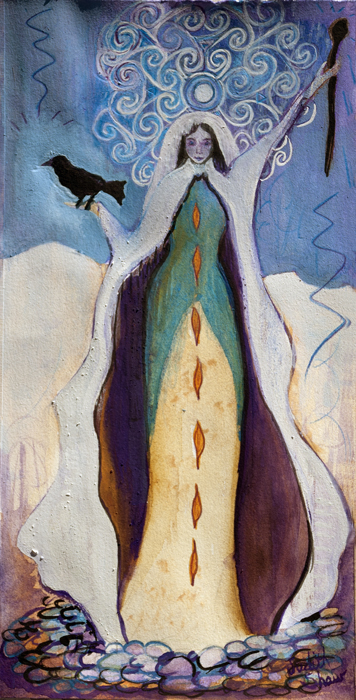
The Cailleach, a Dark Goddess of nature, is one with the land. Sometimes depicted with one eye, she sees beyond duality peering into the Oneness of all Being. She is the embodiment of winter, clothing the land with snow. Sacred Stones are her special places.
She leapt from mountaintop to mountaintop, dropping rocks to create hills, mountains and islands. She carried a slachdam – the Druidic rod, or a hammer with which she wielded power over the seasons and weather.
She is the guardian of the life force, finding and nourishing the seeds, commanding the power of life and death. The Cailleach personifies death and the transformative power of darkness, leading us through death to rebirth.
Our ancestors believed that the rocks on the Isle of Lewis used to create the Callanais Stone Circle were gifts from the Cailleach – from her acts of Earth building. These metamorphic gneiss rocks are among the oldest in Europe and are embedded with various types of crystal such as quartz, feldspar and hornblende. Perhaps these crystals in the ancient rocks create the energy field I felt so strongly on my visit – all coming from the hand of the Cailleach, a personification of the power of Mother Earth.
Archeologists theorize that the 5,000 year old Callanais Stones were a sacred site created for ritual and prayer, in particular from which to mark the 18.6 year lunar cycle – similar and yet more complicated than the yearly Sun cycle of Summer and Winter Solstices.
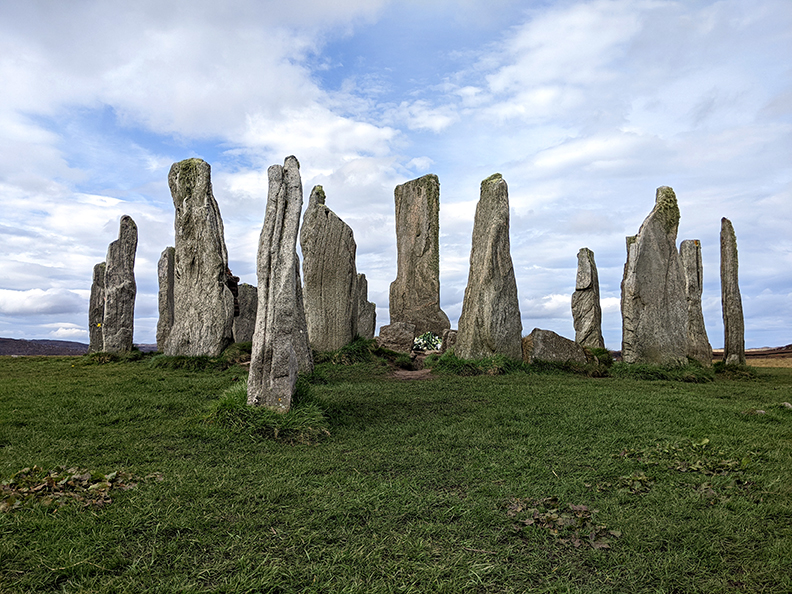
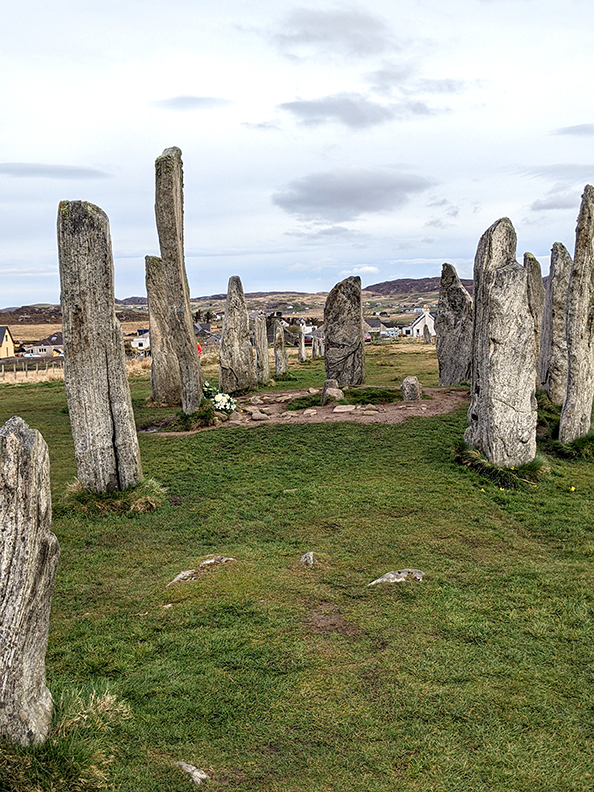
Callanais Stone Circle seen from Cross Entrance on East
Every 18.6 years, this moon cycle reaches Major Lunar Standstill with the full moon nearest the Summer Solstice. It is viewed through the Callanais Stones rising out of Cailleach na Mointeach – our Earth Mother. Being so far north it only skims the horizon then appears to set among the stones.
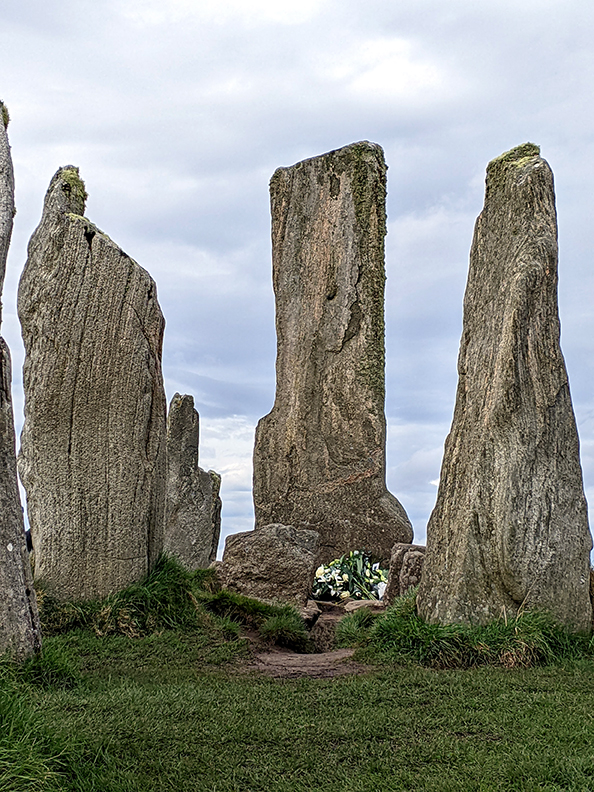
Two stones of the Callanais 13 stone inner circle framing Cailleach na Mointeach
It is hard for our modern minds to understand the awe these ancient people must have felt at the beauty and terror of nature during the Megalithic Era – when the human family was first beginning to settle in one place though had not yet discovered agriculture.
Perhaps the ceremonies held at Callanais helped hold the terror at bay. Closing my eyes I can imagine being there on this short night, near mid-summer, for the ritual marking of the passing of winter – I and my tribe had survived the season of long, dark nights. This was the special time that our tribal shaman knew how to mark. We all understood the precariousness of life and that marking the circuits of Earth and Sky provided invaluable knowledge for our survival. I can imagine feeling immense gratitude witnessing the cycles of life unfold as Earth and Sky and human minds interacted and the full moon rose out of our Earth Mother – Cailleach na Mointeach – and then set within the Sacred Stone Circle.
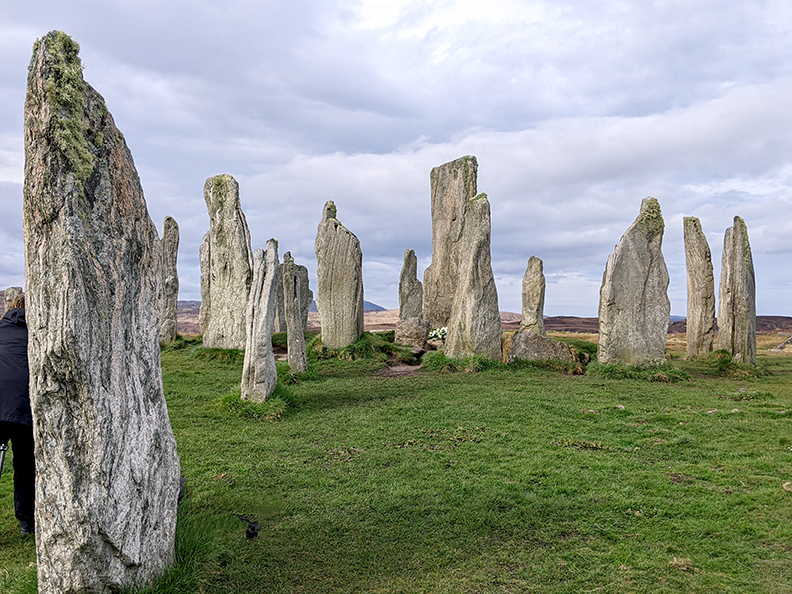
Further illustrating Callanais’ connection to Goddess, its original construction was comprised of 13 stones arranged in a circle – both number and shape are symbols of Moon and Goddess. At some point an even-armed cross was added around the perimeter – symbolic of the sun and of the meeting place of the divine and the mundane.
It seems unlikely that such a magnificent structure was created for use only once every 18.6 years. Of course these people left no written account of their actions, but local legend and lore suggests the Callanais Stones were seen as a fertility power spot. Given the Stones connection to Moon and Goddess that is not surprising. An old legend claims that Callanais is a promising spot to consummate a marriage or become engaged. In fact I overheard a couple of visitors while I was there claiming to have become engaged at Callanais.
But what does a site like the Callanais Stones hold for us today? Can Mother Earth still speak to us there?
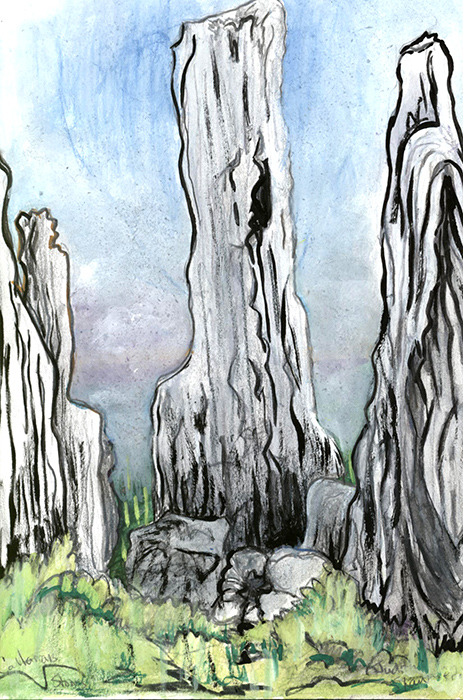
After a bit of a wander through and around the Stones, I sat and sketched. Slowly through that act of eye to hand to pencil to paper I began to feel the deep connection that always comes in when I attempt to translate 3D reality onto a 2D piece of paper.
Time passed and soon the only return bus would arrive so I stopped and just sat quietly, listening to the wind and feeling the energy. I felt strongly a sacred presence in this spot where long, long ago ceremonies for Goddess had been held. I heard the Cailleach’s calling – to an acceptance of our modern world and the difficult days of transformation the 21st century offers up. The winds carried her message – a glimmer of hope that we can find our way back to living in balance with her natural rhythms of creation, destruction and creation. I felt her reassurance that though the geography of Earth changes and the epochs of humankind and the flesh and bones of all creatures pass away, the magnificence of life continues. The Cailleach touched my heart there at her Sacred Stone circle, reminding me that, though pain and suffering has been and will always be with us, life is a gift to be cherished.
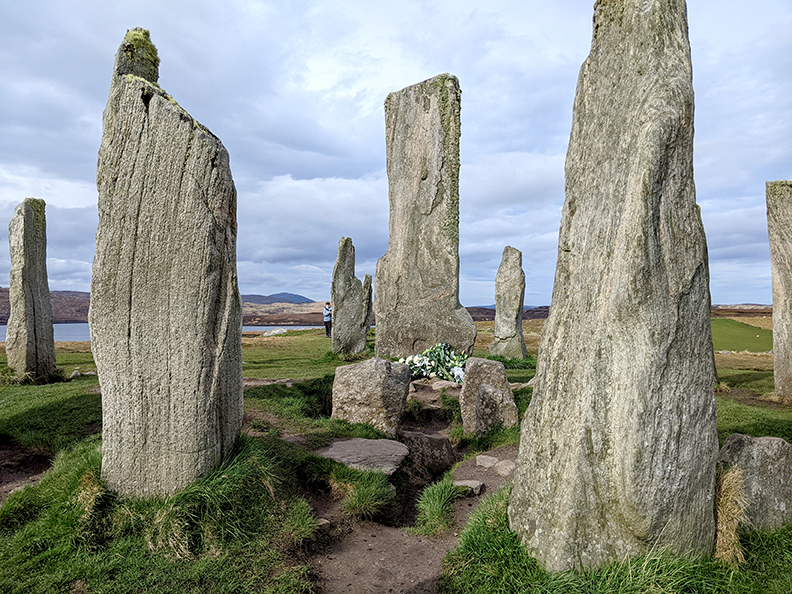
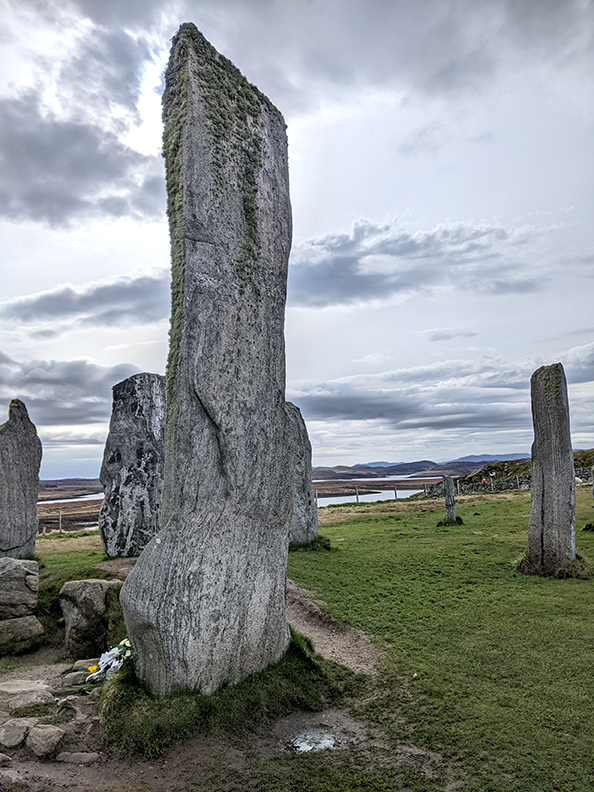
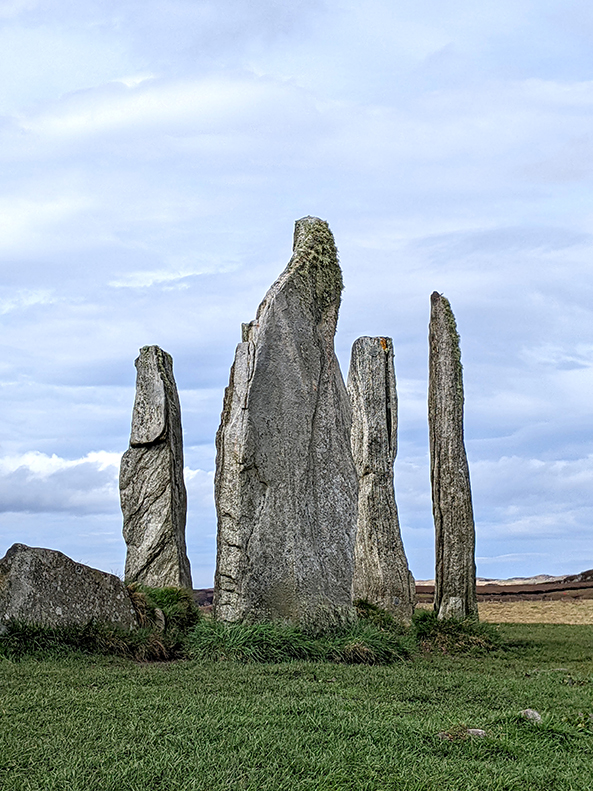
Here are a few more photos of the Callanais Stones
Judith Shaw, a graduate of the San Francisco Art Institute, has been interested in myth, culture and mystical studies all her life. Not long after graduating from SFAI, while living in Greece, Judith began exploring the Goddess in her art. She continues to be inspired by the Goddess in all of Her manifestations. Originally from New Orleans, Judith makes her home in New Mexico where she paints as much as time allows and sells real estate part-time. Give yourself the gift of one of Judith’s prints or paintings.
In my last blog I wrote that the image of God as a dominating other who enforces his will through violence–found in the Bible and in the Christian tradition up to the present day–is one of the reasons I do not choose to work within the Christian tradition. To be fair, there is another image of God in Christian tradition that I continue to embrace. “Love divine, all loves excelling” is the opening line of a well-known hymn by Charles Wesley. Charles Hartshorne invoked these words and by implication the melody with which they are sung as expressing the feelings at the heart of the understanding of God that he wrote about in The Divine Relativity.
Love divine, all loves excelling also expresses my understanding of Goddess or as I sometimes write Goddess/God. Though I am no longer a Christian, but rather an earth-based Goddess feminist, I freely admit that I learned about the love of God while singing in Christian churches. Hartshorne wrote that he knew the love of God best through the love of his own mother, and I can say that this is true for me as well. My mother was not perfect, and she did not understand why I wanted to go to graduate school, my feminism, or my adult political views, but I never doubted her love or my grandmothers’ love for me. (I count myself lucky. I know others did not have this experience.) Like Hartshorne, I also learned about the love of God through the world that I always understood to be God’s body. Running in fields and hills, swimming in the sea, standing under redwood trees, and encountering peacocks in my grandmother’s garden, I felt connected to a power greater than myself.
A couple of months ago I did a day trip to visit the historical site of one of the 10 internment camps which were formed due to Executive Order 9066 issued on February 19, 1942. Manzanar Relocation Camp is located between the Sierra Nevadas and the Owens Valley. Manzanar held over 11,070 Japanese Americans from 1942–1945. EO 9066 forced 120,000 American citizens to leave everything and become in all accounts prisoners; two-thirds of those were native-born American citizens. This executive order largely focused on people living on the West Coast of the United States to eliminate the possible threat of a secondary attack. They were relocated far inland and the majority of the camps were outside of the West Coast. While this was done in the 1940s, our current climate is looming to make it seem like there are forces in this world that are attempting to perform different forms of subjugation and confinement.
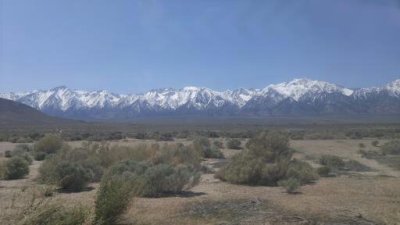
Manzanar, in the middle of nowhere California (and I mean nowhere—it takes over three hours to drive the more than 230 miles from Los Angeles and it is not directly accessible from Central California), is divided by the great Sierra Nevadas. This is one of the things that struck me when I arrived at Manzanar—the stark beauty and ruggedness of the mountains, the immense flat lines of the valley, and the complete isolation. Due to being so close to the Nevadas and the desert valley conditions, the weather can be extreme. Many of the detainees documented the harshness of the weather conditions, from the high winds to the stark cold at night, and the barely adequate buildings to shelter them from it.