What Is “Egalitarian Matriarchy” and Why Is It So Often Misunderstood? by Carol P. Christ

In their purest form, “egalitarian matriarchies” place the mother principle at the center of culture and society. Their highest values are the love, care, and generosity they associate with motherhood. These values are not limited to women and girls. Boys and men are also encouraged to honor mothers above all, to practice the traits of love, care, and generosity, and to value them in others.

“Egalitarian matriarchal” societies are matrilineal which means that family membership and descent are passed through the female line. They are also usually matrilocal, which means that women live in their maternal home all of their lives. Family groups are usually extended rather than nuclear. Often there is a “big house” in which groups of sisters, brothers, and cousins live together with mothers, aunts, grandmothers, and great-aunts. In what I imagine to have been the original form of the system (still practiced by the Mosuo of the Himalayas), men also live in their maternal house, visiting their lovers at night, and returning home in the morning.

Mosuo women at festival

These societies practice small-scale agriculture. The women are owners and guardians of the land, which is held in common by maternal clans. They are also the guardians of the secrets of agriculture, food storage, and food preparation, which are passed down from mothers to daughters through songs, dances, rituals, and stories that celebrate the Earth as a great and giving Mother. The powers of women as birth-givers and as the guardians of the mysteries of the agricultural cycles are symbolically related to the powers of birth, death, and regeneration in nature and in all creative processes.

Women seated under trees in place of honor at Minoan festival

These social and cultural systems must have first developed at the beginning of the Neolithic era, when “woman the gatherer” first discovered the secrets of agriculture that allowed people to settle down and farm the land. If women discovered agriculture, then it makes sense that they would have been leaders in the first settled communities and guardians or owners of the land they farmed. They would have been the ones to build the first homes on or near the farmland. Sons as well as daughters would have been born in these early settlements.

The males of the families or clans continued to hunt. Over time they became responsible for building and heavy farm labor and for grazing flocks and seeking raw materials away from the settlement. It makes sense that they would be the ones to venture away from the community to gather information and to trade. In a recent documentary, Mosuo men stated that they don’t work as hard as women. This may not have been the case in the past. Today products and raw materials are brought in through the capitalist economy: traditional roles of traders are obsolete. Information gathering was an important part of trade expeditions: this is how new technologies spread rapidly in the Neolithic era; religious and cultural symbols were also shared by traders. Today there are books, newspapers, television, and the internet. Nor are Mosuo men involved in inter-clan negotiations in the People’s Republic of China.

From the division of labor in these societies, an egalitarian system of governance developed in which the elder women or grandmothers supervised the “internal” life of the house or clan. The “internal” domain included family and farm and all of the rituals surrounding birth, puberty, and death, as well as planting and harvesting. Women played central roles in creating and enacting all of these rituals. Through their expeditions and trade activities, elder men, the brothers of the grandmothers and uncles of the next generations, became responsible for the “external” relations of the clan, meeting people from other cultures when they were away from home, and welcoming visitors who arrived on their home territory.

Because of this division of labor, the elder men would have been the ones to meet and greet colonists and invaders and also to speak with storytellers, historians, and anthropologists, most often also men, who were interested in learning about their culture. If foreign men  came from patriarchal cultures, they would have assumed that the men who met them were the leaders of their groups. The party line in the field of anthropology, which is followed by academics in other disciplines, is that “men wield the power” in matrilineal societies. I was disappointed to read this when I first started learning about matrilineal societies as a graduate student and to find it repeated in a recent article arguing that Minoan culture might have been matrilineal and matrilocal.

Those of us who have been socialized in patriarchal societies in which “men wield the power” cannot easily imagine alternative systems. When we begin to think about female power, we immediately conjure up pictures where “women wield the power” by going to war, keeping men as slaves, sexually abusing and raping them, and forcing them into subordinate positions. Such images are so abhorrent that we may conclude that patriarchy is not so bad after all. And this stops us from looking for or wanting to envision alternatives.

In 1981 anthropologist Peggy Reeves Sanday challenged these conventional views in her ground-breaking Female Power and Male Dominance. Examining all of the pre-urban societies documented in anthropological records, she discovered that societies that celebrated and valued female power were not female dominant but egalitarian. She also found that societies that celebrated and valued male power were almost always male dominant. They tended to develop in times of external threat (when men became warriors) or environmental crisis (when the female power of the earth was viewed as having failed the community). Though Sanday’s arguments are convincing, they failed to change that anthropological consensus that “men wield the power” in all human societies, including those that celebrate female power and are matrilineal and matrilocal.

What the consensus that “men wield the power” in matrilineal, matrilocal, and matrifocal societies does not recognize is the power women hold in the internal relations of the group. For example, in the Iroquois culture, the councils of female elders that managed the day to day life of the clan were just as important as the councils of male elders that through their “chief” met with European settlers and invaders. In fact, the councils of female elders were slightly more powerful than those of the male elders. Iroquois women could remove male leaders they did not approve of and reject decisions of the male council to go to war. This power of the female council did not mean that Iroquois women dominated Iroquois men. Rather it was an important check-and-balance ensuring that men’s councils could not unilaterally take actions that would negatively affect the internal relations of the clan.

What should we call societies such as these? Obviously we should continue using the terms “matrilineal” and “matrilocal” where they apply. But what term should we use to describe these cultures as a whole? Archaeologist Marija Gimbutas called the egalitarian societies of Old Europe “matrifocal” because she recognized that the term “matriarchal” is usually (mis)understood to mean female dominant; this decision did not protect her work from being criticized for its challenges to the patriarchal consensus.

Peggy Reeves Sanday redefines matriarchy as involving “cultural symbols and practices associating the maternal with the origin and center of growth processes necessary for social and individual life. Heide Goettner-Abendroth defines matriarchy to mean “mothers at the beginning,” based on one of the meanings of the root word “arche,” while at the same time insisting that matriarchies are egalitarian.

I dared to use the “m” word after reading Peggy Reeves Sanday and Heide Goettner-Abendroth. I define egalitarian matriarchy as a society and culture organized around the mother principle of love, care, and generosity, in which mothers are honored and women play central roles, and in which men also have important roles and every voice is heard. My new suggestion is that the “m”word always be preceded by the “e” word, in other words that we not use “matriarchy” unmodified, but always write and speak of “egalitarian matriarchies” in order to make it clear that we are not talking about female-dominated societies. This will be my practice in the future.

*You can read more in Societies of Peace by Heide Goettner-Abendroth, in Women at the Center by Peggy Reeves Sanday, and in Daughters of Mother Earth and Iroquoian Women by Barbara Alice Mann. Or watch The Women’s Kingdom or other documentaries on the Mosuo.


Carol P. Christ is an internationally known feminist writer and educator currently living in Heraklion, Crete. Carol’s new book written with Judith Plaskow, Goddess and God in the World: Conversations in Embodied Theology, is on sale for $3.71 kindle on Amazon in May 2018. FAR Press recently published A Serpentine Path: Mysteries of the Goddess. Carol  has been leading educational tours based on the religion and culture of ancient Crete for over twenty years. Carol’s photo by Michael Honegger.


Glimpses of Women in India by Elizabeth Cunningham

Recently I traveled in India with my husband who did doctoral research there 48 years ago. I had no goals of my own other than to be open. Back only a short while, I am still pondering the journey. Here are glimpses of the women I saw, often only from a distance, with gratitude for so much kindness.

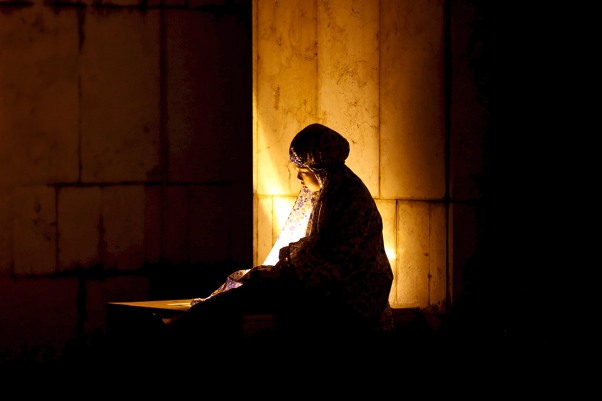
“Welcome to the City of Joy,” says our guide when we step out of the airport into the warm Calcutta night.  “You have arrived on Maha Shivaratri, the Great night of Shiva. This is especially a holiday for women. Every woman wants a husband like Shiva.”

Source: Alamy; used with permission

Continue reading “Glimpses of Women in India by Elizabeth Cunningham”

Stories the Stones Tell by Sara Wright

A couple of days ago I was climbing a mesa with my friend Iren who is “a guide to the wild places” – those places off the beaten track where stories are told by the stones and the Earth that supports them.

As a severely directionally dyslexic person who cannot tell her left from right navigating this hidden world would be impossible without Iren’s deep knowledge of this land, her expertise, her extraordinary sensitivity and her love for Nature. No words can ever express my gratitude for this friendship without which I would feel bereft.

As we climbed through mountains of human garbage and four wheeler tracks we discovered potsherds at our feet. Picking up the predominantly black and white pieces for inspection I found myself wondering about the women (and children) who gathered the clay, shaped it into pots, and fired the vessels to store food. There are so many untold women’s stories hidden in these clay fragments… Continue reading “Stories the Stones Tell by Sara Wright”

Is Religion Our Sacred Cow? by Esther Nelson

Recently, my colleague (I’ll call him Ben) participated in his grandson’s bris—the circumcision ritual within Jewish tradition. The circumcision was performed by a mohel–someone who is trained on removing the foreskin of an eight-day-old, male child.

Neither Ben nor his wife is Jewish. Their son converted to Judaism when he married a Jewish woman whose family celebrates the birth ritual with a host of traditions.  One of those traditions dictates that the immediate family members, upon news of the baby’s imminent birth, gather together in, or around the vicinity of, the new family’s home in order to welcome the child into the world.

So Ben rushed to his son and daughter-in-law’s home a couple of states away shortly after the baby boy’s birth, staying until after the circumcision ceremony where Ben had the official role of conferring on the newborn his Jewish name. Continue reading “Is Religion Our Sacred Cow? by Esther Nelson”

On the ‘Naturalness’ of Inequality by Ivy Helman

29662350_10155723099993089_8391051315166448776_oIn some regards, life on Earth seems to depend on some basic inequalities.  For example, differences in size, height, strength, speed and endurance advantages some and disadvantages others.  Depending on another for survival is another type of inequality. Being able to adapt to change increases one’s likelihood of survival as well.  

In this regard, inequality is natural, a normal part of existence.  In fact, the exploitation of such inequalities supports and perpetuates life on this planet.   Darwin said as much. Evolutionary theory does as well. At one point, we, homo sapiens, replaced our Neanderthal cousins.  Lions kill and eat gazelles. Some iguanas in the Galapagos Islands were able to become great underwater swimmers in order to reach edibles; those who couldn’t died. Continue reading “On the ‘Naturalness’ of Inequality by Ivy Helman”

From the Wasteland Rises Hope by Carolyn Lee Boyd

Carolyn Lee BoydFor millennia, humans have told stories of goddesses who have decreed that, because terrible crimes have been committed against their female loved ones or those under their protection, our world would become a desolate wasteland. They withdrew their spiritual power that made life possible so that no fruits or vegetables would grow to nourish us or no sunlight would warm our bodies. Only when justice was done did these goddesses heal the wasteland so human life could continue.

In ancient Greece, the youthful daughter Persephone was kidnapped from her idyllic wildflower meadow to the Underworld by Hades. Her mother, the great Earth goddess Demeter, wandered the world in great despair seeking her daughter while the crops withered and the people starved. Only when Persephone was returned to live on the Earth was it again abundant. Amaterasu, the Shinto Sun Goddess, hid her life-giving light when she was angered by her brother’s desecration of her queendom that resulted in a friend’s death. Finally, when her brother was banished from heaven and she was lured from her cave and saw her sacredness and beauty in a mirror, the sun’s rays nourished the Earth once more. You may know of more stories from your own tradition.

Continue reading “From the Wasteland Rises Hope by Carolyn Lee Boyd”

Death is a Gift, and Christ is a Hag by Trelawney Grenfell-Muir

My father is dying, and I am haggard with grief and exhaustion. Over a month of frantically arranging child care, driving to the ICU in the middle of the night, fighting to protect my Dad from neglect and malpractice, chasing case managers, begging doctors, negotiating with nurses, sensitive, depleting, agonizing family debates about hospice and DNR, and hour after hour sitting and holding my Dad’s hand, singing, comforting, soothing, reassuring. Washing his face. Massaging salve into his feet and legs. Continually checking to see if he is too cold, too warm, in pain, breathing ok. Weeping as I drive home through snow and rain and dark, watching car accidents happen just one lane over, trying to soothe my frazzled and anxious little children, support my husband in his degree program, and not lose my own career entirely.

So when my daughter asked me, “Mummy, why does Grampy have to die?” I felt dizzy for a moment with my exhausted, overwhelmed, haggard inability to have an instant, perfectly formulated response to provide comfort and meaning for my child. Finally, I said, “Because, darling, if no one died, no one could live. All of us, our bodies are made from the food we eat, which is made from plants, which is made from dirt, which is made from everything that has died. Death is the only way for life to exist. Death allows life, births life, IS life. Death is our only path and connection to eternity.”  Continue reading “Death is a Gift, and Christ is a Hag by Trelawney Grenfell-Muir”

Remembering MLK’s Life, not Death by Gina Messina

Gina-MD-5-UrsulineYesterday marked the 50th anniversary of the assassination of Martin Luther King, Jr. Thousands gathered at his memorial and many more rallied across the U.S. to honor King’s commitment to civil rights and non-violent action. His message continues to resonate in a nation that has never ceased to struggle with complex issues related to race, gender, sexuality, religion, and so on. 

While the Land of the Free is invested in honoring King’s death, we could instead be focused on how he lived. As Rev. Jesse Jackson explains, 

He mobilized mass action to win a public accommodations bill and the right to vote. He led the Montgomery bus boycott and navigated police terror in Birmingham. He got us over the bloodstained bridge in Selma and survived the rocks and bottles and hatred in Chicago. He globalized our struggle to end the war in Vietnam.  How he lived is why he died. Continue reading “Remembering MLK’s Life, not Death by Gina Messina”

Toil and Trouble (Part 2) by Barbara Ardinger

Continued from Part 1.

“Mirror, mirror, on the table,
Show us all that you are able…”

The witch and her ad hoc coven and the ravens are leaning forward to see and hear more clearly what the mirror is showing them. The scarecrow wearing the human mask and his Gollumesque advisor are suddenly standing in a formal garden and addressing an audience that consists of a dozen rows of handsome but uncharming and self-important princes and (possibly) some princesses.

“Those girls are all captives,” Ella says. “Like I was until I started thinking for myself.” She gasps. “Oh, look—my sisters Annette and Darlene are there, too. When did they surrender?” As she begins weeping (she can’t help it), Mrs. Bezukhov pulls her into her arms. “Look, my Pierre is there, too,” she whispers. “He was always so kind, so smart…he spent his days helping other people. How could he stand among those, those—I don’t know what to call them.” Continue reading “Toil and Trouble (Part 2) by Barbara Ardinger”

The Heraklion Museum: A Critique of the Neolithic Display by Carol P. Christ

If I had been asked to write the words that introduce visitors to the Heraklion Archaeological Museum of Crete to its earliest inhabitants, I would have said something like this:

While there is evidence that human beings visited Crete as early as 150,000 years ago, the first permanent settlers arrived from Anatolia in the New Stone Age or Neolithic era, about 9000 years ago, bringing with them the secrets of agriculture and soon afterward learning the techniques of pottery and weaving. As the gatherers of fruits, nuts, and vegetables and as preparers of food in earlier Old Stone Age or Paleolithic cultures, women would have noticed that seeds dropped at a campsite might sprout into plants. Women most likely discovered the secrets of agriculture that enabled people to settle down in the first farming communities of the New Stone Age. As pottery is associated with women’s work of food storage and preparation, and as weaving is women’s work in most traditional cultures, women probably invented these new technologies as well. Each of these inventions was understood to be a mystery of transformation: seed to plant to harvested crop; clay to snake coil to fired pot; wool or flax to thread to spun cloth. The mysteries were passed on from mother to daughter through songs, stories, and rituals. Continue reading “The Heraklion Museum: A Critique of the Neolithic Display by Carol P. Christ”