From the Archives: Forty Days After Childbirth, Mary Returns to the World by Laura Shannon

This was originally posted on Feb 6, 2021
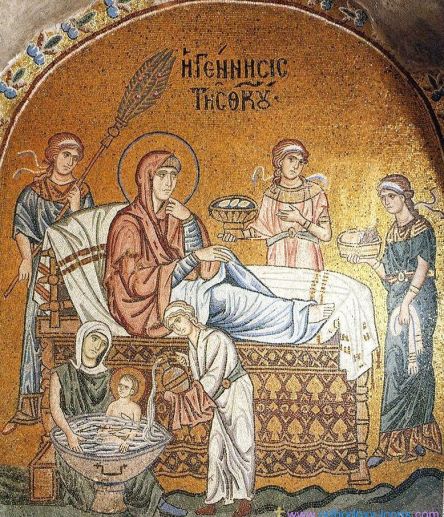
image of Mosaic of the Nativity

Mosaic of the Nativity

All week we have been warming our spirits at the sacred fire of Candlemas / Imbolc, the Celtic holiday in honour of Brighde, Irish saint and Goddess of poetry, smithcraft and healing. Imbolc falls approximately 6 weeks between the winter solstice and the spring equinox, one of the 8 festivals of the Celtic year.

In the Greek Orthodox Church, February 2 is celebrated as Ypopantis, the presentation of Jesus at the Temple, 40 days after his birth, in accordance with Mosaic law. This day also marks Mary’s ritual return to the world after forty days of postpartum seclusion. This practice was known in the Western Church as ‘churching’ or blessing a new mother after 40 days; Hindu tradition also recommends women spend up to 40 days in rest and isolation after childbirth.

Continue reading “From the Archives: Forty Days After Childbirth, Mary Returns to the World by Laura Shannon”

Prehistoric Feminine Icons

In this blog post I’d like to take you with me on a recent visit to the special exhibition “Arts and Prehistory”* in the Museum of Mankind (Musée de l’Homme) in Paris.**

Like the Feminine Power in London exhibition I wrote about last year, this is another ode to human imagination and creativity in connection to the mystery of life.

The exhibition features women figurines and cave paintings from dating between 26.000-34.000 years old, and I wonder how these prehistoric icons can inspire us to look at female bodies today…

Continue reading “Prehistoric Feminine Icons”

From the Archives: Sacred Food for Body and Soul by Carolyn Lee Boyd

This was originally posted on Jan 29, 2022.

Today is Wives’ Feast Day, a holiday celebrated in Ireland and northern England on February 2, the same day as Imbolc, Candlemas, and St. Bridget’s Feast Day. On this holiday, women (in Old English, “wife” meant simply woman) would gather together and enjoy making and sharing delicious foods with each other, honoring themselves and their work providing nourishment and other aspects of making a “home.”

When you think about it, this delightful tradition is quite remarkable. Feast days are generally associated with saints, so, in a way, this feast day recognizes the sacredness of all women and also their daily labor. This echoes to me Old European cultures that connected women’s baking and weaving to divinity by placing workshops in goddess temples and associating goddesses with these tasks. Today, women work in many jobs not directly associated with food production, but still labor to make our communities and planet better “homes” in many other ways. 

Continue reading “From the Archives: Sacred Food for Body and Soul by Carolyn Lee Boyd”

From the Archives: Brigid, Goddess of Healing, Poetry, and Smithcraft by Judith Shaw

This was originally posted on January 31, 2013

Brigid, the Celtic Goddess of Healing, Poetry, and Smithcraft, begins her reign on Imbolic, February 2, the midpoint between winter solstice and spring equinox. On this day the ancient Celts held their Fire Festival in honor of Brigid and the growing light. In Scotland, as recently as the mid-twentieth century, houses were cleaned and the hearth fires rekindled on February 2, to welcome in  Brigid.  Remnants of this festival are found in America today on Groundhog Day.

Like the Cailleach, She existed in many places and  was known by many names.  The Irish called her Brighde; she was Bride in Scotland,  Brigantia in Northern Britain, and Brigandu in France.  Some called her Brid, Brig or Brighid.  Later she was transformed by Christianity into Saint Bridget.  Her older name was BREO SAIGHEAD.   Her name has various interpretations, many relating to fire – “Power,” “Renown” “Fiery Arrow of Power ” “Bright Arrow”, “The Bright One”, “The Powerful One”, “The High One” and “The Exalted One”.

Continue reading “From the Archives: Brigid, Goddess of Healing, Poetry, and Smithcraft by Judith Shaw”

Feeding the Birds….Refuge, Part 2 by Sara Wright

You can read Part 1 here.

It was a little more than a year ago that I dreamed that my brother, whose ashes were buried below the house, had moved and roamed freely through the forest I had come to love  not just because it was wild, bursting with some 200 year old trees and fertile ground but because it was protected – all 12,000 acres of it. This dream held a ring of unshakable truth for me because Davey and I spent our childhood and adolescence in the woods. Over the past ten years the Powers of this Place (my home) have been fractured. I believe the fragmentation of natural power is due to this small parcel of land being sandwiched in between others that have been heavily and carelessly logged. The perpetual noise created by constant traffic, the whine of man’s machines drowns out the voices of Nurturing Nature Spirits.

  In what I have come to call ‘my forest’ it is blessedly still at least in the spring and fall. During the spring there are so many birds singing at the edge of the river that I slip into an enchanted state unable to do anything but look and listen… The Powers of Place are palpable, all day long. Frequently I experience the amorphous presence of my little brother. I have also found my burial place in Hemlock Hollow among the tangled roots of the Mother Trees sung to by the river.

Continue reading “Feeding the Birds….Refuge, Part 2 by Sara Wright”

Legacy of Carol P. Christ: “What Would Happen If One Woman Told the Truth about Her Life?”

This was originally posted on September 24, 2018

According to poet Muriel Rukeyser, “the world would split open.”

This poem accurately describes what many women experienced in consciousness raising in the 1970s and what many women experience today in the #MeToo movement.

For many of us the world did split open. We began to take ourselves and our experiences seriously. To do so we had to question received wisdom encoded in such questions as: “What was she doing there in the first place?” “Was she drinking too?” “Why didn’t she change out of her bathing suit?” Underlying these questions is the assumption that: “whatever happened, she must have asked for it.”

A lot of people are wondering why congressmen and voters who claim to uphold Christian principles are not more outraged about credible allegations of sexual assault against a child whose name was Christine Blasey. What this question fails to address is the fact that the Christian principles (if any) held by conservatives are steeped in patriarchy. Liberals may argue that Jesus would have cared about the girl, and I believe they are right. But the Christianity that developed after his death was centered on the Father, Son, and Holy Spirit, all of whom are male. This Christianity is patriarchal to the core: its deep message is that power belongs the hands of males and that male power is not to be questioned.

Continue reading “Legacy of Carol P. Christ: “What Would Happen If One Woman Told the Truth about Her Life?””

Seeds of Hope: Part Two by Beth Bartlett

You can read part 1 here.

The patenting of seeds[i] has made the thousands-year-old practice of seed saving illegal, as is the sharing of seeds from farmer to farmer. The most notorious case is that of Canadian farmer Percy Schmeiser, whose canola crops were contaminated with Roundup Ready canola pollen blown into his fields from neighboring corporate farms. When Monsanto trespassed onto his fields, took samples, and found Roundup Ready canola plants mixed in with Schmeiser’s own canola plants, they sued him for violation of patents. Ultimately, the Canadian Supreme Court ruled in favor of Monsanto, but also ruled that Schmeiser owed Monsanto nothing.

In my own city, seed sharing became an issue when in 2013 our local library decided to start a seed library. The project was begun with great hopes that patrons could check out seeds for their home gardens, with the understanding that they would save a portion of their seeds and return these to the library for next year’s use. [ii] Project leaders hoped this would preserve locally adapted seed varieties. Unfortunately, after the seed library came to the public’s attention, the Minnesota Department of Agriculture informed the library that they were in violation of a Minnesota statute that prohibited the exchange of non-commercial seeds. [iii] Library Manager Carla Powers commented, “ . . . the law went so far as to make it illegal for gardeners to exchange a handful of seeds with one another.”[iv] But this did not end the library’s efforts.  Several ally organizations[v] stepped up to create an amendment to the statute that exempted the exchange of non-commercial seeds from testing, labeling and licensing laws. This inspired a state-wide effort to change the law, which was successfully accomplished in that year’s legislative session.[vi]

Continue reading “Seeds of Hope: Part Two by Beth Bartlett”

Seeds of Hope: Part One by Beth Bartlett

Author’s Note: This piece was inspired by Janet Maika’i Rudolph’s wonderful FAR post of December 15th, 2022, “Ode to Seeds.”

“. . . I know, yes, there is renewal, /because this is what the seeds ask of us/ with their own songs/ when we listen to their small bundle of creation,/ of a future rising from the ground . . .” – Linda Hogan

The first seed catalogs started arriving in the mail even before the turn of the new year.  In an annual ritual of hope, in the depths of winter we turn our thoughts and dreams to growing things – seeds of heirloom tomatoes, cucumbers, squash, carrots, and beans that will feed us and grace our tables in the summer and fall, and colorful marigolds, nasturtiums, and zinnias that will delight all summer long with their beauty. Is this the invincible summer of which Camus wrote?[i] 

Continue reading “Seeds of Hope: Part One by Beth Bartlett”

Women’s March in CA 1/22/23 by Marie Cartier

WOMENS MARCH, Long Beach, California on the 50th anniversary of the passing of Roe v Wade,
January 22, 2023

Continue reading “Women’s March in CA 1/22/23 by Marie Cartier”

Why Feminism Needs the Fierce Goddesses by Susan Foster

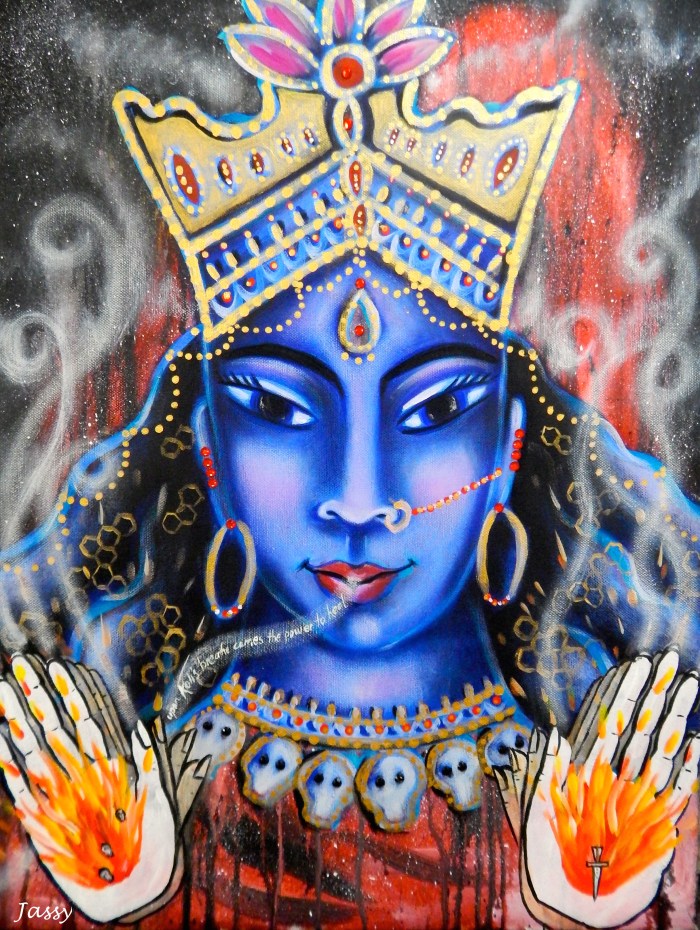
Kali Ma – She who carries transformation upon Her breath.

The recent backlash against women and feminism, highlighted by the Supreme Court decision overturning Roe v. Wade, has left many people asking: Is feminism dead? Or if it isn’t dead, is it lost? The decision dealt a blow to one of the most basic freedoms of women—control over their own bodies. In the rush to protect the life of embryos and fetuses, the lives of millions of women will be compromised if not lost altogether, especially poor and BIPOC women.

The Court is inflicting its right-wing views on a country that does not share its values; a majority of Americans support a woman’s right to abortion. “The “triumphal right,” says Susan Faludi in an interview with Michelle Goldberg, “has taken the gloves off and is pursuing a scorched-earth campaign against women’s most fundamental rights.” [i] And although the feminist movement cannot be reduced to the fight for reproductive justice (with issues such as maternity leave, equal pay, childcare, healthcare, etc., still on the table), banning abortion has become the tip of the patriarchal iceberg.

Continue reading “Why Feminism Needs the Fierce Goddesses by Susan Foster”