Arianrhod; Postnatal Trauma and the Rejecting of Patriarchy by Kelle BanDea

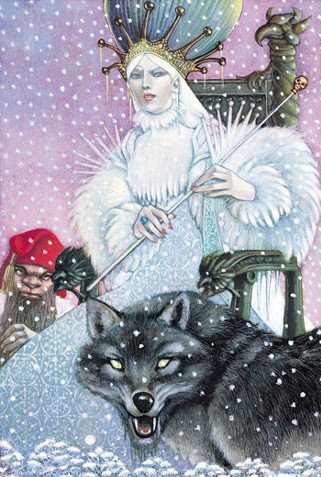
Mothers and sons. The stories that make up the Four Branches of the Mabinogi, a Welsh medieval collection of Celtic legends, are in large part about mothers and sons. Mostly about their separation. Mabon is stolen from Modron. Rhiannon’s son Pryderi is twice captured. Branwen’s baby is murdered. In Arianrhod’s tale, the Fourth Branch, it is she, the mother, who rejects her son.

Continue reading “Arianrhod; Postnatal Trauma and the Rejecting of Patriarchy by Kelle BanDea”

The Wisdom of the Beguines: The Forgotten Story of a Medieval Women’s Movement by Laura Swan, part 2 by Theresa C. Dintino 

Part 1 was posted yesterday

Praying people out of purgatory

Beguines excelled at this. By the Middle Ages, the belief in many Christian circles was that one did not go directly to heaven but to a sort of “holding place” after death to be cleansed of their sins before being allowed into heaven. Eventually “the medieval church also taught that people could pray for the souls in purgatory and that their prayers would effectively aid those souls in their transition from purgatory to heaven”(108).

It’s important to note that these women were esteemed by the communities they lived in as spiritually gifted, able to intercede with God on their own without permission from the church, clergy or men. This is radical for the time.

“Beguines, as we have seen, were understood to have extraordinary spiritual powers. People believed that having a beguine intercede before God on their behalf was an assurance that their petition was heard by God—and perhaps in no instance more than for “those poor souls in purgatory.” And beguines believed that they did indeed exercise the authority to release countless souls from purgatory. Many of the stories included in the vitae of beguines grapple with the fate of the deceased in purgatory (or hell)”(109).

Continue reading “The Wisdom of the Beguines: The Forgotten Story of a Medieval Women’s Movement by Laura Swan, part 2 by Theresa C. Dintino “

The Wisdom of the Beguines: The Forgotten Story of a Medieval Women’s Movement by Laura Swan, part 1 by Theresa C. Dintino 

Moderator’s Note: This piece is in co-operation with The Nasty Women Writers Project, a site dedicated to highlighting and amplifying the voices and visions of powerful women. The site was founded by sisters Theresa and Maria Dintino. To quote Theresa, “by doing this work we are expanding our own writer’s web for nourishment and support.” This was originally posted on their site on July 5, 2022. You can see more of their posts here. 

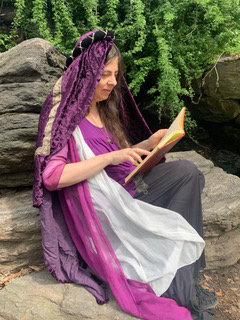
Around 1200 AD in Europe, communities of women often called beguines began to form. These women were not nuns, they were devout and devoted to the tenets of Christianity but did not belong to any church. They were independent communities of women who often created their own industry, trade or other means to produce income. They were self-sufficient and generally concerned with helping the poor, especially women. They lived in convents. This was the origin of that word.

“These women were essentially self-defined, in opposition to the many attempts to control and define them. They lived by themselves or together in so-called beguinages, which could be single houses for as few as a handful of beguines or, as in Brugge, walled-in rows of houses enclosing a central court with a chapel where over a thousand beguines might live—a village of women within a medieval town or city”(2).

Continue reading “The Wisdom of the Beguines: The Forgotten Story of a Medieval Women’s Movement by Laura Swan, part 1 by Theresa C. Dintino “

Witch Power? part 2 by Sara Wright

You can read part 1 here

Witch hazel flower

After being nailed as a witch I separated myself from the word and witch power in general. The word witch had a very dark side and could be used in the same frightening manner as it had been during medieval times to label and to expel any woman who lived on the edge (source of my original sense of unease). Especially one who lived alone in the woods and loved animals like I did.

 Why had I been singled out? I was an outsider whose crime was to animate nature. Anything associated with nature was suspect if not ‘evil’.

 Feminists beware. If you claim to be a witch – recall that the word is loaded. Personally, I think the label has backfired reducing our overall power as women. Perhaps making us more suspect than we already are.

Continue reading “Witch Power? part 2 by Sara Wright”

Filigreed by Diane Finkle Perazzo

Dressed in filigreed art deco daffodils,
dainty and tucked among tailored leaves
held proudly — almost defensively.
Elegant and demure;
your shapely neck flares with grace.

You are such a small and lovely thing:
light as a feather and yet
you carry the weight
of an American woman’s silver-plated dreams.

Like her, you were designed to be admired –
fashioned to be lifted lightly.
Pretty and proper at the table and
placed just so.

Comfortable in your simple life of service.
Polished until your delicate silver skin
wore thin and the truth
within your copper heart could be revealed.

********

Continue reading “Filigreed by Diane Finkle Perazzo”

Apaḥ and the Nāga: Water and the Snake by Lenore Lowe

Image © 2024 Compilation of Lenore Lowe and Freepik.com

As I write this, water has slowly leaked in my front yard for a day. It has already turned what was dry and brown to moist and green. It seems fitting on the day of Nāga Pañcamī (worship on this particular 5th day of the half moon). It’s fitting that water—apaḥ—has gently made its way to the surface. It has wound around pipes, rocks and roots like a cobra—nāga—to come up to show itself. Though, there are financial challenges in fixing the leak, I can’t help celebrate it as a blessed omen of goodness to come.

            After all, it’s arrived for this extra auspicious day in the most favourable month of the vedic calendar. I admit some of my frivolity may be from feeling better on my 5th day of covid. (The significance of the number 5 is not going unnoticed: linked to Patañjali and the great Yoga Sutras.) My mind too feels like it’s been making its way back to the surface. The seepage also keeps bringing me back to thoughts about the watery world of emotions, and new depths of emotions seem to be rising up in me. They feel deeply personal and universal at the same time. The celebration is devotional, the auspiciousness of having this extra time off of work to bring roses to the Mother.

Continue reading “Apaḥ and the Nāga: Water and the Snake by Lenore Lowe”

Witch Power? part 1 by Sara Wright

Witch hazel flower

On my grandparent’s farm witch hazel trees were common, sprouting up around old fieldstone walls at the edges of the forest. I loved these trees that bloomed in the fall after all the leaves had fallen. Masses of buttery yellow spindles covered bare twigs. Clusters of blossoms stood out starkly against the trunks of most of the hardwoods – hickory, beech, maple and oak.

As a child I carefully inspected each clump of blossoms. On some branches I found empty seed capsules which I learned much later expelled their seeds all at once the year before. Even these bird beaked pods looked to me like a kind of flower. I also saw little round balls that I later learned were next year’s buds already formed and that the identical looking flowers were either male or female. If I stood beneath a tree, the tangled shapes of the branches wove a loose string -like tapestry above me, one that was often mirrored by a cobalt blue sky.

Continue reading “Witch Power? part 1 by Sara Wright”

Herstory Profiles: The Season of the Witch by Anjeanette LeBoeuf

Throughout the modern ages there have been stories, legends, myths, and historical accounts of threatening people, mainly women, who have been linked with the supernatural, with containing powers, engaging with elements that go beyond the natural world, and who decentralize, shake up, and counter mainstream patriarchal systems and groups. And the predominate word which can be translated and transcend languages is that of WITCH. And since we are in the month of October, when it becomes somewhat acceptable for people to deck their houses with items long been associated with witchcraft, this month’s herstory profiles is diving into all things witchy.

So, lets deconstruct what witches do and how they function in history and in modern times. When we look at the origins of magic – at the very core- is the manipulation of the natural world for supernatural outcomings. Those outcomes can be a range – from conversing with supernatural beings, healings, prophecy, alchemy, transformation, and to even holding secret knowledge. The word magic has origins in Ancient Persian and Proto-Indo-European languages with concepts of “being able to” and to “have power.” If we look at ancient cultures, civilizations, and religions we found multiple variations of people and roles being able to contain, control, and weld magic.

Continue reading “Herstory Profiles: The Season of the Witch by Anjeanette LeBoeuf”

Book Review by Kristen Holt-Browning: Sweet Hunter: The Complete Poems of St. Theresa of Ávila (Bilingual Edition), translated and with commentary by Dana Delibovi

The Catholic mystic women of the medieval and early modern era—such as Hildegard of Bingen, Julian of Norwich, and Theresa of Ávila—can seem unknowable to us now. How did they nurture their fiery love of Christ within the rigid patriarchal (indeed, misogynistic) structure of medieval and early modern European Christianity? How did they find the strength and bravery to write about Jesus as husband, mother, lover? The writing of these mystic women can strike us even now as shocking, given that they often described Christ as their husband, their lover, or even their mother.

In Sweet Hunter: The Complete Poems of St. Theresa of Ávila (Bilingual Edition), poet and professor Dana Delibovi gives us the words of the sixteenth-century proto-feminist in a timbre close enough to our own to help close this gap. As Delibovi notes in her perceptive and illuminating Introduction, she centers Theresa’s balance of the mystical and the practical in her translations. Indeed, Delibovi admits that, “I had to fight the temptation to pretty-up her words and make them seem, well, more saintly.” And yet, it is this precisely this direct language that, paradoxically, heightens the divine fervor behind the writing, as when a shepherd speaks of Mary in “It’s Dawn Already”:

Continue reading “Book Review by Kristen Holt-Browning: Sweet Hunter: The Complete Poems of St. Theresa of Ávila (Bilingual Edition), translated and with commentary by Dana Delibovi”

An Incantation for 2024, USA by Marie Cartier

-please repeat and/or use in ritual, if needed

There was a time (there was a time)

We were waiting for something (we were waiting for something)

We were wanting something (we were wanting something)

We needed it to be different (we needed it to be different)

We were. We are. We are here: this is it.

We want something. We want something. We need something. We need something.

There was a time when we could make something happen.

Continue reading “An Incantation for 2024, USA by Marie Cartier”