“Enlightened Sexism” and The Media: The Cultural Attack on Feminism by Michele Stopera Freyhauf

Freyhauf, Feminism, Religion, Durham, Old Testament, Blogger, Bible, Gender, Violence, Ursuline, John CarrollWhat is a feminist mother of four daughters to do these days?  Look at our media and how girls and women are portrayed to our daughters, teens, and young adults. Then take a look at how media portrays the face of feminism, promoting every negative stereotype out there.  As I scroll through the magazines, listen to songs on the radio, and watch the programming targeted at girls in junior high and up, I cannot help but ask the question – Is the media trying to destroy feminism?

While this introduction might sound drastic, much truth lies behind the questions.  One merely needs to look around and watch former Disney Star, Miley Cyrus, twerk and make lewd gestures with a foam finger while grinding against a man, almost twice her age, as he sings about the blurred lines of sexual consent. When I saw the news stories and yes, watched the video, I was utterly mortified and stunned.  Gloria Steinem, in a statement that seems to condone this behavior stated that Cyrus’ performance (actions) is not a new phenomenon, but a product of American culture.  Instead of looking at it through the lens of degradation and influence, she defended the young star by saying:

 “I wish we didn’t have to be nude to get noticed. But given the game as it exists, women make decisions.  For instance, the Miss America contest… the single greatest source of scholarship money for women in the United States.  If a contest based only on appearance was the single greatest source of scholarship money for men, then we would be saying ‘this is why China wins.’ You know?  But that’s the way culture is.  I think that we need to change culture, not blame the people that are playing the game that exists.”

When Cyrus’ actions are boiled down to being “nude to get noticed,”  and we accept this behavior by merely chalking her performance up to  culture – isn’t it time to change culture?  Continue reading ““Enlightened Sexism” and The Media: The Cultural Attack on Feminism by Michele Stopera Freyhauf”

Liberations of Immigrant Women in Western Religious Conversion by Andreea Nica

Andreea Nica, pentecostalismThe prolonged debate around feminist subjectivity and religious participation continues to evoke much compelling discussion in academia, political arenas, and public space. There have been a number of academic studies around the intersection of gender, religion, and migration, specifically on how gender and immigration assimilation is constructed and managed within western religious systems.

I am currently researching the trajectories of immigrant assimilation and conversion, and how gender relations and religious identities are managed within these processes to further develop my proposal for doctoral study. I find this area of research fascinating as it’s so diverse and pertinent to the progression of gender equity amongst religious participants. Continue reading “Liberations of Immigrant Women in Western Religious Conversion by Andreea Nica”

Muslim Ritual Prayer, Social Submission, and Embodied Dissonance by Laury Silvers

Silvers, Bio Pic FRBlogWebsites run by Muslim scholars typically offer advice columns for those seeking legal rulings and religious guidance on personal concerns. One young Muslim woman wrote to a site about her doubts that wearing hijab was connected to being a good person. The gist of the opinion was that wearing a head scarf, whether she feels right about it or not, will internalize good behavior thus transforming her faith. The acting scholar, Shazia Ahmed writes,

“…performing good deeds, even if one may not be ‘feeling it’, can affect us and change us.  The limbs are inroads, and performing good deeds with them can soften a hardened heart, bring enlightenment to a closed mind, and give a person a feeling of rejuvenation and desire to come closer to Allah and do more positive things.”

If she wears a head scarf, her faith, ritual and ethical observance, and peace of mind will increase. This approach is supported by studies undertaken in the field of social and behavioral psychology. It’s been shown that standing or sitting in an open-bodied “power pose” increases testosterone and reduces cortisol, just as forcing a smile increases serotonin. That’s all well and good, and I’ve certainly got nothing against hijab. As we should all be aware by now, hijab has multivalent meanings for Muslim women that do not typically accord with non-Muslim assumptions of its oppressiveness. So hijab is not the point here. My point is that the use of repetitive behaviors and rituals, which are capable of transforming a person’s the inner life, may also act as methods of social control that may not result in the desired peace of mind.

Continue reading “Muslim Ritual Prayer, Social Submission, and Embodied Dissonance by Laury Silvers”

Truths My Mother Taught Me by John Erickson

I never gave much credence to religion but through my mother, I met G-d, and through her I understood that I’m not a feminist because of the books I’ve read but rather because of the woman I call mom.

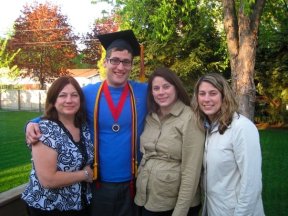
Graduation PhotoThe first question I always get asked when I’m in feminist spaces is: “What inspired you to become a feminist?”  Although I could go into the various histories revolving around men’s involvement in the early stages of the women’s movement to the similarities between the LGBTQ and women’s movements, my simple answer has always relied on one person: my mother.
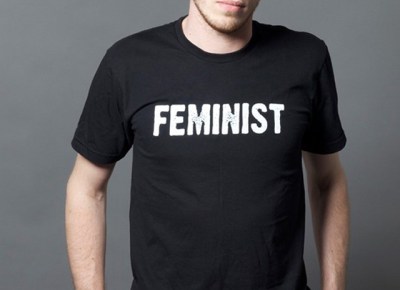
I’ll be the first to admit (as well as many other people who will join me in the same chorus) that my mother deserves Sainthood for having put up with all the shenanigans I have, and still continue to, put her through. From running away from our local Catholic church the moment she dropped me off at Sunday School, to swearing like a sailor on leave at a very early age in front of Father Schmidt (who still fondly remembers me and the list I brought in with me to the confessional booth). Continue reading “Truths My Mother Taught Me by John Erickson”

The Purity Complex: Are Men Really Less Affected Than Women? by Andreea Nica

Andreea Nica, pentecostalismWomen’s bodies continue to receive an inexhaustible amount of attention. As a society, we have glorified, scrutinized, degraded, hypersexualized, underrepresented, and misunderstood the female body. Purity culture has orchestrated a movement around the management, perception, and regulation of women’s bodies. As a former Pentecostalist, I grew up knowing there was more focus on my body versus those of my  brothers in Christ. There was a bodily divergence between men and women that I did not fully comprehend but felt obligated to adhere to; the ideological basis of this difference was filled with much ambiguity.

Each time the church organized a sexual purity event and/or discussion, boys and girls were unfailingly segregated. I was always so curious about what was discussed in the boy’s group so I would ask my brother, Christian boyfriend, and male friends at the church to fill me in on the gossip. In my teens, I didn’t know how to perceive the information relayed to me. Looking back now, I am surprised at the discourse around purity culture and masculinity in the church. During my earlier years at college, I convened with the male pastoral leadership, and they confirmed the following main themes taught to men during sexual purity discussions. Continue reading “The Purity Complex: Are Men Really Less Affected Than Women? by Andreea Nica”

The Hot Seat by John Erickson

Being a man in feminism isn’t easy and that’s how it is supposed to be.

men_feminist_mainI’ve been thinking a lot about what it means to be a male feminist lately.  As the only man to be a permanent blogger on this very site until my colleague and friend Kile Jones came on board, I took my role, as a man in a traditional feminist (online) space very seriously.  Although the ongoing struggle to be a male feminist is one continually wrought with dialogues about power and positionality (amongst a host of many other topics), I am often conflicted when I see male feminists take advantage and destroy the hard work that many, specifically on this site and beyond, worked hard to build and defend.

Not wanting to reopen old wounds or start new online battles, men have been involved in feminism for quite some time.  From James Mott chairing the first women’s rights convention, to radical feminist Andrea Dworkin’s life partner John Stoltenberg, to Michael Kimmel and Michael Kaufman’s life long work to legitimize not only men in feminism but also what it means to be a man who works for gender equality, being a man in feminism isn’t easy and that’s how it is supposed to be. Continue reading “The Hot Seat by John Erickson”

Mindfulness of Putting Ourselves Down by Oxana Poberejnaia

oxanaFrom the Buddhist point of view, all phenomena are conditioned, i.e. they arise, carry on, and come to an end because of other phenomena. Buddhism does not look at anything we experience as “things”, but rather as processes.

Confusion arises due to various factors, chief among them : 1) vague sense of “ego”, and 2) language. The vague sense of ego is portrayed in Khemaka Sutta as the last delusion that a monk drops before getting Enlightened, so we won’t worry about it now. Where language is concerned, Buddhism stands on similar positions to those of postmodernism and feminism, i.e. our social world is defined by how we speak about it. One can say that we actually create society by the act of speaking.

Continue reading “Mindfulness of Putting Ourselves Down by Oxana Poberejnaia”

I Love Love Tel Aviv By Laurie-Ann Cota

Laurie-annAs a self-identified Jewish musician, pop culture nerd/aficionado, getting in touch with my cultural heritage in creative ways is extremely important to me.  This past year I traveled to Israel for the first time and it was life changing.

I traveled with close friends from my undergraduate days at UCLA.  We had bonded and formed a friendship through the blood, sweat, and tears shed in a Hebrew class.

As a Jew in the United States I realized that I was conforming to social standards without even knowing it.  Coming home to Israel, this became very clear.  For instance, many of my friends have very curly hair – we call it the “Jewfro” – and they remedy this problem with the ever so popular Brazilian Blowout, which definitely makes one look less “ethnic.”  I have BIG hair, which I maintain by getting it razored or thinned out; if I don’t, I end up looking like Einstein.  In Tel Aviv there were big heads of curly hair that were flowing with pride.  My friends and I commented that we didn’t even realize how much of our Jewish identity we hid with simple hair products.  Something as innocuous as our hairstyles made me step back from the manner in which we alter ourselves to fit into society here in the United States. Continue reading “I Love Love Tel Aviv By Laurie-Ann Cota”

God Doesn’t Live Here Anymore: Gay Bars and the Growing Divide Between Sexuality and Spirituality by John Erickson

oes God exist within the LGBTQ community anymore or has the community itself abandoned God for all-night raves, dance clubs, alcohol, and hypersexualized and over commoditized fetishized forms of femininity and masculinity? Oftentimes, I find myself answering yes to the above questions. After surviving hate crime after hate crime and endless batches of newly elected conservative politicians hell bent on ignoring medical and social epidemic plaguing the very country they were elected to serve and protect, why would a community, oftentimes linked to sin itself, believe in a holy entity?

John Erickson, sports, coming out.My good friend and fellow Feminism and Religion Contributor Marie Cartier’s forthcoming book, Baby You Are My Religion: Women, Gay Bars, and Theology Before Stonewall argues that American butch-femme bar culture of the mid-20th Century should be interpreted as a sacred space.  Specifically, gay bars served as both communal and spiritual gathering spaces where butch-femme women were able to discover and explore not only their sexuality but also their spirituality.  An opus of an academic accomplishment based off of the amount of in-depth interviews she conducted, Professor Cartier explores lived religion in an area that has become all too common within the LGBTQ community: the bar

The Palms, the last local and only lesbian bar to be found in city of West Hollywood, CA is closing its doors and I can’t help but wonder where its patrons or parishioners will now go? Continue reading “God Doesn’t Live Here Anymore: Gay Bars and the Growing Divide Between Sexuality and Spirituality by John Erickson”

The Myth of Teen Violence and Spiritual Paths by Kelley Harrell

What does it take to decode teenage America? How can we understand the confluence of factors behind rising crime rates involving our youth, changing sensibilities toward bullying, and violence in our society? Better yet, how do we inform ourselves and support young people in finding the facts? Every day I read articles asking these questions, and a San Francisco woman has devoted the last few years researching their answers.

2013-05-13-BethWinegarner.jpg  David Kinnaman and Gabe Lyons in their book unChristian, of the majority religion, Beth Winegarner noted that a lot of teens have "lost respect, because they find [Christianity] anti-homosexual, judgmental, or hypocritical."A passionate supporter of social causes, a civic voice sounding our shifting cultural landscape, a wonderful mother, and a brilliant writer — meet Beth Winegarner. Creator of Backward Messages, a forum openly discussing social elements that feed violence in teen culture, and the media that perpetuates myths around them, Winegarner doesn’t hold back. She takes on sacred cows that have always clouded adult judgment where youth behavior is concerned — heavy metal, video games, the entertainment industry, and the occult. Her work deconstructs every façade that informs our policy, parenting, and perspectives on teens. Not stopping to just debunk socially accepted truths about teens behaving badly, her platform goes on to highlight the real issues creating problems. Among them she cites lack of mental health support, parenting, and in some cases, healthy social communities. Continue reading “The Myth of Teen Violence and Spiritual Paths by Kelley Harrell”