

Patriarchy begins at home.
Author’s Note: One reason I am sharing this story is that I hope that it will ease another round of suffering. However, I would dearly like to believe that others might reflect upon the ways they have been impacted by family violence or silence in their own lives, so we don’t get caught by projecting these patriarchal roots outside of us onto the collective while dismissing them in ourselves. That dark patriarchal seed is present in all of us, and I think that telling our personal stories keeps us attached to the whole with humility – a challenge in this time of monstrous ethical, social, political, ecological breakdown.
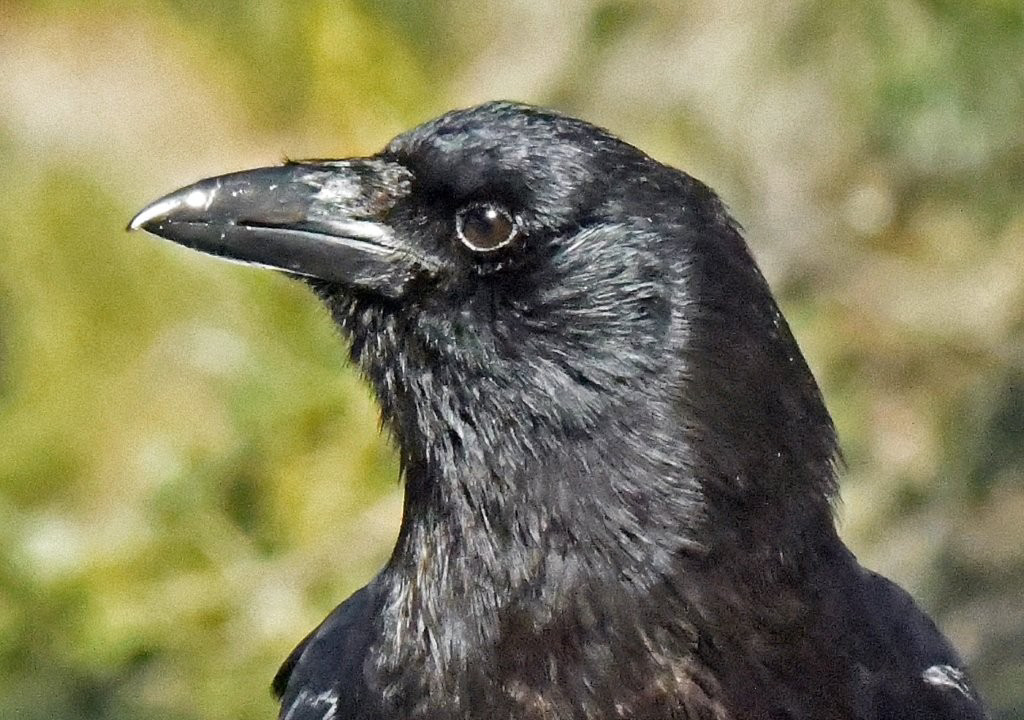
I often have dreams that leave me with questions, dreams that provoke deep personal reflection, dreams that stay with me as the following one did. At mid-life I had written tributes for two men that mentored me from a distance who brought ‘good fathering’ into the foreground because each encouraged me to believe in myself, to celebrate my original thinking, to trust my intuition and more.
I am talking to my dead mother about having found someone who could help me with math and directional confusion because of my dyslexia. In this conversation my mother is not a personal figure (when she appears as herself it usually means that I am going to face some difficulty – As an impersonal ‘great mother’ figure she is helpful). She replies that my father wanted to teach me all these things, but he just couldn’t. So many problems were in the way. I choke up weeping over this knowing (and my tears carry over into waking) because I know that ‘my mother’ is speaking the truth. I feel such heartbreak for both my dad and for me.
As I awakened from this dream in the middle of the night Lily b. my newly acquired telepathic dove was bellowing. He was reiterating the truth of the dream.
My father died suddenly from a blood infection that he acquired in the hospital after being operated on for colon cancer in his early seventies. The last time I saw him he smiled and called me “his girl,” an endearment he never used to describe his daughter during all the years of her life.
The day he died, I dreamed he became a beaver.
A pure white dove appeared at my bird feeder and stayed for one day.
The night after my father’s death his brother, my uncle, bit into some pasta and discovered to his astonishment and disbelief that he had bitten into a tiny white stone dove that had found its way into his pasta. My uncle never recovered from this shock and placed the diminutive stone dove on his fireplace mantle and kept it there until the time of his death… Like me, he had a very difficult relationship with my father who he said threw tantrums and rages that made him impossible to be around.
I recalled my experience in Assisi Italy (My father was an Italian immigrant, so this was also my homeland). When white doves landed around me in a circle one morning at dawn, I felt that I was being blessed by something beyond my comprehension…On my return I became obsessed by doves, who I had always loved.
Soon after my father’s death I acquired a dove of my own. Lily b was a free flying house bird. Every morning when I wrote something important in my journal he would coo repeatedly. Because I recorded these responses daily it became impossible to ignore what was happening. After a period of six months, I surrendered the last of my doubts. This bird was reading my mind.
Lily b validated what I believed but never spoke of, namely that birds, (plants, and animals) can be messengers alerting us to what’s happening in the present as well as acting as messengers from the beyond.
I began corresponding with one of my mentors, Rupert Sheldrake, who was studying telepathy in animals. Lily b’s telepathic ability became part of Rupert’s data bank. I told no one that Lily b’s arrival also seemed to create a bridge to my dad.
Buried memories surfaced. In between the cracks of my father’s unpredictable rages that so frightened me as a child and kept me distant from him as an adult, I re membered that my father demonstrated his love to my brother and me through some deeply caring actions:
My father took me to the zoo and bought me a child’s umbrella when it rained. The day we went to the circus he presented me with my first live lizard. One night he introduced me to ruby pomegranate seeds. He brought home metal toy birds that chirped when he wound them up. Whenever we went to the beach, he would bury my brother and me in the sand and build elaborate sand trains with cabooses for us to play on. He plucked me out of the ocean the day I almost drowned. When I threw up it was my father that held my head, who scooped up my brother and raced him to the hospital. He was the parent that read us stories at night. An aeronautical engineer by profession and a builder in his free time, he fired my imagination with his fascination for the mystery of the stars and the workings of the universe. When my mother decreed that his two children needed a spanking my father would dutifully come in our bedroom to discipline us after he came home from work. My brother and I stuffed books into the back of our pants, so the spankings never hurt. We thought ourselves so clever because we had outwitted our father. It never occurred to either of us that he saw through this ruse and ignored it!
What had blocked these loving memories for so long?
Violence and lack of accountability. As children we couldn’t trust a man who took out his explosive rage on us for reasons that we could not comprehend. As adolescents my mother ridiculed her husband’s verbally abusive behavior (my father was never physically violent – he yelled) and taught us by example to dismiss our father as irrelevant. And yet, she stayed in a troubled marriage modeling to her children that raging like a madman was somehow acceptable because she put up with it too. She taught us to be non – violent but she ‘endured’. The fact that neither of our parents were accountable for their actions helped seal our fate as children. Neither parent ever apologized. Sadly, my brother and I both began to hate our father, becoming unconscious collaborators with our ‘enduring’ mother. Both helped collapse the bridge to positive parenting.
The result of this breakdown was that neither of us had a healthy internal mother or father image to emulate. The consequences were catastrophic. My little brother turned that violence on himself, committing suicide after graduating from Harvard.
Although I survived, I did the same. I married a violent man, ended up battered, divorced him, and found two other vicious men to take his place. I finally got it; best to go on alone.
Violence begets violence/or Sphinx-like silence whether we choose it or not. Most important is that these patterns don’t disappear. They manifest intergenerationally in one form or another so it’s wise to pay close attention and if possible, to root out particulars.
Healing with my dad began in the early years of mid-life when my father opened his heart. After a heated telephone exchange, he slammed down the phone. No surprise there. But what happened next stunned me. My father (now in his sixties) called me right back and apologized for his behavior. That one apology opened the door to others and led to a reconciliation between a father and his daughter that continues to deepen although my father has been dead for many years. In retrospect I can see that I was more than ready to re-weave the broken connection between us but at that time without evidence of some accountability on his part there was no way I knew of to open the door. This simple gesture made all the difference. I needed that bridge. The one chilling detail is that my father asked me not to share our conversations with my mother. I never asked him why.
I loved feeling for the first time that my father loved his children deeply. Despite his rages. Later I learned that my dad had physically abused his wife, my grandmother, his brothers and sisters. As the oldest son he had tried to protect his mother and stayed loyal to her and to his whole biological family up until he died. My father’s unpredictable rages had a context I could finally understand if not excuse. I continued to hold him accountable but held no rancor. I often reflect upon how things might have turned out had he lived longer. For him family meant everything and all differences were tolerated if not always appreciated or agreed upon.
As I cobbled together the pieces of my life I developed into a self – directed woman, who was for the most part, author of her own destiny. I owned that I had inherited my father’s impatience, that I exploded into anger too. My father was scapegoated by mother’s family, and the same fate was bearing down on me, but I didn’t know that at the time. Whenever I behaved badly, I immediately apologized and hated myself. Overcome with shame I never saw that self-blame and self-hatred are related. Covert patriarchal violence continues to erupt in me during times of despair.
Part 2, next Tuesday.
Discover more from Feminism and Religion
Subscribe to get the latest posts sent to your email.


I love hearing about Lily B and your deep connection to all animals and plants. Way to heal ourselves and our others.
LikeLiked by 1 person
Whooh – I make errors all the time in my writing but this one is serious.”Later I learned that my dad had physically abused his wife, my grandmother, his brothers and sisters.” This was not my father but his father that physically abused his whole family. Sorry.
LikeLike
It is so healing for me to read how your view of your father has become “tempered” with memories of all the aspects of his fathering. I’ve been doing a similar process. It’s one of the gifts of age, to be able to see our past events from more than just our own one perspective.
Thanks for the clarification- it took me a minute to figure out that you were talking about your grandfather in that paragraph.
LikeLiked by 1 person
You are correct I believe. Age helps us to shift our perspectives from self to other – I have to keep reminding myself that this perspective is developmental…and not to expect that young people will get it.
LikeLiked by 1 person