

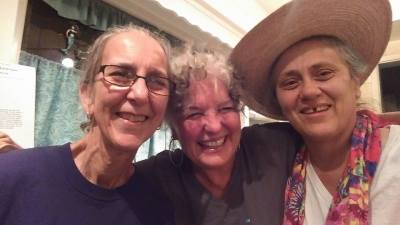
 Last week I went out to eat with a group of insightful scholars at the American Academy Religion 2015 Conference held in Atlanta, Georgia. We had just participated on a remarkable panel which was an “Author Meets Critic” session with Bernadette Barton, author of the book Pray the Gay Away: The Extraordinary Lives of Bible Belt Gays. One of our panelists was in Georgia after years of estrangement, not only from his biological family, but also from the geography of his birth because of the biological familial estrangement. He was experiencing the geography of his hometown for the first time in many years. He spoke eloquently in the panel about how much being in the geography itself again was triggering, but also how somatically it was necessary for his own healing. He needed to revisit and be embodied on the actual land—which was very different than re-remembering the hurt from a geographical distance. Also, in order to fully participate in the life of a scholar, which he was now choosing, he had to reconcile being able to revisit this geography in order to attend this particular conference. And frankly, to be able to participate on the panel which was so close to his heart—being a person who was from the Bible Belt and had literally been “prayed” over so that his “gay would go away.”
I have moderated many panels, but this is the first one where I wrote “Congratulations!” on a piece of paper to one of the panelists and passed it to him after his reading. Overall it was a great session of papers and as mentioned we all adjourned for drinks and conviviality. And to celebrate that our gay had not been prayed away.
We began to discuss holiday plans. I said to the young man who had presented his paper so courageously that I was very proud of him not only for his work, but for his ability to return to the geography in which he had experienced so much harm. I said that I was from a very abusive biological home in New England and I had not been north of New York since leaving at age 30 (I am now 59); that for me, putting my embodied self into the actual geography where I had experienced so much harm had not been possible, except for attending my mother’s funeral- its own extreme event.
Some folks at the table expressed surprise and much sadness—how could those of us without biological ties to family handle the holidays? I realized that for me it has been almost thirty years since I began creating “alternatives” to the family I was born in—my biological family- and that I have successfully created chosen family and chosen traditions instead. One of the ways I first learned to deal with holidays which had expected traditions and attendance at biological family functions was to create alternate plans well before the expected day (Thanksgiving, Christmas, etc.) and stick to that plan. I learned that once that day was “here,” I would be triggered and would not be able to create spur of the moment alternatives in the midst of those feelings.
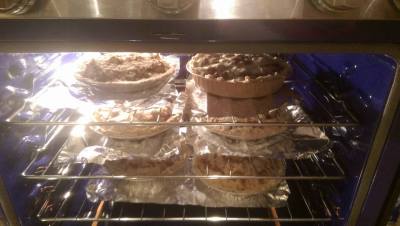 One tradition I created 20 years ago was the tradition of “Pie Day” with a good friend of mine. We realized this year that we have been doing that for 20 years! Now that is my “tradition” and that is my “family.” We bake an inordinate amount of pies on Pie Day—a very specific recipe—green apple with golden raisin reduction— and people and friends come over. We celebrate. We eat pie with cheese (a New England tradition) and salad- I call it “a French meal” after my Canadian heritage. Whoever bakes or drops by, eats. Some folks walk away with a pie. We freeze a bunch and have “pie nights” throughout the year. Various girlfriends, friends and friends of friends have helped throughout the year make our estimated 15-20 pies per year, complete with hand rolled, all butter crusts every year.
Continue reading “Creating Families and Traditions of Choice—and Saving Your Life by Marie Cartier”
 I believe that as feminists what we are striving towards is not just equality between women and men, although this aspect is crucial. Feminism has contributed to developing of such disciplines and practices as deconstruction, environmentalism, LGBT rights, and animal rights.
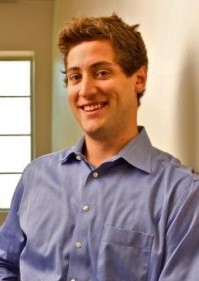 Kim Davis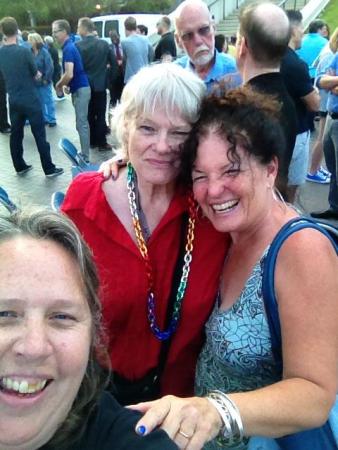
 Recently I took one of those on-line quizzes that show up on Facebook. Based on my response to particular questions, it promised to tell me what my Biblical name would be. To my joy I received Mary Magdalene. To my disappointment her bio lacked any of the historical tensions we have come to expect.
 Recently, some Christian communities have been angrily sharing these
  Recently, I realized the heart’s capacity to hold both extreme tragedy and utmost joy simultaneously. Surely this is something I’ve experienced in the past, but both personal and nation-wide events have served as poignant reminders. First, the racism that primarily persists in microaggressive forms—in the underbelly of a society that too often prides itself in the heinous sin of “colorblindness,” claiming that racism no longer exists in the United States—reared its violent head in the most blatant and painful ways in the slaughter of nine innocent people in Charleston. Because the shooting took place in a church, some media outlets have tried to claim that the shooter’s intentions were to attack persons of faith. It is clear, however, based on Dylann Roof’s words, photos, and history, that these killings were hate crimes targeted specifically at black people. Hearts broke. Lives ended. We, as a nation, were reminded, all too soon and yet again, that the lives of black people are valued less. Racism is present, evil, persistent, both blatant and hidden. It is more than hearts can hold.
 Feminism and Religion