Legacy of Carol P. Christ: Do White Feminists Have Ancestors?

This post was originally published on Aug. 12th, 2011

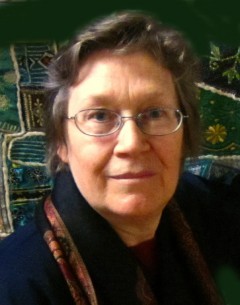
Carol P. Christ is a founding mother in the study of women and religion, feminist theology, women’s spirituality, and the Goddess movement.  She teaches in the Women’s Spirituality program at CIIS and through Ariadne Institute offers Goddess Pilgrimages to Crete. Her books include She Who Changes and Rebirth of the Goddess and the widely used anthologies Womanspirit Rising and Weaving the Visions.

Some years ago when I was speaking on ecofeminism, womanist theologian Karen Baker-Fletcher posed a question that went something like this:  What I am missing in your presentation is reference to ancestors.  For black women, this issue is critical.

Baker-Fletcher’s question provoked a process of thinking that continues to this day.  For example, I began to notice that when black women spoke at the American Academy of Religion, they often began by thanking their foremothers Delores Williams and Katie Cannon for beginning the womanist dialogue.  It is far rarer to hear a white woman thank Valerie Saiving, Mary Daly, Rosemary Radford Ruether, or Marija Gimbutas before her talk.

To the contrary, many white women take great pains to distance themselves from feminist foresisters.  I once heard a white woman Biblical scholar tell women students to do work on women in the Bible or other areas of religion without using the word feminist or placing their work in a female or feminist train of thought– if they wanted to get it published.  She was very proud that she had used this method and succeeded.  In other words, she was following in the footsteps of Mary Daly, Phyllis Trible, and Elisabeth Schüssler Fiorenza but acting as if she had invented the study of women and the Bible herself.  The reason for this, she freely admitted, was that male scholars who held power in her field would not respect her work if she used the “f” word. Continue reading “Legacy of Carol P. Christ: Do White Feminists Have Ancestors?”
I Am an American, Too by Marie Cartier

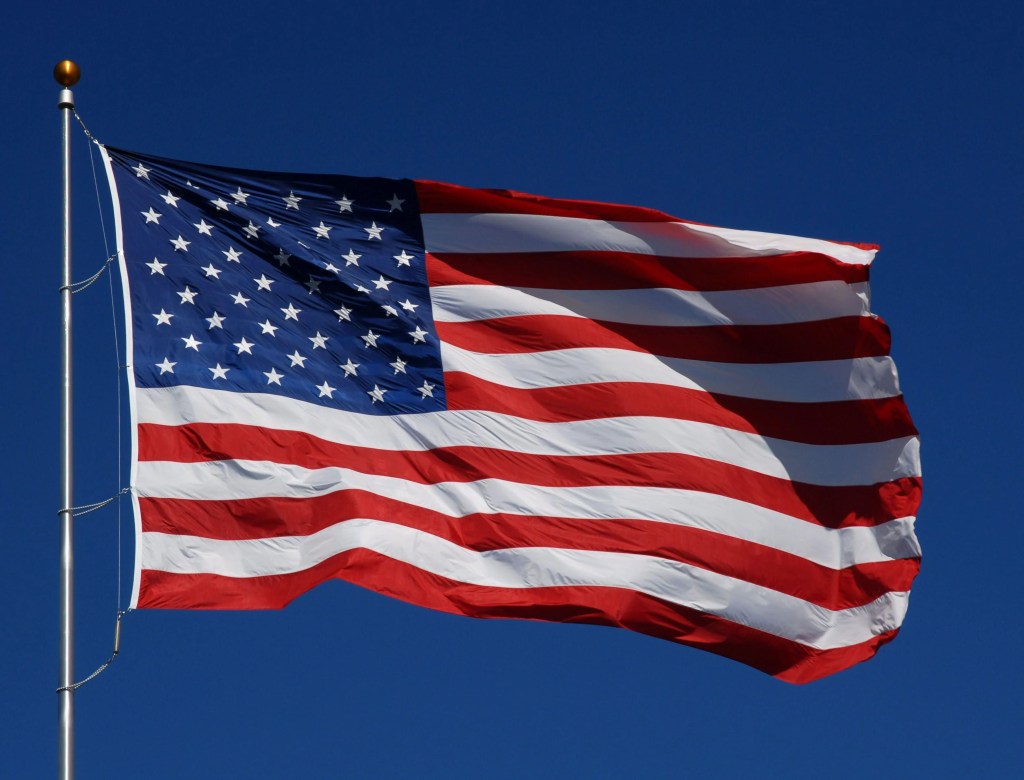
I am an American.
I am proud to be an American.
I am not proud of everything America does—
But I am proud of democracy—
of the idea of democracy.
And I do not want to waste my shot, either.

Continue reading “I Am an American, Too by Marie Cartier”

From the Archives: Is Baptism a Male Birthing Ritual? By Michele Stopera Freyhauf

This was originally posted on March 22, 2012

Quite a number of years ago I had a conversation with one of my professors, a feminist theologian, who posed the question “Why do I need a man to purify my baby with the waters of baptism?  Is there something wrong or impure about the blood and water from a mother’s womb – my womb?”  Before you jump and shout the words Sacrament or removal of original sin, this question bears merit in exploring, especially in today’s world where women are taking a serious beating religiously, politically, and socially.  In today’s world, violations and rants are causing women to stand up and say STOP!  This is MY Body.  This outcry was provoked by chants of ethical slurs against women– Slut! Prostitute! Whore!  The cry got even louder when the issue of religion and government was raised in the fight of healthcare coverage of contraception. The cry got even louder with the enactment of the laws in Virginia and Texas (and many other states to follow suit) that forces women to undergo transvaginal ultrasounds in early stage abortions.  The mandatory insertion of a wand into a woman’s vagina (mandated by the government, mind you), is a violation and has women crying RAPE!

Continue reading “From the Archives: Is Baptism a Male Birthing Ritual? By Michele Stopera Freyhauf”

Label or Be Labelled Part 3: Toward Embodied Presence

In Part 1 of this series on labelling, I highlighted the difference between naming and labelling, and the search for a personal label as ‘participation ticket’ for life.

In Part 2 on professional and spiritual identity, I looked at what we can learn from the autoethnographic practice of disclosing various selves in research situations. I also discussed the effects of Christianity on the suppression of pagan traditions in northwestern Europe, and nature-based spirituality as part of our generic spiritual DNA.

Today I share a few final reflections including what groups celebrate their differences with ‘prides and games’, and which ones remain invisible? What are the effects of woke ideology on fear of expression and loss of voices, and an invitation for embodied presence as one characteristic of our shared humanity.

Continue reading “Label or Be Labelled Part 3: Toward Embodied Presence”

Label or Be Labelled Part 2: Professional and spiritual identity

This post continues from Part 1, where I situated this essay as a reflection on Xochitl Alvizo’s article Human, Just HumanThere, I questioned the difference between the power of naming versus the pressure to label. I then described my search for a personal identifier as ‘participation ticket’ to life. This feels important nowadays to join the conversation and not be dismissed by default. However, I wondered whether looking for things that set us apart emphasises otherness rather than shared humanity.

Today, I question what can we learn from autoethnography about the many selves we bring to different professional situations and how they might hide more than they reveal. I also describe the challenges of naming nature-based practices in a geographical area where 2000 years of Christianity forced our pagan traditions underground.

Continue reading “Label or Be Labelled Part 2: Professional and spiritual identity”

From the Archives: Sacred Water by Molly Remer

This was originally posted on August 9, 2017

“Drinking the water, I thought how earth and sky are generous with their gifts and how good it is to receive them. Most of us are taught, somehow, about giving and accepting human gifts, but not about opening ourselves and our bodies to welcome the sun, the land, the visions of sky and dreaming, not about standing in the rain ecstatic with what is offered.”

–Linda Hogan in Sisters of the Earth

The women have gathered in a large open living room, under high ceilings and banisters draped with goddess tapestries, their faces are turned towards me, waiting expectantly. We are here for our first overnight Red Tent Retreat, our women’s circle’s second only overnight ceremony in ten years. We are preparing to go on a pilgrimage. I tell them a synopsis version of Inanna’s descent into the underworld, her passage through seven gates and the requirement that at each gate she lie down something of herself, to give up or sacrifice something she holds dear, until she arrives naked and shaking in the depths of the underworld, with nothing left to offer, but her life.

Continue reading “From the Archives: Sacred Water by Molly Remer”

Human, Just Human by Xochitl Alvizo

Mary Daly and other feminist scholars of her time knew that taking away the power of naming, whether oneself or the world, is one of the primary ways to take a people’s power away, to subjugate them to a world they do not help form or create.[1] Control over their bodies, their sexuality, and their relationships, is another. It has happened throughout history that not all people are allowed the same level of sovereignty over their bodies. Women, children, black people, indigenous and enslaved people, and whoever is deemed a threat to the social, economic, and cultural status quo being advanced (enforced) at a given place and time, have been forcibly and violently legislated against and policed into submission through varying implicit, explicit, informal, and institutionally sanctioned ways.

Continue reading “Human, Just Human by Xochitl Alvizo”

Archives from the FAR Founders: Learning Compassion from Inmate Number 74799 by Cynthia Garrity-Bond

This was originally posted on July 21, 2017. This is the first post of our new series to highlight the work of the four founders of FAR, Garrity-Bond, Caroline Kline, Gina Messina and Xochitl Alvizo

Technically I was employed as a lab assistant at our community

Considered standard prison procedure, Michael was scheduled for an autopsy the following day. While my grief over Michael’s death was considerable, it was the pending autopsy that caused my immediate concern. As I pictured Michael on the cold table of steel, the crude instruments sawing and cutting into his already weathered body, I took it upon myself to somehow ease this last assault. I phoned the Tucson corner’s office, hoping to speak to the pathologist who would be performing Michael’s autopsy. With surprising bureaucratic ease, I was transferred to him. After introducing myself, I explained he would be receiving Prisoner 74799, my brother, from Tucson General, and that by all appearances this was just another disposable inmate whose criminal past simply caught up with him, sort of a karma-like ending. His thin, emaciated body, I warned, is covered in tattoos, which I feared might induce a harsher judgment upon this cast away soul. I asked the pathologist that when he begins the post, he please remember Prisoner 74799 was somebody’s son, somebody’s brother, father and friend and more importantly, that this man was loved. “Please” I pleaded, “try to see beyond the obvious signs of poor choices mapped onto his body, instead see he is more than his prison issued number and that Michael Paul, while far from saint, was a man who loved and was loved.”

Continue reading “Archives from the FAR Founders: Learning Compassion from Inmate Number 74799 by Cynthia Garrity-Bond”

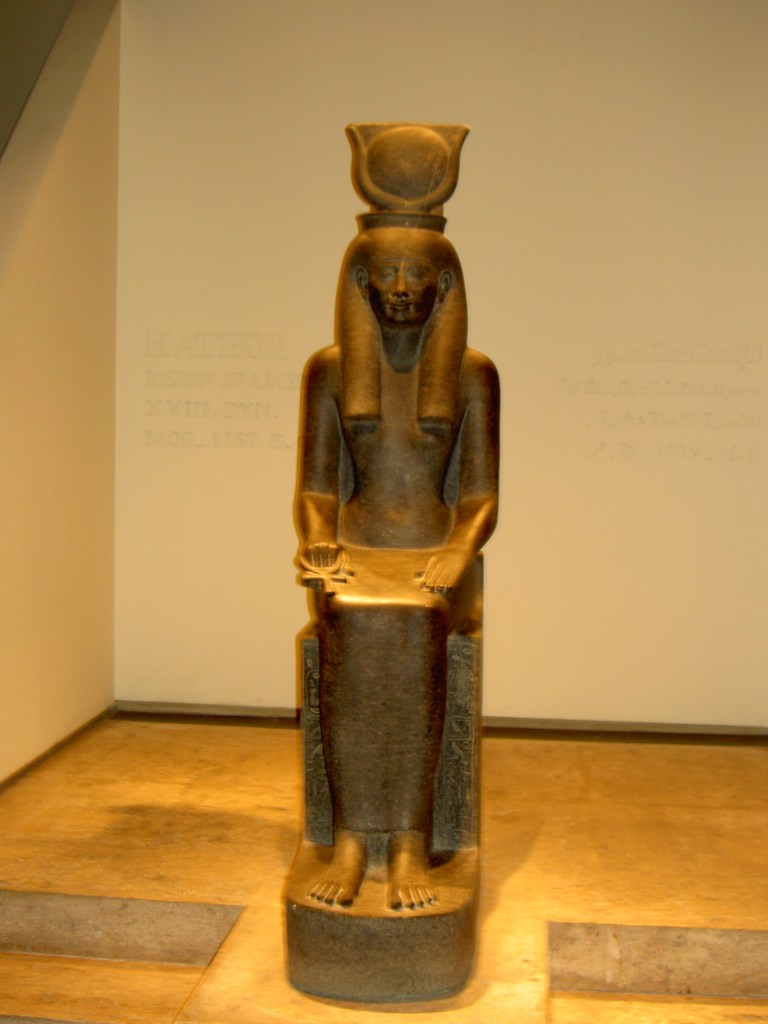
Legacy of Carol P. Christ: GODDESS AND SACRED COW: A RE-EXAMINATION OF THE MYTHOLOGY OF THE SACRED BULL

This was originally posted on August 5, 2013

Most archaeologists and visitors to museums assume that when they see a horned bovine, they are faced with the image of the male God or the image of the bull sacrifice.  In the minds of many, these two are one, as we have been taught that the male God who was the consort or son-lover of the Goddess was sacrificed. Yet horned Goddesses are not infrequent in the history of religions and Hindus still revere the sacred cow.  

Cattle have played an important role in human life from the beginning of agriculture.  Cows provide milk which is also turned into butter, cheese, and yogurt.  Most of the young males and some of the females are killed for meat or leather, while a few males are kept to impregnate the females.  Though the “raging bull” is the lens through which most of us think about mature male bovines, I have been told by a friend who raised cattle that in fact bulls are for the most part gentle and even sweet–though of course they are also potentially dangerous.

Continue reading “Legacy of Carol P. Christ: GODDESS AND SACRED COW: A RE-EXAMINATION OF THE MYTHOLOGY OF THE SACRED BULL”

From the Archives: That Which Is Sacred by Max Dashu

Moderator’s note: This marvelous FAR site has been running for 10 years and has had more than 3,600 posts in that time. There are so many treasures that have been posted in this decade that they tend to get lost in the archives. We are beginning this column so that we can all revisit some of these gems. Today’s blogpost was originally posted June 30, 2012. You can visit it here to see the original comments.

We are going through a huge cultural shift toward restoring the female to her full radiance. However you want to define that, it is rising now, through us.

That which is Sacred, what should we call it? We’ve been told to name it he, him, his. That it was blasphemy to do otherwise, to say she, even as they desecrated the Divine with comparisons to mortal overlords, those cruel masters, despoliators, persecutors. No. Reconsider. That fearful address to an authoritarian punisher takes us far from true reverence. Rather revere the roots of Being, manifesting in all Nature around us, within us. The profound silence, and the Deep calling to the Deep.

Deeply I go down into myself. My god is Dark and like a webbing made of a hundred roots that drink in silence. ― Rainer Maria Rilke

Continue reading “From the Archives: That Which Is Sacred by Max Dashu”