Legacy of Carol P. Christ: GODDESS AND SACRED COW: A RE-EXAMINATION OF THE MYTHOLOGY OF THE SACRED BULL

This was originally posted on August 5, 2013
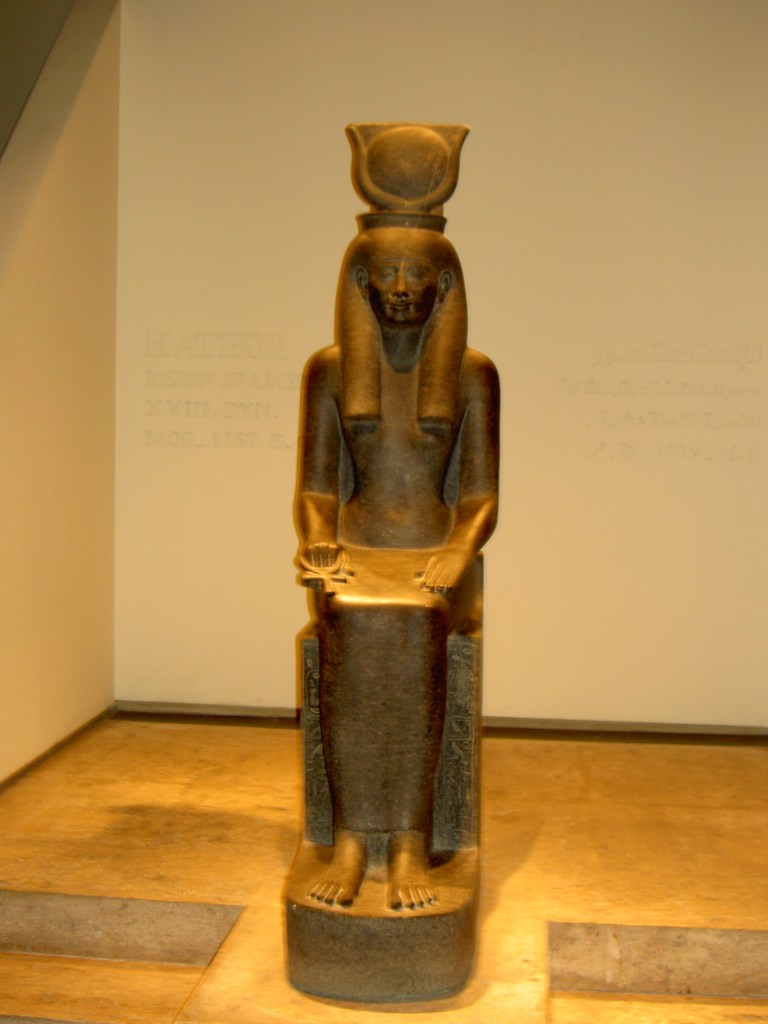
Most archaeologists and visitors to museums assume that when they see a horned bovine, they are faced with the image of the male God or the image of the bull sacrifice.  In the minds of many, these two are one, as we have been taught that the male God who was the consort or son-lover of the Goddess was sacrificed. Yet horned Goddesses are not infrequent in the history of religions and Hindus still revere the sacred cow.  

Cattle have played an important role in human life from the beginning of agriculture.  Cows provide milk which is also turned into butter, cheese, and yogurt.  Most of the young males and some of the females are killed for meat or leather, while a few males are kept to impregnate the females.  Though the “raging bull” is the lens through which most of us think about mature male bovines, I have been told by a friend who raised cattle that in fact bulls are for the most part gentle and even sweet–though of course they are also potentially dangerous.

Continue reading “Legacy of Carol P. Christ: GODDESS AND SACRED COW: A RE-EXAMINATION OF THE MYTHOLOGY OF THE SACRED BULL”

From the Archives: That Which Is Sacred by Max Dashu

Moderator’s note: This marvelous FAR site has been running for 10 years and has had more than 3,600 posts in that time. There are so many treasures that have been posted in this decade that they tend to get lost in the archives. We are beginning this column so that we can all revisit some of these gems. Today’s blogpost was originally posted June 30, 2012. You can visit it here to see the original comments.

We are going through a huge cultural shift toward restoring the female to her full radiance. However you want to define that, it is rising now, through us.

That which is Sacred, what should we call it? We’ve been told to name it he, him, his. That it was blasphemy to do otherwise, to say she, even as they desecrated the Divine with comparisons to mortal overlords, those cruel masters, despoliators, persecutors. No. Reconsider. That fearful address to an authoritarian punisher takes us far from true reverence. Rather revere the roots of Being, manifesting in all Nature around us, within us. The profound silence, and the Deep calling to the Deep.

Deeply I go down into myself. My god is Dark and like a webbing made of a hundred roots that drink in silence. ― Rainer Maria Rilke

Continue reading “From the Archives: That Which Is Sacred by Max Dashu”

Reshaping Our World with Words by Carolyn Lee Boyd

Holy well of Saint Scoheen

Pagasasthai, kernos, thiosos, sloinneadh, taibhsear.  These are centuries-old words that help describe and create a world in which the Earth is sacred and receives gratitude, people revere the wisdom of their ancestors, and those who see beyond our everyday reality are honored. 

Every day we build the world around us with words. Their tone and subtle meaning tell us who we are, what our place in society is, and how we should live. Which objects and concepts become common words indicate what is “real” and important or not. When an object or concept has its own word it gains clarity and power. Here at FAR, for example, we have had many wonderful posts about rewriting religious texts and liturgy to re-invigorate them with the sacred female spirit and be resonant with female presence. 

Continue reading “Reshaping Our World with Words by Carolyn Lee Boyd”

Monotheism and the Shema: Lessons on Oneness and Unity by Ivy Helman

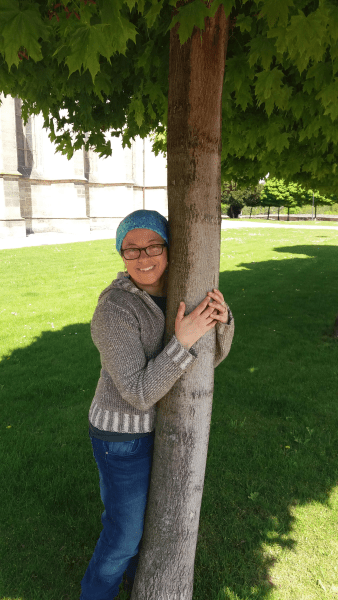
ivy tree huggingIn my last blog post, I explained what we lost when the Israelites became monotheists.  That post looked at the move to monotheism from a more historical, feminist perspective.  In this post, I want to understand monotheism from a more modern, feminist lens.  Using the Shema as a starting point for modern Jewish monotheistic thinking, my question is: how do we honor the deity based on who we understand that deity to be?  In my opinion, Jewish monotheism requires we honor G-d by moving away from one-sided gendered depictions of the deity and think about how we act in light of the interconnectedness of life.

Judaism highlights the Shema as the description of the divine.  It reads, “Hear, O Israel! The L-rd is Our G-d, The L-rd is One!,” (Deut. 6:4).  The key aspect of this verse is twofold. First, we have a relationship with the deity hence the description of the deity as “our,” and, second, this deity is one. 

Oneness used to imply that no other deities count, and perhaps also that no other deities literally exist.  For example, if one were to read the Torah, one would understand the deity differently.  On the one hand, the deity is one of many possible deities one could worship. On the other, it is quite clear that no matter what the deity is called, there is one specific deity that chose to help the Israelites.  In the Torah, the divine is always referred to as he, using only masculine pronouns for the deity. In addition, he is often called king, lord, and master. G-d is depicted as powerful, wrathful, jealous, and even scary.   Continue reading “Monotheism and the Shema: Lessons on Oneness and Unity by Ivy Helman”

The Lady Be With You – A Closer Look at Liturgical Idolatry by Tallessyn Zawn Grenfell-Lee

Even though I realized at least 17 years ago that it makes no theological sense to limit our symbols of the Divine to male symbols – Lord, God, Father – it took several years for this idea to embed itself into my subconscious. Over time, male language moved from ‘unnoticed’ to ‘noticed’ to ‘distracting’ to, eventually, ‘oppressively violent when used exclusively, without female images to balance out millennia of the idolatry of maleness.’

One of my favorite ways to dislodge this subconscious, internalized patriarchy has involved rewriting favorite old hymns. I usually try to incorporate a combination of images, to represent the incarnate divinity of all genders and all Creation. But let’s be honest: female terms for the Divine remain startling in many religious and secular, cultural contexts. In my own Methodist tradition, even though progressive Methodists sign up on paper to the idea that “God” (there we go again with the male terms) is bigger than any symbol or gender, I’ve as yet only ever been to one Christian church that used balanced gender images of the Divine, and that was a queer welcoming Methodist ministry with intentionally inclusive theology and liturgy.

I think that church saved my life. Some days, I also think it ruined my life. It showed us all what Methodism can be; and then, its time ended, and we alums drifted into the diaspora to try to take the hope and healing we experienced there into our own journeys. Some of us remain within Methodism and continue to work for the vision of welcome, of the kin-dom, that we sought together there. Personally, I love being Methodist. Grace, the journey, grace, the quadrilateral, grace.

Continue reading “The Lady Be With You – A Closer Look at Liturgical Idolatry by Tallessyn Zawn Grenfell-Lee”

What Gender is God Anyway? by Janet Maika’i Rudolph

Adult Daughter (“AD”): Hi Mom, Alex said to tell you “hi.”

Me: That’s nice. How is she?

AD: How are “they?” Alex uses “they,” mom.

Me: Oh right, sorry. I am having some trouble wrapping my head around using “they” and “them.”

AD: Well mom, that is something you’re going to just have to get over.

Using “they” to refer to one person short circuits my long life of grammar training. I found my mind resisting the plural no matter how many times I reminded myself that Alex uses plural pronouns. As I considered my brain’s resistance to “they/them,” I realized that singular gendered pronouns are truly a cultural construct. I went on to muse that maybe Alex was on to something bigger than themselves. I began to think about the Bible, arguably the foundational document of our patriarchal society, and how it uses a plural form while referring to a singular or one God.

Continue reading “What Gender is God Anyway? by Janet Maika’i Rudolph”

Honoring the Completion of the Year, by Molly Remer

“Beginnings and endings are so very sacred, to give honor to all that has transpired, every experience, every joy, every pain, is a doorway to the magical. Hold your entire year between your hands, every day, every thought, every breath. Now bless it with gratitude, love and humility. You have done more to transform this new year than a thousand resolutions.” 

 –K. Allen Kay

Two years ago, at the end of the year, I was supposed to hold a closing ceremony for a year-long Ariadne’s Thread study group I had been guiding throughout the year. Every member of the circle ended up backing out of the closing circle at the last minute, but I held the ceremony in full anyway, alone in my front yard, just for myself, and expanding it to include acknowledging and appreciating all the work I had completed in 2016, including my D.Min degree. People’s reasons for backing out of the ceremony were very valid and while on a cognitive level I understood why they couldn’t come, on an emotional level I still felt let down and disappointed at being “abandoned” by them. Holding the closing ceremony for myself anyway and acknowledging that I kept my own commitment to doing a full year of this work in circle, felt like a powerful declaration and affirmation of my own worth. In fact, it was such a validating and powerful experience that I continued the practice with a personal year-end closing ceremony for 2017 as well and I will do the same for myself this year too. Continue reading “Honoring the Completion of the Year, by Molly Remer”

Small Victories by Sara Frykenberg

Last year was a hard year. I wrote about this difficulty—vaguely eluding to challenges of environment, home, and work—in my last post. In this blog, which was a copy of my reflection for our last faculty meeting of the year, I asked my colleagues and myself: should I take the year apart or find thoughts that will help us put ourselves back together again in the fall? I am pretty good at taking things apart. But returning to school in less than a week, I find myself most concerned with the latter question: have I put myself back together again? Have I found these thoughts?

I have slept more, but am I rested?

I have taken space, but am I ready to be close again?

I don’t know. But I am beginning to find the answers, the fragments of thought, in my small victories.

Bringing my panic to ‘get it together’ before school starts to my brother, he said to me: “You have a stubborn Taurus heart.” He’s right. My Taurus moon, which tends towards obstinacy, perfectly suits my Libra (in)decisiveness. I might have a lot of trouble coming to a decision, but once I have, you better believe that I am going to hold onto that decision—particularly in matters of the heart. I tend to hold onto anger too, problematically. I once lived an entire year in perpetual rage. But, I eventually had to let it go to learn how to breathe again (literally and figuratively). This summer has also been a practice in breathing; and the process feels at best, incomplete. Continue reading “Small Victories by Sara Frykenberg”

The Blessing of Spiritual Direction by Elise M. Edwards

elise-edwardsFive years ago, I moved to Texas from California. In that time, my spiritual practice and my feminist and womanist worldview has grown through contemplative practices.  It’s ironic. “Everything’s bigger in Texas!” the saying goes, but in the presence of big, sweeping landscapes and open skies, big storms, and big egos, I’ve found the sacred in the small things.  I have deepened my connection to God through a small group of women who practice group spiritual direction.

This past Sunday evening, I gathered with these women at my church for our spiritual direction group.  We sat comfortably in  a circle, relaxing on a couch and chairs around a coffee table, as the evening sun streamed in from a large picture window and lit the room.  As we read a passage from the Bible (Mark 3:34-35) in which Jesus looks at the people sitting around him and says, “Here are my mother and my brothers! Whoever does the will of God is my brother and sister and mother,” I saw my companions more clearly.  Although my eyes were closed, I had a vision of these women sitting around me, halos made of sunbeams shimmering over their heads.  I thought, “Here are my sisters!”

Continue reading “The Blessing of Spiritual Direction by Elise M. Edwards”

Sacred Water by Molly Remer

“Drinking the water, I thought how earth and sky are generous with their gifts and how good it is to receive them. Most of us are taught, somehow, about giving and accepting human gifts, but not about opening ourselves and our bodies to welcome the sun, the land, the visions of sky and dreaming, not about standing in the rain ecstatic with what is offered.”

–Linda Hogan in Sisters of the Earth

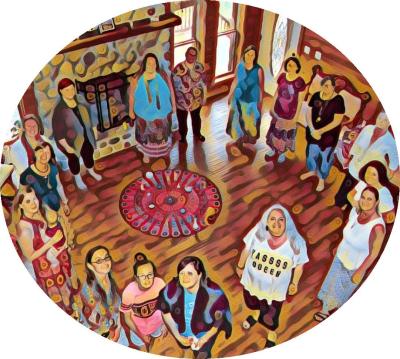
The women have gathered in a large open living room, under high ceilings and banisters draped with goddess tapestries, their faces are turned towards me, waiting expectantly. We are here for our first overnight Red Tent Retreat, our women’s circle’s second only overnight ceremony in ten years. We are preparing to go on a pilgrimage. I tell them a synopsis version of Inanna’s descent into the underworld, her passage through seven gates and the requirement that at each gate she lie down something of herself, to give up or sacrifice something she holds dear, until she arrives naked and shaking in the depths of the underworld, with nothing left to offer, but her life.

In our own lives, I explain, we face Innana’s descents of our own. They may be as difficult as the death of an adult child, the loss of a baby, the diagnosis of significant illness, or a destroyed relationship. They may be as beautiful and yet soul-wrenchingly difficult as journeying through childbirth and walking through the underworld of postpartum with our newborns. They may be as seemingly every day as returning to school after a long absence. There is value in seeing our lives through this mythopoetic lens. When we story our realities, we find a connection to the experiences and courage of others, we find a pattern of our own lives, and we find a strength of purpose to go on. Continue reading “Sacred Water by Molly Remer”