
On the path
through the pines
I see clumps of
moss scattered,
an old tree trunk
is raked as if
with claws;
clumps of downed bark
food for the earth.
My heart soars.
Wild hope pours
through me like honey.

Exploring the F-word in religion at the intersection of scholarship, activism, and community.

On the path
through the pines
I see clumps of
moss scattered,
an old tree trunk
is raked as if
with claws;
clumps of downed bark
food for the earth.
My heart soars.
Wild hope pours
through me like honey.

There’s a pinnacle moment, I believe, when everyone’s path is laid before them. The funny thing about that, is that we usually don’t see that moment, until many years later. It is then, at that sudden moment of clarity, in that epiphany, that it all comes together.
My former husband was in the United States Air Force and from 1990-1992, we were stationed at RAF Greenham Common, in the United Kingdom. When we first received our orders, not even ten minutes after, other service members started to inform us: “You’re going to where all those crazy ass bitches are.” “You’re gonna have to deal with those dike peaceniks.” “Wait until you get a load of those nasty, dirty women. They live at the base, camp out there, never shower, stop the convoys – they’re disgusting pigs.” Continue reading “From Military Wife to Peacebuilder – Learning from the Greenham Common Peace Women by Karen Leslie Hernandez”

Recently feminist scholar Vicki Noble said this is the best definition of patriarchy she has read–but she hadn’t known of it earlier! I am am republishing it now in hopes that all of you will share it on your social media so that it becomes more widely known. Thanks!
Patriarchy is often defined as a system of male dominance. This definition does not illuminate, but rather obscures, the complex set of factors that function together in the patriarchal system. We need more complex definition if we are to understand and challenge the the patriarchal system in all of its aspects.
Patriarchy is a system of male dominance, rooted in the ethos of war which legitimates violence, sanctified by religious symbols, in which men dominate women through the control of female sexuality, with the intent of passing property to male heirs, and in which men who are heroes of war are told to kill men, and are permitted to rape women, to seize land and treasures, to exploit resources, and to own or otherwise dominate conquered people.* Continue reading “Patriarchy as a System of Male Dominance Created at the Intersection of the Control of Women, Private Property, and War by Carol P. Christ”
 The Tanakh, Jewish scriptures, predominately call the deity king and lord and use the masculine pronoun. These images evoke a certain level of power. Just how powerful the deity is in then multiplied when “he” is addressed as “G-d of Gods,” “Lord of Lords,” judge, almighty, all-powerful, and warrior-like with vengeance, fury and flaring nostrils. Events like war, army invasion, disease, drought, and famine are often described as divine punishments for wrongs done throughout the Tanakh.
All of these images bring forth a certain mindset regarding who the divine is and what “he” does. Indeed, such images may well have been crucial in those ancient days when famine, drought, war, and disease were ever present and, day-to-day survival was often extremely difficult. People sought understanding as to why they were suffering, and the workings of divine beings offered such explanations. Continue reading “What We Lost When We Became Monotheists by Ivy Helman”
 Last week, I attended a film festival in Waco, Texas that showed the 2019 documentary This Changes Everything. Spending Friday evening at a film festival seemed like an enjoyable and appropriate way to kick off a weekend that would culminate with the Academy Awards (the Oscars). I had no idea that this film would inform the way I viewed the movie industry and its most celebrated awards show. It did change everything for me.
This Changes Everything is about the representation of women in film, particularly their underrepresentation and misrepresentation on screen and in the film- and television-making process. It is not the first time this theme has been explored in a documentary. What struck me at this viewing, though, was the way the film portrayed patterns that resonated with my experiences in academia and in religious communities. There are parallels between the way sexism manifests in entertainment and I, along with other members in the (predominantly female) audience, couldn’t help but see parallels in Hollywood’s patterns of exclusion and the discriminatory conditions we confront in numerous other industries and professions. What were these patterns?
Continue reading “I Hope “This Changes Everything” by Elise M. Edwards”
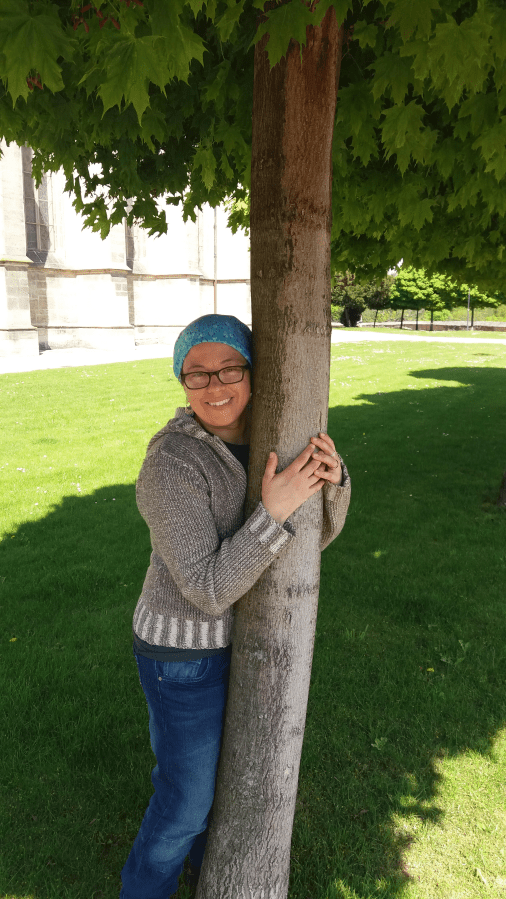 Tomorrow is Tu B’Shevat, the New Year of the Trees, or their birthday. It is the day of the year when all trees, regardless of when they have been planted, turn another year older. The rabbis standardized this day in an effort to minimize complexities, since in the land of Israel, fruit can only be eaten from trees that are four or older (Leviticus 23-25). Tu B’Shevat, then, on a practical level, marks how old fruit bearing trees are.
The holiday has evolved since then. In the 16th century, Kabbalistic mystics developed a seder to celebrate the holiday, which involved eating certain fruits, drinking both red and white wine, saying blessings, and reading certain mystical texts. Each type of fruit one eats has a specific mystical meaning whether the fruit is completely edible (i.e. apple), has an inedible pit (i.e. olive), has an inedible shell (i.e. pistachio) or has a covering one generally wouldn’t eat, but could (i.e. orange). To this day, many congregations observe the holiday by hosting their own Tu B’Shevat seders often ripe with such kabbalistic overtones. Continue reading “When Every Day Will Be Tu B’Shevat by Ivy Helman.”
About 20 years ago I witnessed a performance of the 3 plays of the Oresteia (the Orestes plays) by Aeschylus. I was stunned. Watching them in sequence, I understood that the plays were one of patriarchy’s “just so stories” and that their continuing performance was part and parcel of patriarchy’s perpetuation and legitimation.
According to the myths, Helen, the wife of King Menelaus of Sparta, ran off to Troy with its prince, Paris. In revenge for his lost honor, Menelaus called the Greeks to attack Troy and bring her back. Agamemnon, brother of Menelaus and king of Mycenae, assembled his ships, but the wind refused to fill their sails. He was told that his army would be allowed to depart only if he killed his daughter Iphigenia. He lured his daughter and her mother Clytemnestra to the place where his ships were waiting with the promise of marriage to Achilles. When they arrived, he killed his daughter and the ships sailed.
The myths do not tell us that in matrilineal and egalitarian matriarchal cultures the mother-daughter bond is the sacred because it represents the continuation of life. Continue reading “The Matricide Basic to Patriarchy’s Birth by Carol P. Christ”
 This week’s Torah parshah is Vayera (Genesis 18:1– 22:24). The parshah contains the the destruction of Sodom and Gomorrah, the questionable hospitality of Lot, the incestual sexual relationships between a drunken Lot and his daughters, the revelation of Sarah’s pregnancy, the birth of Issac, the expulsion of Hagar and Ishmael from Abraham’s family, and the legendary story of the binding of Isaac. Needless to say, there is much that can be said, but today I want to focus on the women from Lot’s and Abraham’s families.
Women figure prominently in Lot’s family. In the parshah, we first meet Lot as host. Two male visitors (angels) come to stay at Lot’s house. When some of the male inhabitants of Sodom learn of this, they come to Lot’s door wanting to harass and sexually assault the guests. To protect his guests, Lot offers his unmarried daughters to the men instead. Later in the text, we learn that Lot can safely leave Sodom because he is righteous (although what may have spared his life more is the fact that Abraham is his uncle). Continue reading “Vayera and Women’s Agency by Ivy Helman”
Yom Kippur, the Day of Atonement, was the 9th of October 2019. On this day, Jews typically attend shul, offer various prayers, and participate in some form of fasting. The day is meant to be a reflection on the ways in which we, as individuals and as a community, have not been our best selves. In this reflection, we speak aloud our objectionable behavior and ask for the Divine’s forgiveness.
In some Jewish communities, the ashamnu prayer, which we use to acknowledge our harmful and destructive behavior, has been the same for centuries. Its particular form and composition is a stylized, alphabetized list of misdeeds. For example, one can find on the list stealing, lying, being rude, disobeying the Torah, participating in abominations, turning away from G-d and so on.
That being said, many communities have rewritten the prayer to speak to modern-day failings. For example, one can find concern for racism and anti-Semitism. Another ashamnu highlights the need to end war. I even found an ashmanu that was considerably more personal in its reflection. It problematized self-doubt and supported self-care. Continue reading “Untapped Communal Potential and Yom Kippur by Ivy Helman”
 Va’etchanan (Deuteronomy 3:23-7:11) gives us pause for thought in its contradictions. First, the parshah (Torah portion) contains the aseret hadibrot (Ten Commandments), among which is: you shouldn’t murder (5:17). Then, pasukim (verses) 6:4-5 contain the shema (Hear O Israel! The L-rd is Our G-d. The L-rd is One!) followed by the admonishment to: “love the L-rd, your G-d, with all your heart and with all your soul, and with all your might,” (Deut. 6:4-5). Finally, pasuk 7:2 instructs the Isrealites, upon entry into the Promised Land, to kill and “utterly destroy” the various groups of people living there.
In other words, one is supposed to not murder. One is reminded to love G-d. And, then, G-d commands the Israelites to commit mass murder. I can’t help but think about the mass murders in the United States. Continue reading “On Va’etchanan: Do Not Murder, Rather Love by Ivy Helman”

