Bloody Waters by Ivy Helman

(Author’s note: I live in Prague, Czech Republic and teach at Charles University.Try as I might, I could not express in prose my thoughts about the violence in the world and particularly the violence here, in Prague, on the 21st of December, especially given the fact that I was a block away from what took place. So, I have written a poem instead.)

I swim through
the slimy waters of patriarchal violence
Difficult to express in words
the anxieties, the fear, the sadness
I feel as I take another stroke

towards

the parshah Bo (Exodus 10:1-13:6),
a divinely wrought plague of locusts
devouring all in their path.

Breathe,
stroke.

Darkness lasting three long days
blood smeared on doorposts and lintels
the deaths of first-borns, humans and animals alike,
the proclamation of a New Year and its festivities
to remind us of such nonsensical violence.

Breathe.
There is blood in the water.
Stroke.

Continue reading “Bloody Waters by Ivy Helman”

RELIGIOUS POLITICS by Esther Nelson

As I mentioned in an earlier post, I am a fan of Jim Rigby, a Presbyterian minister, serving a parish in Austin, Texas. I follow Jim on social media and read his posts regularly. I find his take on modern, American Christianity succinct, on-point, and very similar to my own experience growing up with evangelical, fundamentalist missionary parents.

Jim describes his initiation into religion in the following paragraph:

“As a child I learned an a-political version of Christianity. I…was offended if a preacher brought up social issues in a sermon. Religion for me meant a personal relationship with God so I could sing “Jesus loves the little children” but not feel any need to confront the possibility that my nation might be dropping napalm on them. I was taught to pray for world peace but to remain silent about my nation’s polices that made war inevitable. I could talk about Moses telling Pharaoh to set his people free, but was not permitted to break any chains in my own day.”

Continue reading “RELIGIOUS POLITICS by Esther Nelson”

What “Can” Women Do? – An Excerpt from Nice Churchy Patriarchy by Liz Cooledge Jenkins

In an essay called Sister, You Can Be Anything God Desires You to Be,[1] Kara Triboulet recalls a discussion in her theology class at her Christian college. When the professor opened up the floor and invited students to express their views on women in leadership, these are some of the things her classmates said:

“I believe women can be in leadership, just not as pastors.”

“Allowing women to teach other women and children isn’t limiting. At least they have a place to serve.”

“Women can be directors, but not pastors.”

“The Bible is very clear . . . women can’t teach or lead men because men were created first. It’s just the way God ordained it, and we all just need to accept that.”

Continue reading “What “Can” Women Do? – An Excerpt from Nice Churchy Patriarchy by Liz Cooledge Jenkins”

What, Together, We Are by Annelinde Metzner

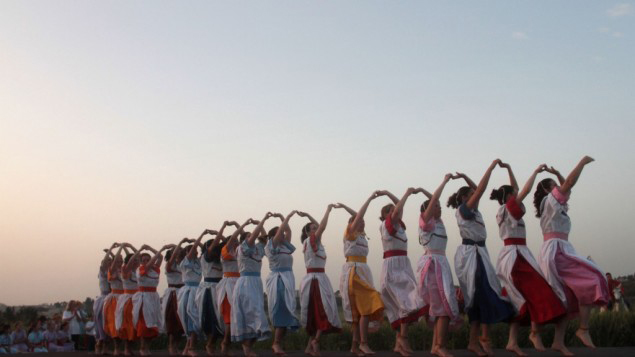
Kibbutz

It seems that the hearts of the whole world, and especially the hearts of women, are grieving now, as war and warmongering take over more and more of the Earth.  Patriarchy rages on, like a monster in its death throes, and we wonder, “will they take us all down with them?”  It is my hope that these poems will help us to keep on keeping on, keep on loving Her.

My grief, my love for the world                                        

I watch the dancer, one arm framing her face,
one hip drawing upward in the belly’s rhythm.
The dance of mature women, Raqs Sharqi
born of the sensuous music of the Middle East.
Her hips pull us into infinity,
an inward-outward shout of beauty and desire.

Continue reading “What, Together, We Are by Annelinde Metzner”

To See Ourselves in Others: Part Two by Beth Bartlett

Part 1 was posted yesterday. You can read it here.

Patriarchy is a system of male dominance, rooted in the ethos of war which legitimates violence, sanctified by religious symbols, in which men dominate women through the control of female sexuality, with the intent of passing property to male heirs, and in which men who are heroes of war are told to kill men, and are permitted to rape women, to seize land and treasures, to exploit resources, and to own or otherwise dominate conquered people.[i]Carol Christ

In Part I, I urged against the distancing that intellectual analysis can bring to situations that require us to respond from the depths of our being, and yet, how can one be a reader of this blog and not examine the intertwining strands of patriarchy, religion, women, and war in this current conflict.

Continue reading “To See Ourselves in Others: Part Two by Beth Bartlett”

Legacy of Carol P. Christ: Hidden Meanings in the Rituals of the Assumption

“[T]he Old European sacred images and symbols were never totally uprooted; these persistent features in human history were too deeply implanted in the psyche.  They could have disappeared only with the total extermination of the female population.” Marija Gimbutas, The Language of the Goddess, 318.

August 15 is known to Greek Christians as the date of the Koimisi, “Falling Asleep” or Dormition of the Panagia, She Who Is All Holy.  December 25 is a minor holiday in the Orthodox tradition, while Easter and August 15 are major festivals.  The mysteries of Easter and August 15 concern the relation of life and death.  In Orthodox theology, both Easter and August 15 teach that death is overcome:  Jesus dies and is resurrected; Mary falls asleep and is assumed into heaven.  These mysteries contain the promise that death is not the final end of human life.  Yet this may not be the meaning of the rituals for many of those who participate in them.

Continue reading “Legacy of Carol P. Christ: Hidden Meanings in the Rituals of the Assumption”

Nitzavim-Vayeilech: Inspiration for a More Egalitarian Judaism.

The Torah portion for yesterday was a double one: Nitzavim-Vayeilech (Deuteronomy 29:9-31:30).  I have already written about Vayeilech here, yet as with any parshah there is always more to say. Nonetheless, I will mainly focus on the motifs that are more particular to Nitzavim (Deut. 29:9-30:20).  Some we have seen before like an obsession with idolatry, threats and punishments in the forms of disease, plagues, destructions, and annihilations, the Israelites’ persistent betrayal, and this-worldly rewards for good behavior.  Yet, there are some ideas we haven’t seen yet.  I want to focus on three: the Torah referring to itself; the idea of the Torah being heard; and the freedom of people to choose their own heart’s inclinations.

Deuteronomy 29:20 refers to the book of the Torah.  However, it is only in verse 31:9, that we learn that Moses is the author of the Torah.  More orthodox versions of Judaism adhere to this belief that Moses wrote the Torah (except for perhaps the last 8 verses or so since he had died), but according to biblical historians, the Torah was compiled out of a myriad of sources during the Babylonian exile.  Nonetheless, I find it interesting that in Vayeilech-Nitzavim, the Torah refers to itself eight times (29:20, 21, 27, 30:10, and 31:9, 12, 24 and 26).  To some extent, it seems to be setting itself up to be an equal to the ten commandments within Israelite temple worship as there are also instructions to put this book of Moses next to the ark of the covenant within the tent of meeting (31:26).  While Moses may not have written the Torah, it is clear that its authors intended for it to be a religiously significant book within Israel.  And, it has become for Jews, the religiously significant book.

Continue reading “Nitzavim-Vayeilech: Inspiration for a More Egalitarian Judaism.”

Welcome to the Psychopomp Dreamhouse! by Stacey Simmon, PhD

When I first heard a Barbie movie was going to be released this summer I groaned. Like the awful complements of GI Joe, American Girl, and Trolls, I assumed that the content of this film would be designed to fleece parents out of the cost of tickets and popcorn. I am delighted to report that I was completely mistaken. Not only does Barbie enchant, she also delivers a complex message about idealism and womanhood.

But Barbie’s most important revelation is in her role as a psychopomp between the world of the ideal and the world of the real. Barbie Land is like a patriarchal heaven. Women are ideal, they don’t have flaws. They get shit done without breaking a sweat or wearing comfortable shoes, and the men are the accessories. It is what I imagine all the men who struggle with patriarchy idealize about what it would mean to be a beautiful, flawless woman- all of the power, where men can relax and be accessories for a change.

Continue reading “Welcome to the Psychopomp Dreamhouse! by Stacey Simmon, PhD”

Legacy of Carol P. Christ: The Sacred Feminine or Goddess Feminism?

This was originally posted on January 25, 2016

Carol Molivos by Andrea Sarris 2

In recent years “the Sacred Feminine” has become interchangeable with (for some) and preferable to (for others) “Goddess” and “Goddess feminism.” The terms Goddess and feminism, it is sometimes argued, raise hackles: Is Goddess to replace God? And if so why? Does feminism imply an aggressive stance? And if so, against whom or what?

In contrast, the term “sacred feminine” (with or without caps) feels warm and fuzzy, implying love, care, and concern without invoking the G word or even the M(other) word–about which some people have mixed feelings. Advocates of the sacred feminine stand against no one, for men have their “sacred feminine” sides, while women have their “sacred masculine” sides as well.

Nothing lost, and much to be gained. Right? Wrong.

Continue reading “Legacy of Carol P. Christ: The Sacred Feminine or Goddess Feminism?”

Re’eh: When Turning to Monotheism Requires Violence.

I have covered all of the Torah portions for the month of August except for Re’eh (Deuteronomy 11:26-16:17), which was the parshah for yesterday the 12th of August, 2023.  It contains discussions of idolatry, the inheritance of the land, what counts as kosher animals, the prohibition against eating blood, the sabbatical years, and a list of festivals and their observance.  As one reads, it becomes clear that the main concern of the parshah is threefold: observance; idolatry; and place.  Re’eh is more or less an argument for monotheism, one that acknowledges the existence of other gods, institutes a series of rewards and punishments to convince people to join in, and resorts to violence when people are unconvinced.  What does that mean for feminism?  We will see.

Continue reading “Re’eh: When Turning to Monotheism Requires Violence.”