To Your Poor Health by amina wadud

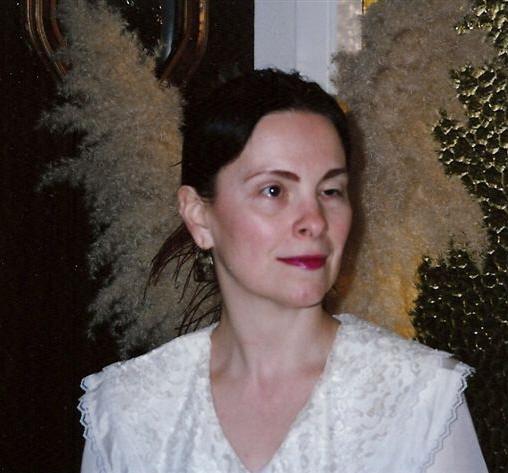
amina 2014 - cropped

This week I had started my blog in commemoration of Black History Month.  Alas it has sat in my computer unfinished as the deadline is well past for my bi-monthly post.  So here is why.

As I was listening to NPR one day, a man was describing the “types” of thinking developed as a consequence of the types of intellectual and physical exposure.  “Higher” thought (I hate that assessment of it, but it’s his word) he equated with things like knowledge of Shakespeare.  “Other” thought went with the days before (or current places and peoples without) access to some of our own human intellectual ventures (like Shakespeare’s plays).  What I, the abstract thinker (of course, I’m a theologian…) took away from this was that maybe I had ventured well into the realm of so-called higher thinking and as such had LOST touch with some basic thought for survival.

So I had a medical emergency. I have a hiatus hernia.  It was diagnosed just before I went to India, and medication prescribed.  I filled that prescription for over a year at my local pharmacy for about $10-$12 per 100 pills.  India is in a patents war with the US over medicine production, because they refuse to play into the over-costly game that is our US norm.  When my supply ran low I went to get a new prescription filled at my now local pharmacy.  They asked for over $300 for a 3-month supply!  Even if I only got one month it would be $169. I opted to do without altogether.  I figured my dietary adjustments, no citrus, no mint, no tomatoes no night time eating would be enough to suffice. Continue reading “To Your Poor Health by amina wadud”

Why I Don’t Believe in Female Pastors by Andreea Nica

Andreea Nica, pentecostalismIt may come as a surprise to those who identify as both feminists and religious practitioners that I don’t believe women should be pastors of any dominant religious congregation. This includes most religions which, I assert, are rooted in and structured by the tenets of patriarchy. Does that mean I think women should be congregants of a patriarchal-originated religious system? You guessed it – no. While this may seem like a radical notion to some, it took me quite some time to come to terms with my own conflict in being both feminist and a believer.

My transition from the Pentecostal sect was a long, intricate process that involved life-altering decisions. The notion of leaving the church was driven by my immersion in women’s studies during my undergraduate degree. There were many difficult questions I simply didn’t have an answer for, as the church didn’t provide me with them.

One of them being: Can women instruct an entire congregation of believers?

For those who are female pastors, I’m sure you’ve heard this one a million times, but somehow it never fades from religious and secular discourse. Whether it’s the Islamic, Jewish, Christian, or Mormon faith, women have had to constantly fight for their right to preach religious doctrine. In the beginning of my transition, I was on the side of: Preach it ladies! Continue reading “Why I Don’t Believe in Female Pastors by Andreea Nica”

Women, Religion, and Whiskey by Phil Conner

Women, Religion, and WhiskeyAt some point in most of my days, I will center myself down with a glass of whiskey.  It is not the effects of the wonderful spirit that draw me to it so much as the myriad of flavors contained therein.  A good whiskey is like a good person; it will unfold with layers over time.  A good whiskey is always the same, always reminding you of why you loved it in the first place, but always fresh, exciting, and nuanced.  The experience of whiskey is a deeply spiritual one for me, and one that helps inform the way I move in the world.  Despite the fact that many whiskey-lovers experience whiskey in similar ways, whiskey brings with it negative binaries, especially in the United States.  Chief among these binary stereotypes are the two myths I despise the most: whiskey is a man’s drink and whiskey is antithetical to religion.  As someone who tends bar for a living, I see these myths perpetuated all too often.  “I don’t want that fruity drink; do I look like a chick to you?”  “Of course I want another drink.  What am I?  A Christian?”  Statements like these motivated me to start writing about whiskey in the first place, and Fred Minnick’s recent book, Whiskey Women: The Untold Story of How Women Saved Bourbon, Scotch, and Irish Whiskey, and the increasingly progressive whiskey-blogging community have helped me gain the courage to spread the gospel of the history and meaning of whiskey especially as it relates to women and religion. Continue reading “Women, Religion, and Whiskey by Phil Conner”

Can Secular Immigrant Assimilation Promote Equality? Pt. 2

Andreea Nica, pentecostalismI often wonder how my life would have been different if I had undergone a secular immigrant assimilation process. My former faith within Pentecostalism not only shaped my identity, but augmented my ability to assimilate into the American culture. Subsequently, this led me to explore how nonreligious narratives help immigrants better acculturate to western society. Despite my interests originating in personal exploration, emergent studies within religion and sociology show that there are many factors that come into play when considering social and cultural assimilation.

Following up on my most recent post, Liberations of Immigrant Women in Western Religious Conversion, I will draw on a comparative analysis to consider secular immigrant assimilation processes. Women’s experiences during their migration process contribute to their cultural and social identity formation. Many studies point to the established idea that religion is a key variable in influencing immigrant assimilation, particularly among the Latino community. “Faith plays an important role in their lives: 74 percent of Latinos say religion provides a ‘great deal’ or ‘quite a bit’ of guidance for them” (Philanthropy Roundtable). Continue reading “Can Secular Immigrant Assimilation Promote Equality? Pt. 2”

The Philadelphia Ordinations and Pope Francis in Rio by Alla Renée Bozarth

Alla Renée Bozarth, Philadelphia 11, Philadelphia ordinations

On July 29, 2013,  I read the feminist theologian Mary Hunt’s fine account of Pope Francis’ visit to Brazil, with commentary on his informal conversation with press people on the way back to Rome.

When asked for a statement about the role of women in the Roman Catholic Church, a question which indirectly refers to women in the priesthood and episcopacy, he reiterated the position that the door to the ordination of women is closed. In response, I was inspired to write in the way that most intensely felt responses come out~ as a poem.

As I wrote, I couldn’t help but hear an older poem, “Water Women,” in the background. Perhaps the fact that Pope Francis had been to Rio, the Spanish word translated into English as river, inspired this association. Perhaps it was reinforced because Mary Hunt, whose article had moved me, was the co-founder and co-director of the organization WATER (Women’s Alliance for Theology, Ethics and Ritual). I wrote the poem “Water Women” a few years after the historical Philadelphia Ordinations, in which eleven women put a significant crack in the stained glass ceiling barrier in the Episcopal Church by being ordained to the priesthood on July 29, 1974. That fait accompli event opened the doors to the ordination of women into all three Holy Orders. The Roman Catholic Women’s Ordination Conference began later that same summer. I wrote “Water Women” in response to a question asked of me and others in a small group of Roman Catholic and Episcopal feminists during a press conference, just as I wrote “Pope Francis in Rio” on the 39th anniversary of the Philadelphia Ordinations because of a press conference, this time with Pope Francis during his flight back to Rome.

Continue reading “The Philadelphia Ordinations and Pope Francis in Rio by Alla Renée Bozarth”

To Have and to Hold: Gay Marriage and the Religion Question

If a conservative religious traditions can’t give their mothers or sisters full equality, how can we expect them to give a GLBT individual the time of day?

John Erickson, sports, coming out.Outrage.  Anger.  Fear.  Hatred.  These are just a few of the words that flashed across my Twitter feed as I woke up on that fateful Wednesday, June 26 morning when the Supreme Court of the United States ruled that the Defense of Marriage Act (or DOMA) was unconstitutional and that supporters of Proposition 8, the hotly contested voter initiative in California that banned same-sex marriage, had no standing.   People were mad.  However, it wasn’t just the typical kind of mad that is associated with hatred, it was a type gay_marriage_81102178_620x350of mad that was met with impossible anguish because what I was reading and feeling was a result of one thing: there was nothing more they could do.

What does all this mean?  Questions from friends and family were filling up my inbox and although I wanted to take a moment to just hit “Reply All,” and input the words: Equality, I had to hold back and start to examine the notion that although equality may now be firmly on the proverbial table, there is still a lot of work to be done, specifically for gay marriage and those wanting to marrying inside the traditional church spaces they grew up in and not just the ones that have come out as open and affirming in recent years towards LGBT individuals. Continue reading “To Have and to Hold: Gay Marriage and the Religion Question”

God Doesn’t Live Here Anymore: Gay Bars and the Growing Divide Between Sexuality and Spirituality by John Erickson

oes God exist within the LGBTQ community anymore or has the community itself abandoned God for all-night raves, dance clubs, alcohol, and hypersexualized and over commoditized fetishized forms of femininity and masculinity? Oftentimes, I find myself answering yes to the above questions. After surviving hate crime after hate crime and endless batches of newly elected conservative politicians hell bent on ignoring medical and social epidemic plaguing the very country they were elected to serve and protect, why would a community, oftentimes linked to sin itself, believe in a holy entity?

John Erickson, sports, coming out.My good friend and fellow Feminism and Religion Contributor Marie Cartier’s forthcoming book, Baby You Are My Religion: Women, Gay Bars, and Theology Before Stonewall argues that American butch-femme bar culture of the mid-20th Century should be interpreted as a sacred space.  Specifically, gay bars served as both communal and spiritual gathering spaces where butch-femme women were able to discover and explore not only their sexuality but also their spirituality.  An opus of an academic accomplishment based off of the amount of in-depth interviews she conducted, Professor Cartier explores lived religion in an area that has become all too common within the LGBTQ community: the bar

The Palms, the last local and only lesbian bar to be found in city of West Hollywood, CA is closing its doors and I can’t help but wonder where its patrons or parishioners will now go? Continue reading “God Doesn’t Live Here Anymore: Gay Bars and the Growing Divide Between Sexuality and Spirituality by John Erickson”

The Catholic Church: Love Story or Scold Story? by Dawn Morais Webster

Dawn Morais Webster, the Pope off to his summer palace, Castel Gandolfo. He tells the world he will now become just a “humble pilgrim.”

 “We, the women and men of the church, we are in the middle of a love story: each of us is a link in this chain of love. And if we do not understand this, we have understood nothing of what the Church is.”   Pope Francis

Welcome words of love and acceptance.

Not so the words and actions of Cardinal Tim Dolan who shut of the doors of St. Patrick’s Cathedral in the faces of LGBT Catholics and their supporters on Sunday, May 5.

Leading a silent—but eloquent—protest in New York in response to the  Cardinal’s recent likening of LGBT Catholics to “dirty hands” that needed to be washed clean, Joseph Amodeo describes what happened when the group tried to quietly enter the Cathedral with symbolically charcoal-blackened palms:

We were greeted by four police cars, a captain, and eight uniformed officers. We were informed by the NYPD’s LGBT liaison that the Archdiocese was prohibiting us from entering the Cathedral, because of our dirty hands. When we tried to enter the Cathedral, security advised us that we could not enter. The representative for the Cathedral said that we could only enter the church if we washed our hands. I truly believe that Christ would have welcomed and embraced us. Instead, we stood vigil in front of the Cathedral for an hour. The Archdiocese’s response further reinforces the feeling of spiritual homelessness that many LGBT Catholics and their friends feel. Continue reading “The Catholic Church: Love Story or Scold Story? by Dawn Morais Webster”

Appreciating the Sacrament of the Present Moment by Michele Stopera Freyhauf

In order to be at peace, it is necessary to find a sense of history – that you are both part of what has come before and part of what is yet to come. Being thus surrounded, you are not alone; and the sense of urgency that pervades the present is put in perspective. Do not frivolously use the time that is yours to spend.  Cherish it, that each day may bring new growth, insight, and awareness.  Use this growth not selfishly, but rather in service of what may be, in the future tide of time. Never allow a day to pass that did not add to what was understood before. Let each day be a stone in the path of growth. Do not rest until what was intended has been done. But remember – go as slowly as is necessary in order to sustain a steady pace; do not expend energy in waste. Finally, do not allow the illusory urgencies of the immediate to distract you from your vision of the eternal.

                                                     (Elisabeth Kubler-Ross, The Final Stage of Growth, 167)

Freyhauf, Feminism, Religion, Durham, Old Testament, Blogger, Bible, Gender, Violence, Ursuline, John CarrollLast month we lost a good friend unexpectedly.  His death, just days after his 49th birthday caused me to confront my own mortality. His death also makes me think about that void in life that we leave as well as the legacies we leave behind. How will I be remembered?  Did I make a difference while on earth? Have I served and given back enough?   Continue reading “Appreciating the Sacrament of the Present Moment by Michele Stopera Freyhauf”

Thanks for Coming (Out): Sexuality, Sports, and Spirituality by John Erickson

I have to be honest, Jason Collins’ admission that he was a homosexual, albeit brave, upset me. While coming out is an completely unique experience to every individual that does it, Jason Collins’ story was just another example of the rampant sexist and heteropatriarachal world that privileges male bodies and sexualities over women’s similar experiences. While I applaud Jason’s story and it’s timing, the first thing I asked to my colleagues was: Where was the hubbub over Sheryl Swoopes or Martina Navratilova?

John Erickson, sports, coming out. Like marking off items on a proverbial checklist, closeted LGBTQ individuals who exist within and outside of the world of professional sports, can recount the numerous things they struggle with in terms of their sexuality.  From fearing of the actual coming out process, dressing in their car or at home to avoid the subtle glances and whispers of individuals in the locker room, to wondering what coming out would mean not only for their game but also for their social and, if they choose, spiritual lives, closeted and out LGBTQ individuals within the multi-billion dollar professional sports industry must grapple with that age old question: what does it mean to be gay and open about it?

The Locker Room

I have to be honest, Jason Collins’ admission that he is a homosexual, albeit brave, upset me.  While I understand that coming out is an completely unique experience to every individual who does it, for me Jason Collins’ story was also an example of the rampant sexist and heteropatriarachal world that privileges male bodies and sexualities over those of women.  While I applaud Jason’s story and the timing, the first thing I asked to my colleagues was: where was the same hubbub over Sheryl Swoopes or Martina Navratilova? Continue reading “Thanks for Coming (Out): Sexuality, Sports, and Spirituality by John Erickson”