Legacy of Carol P. Christ: Why a Goddess Pilgrimage?

This was originally posted on October 1, 2012

What is a Goddess Pilgrimage and why are so many US, Canadian, and Australian women making pilgrimages to ancient holy places in Europe and Asia?  The simple answer is that women are seeking to connect themselves to sources of female spiritual power that they do not find at home.

Traditionally pilgrims leave home in order to journey to a place associated with spiritual power.  “Leaving home” means leaving familiar physical spaces, interrupting the routines of work and daily life, and leaving friends and family behind.  For the pilgrim, “home” is a place that has provided both comfort and a degree of discomfort that provokes the desire to embark on a journey.  The space of pilgrimage is a “liminal” or threshold space in which the supports systems of ordinary life are suspended, as Victor Turner said.  A pilgrim chooses to leave the familiar behind in order to open herself to the unfamiliar—in hopes that she will return with new insight into the meaning of her life. 

Continue reading “Legacy of Carol P. Christ: Why a Goddess Pilgrimage?”
Legacy of Carol P. Christ: Hidden Meanings in the Rituals of the Assumption

“[T]he Old European sacred images and symbols were never totally uprooted; these persistent features in human history were too deeply implanted in the psyche.  They could have disappeared only with the total extermination of the female population.” Marija Gimbutas, The Language of the Goddess, 318.

August 15 is known to Greek Christians as the date of the Koimisi, “Falling Asleep” or Dormition of the Panagia, She Who Is All Holy.  December 25 is a minor holiday in the Orthodox tradition, while Easter and August 15 are major festivals.  The mysteries of Easter and August 15 concern the relation of life and death.  In Orthodox theology, both Easter and August 15 teach that death is overcome:  Jesus dies and is resurrected; Mary falls asleep and is assumed into heaven.  These mysteries contain the promise that death is not the final end of human life.  Yet this may not be the meaning of the rituals for many of those who participate in them.

Continue reading “Legacy of Carol P. Christ: Hidden Meanings in the Rituals of the Assumption”

From the Archives: Sacred Water by Molly Remer

This was originally posted on August 9, 2017

“Drinking the water, I thought how earth and sky are generous with their gifts and how good it is to receive them. Most of us are taught, somehow, about giving and accepting human gifts, but not about opening ourselves and our bodies to welcome the sun, the land, the visions of sky and dreaming, not about standing in the rain ecstatic with what is offered.”

–Linda Hogan in Sisters of the Earth

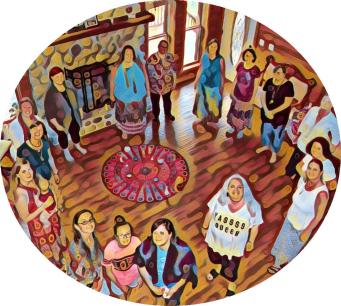
The women have gathered in a large open living room, under high ceilings and banisters draped with goddess tapestries, their faces are turned towards me, waiting expectantly. We are here for our first overnight Red Tent Retreat, our women’s circle’s second only overnight ceremony in ten years. We are preparing to go on a pilgrimage. I tell them a synopsis version of Inanna’s descent into the underworld, her passage through seven gates and the requirement that at each gate she lie down something of herself, to give up or sacrifice something she holds dear, until she arrives naked and shaking in the depths of the underworld, with nothing left to offer, but her life.

Continue reading “From the Archives: Sacred Water by Molly Remer”

Life Still Shaped by the Witch Hunts? by Eline Kieft

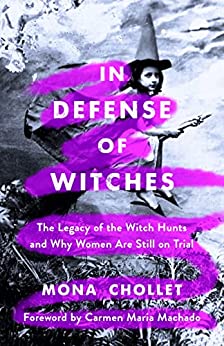
In this article I reframe my understanding of feminism through the lens of Mona Chollet’s In Defence of Witches, and reflect on how my psyche as a woman today is still deeply influenced by the effects of the witch hunts in mediaeval times. 

Continue reading “Life Still Shaped by the Witch Hunts? by Eline Kieft”

Revisiting Our Sisters’ Feminisms by Xochitl Alvizo

This post draws much from a previous post I wrote back in 2013, which generated great discussion in the comments. I came back to it as I was reflecting on our sisters’ revolution in Iran, Women, Life, Freedom, following the death of Mahsa “Zina” Amini while she was in the custody of the “morality police” in Iran. This woman-led movement has been nonstop for seven weeks. I’m in full support of the women and have continued to learn more about their context and history. The movement is powerful and inspiring, heavy and difficult, but its energy is alive and blazing. There is an impromptu song that has come to represent the movement; the song was created by linking real-time tweets and Instagram posts together – you can hear the song, read the lyrics, and see the screenshots in the video below:

Now the post I’m drawing back to from 2013 – a little different from the original – but one intended to invite us to reflect on our engagement with and support of one another across place and difference. And about the relationship between the local and global, and the need to hold a balance of both.

Continue reading “Revisiting Our Sisters’ Feminisms by Xochitl Alvizo”

Honoring My Academic Mothers: Carol Christ and bell hooks by Anjeanette LeBoeuf

I started writing this post a day after news broke that beloved activist, poet, feminist, and academic, bell hooks had passed away. This news comes months after our FAR community lost Carol Christ; another academic, feminist, writer, and maker of history. This post was finished as almost three weeks into a new year has gone by. The advent of 2022 is filled with the last two years’ heavy, unbelievable, heartbreaking, and extraordinary experiences and events.  

Continue reading “Honoring My Academic Mothers: Carol Christ and bell hooks by Anjeanette LeBoeuf”

Celebrating Our Girls, by Molly Remer

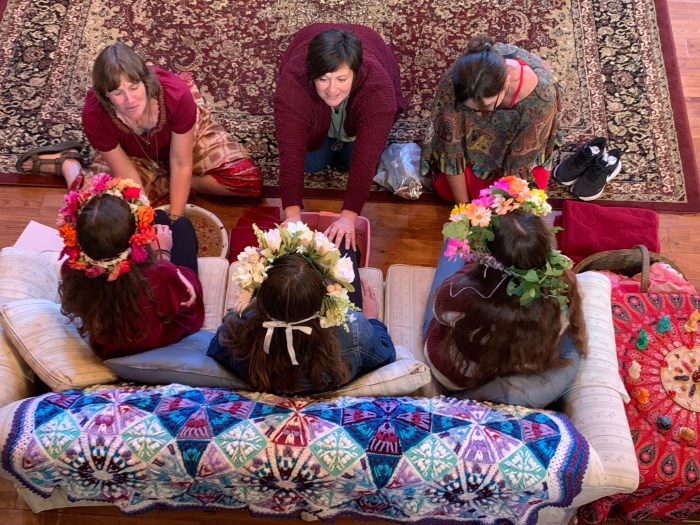
We gathered roses
and bright zinnias
to crown their heads with flowers,
these shining daughters
who we’ve cradled and fed
and loved with everything
we have
and everything we are.
We knelt before them and sang,
our hands gently washing the feet
that we once carried inside our own bodies
and that now follow
their own paths.
For a moment,
time folded
and we could see them
as babies in our arms,
curly hair and round faces,
at the same time seeing
the girls in front of us,
flowers in their hair,
bright eyed and smiling,
and so too
we see women of the future,
tall and strong boned
kneeling at the feet
of their own girls
as the song goes on and on.
We tried to tell them
what we want them to know,
what we want them to carry
with them as they go on their ways:
You are loved.
We are here.
You are loved.
You are strong.
You are magical.
We treasure who you are.
This love that carried them
forth into the very world
they walk on,
we hope it is enough
to embrace them for a lifetime,
and so we kneel and sing
and anoint and adorn
and hold their hands in ours.
We are here.
You are not alone.
You are wise in the ways.
You belong.
We are not sure if tears can say
what we mean to say,
but they fall anyway
as we try our best to weave
our words and wishes
and songs and stories,
with strength and confidence
into a cloak of power
that will encircle them with magic,
no matter
how far away
from us they journey.

Continue reading “Celebrating Our Girls, by Molly Remer”

The Blessing of the Elders by Rachel Thomas

, elders are people who have illuminated my path, inspired me to see my own potential. To open my eyes, all my senses, even those I did not know I had. Elders show bravery and model for us how to be strong.

What is an Elder?

The word elder comes from an Old English word which also meant ancestor or chief. A lot can change in a thousand years and many of us no longer honor older people or seek out them out for advice.

In my experience, elders are people who have illuminated my path, inspired me to see my own potential. To open my eyes, all my senses, even those I did not know I had. Elders show bravery and model for us how to be strong.

My first wise woman teachings came from my family. My mother, and her mother, taught me to be myself, to love being outdoors and the importance of having a garden. Feeling the joy of flowers, cooking with fresh herbs, planting a tree to honor the dead. These are a few ancient traditions of my ancestors that have survived even in a modernized and urban setting.

Continue reading “The Blessing of the Elders by Rachel Thomas”

As I rediscover my connection with the earth, my eco-consciousness inspires me to transform. As I go back to nature, I re-awaken my ancient cellular memories of living in harmony with the earth. I feel called to dance barefoot, play drums, make offerings, bathe in moonlight, harvest with my own hands. As I move forward on a path which is both new and old, it is my beloved elders who have shown me how to find my way.

What is an Elder?

The word elder comes from an Old English word which also meant ancestor or chief. A lot can change in a thousand years and many of us no longer honor older people or seek out them out for advice.

In my experience, elders are people who have illuminated my path, inspired me to see my own potential. To open my eyes, all my senses, even those I did not know I had. Elders show bravery and model for us how to be strong.

My first wise woman teachings came from my family. My mother, and her mother, taught me to be myself, to love being outdoors and the importance of having a garden. Feeling the joy of flowers, cooking with fresh herbs, planting a tree to honor the dead. These are a few ancient traditions of my ancestors that have survived even in a modernized and urban setting.

Continue reading “The Blessing of the Elders by Rachel Thomas”

May Her Memory Be A Revolution by Anjeanette LeBoeuf

On the eve of the Jewish Sabbath and the start of Rosh Hashanah, Supreme Court Justice Ruth Bader Ginsburg breathed her last breath. She was 87. She fought so hard for so long. She is an American patriot, hero, champion for women’s rights, and for many she was the stalwart bastion of justice and ‘liberal’ rulings. She was a Supreme Court Justice for 27 years. Her life has been put into books, a movie, and the most notorious memes around. She became known for elaborate collars over her Justice robes. We mourn the lost of her, we celebrate her memory, and we must pull up our boots and continue the fight.
Continue reading “May Her Memory Be A Revolution by Anjeanette LeBoeuf”

Pandemic Grace: A FAR Message from Xochitl Alvizo

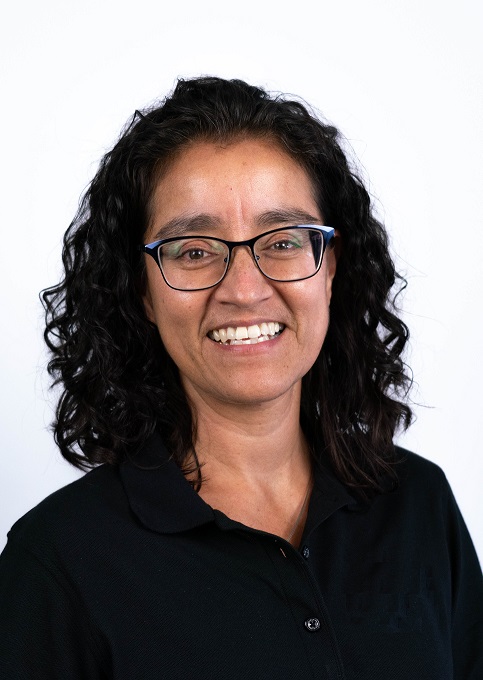
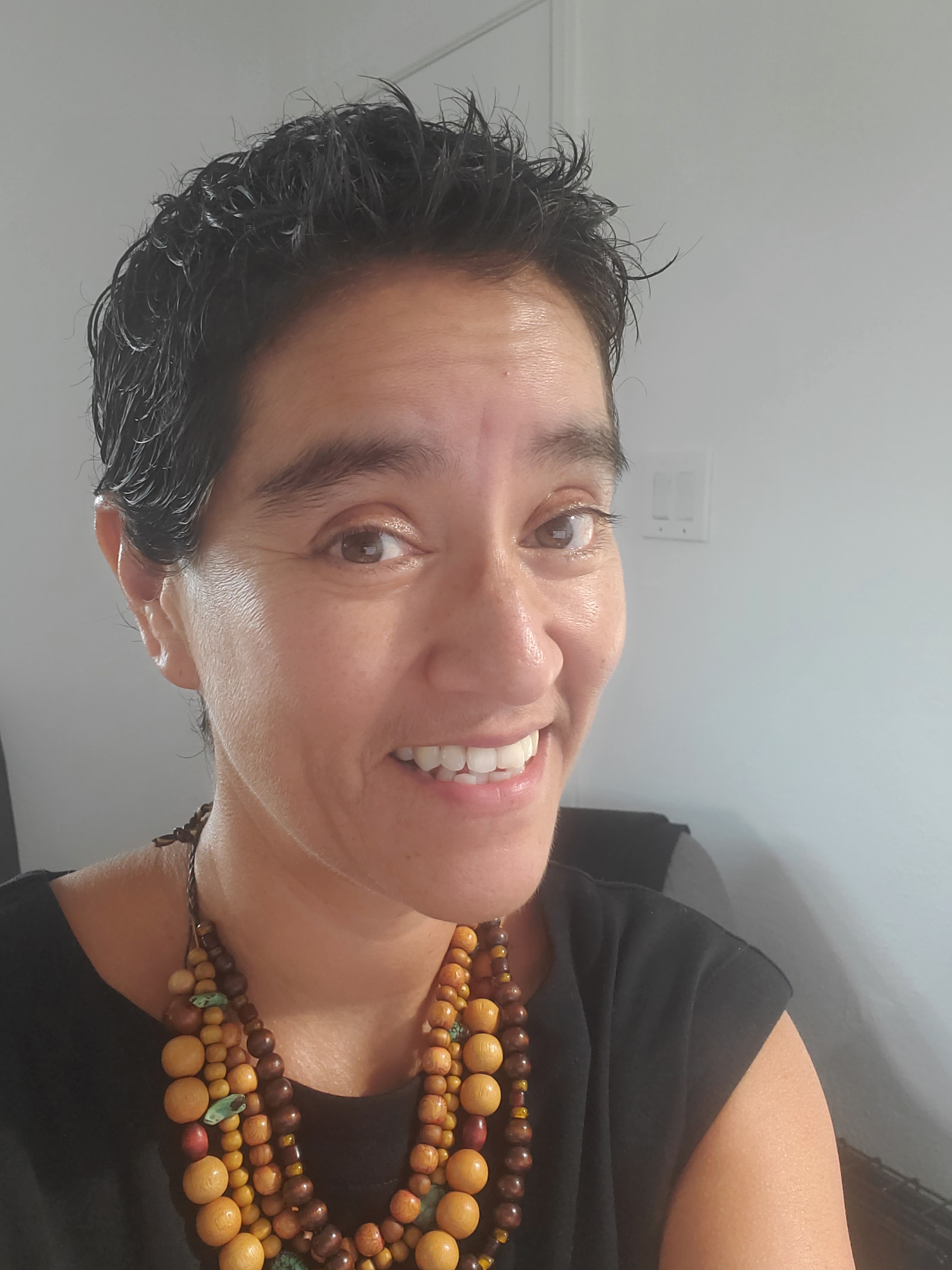
Xochitl with hairHello FAR friends,

I hope you are each doing well – that you are holding up ok during these trying times. It’s Xochitl here. I’m the behind-the-scenes co-weaver keeping things afloat (to varying degrees!) on this collaborative endeavor we call Feminism and Religion.

You may have noticed some gaps in our postings these last couple of months; I want to reassure you that it’s all ok. The gaps are an indication that we are giving one another a lot of pandemic grace. These are tough times and we are all doing what we can to make it through.

FAR will keep publishing as our contributors are able to submit their pieces. We always also welcome new voices and contributions to join in. I will do my best to keep up with the correspondence, but I do appreciate your patience. We are an all-volunteer project and everything we do is done out of our heartfelt commitment. And for all of it, I am grateful.

May we all be well, may we be safe, and may we find our peace.

Rage on, friends!

~ Xochitl


P.S. I’m growing my hair out! I figured quarantine time was a good time to experiment…we’ll see how it goes :)